WindWings® in Maritime Shipping: Applications and Use Cases
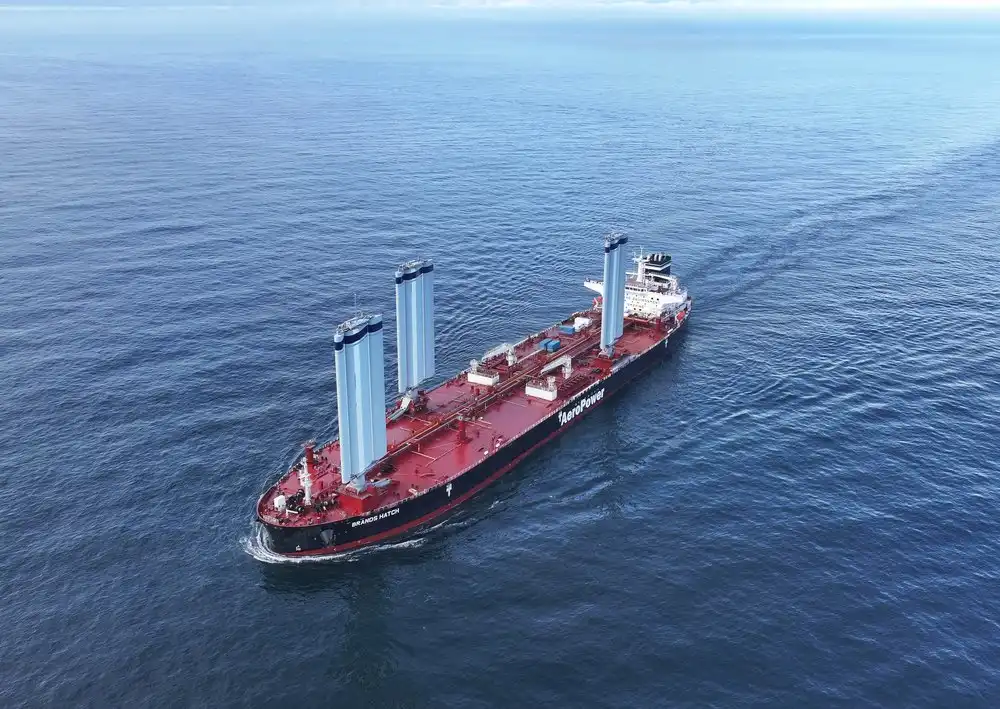
WindWings® represent a significant shift in how the shipping industry approaches fuel consumption and carbon compliance. As a patented three-element rigid sail system developed through a partnership with BAR Technologies in the UK, WindWings® generate propulsive thrust from wind energy, directly reducing main engine load. With verified fuel savings of up to 30% on favorable routes and independent performance validation from DNV, Wolfson Unit, and Lloyd's, this wind-assisted propulsion technology gives shipowners a credible, certified path toward meeting IMO CII, EEXI, and EU ETS requirements without compromising commercial operations.
Understanding WindWings® Technology in Maritime Shipping
What Makes This a Three-Element Rigid Sail System?
The three-element hard wing design of WindWings® is very different from that of soft sails or Flettner rotors. The slope and angle of attack of the wing can be changed in real time, which lets the system instantly adapt to changing wind conditions. This makes more than 2.5 times the mechanical lift of a normal single-element sail, which directly leads to more power and less engine load.
Materials Built for the Marine Environment
The building is made of ship-grade steel and industrial E-glass materials that were chosen for their long-term success in salty, humid environments. Marine-grade hydraulics power the gears for folding and turning. The whole system is made with parts that are ISO-certified, and it meets the structure standards needed for type approval by DNV, Lloyd's Register, BV, and CCS.
Automated Control and Smart Routing
The ship's control system constantly checks the speed and direction of the wind and changes the form and position of the wings without any help from the crew. A web-based weather routing interface connects teams on land and on boats, letting them plan routes that take advantage of the wind to the fullest. Technical workers can see the whole system's output at all times during each journey because real-time thrust performance data is sent all the time.
How WindWings® Compare to Other Wind-Assisted Propulsion Options?
Aerodynamic Output vs. Conventional Approaches
It is impossible for soft sails or single-element hard sails to match the lift coefficient of a three-element rigid wing. WindWings® make more than 2.5 times as much lift as a single-wing sail of the same size. This performance gap is not something the manufacturer says; it has been independently proven by the Wolfson Unit, a well-known fluid dynamics study center, and through DNV-validated real-vessel trials.
Total Cost of Ownership Over a 25-Year Lifespan
WindWings® are made to work for 25 years without needing major parts to be replaced. The system can also be moved from one ship to another. This means that the capital object keeps its value even if the fleet changes. The total cost of ownership is about the same as other decarbonization retrofits when these factors are compared to the amount of money saved on fuel over time and the rising cost of carbon under the EU ETS framework.
Certification Depth Across Major Classification Societies
DNV and BV have given WindWings® Approval in Principle (AiP) and type approval. Lloyd's Register and CCS have also given them certification. International shipowners care about this wide range of class recognition because it makes it easier for flag states to accept ships, for P&I coverage to kick in, and for charterers to give their approvals. Not many competing wind-powered goods have been approved by all four of these groups at the same time.
Practical Applications and Use Cases of WindWings® in Maritime Shipping
WindWings® are designed for commercial ships with a lot of cargo space. This is where fuel use is largest and the business case for wind-assisted power is strongest. The system has already worked reliably at more than 20 major ports around the world, with no problems. This gives procurement teams real-world evidence instead of just guesses.
The main types of ships and trade routes where WindWings® have shown their worth are listed below:
- Kamsarmax and Newcastlemax Bulk Carriers: On high-volume routes such as Brazil to East Asia, where consistent trade winds are available for extended voyage legs, WindWings® reduce main engine demand significantly. Vessels like Pyxis Ocean and Berge Olympus have served as documented reference installations, with DNV-verified fuel savings data available for technical review.
- VLCC and Product Tankers: WindWings® are designed with non-sparking components and hydraulic safety features appropriate for vessels carrying petrochemical cargo. The system's ability to fold flat to the deck during cargo operations means it does not interfere with manifold access or hose handling procedures at the terminal.
- North Atlantic and North Pacific Trade Lanes: On high-latitude routes with variable and sometimes severe weather, the active control system automatically feathers the wing when wind speeds exceed operational limits, neutralizing aerodynamic load on the structure and maintaining vessel stability. This capability demonstrates that the technology performs reliably in demanding real-world conditions, not only in favorable weather corridors.
Procurement Guide for Maritime Shipping Companies
From Compliance Analysis to Signed Contract
The usual way for TSC WindWings® to get bought starts with a route-specific fuel savings and safety review. Based on real trade data, CM Energy works with shipowners to model CII trajectory improvements, EU ETS cost offsets, and payback periods [1]. This study usually takes between one and three months, and it's the technical basis for board-level support of capital expenditures.
Installation Process and Operational Readiness
The installation process includes checking for suitability, putting it together on-site, testing it in the workshop, delivering it, and starting it up on board. The system works like a deck crane; team members don't need any special skills to use it every day, and the interface for human override is easy to understand. During the product's service life, TSC offers long-term service packages, remote monitoring based on IoT, and maintenance support.
New Builds and Retrofit Pathways
WindWings® can be added to both new building and current ships with simple modifications. For new builds, CM Energy works directly with shipyards as an equipment supplier during the design phase to help with EEDI compliance calculations. For refit projects, the first ship is usually used as a test installation to get reliable performance data that helps make choices about rolling out the changes to the rest of the fleet.
Environmental and Operational Impact
WindWings® solves the two government rules that are causing the shipping industry to spend the most money right now: carbon intensity rates under the IMO CII framework and carbon cost exposure under the EU ETS. The system lowers CO2 output per cargo tonne-mile by using less fuel. This raises a ship's annual CII rating and lowers the number of EU allowances the owner of the ship needs to buy.
The fold-down system fixes the problems with port clearance and cargo handling that many technical superintendents bring up during the initial evaluation. When the wing turns to the laydown position, it fully clears hatch covers, which means that grabs, conveyors, and loading equipment can work without having to change how things are done at the port.
CM Energy, which does business under the TSC name, has the manufacturing skills, connections with class societies, and lifecycle service infrastructure to help shipowners from the first request to decades of operation. With more than 350 deck cranes in use around the world, TSC has a good track record when it comes to naval equipment. This makes them a good choice to supply and support a complex system like WindWings®.
Conclusion
With WindWings®, shipowners have a tested and approved way to cut down on fuel costs and meet stricter carbon rules. The three-element rigid sail design is backed by BART's patented technology and proven by DNV real-vessel trials. It gives performance data that helps people feel confident about buying it. This system is a good long-term investment for bulk carrier and tanker owners who need to deal with the current legal environment. It has a 25-year service life, can be moved from one vessel to another, and comes with full support from CM Energy's TSC brand.
FAQ
1. How does the system behave during extreme weather?
When the wind speed is too high, the wing automatically feathers, or folds flat to the deck, to line itself with the wind and remove the hydrodynamic load. This safety behavior is built into the control system and doesn't need any work from the crew. It keeps the ship stable even when bad weather hits.
2. Can WindWings® be installed on an existing vessel?
Yes, retrofit installation is a main way to deploy. For the process to work, the deck fixing points need to be strengthened structurally and the electrical and hydraulic systems of the vessel need to be integrated. At the start, CM Energy does a compatibility study to make sure the project is possible and to describe the scope of the work.
3. What is a realistic payback period?
Payback depends on how windy the road is, how much fuel costs, and how much carbon costs. Most sites expect to get their money back in three to five years, based on how much fuel they save and how much their EU ETS allowance costs right now. As carbon prices rise, this period gets shorter.
4. How much crew training is needed?
The system self-adjusts itself so that daily use doesn't require much training. Before the ship's first trip with the wings on, the crew goes through organized training on how to do maintenance tasks, check the hydraulic system, and use the emergency bypass.
Partner with CM Energy for WindWings® Supply and Installation
As part of its TSC brand, CM Energy is an official WindWings® provider that can get installation engineering, class society paperwork, and lifecycle support services right away. If your fleet is under pressure from CII rating or EU ETS costs, get in touch with our technical team for a route-specific savings analysis and buying advice. To start the WindWings® buying process right away, email us at info.cn@cm-energy.com or go to cm-energy.com.
References
1. DNV. Verification of Fuel Savings from Wind-Assisted Ship Propulsion: Real-Vessel Trial Methodology. DNV Technical Report, 2023.
2. International Maritime Organization. 2023 IMO Strategy on Reduction of GHG Emissions from Ships. IMO Publication, 2023.
3. Wolfson Unit for Marine Technology and Industrial Aerodynamics. Aerodynamic Performance Testing of Rigid Wing Sails for Commercial Shipping. University of Southampton, 2022.
4. Lloyd's Register. Wind-Assisted Propulsion: Guidance Notes for Shipowners and Operators. Lloyd's Register Marine Advisory, 2022.
5. European Commission. Regulation (EU) 2023/957: Extension of the EU Emissions Trading System to Maritime Transport. Official Journal of the European Union, 2023.
6. TradeWinds. "Pyxis Ocean Returns Positive Wind-Propulsion Data After Extended Pacific Voyage." TradeWinds News, 2024.
