Wind Propulsion System for Tankers and Cargo Vessels
Wind propulsion technology represents a transformative approach for the maritime industry, especially for tankers and cargo vessels facing stringent emission regulations and rising fuel costs. Modern wind-assisted propulsion integrates advanced aerodynamic designs with automated control systems to harness natural wind energy, reducing dependency on conventional engines through Wind Propulsion System. As ship owners prioritize decarbonization and operational efficiency, these systems deliver measurable fuel savings while meeting IMO EEXI and CII compliance requirements, positioning fleets for both regulatory alignment and enhanced ESG credentials in competitive charter markets.
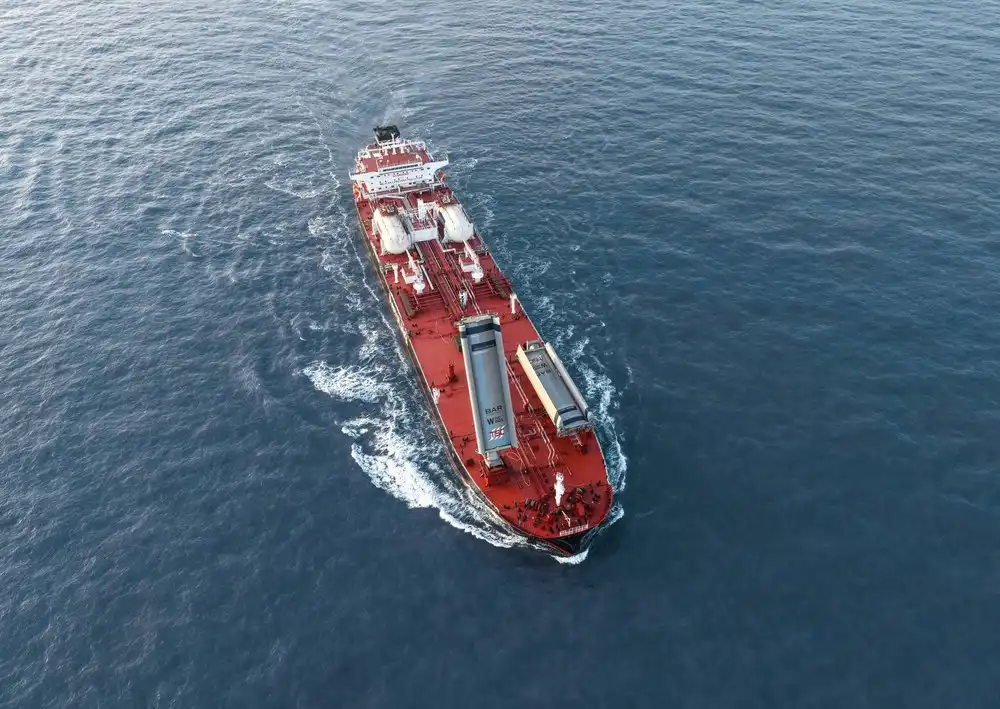
Understanding Wind Propulsion Systems for Ships
Environmental rules and business pressures have led to a renaissance in the marine sector's use of wind energy. Wind Propulsion System technology for tankers and cargo ships uses aerodynamics to make forward thrust, which can be used in addition to or instead of engine power.
Evolution from Sails to Modern Wind Assist Technology
In the past, sailing boats used cloth sails and rigging that had to be done by hand. Today's systems are a huge step forward in engineering complexity. Today's ideas for wind movement include rigid wings, rotor sails, and automatic control systems that change based on the wind. IMO goals to cut greenhouse gas emissions by at least 50% by 2050 compared to 2008 levels, along with the start of carbon pricing systems like the EU ETS, sped up this change.
The WindWings® system is a good example of this new technology. This three-element stiff sail was made in collaboration with BAR Technologies in the UK. Its camber and angle of attack can be fully adjusted to give the best aerodynamic performance in a range of wind situations. Compared to single-element designs, the three-element configuration produces more than 2.5 times as much lift, which results in better thrust efficiency. Independent testing by the Wolfson Unit and validation by DNV show that it can save fuel in real life.
Core Technologies Behind Wind Propulsion Systems
The market for wind propulsion has a number of different types of technology. Rotor sails use the Magnus effect, which is when moving spheres make areas of different pressure. For example, CM Energy's TSC rigid wing sails work like airplane wings by using airfoil principles and electric actuators to change the camber and orientation. Soft sails and kite systems are other options, but fixed wings are most often used on trucks and bulk carriers because they are more structurally stable and can be automated.
Ship-grade steel and industrial E-glass composites are used in CM Energy's WindWings® to make sure they last in tough naval settings. The system's automated alignment adjusts the wing's orientation and camber shape all the time based on real-time wind data to make the most thrust. This smart change reduces the need for crew input—operation is similar to controlling deck cranes and doesn't require any special sailing skills.
Environmental and Economic Benefits
Wind-assisted transportation has two benefits: it lowers pollution and saves money. Less CO2, SOx, and NOx pollutants happen directly when fuel use goes down. Every WindWings® unit can save up to 1.6 tons of fuel every day per wing, which is the same as removing 5.12 tons of CO2 from the air. Multiple wings on a single ship have a big effect on the environment over the course of a year.
The economy benefits in more ways than just bunker savings. Better CII scores make chartering more competitive, since cargo owners want ships that are better at protecting the atmosphere. Access to green financing options and the chance of tax breaks or lower rates under carbon pricing plans make the business case even stronger. Shipowners say that payback times are looking better as fuel prices stay unstable and fines from the government get harsher.
Challenges and Solutions in Adopting Wind Propulsion Systems for Tankers and Cargo Vessels
Making the switch to wind-assisted propulsion is not easy from a technical, operational, or financial point of view. Knowing about these problems and how to solve them lets you make smart choices about buying.
Technical Integration with Existing Vessels
Putting wind propulsion technology on tankers and cargo ships that are already in use requires a structural assessment and reinforcement. Large wing structures put dynamic loads on deck foundations, which must be able to handle it, especially in bad weather. Naval engineers do compatibility analyzes, which look at how stress is distributed in the ship and how that affects stability.
CM Energy handles these worries by offering full installation help. Engineering teams check the structural soundness of each vessel and come up with unique installation solutions that meet the standards of the classification society. There are both above-deck and below-deck versions of the WindWings® system. The wings can be tilted so that they can lay down during cargo operations or port calls. This design flexibility keeps hatch covers and cargo handling equipment from getting in the way as little as possible, which is very important for bulk ships where deck room is used up quickly.
Operational Reliability Across Diverse Conditions
In marine environments, salt corrosion, extreme temperatures, and mechanical wear and tear can happen to equipment. In subtropical heat, polar cold, and tropical storm conditions, Wind Propulsion Systems must operate consistently. Automated control systems must safely react to sudden storms or changes in the wind, stopping the structure from overhealing or becoming too heavy.
Strong building standards are built into the TSC WindWings® system. Hydraulics and control parts made for marine use go through a lot of tests. The wing control and safety system constantly checks the plane's performance and sounds health and safety alarms. The system also allows for human override so that the crew can take action. When bad weather hits, the system automatically flaps the wings in the wind or pulls them back, which reduces drag and protects vital parts.
Validation in the real world backs up this trustworthiness. Bulk carriers with WindWings® have been in service for long periods of time, making calls at more than twenty major ports around the world without any problems. This track record gives procurement teams faith in the long-term reliability and safety of the system.
Financial and Logistical Considerations
Wind Propulsion System investments require coordinated installation, crew training, maintenance, and drydock planning to minimize revenue loss. CM Energy provides factory testing, installation support, training, long-term service, and IoT-enabled remote monitoring. WindWings® offers a 25-year design life and transferability between vessels, improving flexibility and long-term value for fleet owners.
Comparing Wind Propulsion Systems with Traditional and Alternative Technologies
Before you can judge wind-assisted propulsion, you need to know where it fits in the larger world of marine propulsion options.
Wind Propulsion Versus Conventional Diesel Engines
Traditional diesel engines are the most common type of propulsion for ships because they are reliable and can use any bunkering infrastructure around the world. But they put out a lot of pollution and leave owners open to changes in fuel prices and carbon taxes. By moving power needs and lowering fuel burn, Wind Propulsion Systems supplement rather than replace main engines.
Wind power can save anywhere from 5% to 30% on fuel costs, based on the route, the amount of wind, and how the system is built. Trans-ocean routes with steady trade winds, like those that connect China and Brazil or Australia and Europe, are the best places to save money. Documented fuel savings are achieved by WindWings® systems, which have been proven to work in the real world by DNV. These savings can be used as clear performance benchmarks for calculating ROI.
Wind Assist Technology and Emerging Alternatives
LNG engines, systems that run on methanol, and battery-electric drives are some other types of power technologies. All of them have their own pros and cons. LNG cuts down on SOx and particulate emissions, but it is still a fossil fuel, so there are concerns about methane slip. Methanol and ammonia fuels promise to be carbon neutral if they are made from green sources, but there is still not a lot of infrastructure available.
These other options aren't complete without wind propulsion technology, which cuts emissions right away without needing new fuel supply chains or engine upgrades. Hybrid designs that combine wind assistance with LNG or methanol propulsion offer layered decarbonization methods that lower carbon intensity over time as the supply of renewable fuels grows.
Battery-electric propulsion works well for short-sea and coastal tasks, but it doesn't have enough energy density for tanker and cargo ship operations at depths. This is where wind motion comes in, giving extra power on long trips where charging batteries isn't possible.
Supplier Landscape and Technology Selection
There are a number of well-known companies in the Wind Propulsion System market, and each one offers a different set of technologies. Rotor sails, rigid wing sails, and kite systems all compete based on how well they work, how hard they are to build, and how they need to be used.
Procurement experts should look at classification society certifications, real-world performance validation, and lifecycle support skills when choosing providers. The DNV, Bureau Veritas, Lloyd's Register, and CCS certifications for CM Energy's WindWings® system mean that it meets international safety and quality standards. The partnership with BAR Technologies brings aerodynamic knowledge from Formula 1, and software for IoT monitoring and weather routing improves performance on the fly.
WindWings® are different from single-element competitors because they have a three-element stiff wing design that gives them better lift-to-drag ratios and makes power generation more efficient. The system comes in three model sizes to fit a wide range of vessel shapes, from handysize to capesize pieces.
Procurement Guide: How to Choose and Buy Wind Propulsion Systems for Tankers and Cargo Vessels
To choose the right Wind Propulsion System option, you need to carefully look at technical, financial, and tactical factors.
Assessing Vessel Compatibility and Operational Profile
First, look at the operational profile of your fleet. Things about a route, like the direction of the wind, the length of the trip, and the speed that is needed, directly affect how much fuel can be saved. Ships that work in windy areas make more money than ships that work on paths where wind isn't always available. Weather planning software can compare past wind data to planned routes to figure out how much money could be saved.
An assessment of structural compatibility is necessary. For older ships, the deck may need to be strengthened to support the foundation loads, but mounting structures can be built into newer ships while they are being built. System configuration choices are affected by how the hatch covers are set up, where the cargo handling equipment is placed, and airflow restrictions under the bridges.
CM Energy offers compatibility research services that compare the specs of a vessel with the installation standards for WindWings®. Engineering teams simulate how much weight is on a structure, how it will affect stability, and how much space is needed for operations. They then produce detailed feasibility reports that help boards make funding decisions.
Cost-Benefit Analysis and ROI Modeling
ROI analysis should balance capital and operating costs against fuel savings, improved charter rates from better CII performance, and potential carbon-credit revenue. Models should account for fuel prices, carbon costs, and charter-market changes. Independently verified WindWings® savings, a 25-year design life, and transferability between vessels strengthen long-term value.
Supplier Evaluation and Contract Negotiation
Ask several providers for detailed technical offers and compare the specs for aerodynamic performance, the control system's abilities, and the lifecycle support services they offer. Classification society certifications show that rules are being followed, and reference installations show how well something works in real life.
The warranty coverage, performance guarantees, maintenance service agreements, and availability of spare parts should all be spelled out in the contract terms. IoT tracking features allow for remote diagnostics and efficiency improvement, which increases the uptime of the system. Training packages that make sure team members are competent lower practical risks during the first stages of launch.
CM Energy has solutions that are made to fit both retrofit projects and new construction integrations. As a reliable provider of Wind Propulsion Systems, CM Energy offers full support, from the original feasibility studies to installation, testing, and ongoing services throughout the system's lifetime. Get in touch to learn more about how WindWings® technology can improve the economic and environmental performance of your fleet.
Future Trends in Wind Propulsion Technology for Maritime Shipping
Wind propulsion technology keeps getting better thanks to new materials, digitization, and regulatory progress.
Materials and Design Innovations
Advanced composite materials make systems lighter while also making them last longer and be less likely to break down over time. Better resin formulas and carbon fiber reinforcements make things last longer and require less upkeep. Aerodynamic improvements, based on computational fluid dynamics modeling and testing in a wind tunnel, maximize lift and reduce drag losses as much as possible.
Scalability is made easier by modular designs, which let shipowners add systems in stages as their capital budgets allow. Folding and telescoping devices make operations more flexible by making it easier to work with different types of port equipment and goods.
Automation and Digital Integration
Artificial intelligence programs make the best changes to the wing's direction and camber in real time, so they can react to changes in the wind faster than a person could. Machine learning models look at past performance data and guess what the best route and sail setups will be for future trips. When integrated with the ship's energy management systems, wind assist works with engine loads to make the whole power system more efficient.
Satellite wind data and numerical weather prediction models are used by weather routing platforms that are designed specifically for wind-assisted vessels. Web interfaces let teams on land and on board access these tools, which lets them plan trips together and keep an eye on performance.
The WindWings® system from CM Energy includes advanced weather routing software that gives bridge officers automated workflow tools that make it easier for them to make decisions. Real-time thrust performance reporting keeps track of how much fuel is being saved, which helps with clear ESG reporting and charter talks.
Regulatory Drivers and Market Adoption
IMO net-zero targets, CII requirements, EU ETS, and FuelEU Maritime increase pressure to reduce emissions and improve WPS investment economics. Harmonized classification rules and greener financing further support adoption. Early adopters gain lower operating costs, stronger charter-market positioning, and ESG advantages, while expanding supply chains gradually reduce technology costs.
Conclusion
Wind power technology has grown into a workable and tested option for tankers and cargo ships that need to reduce their carbon footprint and meet economic needs. Modern systems like CM Energy's WindWings® Wind Propulsion System save a lot of fuel, help with regulatory compliance, and have environmental, social, and governance (ESG) benefits. They are backed by licenses from independent testing and classification societies. Adoption needs careful technical evaluation and budgeting, but implementation risks are lower when suppliers offer full support and performance has been shown in the real world. As regulations get stricter and technology keeps getting better, wind-assisted power will become an even more important part of sustainable marine operations. It will give ship owners real ways to set their fleets apart from the competition and make them more reliable in the long term.
FAQ
1.What fuel savings can a wind propulsion system realistically achieve?
How much fuel is saved depends on the distance, the speed of the vessel, and the amount of wind that is available. Usually, cuts range from 5% to 30% per year. Trans-oceanic routes with steady trade winds save the most money. Coastal routes or places with changing winds save less, but still make a difference. WindWings® systems have been shown to save up to 1.6 tons of weight per day per wing. This has been proven through real-world operations overseen by DNV. This gives procurement teams clear performance standards.
2.Does installing a wind propulsion system affect vessel stability or cargo capacity?
During planning, engineering analysis is used to carefully handle the effects on stability. Classification societies need stability guides that are up-to-date and take into account wind heeling moments and extra topside weight. Modern systems, like WindWings®, have tilt devices that let the wings move into laydown positions. This lowers the risk of heeling while carrying goods. Strategic placement between cargo holds minimizes the need for deck space while keeping full hatch cover ease and cargo handling functionality.
3.How does the system perform during storms or extreme weather?
During bad weather, automated safety protocols keep ships safe. When the wind speed goes above certain levels, control systems instantly feather the wings into the wind or pull them back completely. This gets rid of drag and structural loads. With manual override, the crew can step in if they need to. WindWings® has full health and safety monitoring, sounding alarms and taking protective actions on its own to make sure the structure stays strong and operations are safe in all kinds of weather that come up during global trading.
Partner with CM Energy for Advanced Wind Propulsion Solutions
With tried-and-true Wind Propulsion System technology, CM Energy is ready to help your fleet work toward a lower carbon footprint. As a top maker of Wind Propulsion Systems, we mix cutting-edge aerodynamic design with full lifecycle services to save you money on fuel and make sure you follow all the rules. With certifications from DNV, BV, LR, and CCS, our WindWings® system has a design life of 25 years, multiple installation options, and IoT-enabled performance optimization. Whether they are adding systems to newbuild projects or upgrading old tanks and cargo ships, our engineering teams help with everything, from figuring out if the project is even possible to starting it up and keeping it running. Visit cm-energy.com or email info.cn@cm-energy.com to learn more about how TSC Wind Propulsion System solutions can help your fleet be more environmentally friendly and competitive in the market.
References
1. International Maritime Organization. (2023). Fourth IMO Greenhouse Gas Study: Executive Summary. London: IMO Publications.
2. Smith, T., Raucci, C., Hosseinloo, S. H., & Rojon, I. (2022). Wind Propulsion for Ships: Economic and Emissions Impact Analysis. London: University College London Energy Institute.
3. DNV GL. (2024). Alternative Fuels and Wind-Assisted Propulsion: Pathways to Decarbonization. Høvik: DNV Maritime Technical Publications.
4. Lloyd's Register & UMAS. (2023). Zero-Emission Vessels 2030: Technology Readiness Assessment. Southampton: Lloyd's Register Marine & Engineering.
5. European Commission. (2023). FuelEU Maritime Regulation: Implementation Guidelines for Shipowners. Brussels: Directorate-General for Mobility and Transport.
6. International Windship Association. (2024). Wind Propulsion Market Report: Installation Trends and Performance Data. London: IWSA Industry Research.