Step-by-Step Guide to LNG Fuel Supply System Installation on Newbuilds
Installing an LNG Fuel Supply System on newbuild vessels requires meticulous planning, technical precision, and adherence to international maritime standards. This system enables vessels to operate on liquefied natural gas, meeting IMO Tier III emissions requirements while reducing operational costs. Our guide walks through the entire installation journey—from initial planning to commissioning—helping shipyards, naval architects, and project managers execute seamless deployments. Whether integrating high-pressure systems for MAN GI engines or low-pressure configurations for Otto-cycle propulsion, understanding each installation phase ensures safety, regulatory compliance, and long-term operational reliability.
Understanding LNG Fuel Supply Systems and Their Importance in Newbuilds
LNG Fuel Supply Systems are a big step forward in maritime propulsion technology that meets the needs of both the environment and operational efficiency. These systems control how liquefied natural gas is stored, conditioned, and sent from cryogenic tanks that stay at -162°C to engines that need certain temperature and pressure conditions.
Core Components and Functionality
C-type insulated storage tanks, cryogenic transfer pumps, vaporizers, pressure build-up units, and complex control systems make up the usual system design. MAN GI engines with high-pressure setups pressurize LNG above 300 bar using PVU technology. This drastically lowers methane slip to about a tenth of what it is in regular gas engines. Low-pressure versions work with Otto-cycle engines at levels below 16 bar, making installation easier and requiring less money.
Regulatory and Environmental Drivers
The International Maritime Organization's Carbon Intensity Indicator and Emission Control Area rules are putting more and more pressure on shipowners. Adopting LNG is a practical way to reduce carbon emissions; compared to marine diesel oil, it cuts sulfur oxide emissions by 99% and nitrogen oxide emissions by up to 85%. The fuel supply system is the technological backbone that makes this transition possible, so installing it correctly is very important for compliance and operational success.
Design Considerations for Newbuild Integration
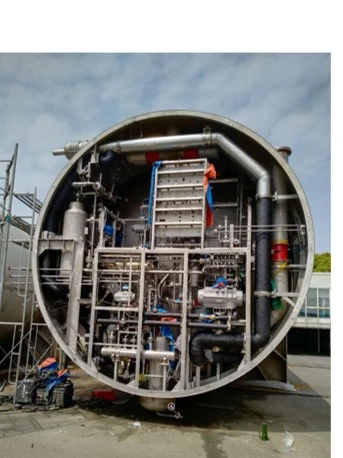
Integrated Tank Cooling System designs in modern setups make the best use of space by putting equipment and pipes inside enclosed cold boxes. This method, which was first used by manufacturers like TSC, lowers the size of the footprint that needs to be built. This is very important for types of ships like PCTCs and container ships where cargo capacity directly affects profits. To deal with the risks that come with working with volatile cryogenic fuels in marine environments, safety features like double-walled pipes that are constantly inspected, emergency shutdown systems, and gas detection networks are used.
Preparing for LNG Fuel Supply System Installation: Preconditions and Planning
For installation to go smoothly, a lot of work needs to be done to get ready, starting months before the first part even gets to the shipyard. In this phase, the technical and logistical frameworks are set up to support all activities that come after.
Technical Specification Development
Finalizing fuel demand estimates requires project teams to look at expected operating profiles, such as trip patterns, main engine load factors, and auxiliary power needs. By matching the LNG Fuel Supply System's ability to the requirements of the propulsion system, you can avoid expensive oversizing or risky undersizing. Working together with other engine manufacturers is important because systems that work with WinGD X-DF engines need very different pressure levels than systems that work with MAN ME-GI powerplants.
Supplier Selection and Technology Validation
Procurement managers look at possible system providers based on strict criteria, such as their working track records on similar vessel classes, classification society approvals from DNV, ABS, CCS, Lloyd's Register, or Bureau Veritas, and proof that they can provide support after the sale. TSC's low-pressure systems have been used successfully on business boats for over twelve months, showing that they are reliable. Meanwhile, MAN's high-pressure offerings provide important guarantee for advanced propulsion configurations.
Regulatory Compliance Framework
It is very important for installation teams to fully understand the IGF Code rules for gas-fueled ship installations, the ISO standards for cold equipment, and the rules that are unique to each flag state. Getting involved with classification societies early on speeds up the design approval process and keeps the project on schedule when technical questions come up during construction. Preparing documentation, such as HAZID studies, fire safety analyzes, and air estimates, should start during the planning phase, not after the building starts.
Step-by-Step LNG Fuel Supply System Installation Process
The steps for installation are carefully planned out, with each step building on the ones that came before it to make a fully functional system.
Phase One: Site Preparation and Logistics
The first step in installation is to prepare specific areas inside the vessel frame. Teams in the shipyard check the integrity of the foundation and make sure that the mounting surfaces are level and that the structure can hold the weight. Lifting paths for big parts like C-type tanks need to be approved, taking into account openings above and turning circles. Before the installation starts, checks make sure that the accepted design plans match up with the electrical penetrations, cable routing, and pipe pass-throughs.
Material staging areas close to the installation site speed up work and lower the risks of handling parts. Cryogenic parts need extra care—storing them in climate-controlled areas keeps wetness from getting in and affecting the performance of vacuum insulation.
Phase Two: Mechanical Component Installation
The first step in mechanical installation is to place and secure the main LNG storage tanks. Heavy-lifting equipment is needed to precisely place these large assemblies. The mounting brackets must be torqued to specification, and anti-vibration measures must be put in place according to classification requirements. To keep cryogenic connections from getting stressed, the orientation of the tank must exactly line up with the points where the pipes meet.
The next step is to install transfer pipes. The pipes between the tanks and the heating equipment will be vacuum-insulated. Welding procedures need certified cryogenic welders who follow the rules for accepted weld methods. Radiographic testing confirms that all welds are solid at vital points, especially those that are subject to changing thermal stresses. At certain places, pressure relief devices, manual isolation valves, and emergency stop valves are all connected, and the ways they work have been tried to make sure they are easy to use and accessible.
The skid for vaporization and pressure regulation comes as a pre-built module, which makes installation easier and cuts down on the time needed for assembly on board. When you mount something, you have to be very careful to line it up with the structural steel interfaces and connect it to the liquid feeds and gas distribution manifolds that come in and go out. Boil-off gas control parts, like gas combustion units for getting rid of extra BOG, connect to the main system. This lets the system work in a variety of load situations.
Phase Three: Electrical and Control Integration
When a control system is installed, mechanical parts are turned into an automatic, smart fuel supply network. Programmable logic controllers are housed in climate-controlled enclosures and are linked to field instruments throughout the system by two separate communication networks. Temperature sensors, pressure transducers, level gages, and flow meters all give real-time operational data that makes it possible to precisely condition and deliver fuel.
There are gas detection monitors in closed areas and ventilation ducts that let you know right away if there are any possible leaks. These safety-critical tools are linked to alarm systems and emergency shutdown logic, which makes sure that they are quickly cut off if dangerous conditions arise. Integration with the ship's integrated automation system lets the bridge check on the fuel supply state and fix problems from afar.
Phase Four: Testing, Commissioning, and Certification
Before handing over operations, thorough testing makes sure that the system is working properly. Helium detection is used on all cryogenic parts during leak tests to make sure they are gas-tight under pressure. In hydrostatic testing, piping systems are put under pressures that are higher than their maximum operating conditions. This makes sure that the structure is strong enough. During functional testing, each valve, sensor, and control loop is put thru its paces, and reaction times and setpoint accuracy are recorded.
During cold commissioning, LNG is slowly added to the system under controlled conditions. Parts are carefully cooled to their working temperatures while problems with thermal shock or contraction are watched for. Performance testing makes sure that the rates of fuel supply are the same across the entire range of engine loads. Before giving out statutory certificates that allow commercial operation, classification society surveyors watch important tests and look over paperwork.
Maintenance and Safety Best Practices for LNG Fuel Supply Systems on Newbuilds
To keep the LNG Fuel Supply System's integrity throughout the ship's useful life, strict adherence to preventive maintenance plans and proactive safety management are needed.
Items and supplies that wear out over time are taken care of in routine repair plans. Cryogenic pump seals need to be replaced every so often based on the number of hours they've been used. The condition of the seals can be tracked by looking at vibrations and temperature trends. Inspections of the packing around valves find damage before it leaks, and filter elements that protect instruments need to be cleaned on a frequent basis. Vacuum-insulated pipes need to have their vacuum integrity checked on a regular basis to make sure they keep working properly and safely.
To fix common operating problems, you need to know a lot about them. Changes in pressure are often caused by vaporizer capacity not matching up with instantaneous engine demand. This means that flow rates of the heating medium need to be tuned. Sensor shift affects the accuracy of control, so calibration must be checked against reference standards. If BOG builds up faster than usual, it could mean that the insulation in the tank is breaking down or that too much heat is coming in from nearby areas.
Both machine safety and human factors are emphasized in safety measures. Emergency reaction drills help the crew get used to shutting down, responding to leaks, and fighting fires in ways that are specific to gas fuel dangers. Every month, the gas detection system is tested to make sure the alarms work and that the evacuation plan is followed. Maintenance work in dangerous areas must follow the steps for a hot work permit, including checking the atmosphere and keeping an eye on the work at all times to avoid sparks.
Optimizing LNG Fuel Supply System Performance and Future-Proofing Your Investment
To get the best return on investment, you need to keep looking at performance and planning for improvements after the initial installation.
Performance Monitoring and Efficiency Analysis
Key performance factors, such as the rate of fuel consumption, the amount of BOG produced, the efficiency of the vaporizer, and the amount of power used by the pump, are tracked by advanced tracking systems. By comparing real performance to design baselines, chances to improve performance can be found. If there is too much BOG, the tank may need better protection or a new plan for heating the cargo. If the pump isn't working well, it could mean there are cavitation problems that need changes to the flow pressure.
Using real-time data on fuel use along with voyage analytics to find the best routes that balance speed needs with fuel economy is possible. Predictive maintenance programs look at patterns in equipment to predict when parts will break before they do. This method, which is based on data, cuts down on unplanned downtime and makes the best use of repair resources.
Environmental Performance and Compliance
Quantifying environmental benefits makes sustainability reports and communications with stakeholders stronger. When compared to heavy fuel oil, LNG-fueled ships produce a lot less pollution. They almost completely get rid of sulfur fumes and particulate matter, and they cut their carbon dioxide output by about 20%. High-pressure systems cut down on methane slip even more, which eases worries about fugitive greenhouse gas emissions that might cancel out the carbon benefits.
Regulatory environments are always changing, and there may be future rules about measuring and reporting methane. Advanced leak detection and emissions tracking systems set up boats well for future requirements, so they don't need to be retrofitted, which can be expensive.
Technology Upgrades and Retrofit Considerations
Modular fuel supply systems can be updated in the future without having to be replaced completely. Upgrades to the control system make it possible to add new digital technologies, such as optimization based on artificial intelligence, fuel tracking based on blockchain, or online diagnostics. Adding hardware like better BOG reliquefaction units or fuel conditioning modules lets systems adapt to changing needs or changes in fuel quality.
As LNG bunkering infrastructure improves, ships that were originally built with low-pressure systems for dual-fuel engines might be able to be converted back to running on pure gas. On the other hand, adding diesel backup options gives operations more freedom in places where bunkering is scarce. Planning for these kinds of changes during the initial installation—by using extra power supplies, backup pipe penetrations, or modular skid designs—hugely lowers the costs of making changes in the future.
Conclusion
Installing an LNG Fuel Supply System on brand-new ships is a difficult task that can be completed if done in a planned way. The technical roots are set up by good planning, safety and efficiency are ensured by careful installation, and long-term value is maximized by ongoing optimization. As the process of reducing carbon emissions in the maritime sector speeds up, these systems offer useful ways to make operations cleaner while still making the business viable. Shipyards and owners who know the best ways to install ships are in a better position to succeed in a business that is becoming more and more focused on environmental performance and following the rules.
FAQ
1.What is the typical installation timeline for an LNG Fuel Supply System on newbuilds?
Installation times depend on the type of vessel and how complicated the system is, but they are usually between four and six months from the start of technical work to the end of commissioning. It takes longer to integrate high-pressure systems that serve big container ships or PCTCs than it does for smaller low-pressure systems. Some activities on the critical path are approval rounds for classification societies, plans for cryogenic welding, and testing processes that can't be sped up without risking safety.
2.How does an LNG Fuel Supply System differ from conventional marine fuel systems?
When liquid fuels are at room temperature, conventional systems handle them by pumping and filtering. LNG systems handle cryogenic liquids that need special insulation, phase-change processes that use vaporization equipment, precise pressure control that matches the needs of the engine, and complex safety systems that deal with the risks of gas spreading. Because the operations are so complicated, the pilots of the ships and the people who do the repair need special training.
3.Can existing vessels retrofit LNG Fuel Supply Systems, or are they only viable for newbuilds?
Retrofits are still technically possible, but they face big problems, such as not having enough room to place tanks and having to deal with complicated governmental approval processes. Newbuild installations are more cost-effective and less disruptive because the system can be integrated while the building is going up instead of taking operational assets out of service. The economics of retrofitting are better for ships that still have a lot of useful life left and for lines that consistently provide access to LNG bunkering.
Partner with CM Energy for Turnkey LNG Fuel Supply System Solutions
CM Energy offers complete fuel gas supply options backed by years of experience in building and manufacturing. Our TSC brand systems, which include both low-pressure versions that are used on commercial ships and high-pressure versions that were created thru strategic collaboration with MAN, give shipyards and owners installations that are reliable, take up little space, and meet the strictest technical requirements.
We help with your project from the first design consultation thru commissioning and beyond, with lifecycle services that make sure it keeps working well. Our relationships with classification societies and engine makers make the approval process faster and easier, and our C-type tank combination with TCS cold box technology makes the best use of space. Whether you're a shipyard looking at system choices or a company that makes LNG Fuel Supply Systems looking for a reliable provider, our team has the technical depth and business freedom that your project needs.
You can talk to our experts about your needs by emailing info.cn@cm-energy.com or going to cm-energy.com. Allow us to show you how our tried-and-true solutions can lower the risk of your newbuild program and put your ships at the head of reducing carbon emissions in the marine sector.
References
1. International Maritime Organization. "International Code of Safety for Ships Using Gases or Other Low-flashpoint Fuels (IGF Code)." London: IMO Publishing, 2015.
2. Levander, K. "Dual Fuel Engines: Latest Developments and Future Trends in Ship Propulsion Technology." Journal of Marine Engineering and Technology, vol. 18, no. 2, 2019, pp. 87-103.
3. Det Norske Veritas. "Rules for Classification of Ships: Gas Fuelled Ship Installations." Høvik: DNV GL, 2020.
4. American Bureau of Shipping. "Guide for Propulsion Systems for LNG Carriers and Other Gas Fueled Vessels." Houston: ABS Publishing, 2018.
5. Hansen, J.F. and Lysebo, T. "Operational Experience with LNG Fuel Supply Systems on Commercial Vessels: Safety and Performance Analysis." Marine Technology Society Journal, vol. 53, no. 4, 2021, pp. 45-62.
6. Wärtsilä Corporation. "Encyclopedia of Marine Technology: LNG as Marine Fuel." Helsinki: Wärtsilä Technical Publications, 2022.