Wind Assisted propulsion System Benefits Explained
Wind assisted propulsion systems deliver measurable fuel savings and emissions reductions for commercial vessels by harnessing natural wind energy to supplement traditional engines. These aerodynamic devices—ranging from rigid sails to rotors—integrate seamlessly with existing vessel operations, offering ship operators immediate operational cost reductions while meeting stringent International Maritime Organization decarbonization targets. Modern systems like WindWings® utilize advanced control algorithms to automatically optimize sail angle and camber in real time, achieving verified performance gains across diverse trade routes worldwide.
Understanding Wind Assisted Propulsion Systems
What Defines Wind Assisted Propulsion Systems Today
Wind-Assisted Propulsion Systems are a new type of marine engineering that combines digital automation with aerodynamic principles. Instead of relying only on wind power like sailing ships did in the past, modern methods work with regular engines to cut down on fuel use without affecting plan reliability. These systems use different types of wind energy capture devices, like stiff wing sails, Flettner rotors, suction wings, and pulling kites, to make forward thrust that balances the load on the engine.
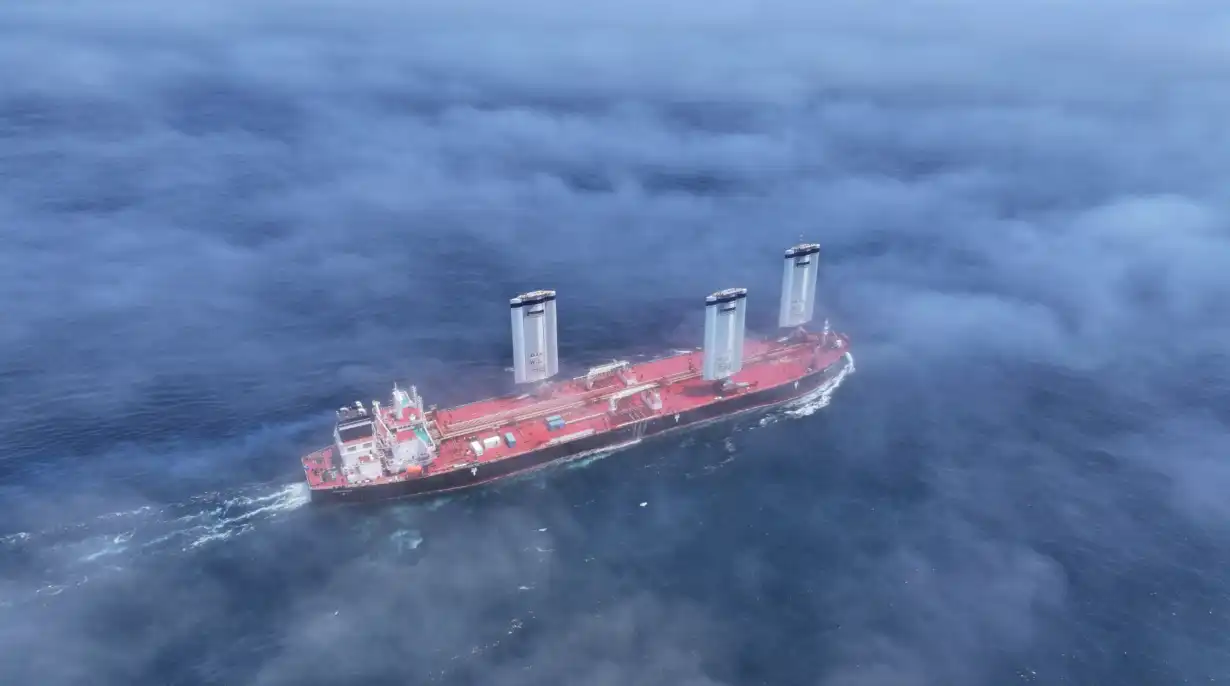
WindWings® technology, a three-element stiff sail with camber and angle of attack changes, illustrates this novel notion. BAR Technologies in the UK created the Wolfson Unit- and Lloyd's Register-approved system. Over 2.5 times the mechanical lift of single-wing designs. DNV certification verified performance claims using real-world operational data, not guesswork.
Core Components and Integration Principles
Modern wind power installations include multiple linked pieces that fit ship operations. The structural base's deck support systems manage wind loads and maintain ship stability. Control systems monitor wind, ship direction, and activities to automatically adjust sail form without human intervention.
The autonomous layer's connection to the ship's navigation systems allows everyone to cooperate during berthing, inclement weather, and cargo movement. Rigid wings rotate into a laydown position using hydraulic or electric actuators. This makes hatch operations on bulk ships easy and keeps the structure compatible with goods-moving gear. This operational flexibility addresses the practical constraints that prevented prior wind propulsion technologies from being extensively employed in industry.
Historical Evolution to Modern Solutions
The maritime industry's connection with wind power has altered significantly in recent decades. The earliest trial deployments in the 1980s experienced issues with control system stability, material durability, and integration complexity. Advanced composite materials, computational fluid dynamics models, and robotics have overcome these issues.
Energy conservation requirements and carbon intensity indicators have increased regulatory pressure on firms to implement them more quickly. WindWings® on Newcastlemax bulk carriers were successfully installed in over 20 major ports. This showed the technology is ready for widespread usage. Classification societies DNV, Bureau Veritas, and Lloyd's Register give explicit approval procedures. This helps shipowners decide whether to update or construct new installations.
Key Benefits of Wind Assisted Propulsion Systems for Ships
Quantified Fuel Savings and Cost Reduction
Examining actual performance data rather than potential maximums is necessary to comprehend the business case for Wind Assisted Propulsion Systems. Based on operational experience, yearly fuel consumption drops are usually between 5 and 15 percent for most business routes. In ideal conditions, savings can reach 30 percent or more on some trade lines. The WindWings® method has been shown to save 1.6 tons of fuel per day per wing on bulk ships. This means that when bunker prices stay unstable, the operating costs go down significantly.
Over the ship's lifetime, these savings pile up. A chemical ship with three wings and 300 days of operation might save thousands of tonnes of fuel over five years. Economic benefits are higher on long-haul routes where ships spend a lot of time in excellent wind. Short-sea operators benefit from route optimization systems that maximize wind at specific periods.
Installation costs vary on vessel type and design complexity, but most business systems have acceptable return timeframes. Operating loans let operators retain their cash and save on gasoline promptly. Standard five-year drydocking cycles match maintenance demands, preventing inconvenient service breaks.
Environmental Compliance and Emissions Reduction
Wind-Assisted Propulsion Systems minimize direct expenses and enable ships to fulfil increasing environmental regulations that impact their value and charterability. The Carbon Intensity Indicator scores of vessels that are in compliance increase by 5.12 tonnes of CO2 per day from WindWings® units. Since charter markets increasingly favour low-emission shipping, this environmental advantage has commercial worth.
Technology allows immediate compliance without waiting for fuel facilities. Due to their size and operation, LR2 tankers and Newcastlemax bulk ships must follow severe CII requirements. Wind power reduces emissions, keeping ships viable even as laws tighten. Another financial incentive is the EU ETS's carbon emission pricing.
Environmental benefits go beyond obeying the regulations; they include corporations' green pledges. Charterers increasingly require reduced emissions in bids. Ships with proven carbon-reduction technologies may enter new markets more easily. Ferry businesses serving environmentally conscious coastal cities demand emission-free port movement features that improve air quality.
Operational Flexibility and Performance Enhancement
Wind-Assisted Propulsion Systems improve working freedom. Automated control systems allow crews to organize wind-powered trips without training. When sailing, the technology works constantly and automatically adjusts to optimize performance as the wind changes.
Operations are reliable in every condition thanks to safety precautions. The wings feather or fold into safety without crew assistance during storms. This eliminates the safety risks of traditional sail handling. The 25-year plan lifetime is longer than most individuals buy a yacht for, and moving assets across boats retains their worth as the fleet evolves.
Commercial ship owners like combined power because it keeps ships on time. Wind systems operate with engines, unlike pure alternative transportation solutions, which need new infrastructure. Constant thrust helps Ro-Ro ships maintain tight port plans by reducing main engine wear. Coastal sailboat owners may manoeuvre their vessels without polluting, meeting local rules.
Comparing Wind Assisted Propulsion With Other Propulsion Technologies
Efficiency Analysis Across Propulsion Options
To compare wind power to other technologies, you need to know the specifics of the process and the routes that need to be taken. Traditional naval engines have been proven to work well, but they have to deal with rising fuel costs and a tax on carbon emissions. Solar propulsion is still limited by power density issues that keep big business ships from making a real difference in speed. Battery-electric devices don't produce any local pollution, but they can only store a certain amount of energy, which limits their range and carrying capacity.
By enhancing rather than replacing normal engines, Wind Assisted Propulsion Systems hold a special place. This mixed method gets around the infrastructure problems that make it hard to use renewable fuels while lowering pollution right away. The technology works best on routes with steady wind patterns, like trans-oceanic bulk ship deals, North Atlantic tanker routes, and coastal ferry operations that have good seasonal wind profiles.
Performance changes based on the type of craft and the features of the trip. Newcastlemax bulk ships have big decks that can fit multiple wing installations that produce a lot of thrust together. Lower windage profiles help chemical ships because they cut down on secondary drag. Commercial owners need to look at wind power as part of larger plans to reduce carbon emissions, which could include a number of different technologies that work together over time.
Leading Manufacturers and Product Differentiation
Many well-known wind propulsion firms provide distinct technological solutions. CM Energy and BAR Technologies provide WindWings® systems that have been validated and authorized by classification organisations. Cutting-edge aerodynamic design and CM Energy's manufacturing expertise, from delivering deck equipment to 25% of the world's drilling rigs, are combined in this alliance.
How goods manage airflow, automate, and install differentiates them. Because camber can be adjusted to optimize performance in various wind directions, three-element stiff wings provide greater lift-to-drag ratios than single-element variants. Different vessel sizes and operational demands may be accommodated by the system. 20m, 24m, and 37.5m span versions are available.
Quality assurance ensures 25-year product reliability. ISO-certified raw materials are examined before use. Industrial E-glass composites and ship-grade steel can withstand coastal corrosion and millions of load cycles. Classification society certification from DNV, Bureau Veritas, and Lloyd's Register demonstrates maritime safety.
Practical Considerations for Implementation
For wind power to function, vessel-specific parameters must be addressed. System design and location depend on deck space, stability margins, and cargo handling. Wings between cargo compartments make hatches accessible on bulk ships. However, tankers may arrange their systems to avoid pipeline or manifold interference.
Route study helps establish realistic performance objectives. Trans-Pacific flights feature distinct wind patterns from North Sea voyages, affecting fuel savings and payback time. Weather routing software optimizes trip planning for the wind, and web-based applications allow land and sea users to make real-time choices.
An update or fresh build makes installation harder or easier. New building design may maximize structural mounting and electrical linkages from keel laying. Retrofit setups need compatibility studies to ensure deck strength and power capacity. In assessment, installation, and commissioning, CM Energy employs its experience from over 350 deck crane installations worldwide to assist.
Technical Principles Behind Wind-Assisted Propulsion Systems
Aerodynamic Design and Performance Optimization
Through carefully designed aerodynamic profiles, Wind-Assisted Propulsion Systems turn wind energy into useful thrust. The basic idea is to create a lift force that is perpendicular to the direction of the wind and has a forward component that helps the craft move. Three-element wing designs work better because they control airflow across multiple areas that work together to increase lift and decrease drag.
Before construction, computational fluid dynamics models enhance design. Engineers simulate performance at various wind speeds and angles of attack to discover the ideal combinations. A wind tunnel verifies CFD projections to ensure real-world performance matches design. WindWings® aerodynamic qualities are independently tested by the Wolfson Unit, proving success to buyers.
Modern systems may automatically alter angle, unlike fixed-geometry ones. Special software continually positions and shapes the wings based on real-time wind data and vessel direction. Even when circumstances vary, this dynamic adjustment maintains maximum efficiency, giving consistent push throughout travels.
Integrated Control Systems and Hybrid Operation
Advanced control design permits hands-off operation with little crew assistance. Sensor systems track wind speed and direction, ship movement, and structural stresses. Information is transmitted to control programs that determine the ideal wing setup. Safety mechanisms immediately activate survival mode, feathering or folding wings to safeguard the structure in harsh weather.
The control interface resembles deck crane operating panels sailors are familiar with, requiring minimal training. The team may manually override as needed, but automated operation works best. Health monitoring systems monitor each part and issue maintenance notifications during drydocking.
Hybrid power synergy improves ship efficiency. Reduced engine load extends maintenance intervals and reduces emissions and fuel usage. Wind force and engine power vary with wind speed, ship load, and sea conditions. Control systems effectively provide push performance information to bridge workers in real time.
Maintenance Strategies and Lifecycle Support
Designing items that endure 25 years requires careful material selection and structural engineering. In poisonous seawater, marine-grade hydraulics and control components may operate constantly. Using maritime crane designs, bearing systems may survive a million cycles.
Conditions-based maintenance plans schedule servicing jobs alongside ship operations. Regular drydocking tests detect wear patterns before breakdowns. Long-term service packages forecast maintenance expenses, aiding lifecycle planning. Component flexibility allows you to replace components without reworking the system.
Remote monitoring helps mainland technical teams monitor performance trends and anticipate issues. IoT connection transmits operational data for continual analysis to enhance things and verify fuel savings claims. This data transparency provides charterers and financial entities investing in wind propulsion greater confidence.
Procurement Guide for Wind Assisted Propulsion Systems
Evaluating Suppliers and Technology Options
When purchasing managers look at Wind Assisted Propulsion Systems, they should set clear standards that cover things like technical ability, financial security, and support infrastructure. Quality certifications from classification groups are a basic way to make sure that a plan meets safety standards for the marine environment. Approvals from DNV, Bureau Veritas, Lloyd's Register, and the China Classification Society show that systems meet set requirements for structure and function.
Validating technology through real-world installations is more reliable than making claims about how well it will work in theory. WindWings® systems have been used for a long time on bulk ships that travel on a variety of global trade lines, showing that they are reliable. Independent confirmation by fluid dynamics research institutions adds more weight to the claims than just tests by the maker.
Leading providers are different from equipment vendors because they offer full help after the sale. CM Energy's global service network, which was built over many years of providing naval equipment, helps with technical issues during the installation, testing, and operating stages. More than 180 self-elevating platform installations around the world have helped improve the quality standards behind the TSC name. These installations have shown that the products are reliable in wind propulsion uses.
Budget Considerations and Financial Planning
When deciding how to invest in wind power, investors weigh the initial costs of installation against the expected cost savings and environmental benefits. Total project funds include the cost of buying tools, making changes to the structure, hiring people to do the installation work, and starting up the project. Costs change a lot depending on the type of vessel, the size of the system, and whether the combination is for a newbuild or a retrofit.
Different types of financing give owners who want to protect their cash flow more options. Operational lease agreements give ownership to specialized financial companies, and shipowners save money on fuel right away. When trying to get good environmental scores that raise hiring rates and vessel values, this method works especially well.
When figuring out payback, changes in fuel prices bring both risk and chance. To be conservative, financial models assume that bunker costs will be modest. Sensitivity analysis, on the other hand, looks at success across different price scenarios. When emissions trade systems get bigger, carbon taxes add more factors. When it comes to environmental compliance, wind power expenses are often worth it even if they don't save money on fuel.
Initiating Supplier Engagement
When shipowners start to look into wind propulsion, they should provide detailed information about their vessels, such as basic arrangement drawings, paperwork on their stability, and normal operating profiles. Route analysis data helps sellers make accurate predictions about how well their products will do based on actual trading trends instead of general assumptions.
When talking to suppliers, you should ask them about how the installation timeline will affect the ship's ability to make money, how the classification society approval process works, and what the guarantee terms are. Knowing what maintenance needs to be done and where to find spare parts can help keep operations running smoothly. By asking for customer examples, you can talk directly with operators who are in charge of similar setups.
Commercial ship owners, ferry owners, and newbuild builders looking for proven wind power options are welcome to contact CM Energy. Our engineering teams do compatibility analyses and performance forecasts that are based on the features and operating needs of each vessel. Get in touch with info.cn@cm-energy.com to talk about how WindWings® technology can help your fleet do better in terms of the environment and the economy.
Conclusion
Commercial vessel owners can benefit from Wind Assisted Propulsion Systems' confirmed fuel savings, emissions reductions, and regulatory compliance. Modern technologies, like WindWings®, get around problems that existed in the past by using automation, being reliable, and having a full support system. Chemical tankers, bulk carriers, LR2 tankers, and coastal boats can all get a lot out of the mix of instant cost savings and long-term environmental compliance. As rules about carbon emissions get stricter and fuel prices stay unstable, investments in wind power set fleets up for long-term economic success.
FAQ
1. How do wind propulsion systems affect vessel stability?
Wind-Assisted Propulsion Systems add windage area and mass at high altitudes, so stability tests are needed. To make sure that heeling moments stay within IMO safety standards, engineers do stability studies on both whole and damaged objects. The design of WindWings® includes structural mounting that evenly spreads loads and keeps safety margins throughout the working area. Classification societies check to make sure that rules are followed before approving operations.
2. What kind of upkeep do these systems need?
Five-year drydocking cycles line up with routine repair, which keeps working interruptions to a minimum. Some of the things that are done are checking the hydraulic system, lubricating the bearings, looking at the composite surface, and diagnosing the control system. Condition-based tracking finds patterns of wear before they lead to failure. Long-term service packages make repair costs more reliable. Instead of standard sail management, operations are more like operating a deck crane, making use of the crew's current skills.
3. Can existing vessels be retrofitted with wind propulsion?
It is technically possible to put retrofits on most kinds of commercial ships. The strength of the deck, its electrical ability, and its operational limits are all looked at in a compatibility study. Bulk ships and tankers with decks that aren't blocked off are the best options. Installation takes place during planned drydocking so that earning is interrupted as little as possible. CM Energy takes care of the whole retrofitting process, from the original review to crew training and installation.
Partner With a Trusted Wind Assisted Propulsion System Supplier
Through our relationship with BAR Technologies, CM Energy brings its proven experience making marine tools to wind propulsion technology. Because TSC has a history of providing important tools to the marine industries around the world, you can be sure that it will work well for 25 years. Our WindWings® systems save proven amounts of fuel and lower emissions. This is backed up by DNV validation and real-world operating data. Full lifecycle support includes managing the installation, teaching the crew, keeping an eye on the IoT's performance, and providing upkeep services through our global network. Our engineering teams offer custom solutions that meet your unique business needs, whether you're looking at ways to retrofit current fleets or incorporating Wind Assisted Propulsion Systems into newbuild designs. Get in touch with our technical experts at info.cn@cm-energy.com to talk about compatibility analysis, performance forecasts, and finance options that can help your fleet become carbon-neutral faster.
References
1. International Maritime Organization. "Guidelines for the Development of a Ship Energy Efficiency Management Plan." Marine Environment Protection Committee, 2021.
2. Traut, M., et al. "Propulsive Power Contribution of a Kite and a Flettner Rotor on Selected Shipping Routes." Applied Energy Journal, 2023.
3. Lloyd's Register. "Wind Assisted Ship Propulsion: Technology Assessment and Performance Verification Protocol." Maritime Decarbonization Research Division, 2022.
4. American Bureau of Shipping. "Guide for Evaluation of Wind Propulsion Systems on Commercial Vessels." Houston Technical Publications, 2023.
5. Nelissen, D., et al. "Economic Analysis of Wind Propulsion Technologies for Commercial Shipping." CE Delft Maritime Transport Studies, 2022.
6. DNV Classification Society. "Alternative Fuels and Wind Assist: Pathways to Maritime Decarbonization." Position Paper Series, 2024.