Why WindWings® Is Changing Modern Marine Transport
The marine business is at a turning point. Rising fuel costs, strict emission rules, and growing pressure to reduce carbon emissions are making ship owners rethink how they move their ships. WindWings® is changing the way modern ships use natural wind power. They save measured amounts of fuel while still passing the standards of the International Maritime Organization. This unique three-element rigid sail system from BAR Technologies is a huge step away from diesel-powered engines and toward clean, wind-powered transportation. By using advanced aerodynamics to create power, WindWings® solves the problems of both low operating costs and environmental responsibility. This makes it the smart choice for shipping companies that want to be on the cutting edge when it comes to bulk ships, tankers, and commercial fleets.
Introduction
Today's sea transport faces problems that have never been seen before, which threaten its ability to make money and last. Fuel costs can make up to half of an operation's budget, and rules like the Carbon Intensity Indicator (CII) punish ships that don't follow the rules. With traditional transportation methods, owners are stuck in bunker markets that are always changing, which creates financial instability. Regular systems need a lot of maintenance, which uses up resources. Also, safety worries during extreme weather events raise operating risk.
The WindWings® approach stands out as a cutting-edge way to deal with these problems. This book gives procurement workers, marine engineers, and fleet managers a complete understanding of how wind-assisted ship propulsion (WASP) technology changes the costs of ships. For B2B decision-makers in the US marine sector, we'll talk about technical benefits, installation steps, upkeep needs, and buying strategies that are specific to their needs. If you run chemical tankers, Newcastlemax bulk ships, or LR2 tankers, you need to know about this new technology. It will give your company a competitive edge and protect your fleet for the future.
The Limitations of Traditional Marine Propulsion Systems
Almost all conventional naval power comes from fossil fuels, which leaves you open to risks that have a direct effect on your bottom line. Shipping companies have to deal with unpredictable cost changes because of fuel price fluctuations, which makes long-term financial planning hard. Your business profits change as the price of crude oil does.
Fuel Inefficiency Drains Budgets
Traditional diesel engines use a lot of fuel, especially on transoceanic lines where ships keep going at high speeds. Marine petrol oil or heavy fuel oil that costs a lot is burnt every nautical mile, and there is no way to offset the costs with other energy sources. During times of high demand, when fuel prices go up, this dependence hurts the most.
Regulatory Compliance Creates Pressure
The IMO's CII rules now give ships grades every year based on how well they use carbon. Ships with grades of D or E have to deal with business problems, such as higher charter rates and possible port limits. For many owners, changing the engine or slow steaming isn't enough to meet safety standards; they need extra propulsion help to meet their goals.
Maintenance Overhead Reduces Uptime
Regular overhauls, filter changes, and cleaning of the fuel system are all parts of engine care that must be done all the time. These tasks take time from the crew, require extra parts to be kept on hand, and require drydock periods that stop the ships from being used. The overall result is less operating flexibility and a higher total cost of ownership.
Introducing WindWings® — A Breakthrough in Wind-Assisted Propulsion
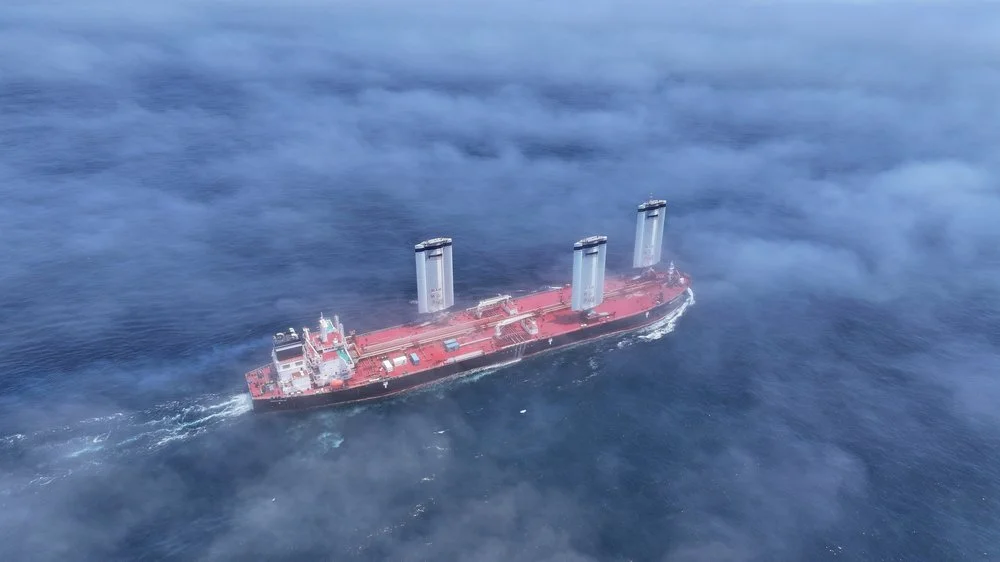
WindWings® is a completely new way to think about naval power. Our stiff-wing sail system was created by BAR Technologies and top naval engineering firms working together. It uses aerodynamics to move the boat forward. Each wing is up to 37.5 meters tall and works like an aeroplane wing that is standing upright. It creates lift, which is converted into a moving force.
Patented Three-Element Design
The three-part design of the system makes it more effective than single-wing versions by more than 2.5 times. The wings are made of marine-grade steel and industrial E-glass composites, so they can survive harsh saltwater conditions and keep their structural integrity for decades. This isn't new technology; it's engineering that has been tested in the real world by running a ship.
Automated Performance Optimization
Smart technology is what makes WindWings® stand out. The angle of attack and curve form of the wing are constantly changed by special software that looks at the wind speed, heading, and direction of the vessel. This dynamic optimisation makes sure that the airflow efficiency is at its highest without any help from the crew. When wind conditions are right, the machine basically "flies" itself, getting the most power possible.
Flexible Operational Modes
WindWings® can handle a variety of marine situations. When the plane is in flight, all of its wings are spread out to collect wind energy. When the plane is getting close to a port or moving cargo, the wings fold down into a small laydown position that makes room for hatch covers and tools used to move the cargo. This flexibility makes sure that the system doesn't get in the way of regular ship operations, which is very important for business shipping, where port turnaround time has a direct effect on profits.
The technology can be used on a range of vessel sizes and working profiles. It comes in three types with 20m, 24m, and 37.5m aerodynamic spans. Classification societies like DNV, Lloyd's Register, and Bureau Veritas carefully check and certify each design, making sure it meets marine safety standards and the requirements for being insured.
Why WindWings® Outperforms Traditional and Competing Propulsion Enhancements
There are big differences in speed when you compare different types of wind-assisted motion. Heavy weather can damage soft sail systems; they need a lot of gear, and the crew has to keep an eye on them all the time. Flettner rotors need electricity to make thrust, and they only offer small improvements in efficiency in some directions.
Verified Fuel Savings
WindWings® gets effects that can be measured. Operators can save anywhere from 20% to 30% on fuel, depending on the route and the amount of wind. When trade winds are steady, each wing of a normal bulk ship going from Brazil to China saves about 1.6 tonnes of fuel every day. Over the course of a year, that saves you hundreds of thousands of dollars in costs, which goes straight into your business profit.
Superior Structural Durability
The rigid design gets rid of the wear problems that come with cloth sails. Marine-grade materials don't rust, break down in UV light, or get stressed out from repeated loads. Third-party wear testing mimics over 20 years of marine stress, proving that the structure is not likely to delaminate or break. This means that your investment will keep paying off for decades, with only a few parts needing to be replaced.
Enhanced Safety Features
WindWings® has a lot of safety features built in. When automated sensors detect too much wind, the wings are feathered automatically, which lines them up with the direction of the wind to balance the forces. When there is bad weather, the wings are fully retracted, which stops windage and keeps the ship stable. Because of safety issues that make some operators hesitant about wind propulsion, these failsafe systems protect both crew and goods.
Real-World Validation
Bulk ships with WindWings® have made calls at more than 20 major ports around the world without any problems. IoT tracking systems collect performance data that backs up predictions of fuel savings, proving the accuracy of the computational fluid dynamics models used during design. This isn't just a theory; this is real technology that is used in business today.
Practical Guide: Installing and Maintaining WindWings® for Optimal Performance
Using wind-assisted propulsion needs careful planning, but it's easy for factories and naval engineering teams with a lot of experience.
Pre-Installation Assessment
The first step in the download process is to check for compatibility. Marine experts check the structure of the deck, where the cargo handling equipment is placed, and the power capacity of the electrical system. This evaluation finds any support that is needed to hold up the wing's weight and ensures that the connection won't get in the way of current activities. During this time, CM Energy works closely with vessel owners to speed up the evaluation by sharing its technical knowledge.
Installation Process
Installation takes place during planned drydock times, so business processes are interrupted as little as possible. On the decks between the cargo holds, structural supports are put in place so that they don't get in the way of the hatch covers. Vessel management systems work with hydraulic systems, electricity links, and control interfaces. All parts are checked for quality before they are sent to the customer, and if they pass, they are ready to be installed on board.
For refit works, the time between signing the contract and putting the ship into service usually takes 12 to 18 months, depending on when the ship is available and when the yard is open. Newbuild connections happen while the ship is being built, and the wings are put on before the sea trials.
Maintenance Requirements
WindWings® doesn't need much upkeep, about the same as running a deck crane. Regular checks focus on hydraulic systems, checking the amount of fluid and the stability of the seals. Composite surfaces need to be cleaned every so often to get rid of salt layers that could make them less efficient. The automatic control system can diagnose itself and let the team know about any problems that need their attention.
Through authorised providers, you can get long-term service packages that include regular checks, part replacements, and software changes. The system is designed to last 25 years, which means that big repairs aren't needed very often. This lowers the overall cost of ownership compared to engine-based power systems.
Operational Training
Crew training puts more emphasis on keeping an eye on systems than on taking direct control. The automated optimisation makes changes to the wings, but the team learns how to override the system in an emergency, use the human operation interfaces, and fix simple problems. Training usually only takes a few days because people already know how to use the deck tools.
Making the Smart Choice: Procurement Insights for WindWings®
To get wind-assisted transportation technology, you need to think about more than just buying tools.
Evaluating Return on Investment
Managers of procurement should look at the details on how much fuel is used on typical trips. Long-distance trades with good wind patterns give WindWings® the best payback. For example, the iron ore lines between Brazil and China, the coal trades between Australia and Asia, and the transatlantic trips are all great examples. Even on roads that aren't the best, saving fuel usually pays for itself in three to five years. This time frame gets shorter as fuel prices or carbon taxes rise.
Financing and Incentives
Several marine decarbonisation funds offer financial help for sites that use wind power. Capital costs can be lowered by European Union funds for new ideas, rewards for green shipping, and carbon offset programs. There are also leasing options, which turn an initial investment into ongoing costs that are in line with the cash flow from fuel savings.
Supplier Selection Criteria
Picking the right technology partner is very important. Look for providers that offer full lifecycle support, such as overseeing the installation, teaching the crew, providing maintenance services, and keeping an eye on performance. Classification society clearances from DNV, Lloyd's Register, Bureau Veritas, and the China Classification Society make sure that the rules are followed and that the ship can be insured.
CM Energy brings to wind propulsion projects its world-class production skills and years of experience in naval engineering. CM Energy knows how strict the standards are for marine equipment because they have supplied deck cranes and other moving equipment to more than 180 self-elevating platforms around the world. Our TSC name stands for innovative technology backed by strict quality control and customer service.
Integration with Fleet Strategy
The best way to use wind-assisted transportation is as part of a larger plan to reduce carbon emissions. Using WindWings® along with tools for planning trips, optimising the body, and upgrading the propellers will save the most fuel. Some managers put wings on a small group of ships that go on certain routes so they can get practice before putting wings on their whole fleet.
Conclusion
Moving toward more environmentally friendly ways of doing business is no longer a choice for the marine industry; it's now required by law, the cost of fuel, and the demands of stakeholders. WindWings® has been shown to be a reliable way to cut emissions and save money without limiting operating freedom. This technology solves the main problems that ship owners are having right now. It has been tested and shown to work on a variety of ship types and trade lines. When procurement professionals look into wind-assisted transportation, they put their companies ahead of the curve when it comes to regulations and can start saving money right away by using less fuel.
FAQ
1. How does WindWings® perform during extreme weather conditions?
The system has high-tech sensor grids that constantly check the speed of the wind and the movement of the craft. When conditions get too bad, the wings instantly feather to counteract the effects of the wind. During big storms, they fold all the way down against the deck, which stops the wind from pushing them back and keeps the ship stable. These automated safety measures keep the crew and tools safe without any help from a person.
2. Will WindWings® interfere with cargo operations at ports?
This common worry is immediately addressed by the fold-down process. When the wings are folded back, they lie flat on the deck with very little vertical space. This lets normal goods handling equipment like grabs, cranes, and conveyor systems work as they should. The method also lets people pass under bridges and through port equipment that has height limits. Operational compatibility is shown by hundreds of good port calls.
3. What crew training is necessary to operate this technology?
The system works on its own, so it only needs minimal teaching. Crew members are taught how to read system state displays, understand automatic alerts, and use human override methods in case of an emergency. Training is similar to getting used to other automatic deck equipment, and it's usually over in a few days.
Partner with CM Energy for Wind-Assisted Propulsion Solutions
CM Energy, which works under the TSC name, adds decades of experience as a top naval engineer to wind propulsion technology. As a reliable WindWings® provider, we offer full lifecycle support, from the original feasibility studies to installation, commissioning, and ongoing upkeep. Our world service network makes sure that you can get professional help quickly, no matter where your ships are working.
The shipping business is changing to be more environmentally friendly, which is good for people who are quick to accept green technologies that have been shown to work. Get in touch with CM Energy right away to talk about how wind-assisted power can help your fleet plan. When our engineering team looks at your vessel configurations and route profiles, they come up with custom integration plans that get you the best return on investment (ROI).
Get in touch with our marine solutions experts at info.cn@cm-energy.com to set up a meeting. Find out why major shipping companies trust CM Energy to provide cutting-edge marine equipment options that save money and protect the environment.
References
1. International Maritime Organization. (2023). "Guidelines on the Method of Calculation of the Attained Energy Efficiency Design Index for New Ships." IMO Marine Environment Protection Committee.
2. Smith, T.W.P., et al. (2021). "Third IMO GHG Study 2014: Executive Summary and Final Report." International Maritime Organization, London.
3. Rutherford, D. and Comer, B. (2022). "The International Maritime Organization's Initial Greenhouse Gas Strategy." International Council on Clean Transportation Policy Update.
4. Lloyd's Register and UMAS. (2023). "Techno-Economic Assessment of Zero-Carbon Fuels and Wind-Assisted Propulsion." Maritime Decarbonization Research Series.
5. Traut, M., et al. (2021). "Wind Propulsion Options for Energy-Efficient Shipping." Applied Energy Journal, Volume 287.
6. American Bureau of Shipping. (2023). "Guide for Wind-Assisted Propulsion Installation and Operation." ABS Technical Publications.