Why Automated Sail System Is Reshaping Smart Shipping
Wind-assisted power is changing the way ships work, and the Automated Sail System is at the heart of this change. It is possible for bulk carriers, tankers, and industrial teams to use less fuel, meet strict pollution rules, and work more efficiently with these smart systems that combine aerodynamic engineering with real-time control algorithms. The shipping industry is under more and more pressure to reduce carbon emissions while also dealing with changing fuel prices. Wind propulsion technology has been shown to help the industry make money in the long term without affecting operating dependability.
Understanding Automated Sail Systems: Technology and Components
From traditional canvas rigging to current wind power, the history of technology is truly amazing. Computers and materials science have made it possible for systems to work in ways that were impossible just a few decades ago.
The Technical Foundation of Modern Wind Propulsion
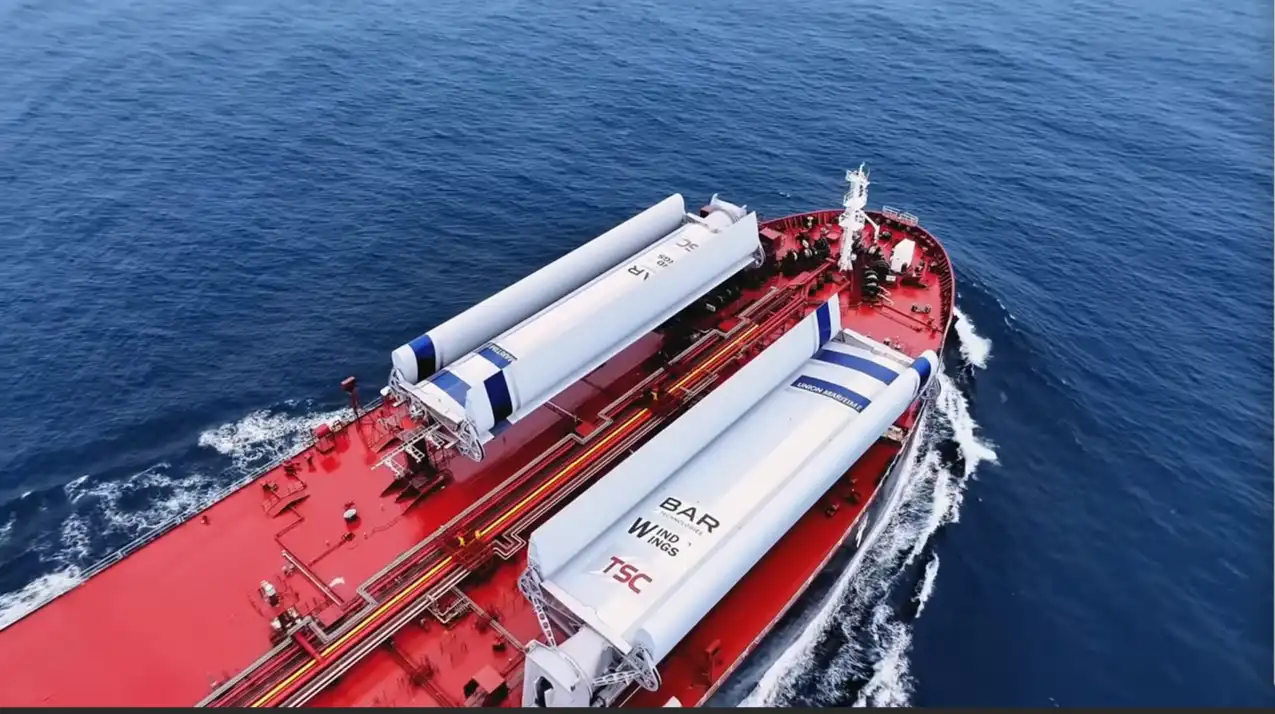
An Automated Sail System integrates anemometers measuring wind speed and direction, programmable computers processing environmental data in milliseconds, and hydraulic or electric actuators adjusting sail angles automatically. CM Energy's WindWings® three-element rigid sail design enables full camber and angle-of-attack variation, generating over 2.5 times the lift of single-wing sails. Structural components use marine-grade steel and industrial composites, certified by DNV, Bureau Veritas, and Lloyd's Register.
Electric Versus Hydraulic Actuation Systems
When procurement teams look at wind power technology, they often compare how electric and hydraulic drive systems work. Electric systems are good for ships with strong electrical infrastructure because they allow for precise control and less complicated repair. When mechanical power needs are higher than what an electric motor can handle, hydraulic options offer higher force output for bigger installations. CM Energy's TSC product line has 20m and 24m types that are powered by electricity. These models work reliably and are easy to connect to current vessel power systems. Both methods achieve the main goal, which is to automatically change the sails without having to do anything on the deck by hand.
Integration With Navigation and IoT Platforms
Modern wind transportation uses more than just mechanical parts. The Automated Sail System works perfectly with weather planning software, giving journey planners real-time information on thrust performance that helps them choose the best route. Web-based interfaces that management teams on land and on board can access allow constant tracking of operating state and fuel savings. This connection turns wind power from a passive extra system into an active part of the journey optimization strategy. It directly helps meet goals for the Carbon Intensity Indicator and the Environmental Efficiency Index.
Why Automated Sail Systems Are Essential for Modern Smart Shipping?
The marine business has to deal with three problems at the same time: rules that require lowering emissions, the need to keep costs down, and the need to keep schedules reliable. All three problems are solved at the same time by wind power technology.
Overcoming Traditional Sailing Limitations
In the past, sailing took a lot of skill from the crew, handling sails by hand was dangerous, and the boats couldn't change to quickly changing weather. These problems are taken care of by the Automated Sail System, which fully automates everything. Crew members start operations with simple controls that are similar to those used on deck cranes. They don't need to know anything special about rigging to do this. During storms, safety devices automatically feather sails to protect both people and equipment. As a result, safe auxiliary propulsion is available to regular business users who don't need special training.
Quantifiable Fuel Savings and Emission Reductions
Validation in the real world is more important than predictions based on theory. Bulk ships with wind propulsion systems have been able to save anywhere from 5% to 30% on fuel costs, based on the route and the amount of wind. When placed on bulk ships, the 37.5m WindWings® model has been shown to save 1.6 tonnes of fuel every day per wing, which equals 5.12 tonnes of CO2 every day per wing. These numbers, which were confirmed by DNV-supervised sea trials, give procurement managers accurate estimates of the return on investment (ROI). For a Newcastlemax bulk ship that sails transoceanic routes with good wind patterns, payback times always fall between 3 and 7 years, which is what financial interests want.
Reducing Crew Workload While Enhancing Safety
Automation changes the way operations are done. The Automated Sail System constantly checks the wind and changes the sail design without the team having to do anything. In rare cases, manual operation interfaces are still available, but for the most part, regular processes run themselves. This keeps crews from getting too tired on long trips and keeps them from having to do dangerous work on the deck when the weather is bad. Health tracking and warning functions built into safety systems give extra peace of mind by automatically starting defensive routines when parameters go beyond safe limits.
Real-World Performance Validation
It's natural to be skeptical about new technologies in the sea environment, since ships are expensive investments that need to be proven to work reliably. There is now a lot of practical history for wind power. Bulk carriers that use the Automated Sail System have been running nonstop for over a year and have made more than 20 calls at big foreign ports without any problems. This history shows that the ship can work with the current port facilities, handle goods, and meet the standards for stability. During cargo operations, the systems spin into laydown positions to keep hatch covers and cargo gear out of the way. When it's time to leave, the systems deploy automatically.
Selecting the Right Automated Sail System: Comparison and Procurement Guide
When making a procurement choice, you have to look at a lot of things, such as technical performance, source trustworthiness, lifecycle costs, and the ease of installation.
Assessing System Specifications for Your Fleet
Customised methods suit each vessel type. Chemical tankers with forward deckhouses need different mounting than bulk carriers with midship cabins. TSC brand offers 20m, 24m, and 37.5m aerodynamic length models, matching specifications to vessel dimensions. Procurement teams should request vessel-specific feasibility analyses verifying stability remains within classification society limits. LR2 tankers on specific trade routes can utilise wind power optimised for those routes.
Evaluating Supplier Credentials and Global Support
Automated Sail System technology selection extends beyond product specifications to supplier capability. CM Energy has supplied deck machinery to over 350 vessels and lifting systems to 180 self-elevating platforms worldwide. The company holds 159 approved patents including 10 invention patents, demonstrating genuine innovation. Global service networks support factory acceptance testing, compatibility analysis, installation coordination, and ongoing maintenance for 25-year operational life. Type approvals from DNV, Bureau Veritas, Lloyd's Register, and CCS accelerate project approval.
Financial Considerations and Partnership Models
One part of figuring out total costs is looking at capital expenditures. The difficulty of installation depends on the type of vehicle. It is cheaper to install equipment on new ships than on older ones, but both methods can still be used. New types of financing, like working leases and performance-based payment models, have come up that lower the amount of money that needs to be paid up front. When selecting wind power for multiple boats, procurement managers should ask about bulk buying options. Suppliers often offer better terms for adopting the technology across the whole fleet. Long-term service deals that include both preventative maintenance and new parts make costs more predictable, which helps with budgeting.
Operational Excellence: Maintenance and Reliability of Automated Sail Systems
For decades of reliable performance, upkeep must be carefully planned and parts must be built to last.
Preventive Maintenance Protocols
The Automated Sail System uses marine-grade components designed for corrosive saltwater environments. Routine maintenance aligns with normal drydocking schedules, minimising operational disruption. Inspection includes composite surface delamination checking, hydraulic fluid contamination testing, and electrical connection verification. These steps parallel standard deck crane procedures, requiring minimal additional crew training. CM Energy offers long-term service packages incorporating IoT sensor monitoring of vibration and motor current draw for predictive maintenance.
Reliability Advantages Over Manual Systems
Traditional soft sails don't last nearly as long as mechanical parts do. The rigid design keeps the cloth from getting damaged by UV light and wear and tear from repeated furling cycles. The 25-year design lifespan without replacing major parts is longer than most ships' working periods, and systems can be moved from one ship to another during fleet upgrades. This lasts a very long time compared to regular sail fabric, which needs to be replaced every couple of years. This greatly lowers the lifecycle costs.
Retrofitting Existing Vessel Fleets
While newbuild integration enables structural optimisation from early engineering, the greatest decarbonisation opportunity lies in the existing fleet. Retrofitting requires structural analysis verifying deck load capacity, stability calculations accounting for added windage, and electrical system integration planning. Standard NMEA protocols ensure new guidance equipment compatibility with legacy systems. Above-deck and below-deck tilt options accommodate various vessel configurations. Installation completes during scheduled drydock periods, minimising revenue interruption.
Future Trends: How Automated Sail Systems Will Continue to Transform Smart Shipping?
The development of technology keeps speeding up, which means better performance and more uses.
Artificial Intelligence and Predictive Control
Current Automated Sail System systems react to measured conditions. Future AI will use weather forecasts and voyage plans to pre-position sails optimally. Machine learning algorithms will analyse fleet-wide performance data to identify configuration improvements maximising thrust for specific vessel types and routes. Predictive capability will extend beyond sail control to voyage planning, suggesting route changes exploiting favourable wind patterns while meeting schedules. Software-upgradable design allows existing installations to receive algorithmic improvements throughout operational life.
Enhanced Sensor Networks and Environmental Analytics
Next-generation systems will incorporate distributed sensor arrays measuring real-time pressure differentials across sail surfaces, enabling dynamic tuning beyond current capabilities. Integration with satellite weather data and oceanographic forecasts will predict wind pattern changes, allowing pre-emptive sail configuration optimisation. Environmental analytics will precisely quantify emission reductions, supporting carbon credit programmes and green financing initiatives increasingly critical to vessel valuation. This accuracy strengthens wind propulsion investment business cases.
Regulatory Alignment and Market Dynamics
The International Maritime Organization is continuing to make its rules stricter. The Carbon Intensity Indicator framework rates how well a vessel takes care of the environment, which has a direct effect on hiring costs and market access. The Energy Efficiency Existing Ship Index sets performance standards for both newbuilds and ships that are already in use. CII can be improved in a useful way through retrofitting with wind propulsion technology, but the power plant needs to be replaced. As these rules are put into place gradually until 2030, ships that don't have technology to lower their emissions will be at a loss in the market. When procurement managers look at fleet investment plans, they should think about wind propulsion not only as a way to improve efficiency, but also as an important piece of infrastructure for meeting regulations and establishing a place in the market.
As demand rises, procurement leaders should work with technology suppliers early to secure delivery slots. Pilot installations on representative vessels should be done to gain operational experience before the whole fleet is put into use, and charterers should be involved in figuring out how much the green premium is worth to support investment business cases. Shipyard design companies and OEM partners should form technical agreements so that shipowners can get integrated WAPS designs as standard.
Conclusion
The Automated Sail System is a tried-and-true piece of technology that helps the environment and the economy in all areas of business shipping. Wind propulsion has gone from being an experimental idea to a safe secondary propulsion system. It has been shown to save up to 30% on fuel, has been approved by major classification societies, and has been used for a long time at sea. CM Energy's WindWings® technology is a good example of this level of maturity. It is made up of engineered systems that offer full lifetime support, from design integration to decades of ongoing upkeep. As the marine industry makes the switch to cleaner energy, wind propulsion can help cut pollution right away, without the infrastructure problems that come with using other fuels. When buying new ships or upgrading old ones, procurement workers should think about wind-assisted propulsion systems as a normal feature, not an extra that can be added if desired.
FAQ
1. What fuel savings can operators expect from wind propulsion technology?
Savings have been recorded ranging from 5% to 30%, based on the type of ship, the route, and the amount of wind. The biggest drops happen on transoceanic routes with steady trade winds for bulk carriers. On the other hand, smaller but still significant drops happen for ships that travel on changeable coastal routes. The 37.5m type has been shown to save 1.6 tonnes of weight every day per installation.
2. How does installation affect cargo operations and port compatibility?
The Automated Sail System incorporates tilt mechanisms rotating wings into laydown positions, maintaining clearance from hatch covers and cargo handling equipment. Bulk carriers equipped with these systems have completed operations at over 20 major ports without restrictions. Positioning between cargo holds enables standard hatch cover movement and crane operations.
3. What maintenance requirements should fleet managers plan for?
Standard plans for dry docking are in line with routine repair. Inspections look at the state of the composite surface, the integrity of the hydraulic system, and the electrical links. These steps are similar to those used for deck crane repair. Predictive tracking tools let you know ahead of time when a part is breaking down, which stops mistakes that weren't planned. Long-term repair packages are offered that cover replacing parts on a regular basis.
Partner With CM Energy for Wind Propulsion Solutions
CM Energy offers a wide range of wind-assisted propulsion options and has decades of experience building naval equipment. As the top company that makes Automated Sail Systems for sale, we offer full support, from the initial compatibility check to installation, setup, and upkeep throughout the system's lifetime. Our WindWings® technology has been approved by DNV, Bureau Veritas, and Lloyd's Register, and it has been used in difficult business settings and shown to work well. Whether you run chemical tankers, Newcastlemax bulk carriers, LR2 tankers, or coastal vessels, our expert team can help you find the best designs for your fleet based on its needs and how it works. Email our procurement experts at info.cn@cm-energy.com to talk about custom solutions, prices for large fleets, and business possibilities. CM Energy uses tried-and-true technology, a global service infrastructure, and open business terms to help you reach your decarbonization goals and improve your bottom line.
References
1. International Maritime Organization. (2023). "Carbon Intensity Indicator Guidelines and Implementation Framework for Commercial Shipping Fleets."
2. Wolfson Unit MTIA. (2022). "Aerodynamic Performance Validation of Three-Element Rigid Wing Sail Systems: Independent Testing Report."
3. DNV Maritime Advisory Services. (2023). "Wind-Assisted Propulsion Systems: Certification Standards and Operational Performance Verification Protocols."
4. Maritime Executive Research Division. (2024). "Fuel Cost Reduction Strategies for Bulk Carriers and Tankers: Technology Assessment and ROI Analysis."
5. Lloyd's Register Marine & Offshore. (2023). "Retrofitting Wind Propulsion Technology: Structural Requirements and Classification Guidelines for Existing Vessel Fleets."
6. Bureau Veritas Marine & Offshore. (2024). "Sustainable Shipping Technologies: Performance Benchmarking of Wind-Assisted Propulsion Systems in Commercial Operations."