What Are the Key Parts of Methanol Fuel Conveyance System?
Understanding how a Methanol Fuel Conveyance System is put together is very important for shipowners and fleet workers who need to switch to better marine fuels. This specialized infrastructure takes care of the special needs of methanol, which is an alternative fuel with a low temperature that is corrosive and absorbs water. Every part of it needs to be designed with great accuracy. A Methanol Fuel Conveyance System includes storage tanks, transfer pumps, filtration units, fuel conditioning modules, control systems, and safety features to make sure that dual-fuel engines always get the right amount of methanol. In contrast to regular diesel systems, these ones need materials that can't be damaged by chemicals, vapor control procedures, and that meet both SOLAS-IBC and IGF Code standards. To make sure practical safety, legal compliance, and long-term dependability across bulk carriers, tankers, offshore vessels, and RoRo fleets, procurement teams must look at these parts as a whole.
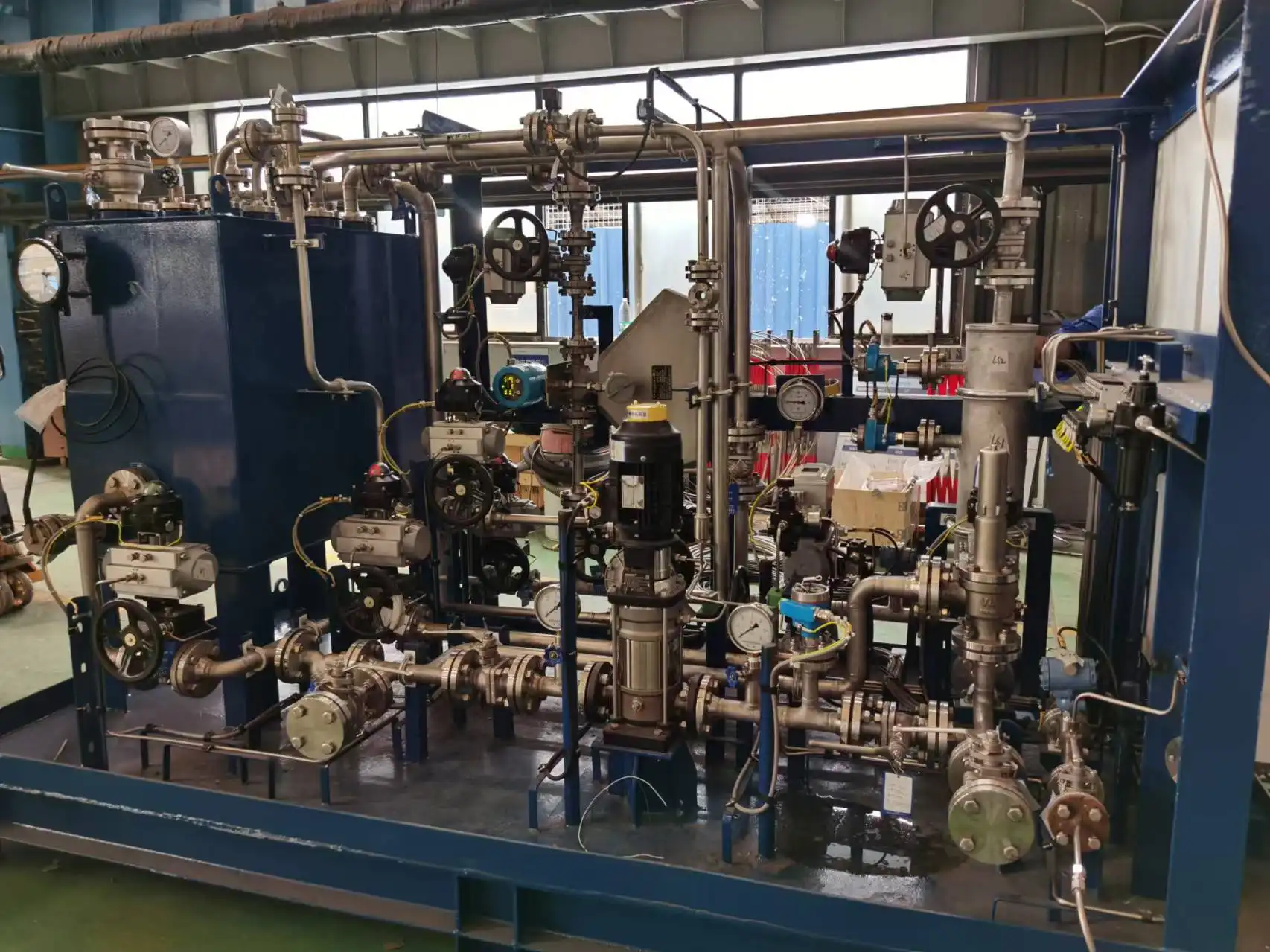
Understanding the Methanol Fuel Conveyance System: Core Components and Functions
A strong Methanol Fuel Conveyance System has several built-in parts that work together to control methanol from storage to burning. Each part takes into account the unique chemical and physical qualities of methanol, which are very different from those of other naval fuels.
Methanol Supply Unit
The methanol delivery unit ensures pressure, temperature, flow rate, and cleanliness requirements set by engine makers are consistently met. Modern supply units feature pressure controllers, flow meters, and temperature regulation devices operating during cold starts, fuel mode transitions, and emergency shutdowns. This precise engineering prevents vapour lock and ensures fuel availability for VLCC operations and asphalt carriers using methanol propulsion.
Filling and Transfer System
The filling and transfer system uses special valves, double-walled pipes, and nitrogen inerting to handle methanol's low flashpoint and toxicity. This system follows SOLAS-IBC chemical vessel rules with vapour recovery and emergency break couplings. Automatic tracking monitors fill levels, prevents overfilling, and manages pressure differentials. This is especially valuable for chemical tankers or VLECs requiring perfect safety records during bunkering operations.
Auxiliary Systems
Auxiliary systems provide backup and conditioning tasks including heating circuits maintaining viscosity, nitrogen purging preventing explosive atmospheres, and lubricant pumps compensating for methanol's poor lubricity. They also manage draining, venting, and sampling points for regular quality checks. Modular design lets owners adjust capacity based on vessel size, from inland river vessels to methanol-fuelled FPSOs requiring substantial fuel storage.
Control and Safety Systems
Programmable logic controllers manage sensor data from gas detectors, flow meters, pressure transmitters, and temperature probes for real-time system health. Safety interlocks automatically isolate sections with detected leaks or abnormal pressure fluctuations. Gas monitoring continuously checks enclosed spaces for methanol vapour, triggering alarms and ventilation when approaching limits. These control architectures satisfy IGF Code requirements for low-flashpoint fuels.
Design Principles and Safety Measures in Methanol Fuel Conveyance Systems
To make a reliable Methanol Fuel Conveyance System, you need to follow rules that put an emphasis on making sure the materials work well together, stopping leaks, and being able to handle tough sea circumstances.
Material Selection Strategies
Material selection prioritises corrosion resistance due to methanol's aggressive properties toward certain metals and elastomers. Grades 304 and 316L stainless steel dominate piping, valves, and tanks, avoiding aluminium or zinc-coated materials. Sealing components use PTFE, EPDM, or perfluoroelastomers instead of conventional Viton or Buna-N which swell and lose volume. Pump internals may receive diamond-like carbon coatings for wear protection. These choices prevent oligomer extraction damaging fuel injectors.
Leak Detection and Containment
Double-walled piping with interstitial monitoring enables immediate inner wall breach detection before methanol reaches surrounding spaces. Block-and-bleed valve arrangements permit isolation of individual sections without complete shutdown. Drip trays, containment sumps, and automatic drainage direct leaks to dedicated collection tanks. Continuous gas monitoring in tank rooms, pump rooms, and transfer stations triggers ventilation and operational alarms for crew safety.
Pressure and Thermal Management
Operating pressures typically range 2 to 8 bar, requiring components rated for transient spikes during pump starts or valve closures. Pressure relief valves prevent tank collapse during high fuel draw, while vacuum breakers prevent over-pressurisation. Thermal management maintains methanol within optimal temperature ranges. Heat tracing on exposed piping prevents freezing in Arctic operations, ensuring reliable fuel flow in extreme conditions.
Maintenance Protocols
Structured inspection schedules tailored for methanol service extend system longevity. Regular seal inspections detect early chemical attack signs. Filter element changes prevent particulate accumulation restricting flow. Sensor and flow meter calibration maintains measurement accuracy essential for fuel management. Periodic non-destructive testing of pipe welds and flange joints identifies weakness before leak development. These procedures, supported by documentation, satisfy classification society requirements and improve uptime for chemical tankers, PCTCs, and ammonia carriers.
Comparative Analysis: Methanol Fuel Conveyance System vs. Other Fuel Systems
Comparing methanol to other marine fuels shows different trade-offs that affect buying choices for different types of vessels and how they are used.
Material Requirements
In normal diesel systems, fuel lines and metal parts are fine, but a Methanol Fuel Conveyance System needs materials that won't rust everywhere. This condition raises the starting cost, but it gives better methanol service longevity. Some problems with compatibility are common to all ethanol systems, but their penetration and water tolerance are different. On the other hand, LNG fuel systems rely on the qualities of materials that are cryogenic rather than their chemical resistance. The unique material needs of a Methanol Fuel Conveyance System are an investment in sturdiness that keeps parts from breaking down too soon, which can happen when materials that aren't made for methanol come into touch with them.
Safety Architecture
When you look at the different safety rules, you can see how a Methanol Fuel Conveyance System manages both flammability and chemical issues. LNG systems focus on extreme cold risks and fast vapor growth. Methanol systems, on the other hand, focus on vapor control and detection because of the fuel's lower flashpoint and health effects on people. Diesel engines don't need to handle vapor very well, but they don't have the benefits that methanol does for pollution. A Methanol Fuel Conveyance System has a full safety design that includes double-wall piping, the ability to inert gases, and multiple gas monitoring points. This architecture reduces risks through built redundancy instead of limiting operations.
Emissions Performance
Because of how it burns, methanol has much lower levels of sulfur fumes, nitrogen oxides, and particulate matter than heavy fuel oil or marine diesel. These environmental benefits are supported by a well-designed Methanol Fuel Conveyance System that makes sure full burning by delivering and preparing fuel precisely. When made from green sources, methanol has the ability to be carbon neutral in a way that traditional fossil fuels can't. When bulk carriers, crude oil trucks, and RoRo ships use methanol as a fuel, they can meet stricter pollution rules and prepare for future changes in environmental laws.
Operational Complexity
Using a Methanol Fuel Conveyance System requires different training and safety protocols than conventional fuels. Crew must understand methanol hazards, bunkering procedures, and emergency response. Modern automation simplifies routine tasks through intuitive interfaces and automatic safety functions. Methanol systems represent a practical middle ground between LNG's cryogenic handling and compressed hydrogen's high-pressure management, leveraging existing liquid fuel expertise while adding necessary safety enhancements for emission reduction goals.
Procurement Guide: How to Choose and Source the Best Methanol Fuel Conveyance System?
To get a reliable Methanol Fuel Conveyance System, you need to carefully evaluate suppliers and make sure that the specs match the practical needs of a wide range of vessel uses.
Quality Certifications and Standards Compliance
Proper certifications provide confidence in Methanol Fuel Conveyance System design and manufacturing quality. DNV Approval in Principle certificates confirm system designs meet classification society standards before construction. DNV Product Certificates demonstrate manufactured equipment matches approved designs. These certificates confirm IGF Code compliance for low-flashpoint fuels and SOLAS-IBC chemical carriage requirements. Procurement for VLCCs, chemical tankers, or LPG carriers should mandate complete approval documentation to avoid costly modifications during vessel surveys.
Compatibility with Engine Systems
Methanol Fuel Conveyance Systems must integrate with existing or planned dual-fuel engines including MAN B&W ME-LGIM units, Wärtsilä methanol engines, and emerging designs. Procurement specifications should list supply pressures, flow rates, and fuel conditioning parameters matching engine manufacturer datasheets. Modern engines communicate with fuel systems through digital protocols governing fuel switching, load management, and fault response, requiring control system interface compatibility. Verifying these technical connections prevents commissioning integration problems and ensures optimal engine performance throughout vessel life.
Modular Design and Customization
Modular Methanol Fuel Conveyance System designs scale across vessel configurations, supporting procurement planning flexibility. Suppliers offering standalone supply units and fully integrated systems enable customisation for newbuild or retrofit projects. Customisation addressing specific capacity needs allows right-sized solutions avoiding overspecification costs. Inland river vessels need 3m³/h throughput while Newmax RoRo requires 8m³/h. Modular designs simplify maintenance by enabling component replacement without complete system disassembly, benefiting vessels with short drydock windows.
Supplier Experience and Track Record
Evaluating supplier qualifications distinguishes proven Methanol Fuel Conveyance System solutions from experimental offerings. Suppliers demonstrating successful installations across diverse vessel types provide operational data from varied environments. References from bulk carrier, offshore support vessel, or FPSO operators using methanol validate real-world performance. Prior dual-fuel vessel, gas carrier, and chemical tanker design experience brings regulatory and integration expertise essential for alternative fuel systems. This knowledge means fewer commissioning problems, steadier performance, and faster after-sales support.
Comprehensive Lifecycle Support
Methanol Fuel Conveyance Systems require regular maintenance, spare parts access, and technical assistance throughout vessel life. Procurement should mandate suppliers guarantee installation supervision, crew training, planned maintenance support, and emergency response. Clear spare parts pricing and availability maintains operational continuity when worn components require replacement. Suppliers with retrofit experience become valuable partners during fleet modernisation, as system standardisation simplifies crew training and parts inventory management. Relationships formed extend beyond equipment purchase to ongoing operational success.
Technology Advancements and Future Trends in Methanol Fuel Conveyance Systems
Innovation keeps changing what the Methanol Fuel Conveyance System can do, making it safer, more effective, and better for the environment while also making it easier to use and less expensive.
Advanced Material Technologies
Next-generation Methanol Fuel Conveyance System components incorporate new materials extending maintenance intervals and reliability. Advanced fluoropolymer coatings with improved permeation resistance maintain elasticity across extreme temperatures. Modern seal materials withstand prolonged methanol exposure without hardness changes or deformation. Composite materials enable lighter piping systems without pressure rating reduction, particularly valuable for offshore support vessels requiring weight minimisation. These innovations extend system longevity in demanding service conditions for chemical tankers, VLECs, and ammonia carriers.
Smart Sensors and Predictive Maintenance
IoT-enabled sensor integration shifts maintenance models from reactive to predictive. Pump vibration sensors detect bearing wear before failure. Pressure transmitters identify incipient blockage through deviation from baseline patterns. Temperature monitoring reveals heat exchanger fouling or insulation degradation. Analytics platforms process data streams predicting component remaining life, scheduling maintenance during planned port calls, and preventing critical process failures. Predictive maintenance maintains operational availability while controlling repair costs for bulk carriers with tight delivery schedules.
Automation and Remote Monitoring
Modern Methanol Fuel Conveyance System control designs let expert teams on land keep an eye on systems on ships in real time, helping with diagnostics and repairs from afar. Automatic fuel swapping between methanol and pilot diesel happens without any problems, depending on the load on the engine and the limits of the pollution zone. Engineers on land can use digital copies of installed systems to model operating situations, find the best control parameters, and make sure that changes will work before putting them into action on ships. This connection makes the job of the crew easier, makes the system work better, and gives fleet managers a better view of all the methanol-powered ships in the fleet.
Renewable Methanol Integration
Methanol Fuel Conveyance System designs accommodate bio-methanol and e-methanol blends without modification as e-methanol production expands. Methanol systems support true carbon-neutral vessel operation when utilising certified green methanol due to fuel-agnostic capability. Ability to operate on conventional methanol during transition while progressively increasing green content provides operational flexibility unavailable with source-locked fuels. This adaptability benefits FPSOs and PCTCs demonstrating environmental leadership while maintaining operational continuity without system modifications.
Regulatory Evolution and Market Growth
As emission regulations tighten, Methanol Fuel Conveyance System adoption accelerates as shipowners seek practical IMO greenhouse gas reduction pathways. Initial range anxiety diminishes as methanol bunkering infrastructure expands. Classification society experience with methanol systems accelerates approval processes, enabling faster certification for newbuilds and retrofits. These trends establish methanol as mainstream marine fuel rather than niche option, opening market opportunities for VLAC operators, inland river vessels, and port service vessels seeking sustainable propulsion pathways.
Conclusion
To choose and set up a Methanol Fuel Conveyance System that works well, you need to know about its unique parts, strict safety design, and how it works, which make it different from other fuel systems. Every system component, from methanol supply units maintaining precise delivery parameters to control systems monitoring safety interlocks, ensures safe methanol handling across vessel types. Material selection, regulatory compliance, and lifecycle support become critical procurement factors determining long-term success. As renewable methanol availability expands, these systems position managers to meet environmental goals while maintaining operational flexibility. Partnering with experienced providers guarantees proven designs, comprehensive support, and continuous innovation necessary for navigating alternative fuel evolution.
FrAQ
1. What materials are most suitable for Methanol Fuel Conveyance System components?
What kinds of materials work best for parts of the Methanol Fuel Conveyance System? Grades 304 and 316L stainless steel are the best for protecting pipes, tanks, and structural parts from rust. Instead of regular elastomers that break down in methanol, sealing materials should only use PTFE, EPDM, or perfluoroelastomers (FFKM). Because methanol isn't very lubricating, diamond-like carbon layers help the parts of the pump.
2. How frequently should Methanol Fuel Conveyance System maintenance occur?
Maintenance schedules rely on how often the system is used, but they usually include checking the seals every three months, replacing the filters every six months, and testing the whole system once a year. Sensors should be calibrated once a year, and piping integrity tests should be done according to the rules set by the classification society. This is usually done during dry-dock inspections every 2.5 to 5 years, based on the type of vessel.
3. Can existing vessels be retrofitted with Methanol Fuel Conveyance Systems?
Technically, retrofit installs are possible, but they need a full analysis of the current spaces, the structure's ability to hold more tanks, and the compatibility of the engines. Modular system designs make retrofits easier by cutting down on the need for unique manufacturing. For retrofits to work, there needs to be enough room, power systems that work with each other, and compliance with the current IGF Code standards for methanol fuel installations.
Partner with CM Energy: Your Trusted Methanol Fuel Conveyance System Supplier
Through its TSC brand, CM Energy delivers proven Methanol Fuel Conveyance Systems for bulk carriers, tankers, offshore vessels, and specialised marine applications. Engineering teams possess dual-fuel vessel, gas carrier, and chemical tanker experience. Successful deliveries include Stena RoRo vessels and asphalt tankers. The comprehensive approach encompasses bunkering subsystems, supply units, auxiliary systems, and control architectures. Modular designs enable component supply or turnkey installation. DNV approval validates technical excellence. Full lifecycle support includes design consultation, manufacturing oversight, installation supervision, and ongoing maintenance.
If you run VLECs, crude oil tankers, PCTCs, or FPSOs that use methanol as a fuel, choosing CM Energy as your Methanol Fuel Conveyance System maker will give you the technical know-how, track record, and full support you need to successfully adopt methanol propulsion. Email our team at info.cn@cm-energy.com to talk about your unique needs and find out how our personalized solutions can help your fleet be better for the environment while still running smoothly.
References
1. International Maritime Organization. International Code of Safety for Ships Using Gases or Other Low-flashpoint Fuels (IGF Code). London: IMO Publishing, 2021.
2. American Bureau of Shipping. Guide for Methanol and Ethanol Fueled Vessels. Houston: ABS Technical Publications, 2022.
3. Verhelst, S. and Turner, J. "Methanol as a Fuel for Internal Combustion Engines." Progress in Energy and Combustion Science, Vol. 70, 2019, pp. 43-88.
4. DNV GL. Alternative Fuels for Shipping: Technology Brief on Methanol. Oslo: DNV GL Maritime, 2020.
5. Ellis, J. and Tanneberger, K. Methanol as Marine Fuel: Environmental Benefits, Technology Readiness, and Economic Feasibility. Brussels: Methanol Institute, 2021.
6. Lloyd's Register and UMAS. Techno-Economic Assessment of Zero-Carbon Fuels: Methanol Fuel Supply Systems for Deep-Sea Shipping. London: Lloyd's Register Marine, 2022.