Why Are Rigid Sails Used on Bulk Carriers?
Rigid sails are used on bulk carriers primarily to reduce fuel consumption and cut carbon emissions without compromising cargo operations. Unlike traditional soft sails, a rigid sail is a solid, airfoil-shaped structure that generates aerodynamic lift to assist main engine propulsion. This wind-assisted propulsion technology helps bulk carriers meet tightening IMO regulations on carbon intensity, lower daily fuel costs, and improve fleet ESG credentials — all while maintaining normal port operations and hatch cover functions that bulk cargo handling requires.
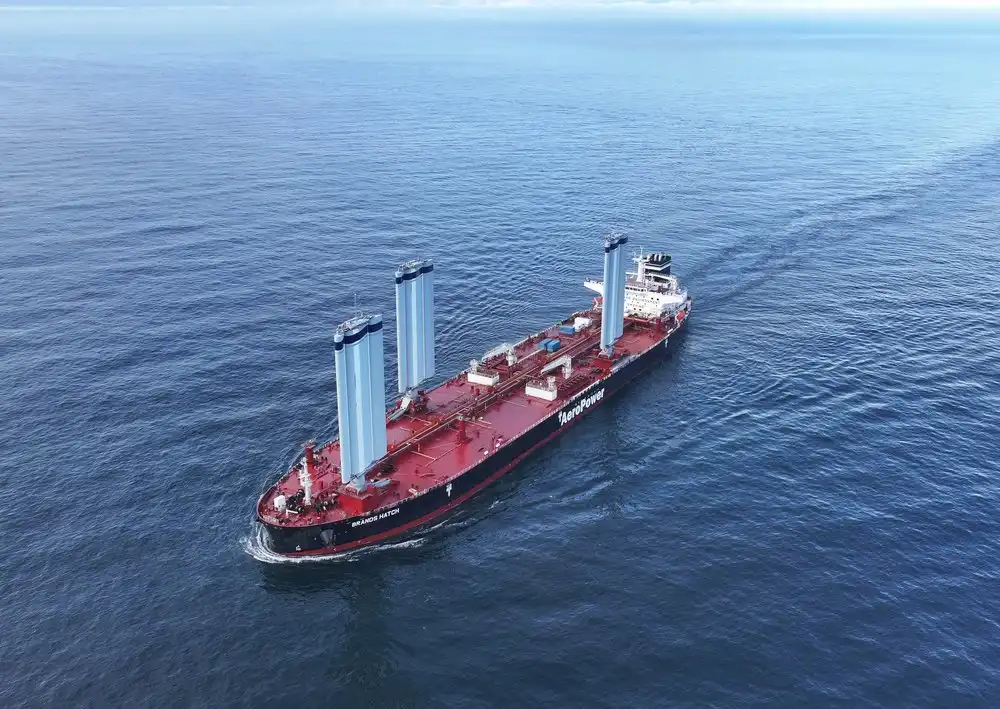
Introduction to Rigid Sails and Their Relevance in Bulk Carriers
What Is a Rigid Sail?
In marine wind-assisted propulsion systems (WAPS), a rigid sail is also known as a wingsail or hard sail. It is a structure with a set profile that is made of structural steel or composite materials. Like an airplane wing, it creates lift, which is directly converted into forward thrust. Since the slope and angle of attack can be changed in real time, the system can instantly adapt to changes in the wind.
Why Bulk Carriers Are the Right Fit
Long transoceanic routes for bulk ships, like the trade of iron ore and grains from Brazil to China, go through steady wind belts that a rigid sail can use to its advantage. The open decks between the cargo holds make it easy to place things, and the ships' steady speeds make wind-assisted thrust predictable and measured.
The Regulatory Push
The IMO's EEXI and CII systems, the EU's Emissions Trading System, and FuelEU's maritime rules are all putting direct financial pressure on companies that run bulk carriers. Rigid Sail technology provides a measured and proven way to lower carbon intensity ratings, which helps with both compliance and getting green funding.
The Advantages of Rigid Sails Over Traditional Sails in Bulk Carrier Applications
Aerodynamic and Propulsion Performance
A rigid sail with three elements makes more than 2.5 times as much efficient lift as a normal sail with one wing. This higher lift coefficient is possible because the multi-element wing profile stays in the best shape no matter what the wind is doing, while soft sails bend when they are loaded. This means that the thrust input stays the same over long ocean journeys.
Environmental and Regulatory Value
Each rigid sail installation on a bulk ship can reduce CO2 emissions by a significant amount every day, as confirmed by an outside evaluation. Classification societies and charterers want DNV-verified real-world performance data instead of theory models. This is what makes the adoption of rigid sail a good idea at the board level.
The two things that fleet operators care about the most right now are taken care of by these benefits. Here is a list of the main benefits:
- Fuel cost reduction: Documented fuel savings of up to 30% per wing depending on route conditions, with measurable daily savings per installed unit.
- Regulatory compliance support: Direct improvement to CII ratings and EEXI calculations, reducing exposure to EU ETS carbon costs.
- ESG positioning: Verifiable emission data strengthens access to green loan facilities and supports charterer qualification criteria under sustainability charters.
Fleet operators who have looked at rigid sail performance statistics regularly say that the combination of less regulation and lower fuel costs makes for a strong case for investment, especially on routes with a lot of sailing and good wind conditions.
Economic Lifecycle Consideration
The initial capital cost for rigid sail upgrades is a real hurdle for procurement teams. The asset's economics are much better, though, thanks to a 25-year design lifespan and the ability to move units between ships. The per-vessel cost picture changes significantly when looking at a fleet and an operating cycle that lasts for many decades.
Rigid Sail Design Principles and Material Technologies for Bulk Carriers
Structural Engineering for Marine Conditions
Bulk ships use rigid sail systems that are made up of industrial E-glass composite panels and ship-grade steel frames. This mix of materials gives the deck the strength it needs to withstand wave and wind loads in open water while keeping the total weight within the limits that can be used for installation. Marine-grade hydraulic and electrical actuators handle the constant adjustments that need to be made over the life of the vessel.
Automated Control and Operational Safety
Modern rigid sail systems have automated wing control that checks thrust output in real time, changes the shape and orientation of the camber, and sets off safety responses in bad weather. Crew members can still use a manual interface, and operating it is about the same level of difficulty as operating a normal deck crane. You don't need to know anything special about sailing to do it. This design choice directly addresses the issue of crew training that procurement teams bring up over and over again.
Retrofit and Newbuild Integration
Rigid Sails come in a variety of span sizes to fit different types of boats. Before any installation can happen on a retrofit job, a compatibility study is done to make sure that the structure is right, that the deck spacing is right, and that it will work with the goods handling equipment. The tilt-to-laydown feature lets the wing completely clear hatch cover operations, so standard cargo cycle times are not affected. When building something new, integrating it during the planning phase lets the best placement and structural preparation happen.
Market Landscape and Procurement Guide for Rigid Sails on Bulk Carriers
Selecting a Qualified Supplier
Classification society approval is the first thing that must be looked at when comparing rigid sail companies. Type clearance and clearance in Principle (AIP) from DNV, BV, LR, or CCS show that the design has been reviewed for efficiency and safety. In addition to certification, procurement teams should check to see if the supplier can provide real-world performance data from ships that are already in commercial service, rather than just modeled projections.
CM Energy's WindWings® (TSC) Solution
The Hong Kong Stock Exchange lists CM Energy under the brand name TSC. They sell the WindWings® rigid sail system, which is a patented three-element wingsail they made with BAR Technologies (BART) in the UK. TSC's WindWings® have AIP and design type approval from DNV and BV. DNV has confirmed that the fuel-saving performance was proven by real ship operations. The Wolfson Unit and Lloyd's fluid dynamics research programs also looked at performance on their own.
The system has been used on bulk ships that call at more than 20 major ports around the world without any problems. This is what B2B buyers look for before committing to fleet-wide deployment. CM Energy offers full lifetime support for this rigid sail technology, including installation, IoT-based remote tracking, weather routing software, and long-term upkeep plans. This support is available for both newbuild and retrofit projects.
Procurement Process and Timeline
A normal rigid sail installation goes like this: compliance and savings modeling (one to three months), technical review and certification proof (one to two months), contract and installation of the pilot vessel, and then rollout of the fleet. When making plans for money and time, drydock windows should be taken into account. These windows can be lined up with planned work to keep operations running as smoothly as possible.
Case Studies and Future Outlook of Rigid Sails in Bulk Shipping
Verified Performance in Commercial Service
Bulk carriers equipped with WindWings® rigid sail systems have finished long business trips along major trade routes. DNV-verified fuel savings show that the technology works in the real world. Ships have called at ports in Asia, Europe, and the Americas without any problems with the wing systems. This is useful information for fleet managers who are concerned about risk.
Integration With Smart Ship Technology
The next step in the growth of rigid sail is to make it work better with systems that control the energy of ships. As part of CM Energy's service, weather routing platforms designed specifically for wind-assisted boats are already available. These platforms give teams on land and on board a shared interface for planning routes that takes wind input into account in real time. This layer of data also helps with the reporting needed by CII monitoring frameworks.
The Path Forward for Fleet Decarbonization
Rigid Sails are one of the few wind-assisted propulsion technologies that has the certifications, operational history, and commercial scalability to be used on a large scale today. As the price of carbon goes up and charterers' sustainability requirements get stricter, ships with verified rigid sail systems will have a structural advantage in rate negotiations and green financing markets.
Conclusion
Rigid Sails have gone from being an idea to a marketable tool. Because they are aerodynamically efficient, meet regulations, and save fuel, they are a good investment for bulk carrier operators who have to deal with both carbon regulations and rising fuel costs. The rigid sail is no longer a test project; it has been fully backed by the classification society and has a service life of 25 years. It can also be moved from one ship to another. The WindWings® system from CM Energy is ready for the market and has the level of certification and operating track record that serious procurement choices need.
FAQ
1. How long does a rigid sail last?
WindWings® rigid sail systems carry a 25-year design lifespan without requiring major component replacement. Units can also be transferred between vessels, meaning the capital investment travels with your fleet strategy rather than being fixed to a single hull.
2. Do rigid sails interfere with cargo operations?
No. The system rotates to a laydown position that provides full clearance for hatch covers and cargo handling equipment. Vessels using this system have completed hundreds of port calls at more than 20 global ports without any cargo operation incidents.
3. What certifications do rigid sails require?
Rigid sail systems for commercial vessels must carry type approval and AIP from recognized classification societies. WindWings® holds certification from DNV and BV, with additional endorsement from LR and CCS — covering the major flag states and financing institutions relevant to international bulk shipping.
4. How do rigid sails affect CII ratings?
By reducing daily fuel consumption, a rigid sail installation directly lowers a vessel's carbon intensity ratio. The degree of improvement depends on route wind conditions, but DNV-verified data from operating vessels provides the documented evidence that CII calculation frameworks require.
5. Can rigid sails be retrofitted to existing vessels?
Yes. CM Energy provides compatibility analysis, on-site assembly support, factory acceptance testing, and full onboard installation services for retrofit projects. The process is designed to align with existing drydock schedules where possible.
Ready to Evaluate Rigid Sail Solutions for Your Fleet? Contact CM Energy
Ship owners and users of bulk carriers and tankers who want more than just a manufacturer's promise can get it from CM Energy (TSC). Our WindWings® system is backed by BART patent technology, DNV and BV approval, and real-world performance data from commercial ships that are currently in use. This gives your technical team the proof they need to make a choice about a capital investment.
As a qualified rigid sail provider and technology partner, CM Energy helps with projects from the beginning, when they are modeling compliance, all the way through to ongoing IoT maintenance and tracking. Get in touch with us directly at info.cn@cm-energy.com or cm-energy.com to talk about your fleet's exact routes and the timing for a retrofit or newbuild.
References
1. International Maritime Organization. 2023 IMO Strategy on Reduction of GHG Emissions from Ships. IMO, 2023.
2. DNV. WAPS — Wind-Assisted Propulsion Systems: Class Notation and Approval Framework. DNV, 2022.
3. Traut, M., et al. "Propulsive Power Contribution of a Kite and a Rigid Sail to the Propulsion of a Ship." Energy, Elsevier, 2014.
4. Lloyd's Register. Wind-Assisted Ship Propulsion: Technology Review and Regulatory Status. Lloyd's Register, 2021.
5. Viola, I. M., and Fossati, F. "Downwind Sail Aerodynamics: A CFD Investigation with High Grid Resolution." Ocean Engineering, Elsevier, 2009.
6. Bordogna, G., et al. "Experiments on a Rigid Wing Sail for an Autonomous Sailboat." Journal of Marine Science and Engineering, MDPI, 2020.