What Are the Core Components of Wind Propulsion System?
A Wind Propulsion System is made up of advanced aerodynamic structures like rigid wing sails, Flettner rotors, or suction sails, along with automatic control systems, structural support frames, and navigation technologies that are all built in. These parts work together to collect wind energy and turn it into forward thrust, which cuts down on the need for dirty fuels and helps the ship meet strict emission rules. Modern systems use materials like ship-grade steel and composite fibers to make sure they last and work well in all kinds of marine situations.
Introduction
The marine business is at a turning point. The International Maritime Organization (IMO) is putting more restrictions on pollution, and the price of bunker fuel is making shipowners of chemical tankers, Newcastlemax bulk carriers, and LR2 tankers actively look for sustainable options. Wind-assisted motion has become a useful option that can be used alone or with gasoline engines to help move things. This guide looks at the most important parts of wind-assisted technologies. It gives technical leaders and procurement experts the information they need to judge these systems for both old ships that need to be fixed up and new ships that are being built. Figuring out how these systems work can help fleet owners meet Carbon Intensity Indicator (CII) requirements, cut costs, and make their fleets more competitive in a market that cares more about the environment.
Understanding Wind Propulsion Systems – A Comprehensive Overview
The Fundamental Principles Behind Wind-Assisted Shipping
Wind-assisted technologies use natural kinetic forces of the air. Today's systems use rigid structures, automation, and real-time weather tracking rather than cloth sails. The basic principle creates lift through airfoil surfaces, reducing main engine load and saving fuel. Wind power protects against fluctuating fuel prices and carbon tax systems like EU ETS. Depending on route and configuration, ships can cut fuel use by 5% to 30%, directly lowering CO2, SOx, and NOx emissions while meeting EEXI standards.
Main Types of Wind Propulsion Technologies
Several types of technology have become popular in different areas of business shipping:
1. Rigid Wing Sails: These airfoil designs, which can be set or movable, have high lift-to-drag ratios and work best in areas with steady wind. Long-haul bulk ships and tankers that work on trans-oceanic routes with predictable trade winds can use their strong build.
2. Flettner Rotors: Using the Magnus effect, these spinning cylinders make force that is perpendicular to the direction of the wind. Rotors are small and don't take up much space on the deck, so they work well for ships that don't have a lot of open space on the deck or that need to be able to change their operations quickly in ports.
3. Suction Sails: Boundary layer pressure improves airflow over wing surfaces, which makes the sails more efficient. Ferry companies and short-sea shipping groups are becoming more interested in these systems because they work well with current ship superstructures.
4. Kite Systems: Kites that are attached and flown from the bow fly at high altitudes where the wind is higher. They work for ships that want to make only minor changes to their structure, but they need to be handled carefully and during good weather times.
These Wind Propulsion System technologies have been around for hundreds of years, but new developments in robotics, composite materials, and computational fluid dynamics (CFD) models have made them useful in the real world. These systems have been successfully installed on bulk ships and tankers around the world, showing measurable gains in fuel economy and emissions profiles that have been confirmed by classification societies such as DNV and Bureau Veritas (BV).
Core Components of Wind Propulsion Systems Explained
Wind Energy Capture Devices
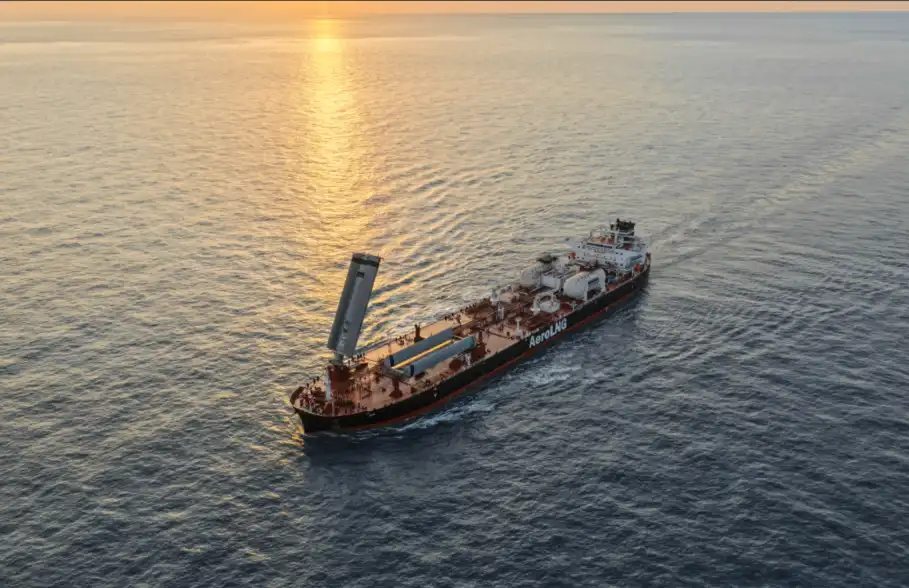
Energy capture sits at the heart of any wind-assisted approach. Rigid wing sails like CM Energy's WindWings® feature three-element design with variable camber and angle of attack for optimal aerodynamic performance. Construction uses marine-grade steel and industrial E-glass composites, ensuring decades of structural integrity in harsh marine conditions. Modern three-element designs produce over 2.5 times the thrust of standard single-wing designs. Material selection prioritizes corrosion resistance, UV degradation resistance, and wear performance under repetitive vessel motion loads.
Automated Control and Guidance Systems
Effective wind-assisted technologies require sophisticated systems operating safely without increasing crew workload. Sensor networks monitor wind speed, direction, sea state, and vessel motion. Specialized software algorithms calculate optimal wing configuration and camber, automatically adjusting sail positions while preventing structural overload in severe weather. Safety features include automated feathering during survival conditions, manual override interfaces, and continuous health monitoring with predictive maintenance alerts. Integration with vessel navigation systems enables route optimization for additional fuel savings.
Structural Support and Installation Considerations
Robust attachment frameworks ensure system stability and longevity. Masts, foundations, and rigging components must withstand dynamic loads including wind forces and vessel rolling. Engineering analysis considers resonance frequencies to prevent fatigue failure. Deck reinforcements safely distribute loads across vessel structures. Retrofit requires thorough compatibility studying deck space, equipment clearance, and structural strength. WindWings® tilt mechanisms move to laydown positions during port operations, enabling hatch cover access, proven at over 20 major global ports.
Hybrid Power Integration
Wind-assisted methods typically do not operate alone. Hybrid configurations combine wind power with conventional engines and energy storage, maintaining propulsion during variable weather. When wind conditions favor thrust, main engine load drops significantly, saving fuel and extending machinery life. Energy management systems balance power sources, adjusting engine output based on real-time wind thrust generation. Battery systems can capture excess energy during high wind periods for later use when wind diminishes or emission-free operation is required, overcoming weather dependency.
Key Benefits and Performance Factors Influencing Procurement Decisions
Environmental and Regulatory Compliance
Regulatory forces drive Wind Propulsion System adoption. IMO's decarbonization plan targets 40% carbon intensity reduction by 2030 and net-zero by 2050. Wind-assisted technologies directly improve CII ratings, helping owners avoid fines and maintain charterer interest. WindWings® cuts CO2 by over 5 tons per wing daily through DNV-verified operations. This verified performance data gives procurement teams confidence in technology effectiveness and regulatory compliance capability.
Economic Advantages and Return on Investment
Fuel represents the largest operating expense for most commercial vessels. Wind propulsion delivers measured emission reductions up to 30% on favorable routes, generating substantial annual savings. Payback periods for ferry and coastal vessel owners often fall under five years. Larger bulk carriers and tankers realize savings across 25-year operational lifespans. Leading providers like CM Energy offer full lifecycle support including factory acceptance testing, IoT tracking, and long-term service packages reducing downtime.
Performance Reliability and Weather Adaptability
Modern wind-assisted systems operate autonomously across diverse weather conditions. Performance metrics include thrust coefficients, lift-to-drag ratios, and route-specific fuel savings projections. Real-world examples show bulk carriers maintaining service schedules while cutting fuel use over 10% on trans-oceanic voyages. Adaptability includes navigation mode for passage, berthing mode for port operations, and survival mode for severe weather. WindWings® holds approvals from DNV, BV, LR, and CCS with independent aerodynamic verification.
Comparison of Wind Propulsion Systems with Traditional and Hybrid Solutions
Lifecycle Cost Savings and Carbon Footprint Reduction
Wind power systems offer clear lifecycle benefits over diesel-only propulsion. Although initial capital investment is higher, fuel savings accumulate quickly. Over 25-year design lifespans like WindWings®, total bunker cost savings can exceed installation costs on wind-favorable routes. Diesel engines emit about 3.1 tons of CO2 per fuel ton burned. Each wing can cut pollution by over five tons daily. Hybrid solutions balance innovation with reliability, as proven on chemical tankers and bulk carriers.
Addressing Weather Dependency and Operational Limitations
Clear communication about limits builds buyer trust. Wind-assisted systems depend on wind presence, making route selection critical. Equatorial routes with light, variable winds offer less benefit than mid-latitude trade wind paths. Honest performance predictions account for seasonal variations and route-specific data. Automated control systems continuously adjust sail setups to maximize power even in light winds. Hybrid integration ensures main engines function when wind input drops. Wind assistance supplements traditional propulsion.
Market Offerings and Supplier Selection
The wind power market features diverse technology approaches. Procurement teams must evaluate supplier reliability, manufacturing quality, after-sales support, and operational track record. Classification society certifications provide baseline confidence. Customer references from similar vessel types reveal long-term performance and problem response. CM Energy offers design integration, retrofit compatibility analysis, factory acceptance testing, installation guidance, and IoT tracking. With over 159 patents, CM Energy covers more than 25% of the global specialized marine equipment market.
How to Choose and Procure the Right Wind Propulsion System?
Assessing Vessel Operational Profiles
System choice is affected by cargo type. Bulk ships with large, clear deck spaces can accommodate multiple wing installations, increasing propulsion power. Tankers carrying dangerous goods require ATEX-compliant components placed carefully to avoid interfering with loading arms or pipeline infrastructure. Roll-on/roll-off ships favor small systems that deploy and retract quickly to maintain tight port schedules. Wind pattern analysis uses historical weather data to estimate annual fuel savings. Advanced routing tools model wind-assisted performance for realistic ROI projections.
Evaluating Procurement Criteria
Full review systems take into account many things, including:
The total cost of ownership includes the price of the item, the cost of installation, the cost of regular upkeep, and the amount of money you expect to save on fuel. Accurate financial planning is possible with clear quotes from suppliers that include all of these details.
1. Complexity of Installation: Retrofit projects are limited by the way the vessels are already configured. For compatibility studies, the structure's strength, the amount of deck room available, and how well it works with cargo handling tools are all looked at. Newbuild projects let plans be improved, but they need to work with shipyards and classification groups early on.
2. Credibility of the supplier: a long history of successful operations is very important. Technology usage risks can be lowered by suppliers who can show years of business deployments, classification society certifications, and happy customer references.
3. Flexibility in financing: Lack of capital can make it hard to make investments in sustainability. Financial barriers are lowered by suppliers who offer lending deals, leasing agreements, or performance guarantees.
4. Lifecycle Support: Long-term happiness depends on the level of service after Wind Propulsion System installation. Full support packages with crew training, online tracking, predictive maintenance, and global service networks make sure that performance stays high.
CM Energy's method takes all of these factors into account. Customized solutions can be used for both new builds and retrofits, and engineering teams do studies of how well each tank works with the others. Global clearance recommendations from DNV, BV, LR, and CCS speed up the approval process with regulators. Design lifespans of 25 years and the ability to be transferred between boats protect the value of assets.
Initiating Inquiries and Procurement Processes
Initial talks are often the first step in the procurement process. Integration optimization works best when suppliers are involved early on, especially during the basic design stages of new buildings or the feasibility study stages of retrofits. During technical talks, system size, performance predictions, installation timelines, and regulatory route mapping should all be talked about.
Supplier listings and business groups offer checked-out ways to get in touch. Going to marine trade shows and conferences is a good way to talk to technology providers, representatives from classification societies, and peer fleet owners who have already installed wind propulsion systems. These exchanges boost trust and give useful information that isn't found in marketing papers.
When you ask for quotes (RFQs), you should include information about the vessel, how it will be used, and how well you expect it to work. With detailed supplier answers, you can compare rival products in a way that is fair and accurate. Including performance promises, service level agreements, and insurance terms in RFQs makes sure that full evaluations are done that go beyond the initial purchase price.
Working with companies with a lot of knowledge, like CM Energy, makes this process easier. CM Energy brings new ideas from different fields to wind power uses. They have experience with hydrogen energy, marine solutions, and electric drive technologies. The company's growth plan focuses on green smart production and carbon reduction technologies, which match the company's skills with the need to lower carbon emissions in the industry.
Conclusion
Wind-assisted technologies have been shown to be a way to make marine activities more environmentally friendly. Procurement professionals can make choices that are in line with fleet sustainability goals and the facts of the economy by understanding the core components, which include aerodynamic capture devices, automated control systems, structural support frameworks, and hybrid integration elements. As rules get stricter and the price of fuel stays unstable, wind propulsion systems provide real benefits, such as proven fuel saves, lower emissions, better CII compliance, and lower long-term operating costs. Adoption depends on carefully checking out the vessel, the provider, and the willingness to working together throughout the whole lifecycle. The maritime industry needs real-world answers to its carbon emissions problem, and wind propulsion gives ships measurable results today while also preparing them for the rules that will apply in the future.
FAQ
1. How much fuel consumption reduction can wind propulsion systems realistically achieve?
Fuel savings depend on the type of boat, the route, and the amount of wind that is available. Reductions in the industry range from 5% to 30% per year, according to statistics. Bulk carriers that travel trans-oceanic paths with steady trade winds often save more—15 to 25 percent—than coastal boats whose routes change often, but still save 8 to 15 percent. The most accurate predictions for certain apps come from performance data that has been checked against data from real-world deployments.
2. What challenges are involved in retrofitting existing vessels with wind propulsion systems?
For retrofit projects to work, they need to think about the structure's capacity, the deck's room, and how it will work with the current tools for moving cargo. Compatibility studies check to see if the structures of the ship and deck can handle extra weight from wind devices. Systems like WindWings® have tilt systems that can be rotated into laydown positions. This keeps cargo activities from being interrupted. Installations usually take a few weeks during planned drydock times, so there isn't too much downtime for operations.
3. Are hybrid wind propulsion systems viable across various cargo ship categories?
Almost all types of business ships can use hybrid designs that combine wind thrust with regular engines. Chemical ships can keep their schedules while reducing their pollution in sensitive coastal areas. Newcastlemax bulk carriers use their big decks to add multiple wings, which lets them carry a lot of fuel on long trips. Even boat companies use small systems to save time on short routes and move around ports without releasing pollution. This shows that technology can be used in a variety of marine sectors.
Partner with CM Energy for Advanced Wind Propulsion Solutions
Through its TSC brand, CM Energy is ready to help your fleet switch to more environmentally friendly fuels. As a leading Wind Propulsion System supplier, we are a top provider of wind power systems and have extensive experience with marine energy solutions. Our WindWings® technology is approved by DNV, BV, LR, and CCS, helping fleets save up to 30% on fuel costs while providing full lifecycle support. Our team conducts thorough integration studies, deploys IoT tracking systems, and ensures smooth implementation for both retrofits and new builds. Talk to our experts at info.cn@cm-energy.com about how our unique three-element rigid sail systems can help your ship perform better, save you money, and meet strict emission standards.
References
1. International Maritime Organization. (2023). "Fourth IMO Greenhouse Gas Study: Initial Assessment of Decarbonization Strategies."
2. Lloyd's Register and UMAS. (2022). "Wind-Assisted Ship Propulsion: Technical and Operational Performance Analysis."
3. DNV Maritime. (2023). "Energy Efficiency Technologies for Ships: Classification Guidelines and Performance Verification."
4. Wolfson Unit MTIA. (2021). "Aerodynamic Performance Assessment of Rigid Wing Sail Systems in Commercial Shipping Applications."
5. Bureau Veritas. (2023). "Alternative Propulsion and Energy Systems: Rules and Certification Framework for Wind-Assisted Technologies."
6. International Windship Association. (2023). "Commercial Wind Propulsion: Case Studies and Industry Implementation Report."