What are the common causes of mud pump and how to prevent them?
One of the biggest problems in drilling operations is Mud Pump breakdowns, which have a direct effect on project timeliness, safety, and profits. Abrasive wear from high-solid drilling fluids, bad maintenance procedures, component fatigue from cyclic pressure loads, seal degradation, and bad operating parameters are the major reasons. Strategies for prevention focus on strict inspection plans, choosing high-quality parts, teaching operators, and keeping an eye on their work. Drilling contractors can cut down on unproductive time and keep wellbore circulation steady by understanding these failure mechanisms and putting in place systematic preventative measures. These are important factors in offshore platforms, shale gas operations, and geothermal drilling projects all over the United States.
Understanding Mud Pump Basics and Operating Principles
Drilling requires steady heavy fluid flow across the wellbore. This fluid-moving system relies largely on the Mud Pump. Revolving positive displacement machines convert mechanical energy into hydraulic power. This apparatus works with thick, dense, solid-containing fluids in deepwater research and shale gas drilling. At around 7,500 psi, it does this.
Types of Mud Pumps and Their Configurations
Businesses generally employ triplex and duplex setups. Each has unique functioning characteristics. Due to their single-acting plungers, triplex pumps offer better flow patterns and less turbulence than duplex pumps. This architecture makes triplex units ideal for HDD and directional drilling configurations that require to maintain pressure.
Many techniques exist to transmit electricity. Diesel units don't need to be linked to the power grid, making them ideal for abandoning wells on isolated land or at sea. Modern urban development and geothermal well drilling are prioritising environmental requirements, while electric-driven designs are more efficient and emit less.
Key Components and Their Functions
The power end converts prime mover rotation into reciprocating motion using a custom crankshaft unit. Herringbone gears, crossheads, and connecting rods move fluid end components in sync. Abrasive drilling fluids contact wearable seals, pistons, valves, and seats at the fluid end.
Mechanical stress is applied to these wear-and-tear sections throughout each stroke cycle. Pistons hit liner walls hundreds of times each hour. The suction and discharge valves open and shut in a precise sequence to regulate fluid flow when pressure variations would damage typical valve systems. Bearings support radial and axial loads and align with thousandths of an inch precision.
Operating Principles Behind Pressure Generation
The pistons retract during the suction stroke, creating negative pressure. This draws drilling fluid into the pump chamber via the suction line. The discharge stroke begins with engine rotation. This advances the pistons and presses the fluid. When chamber pressure exceeds line pressure, discharge valves open. This allows fluid to enter the discharge manifold and flow to the standpipe, where it will reach the drill bit thousands of feet below.
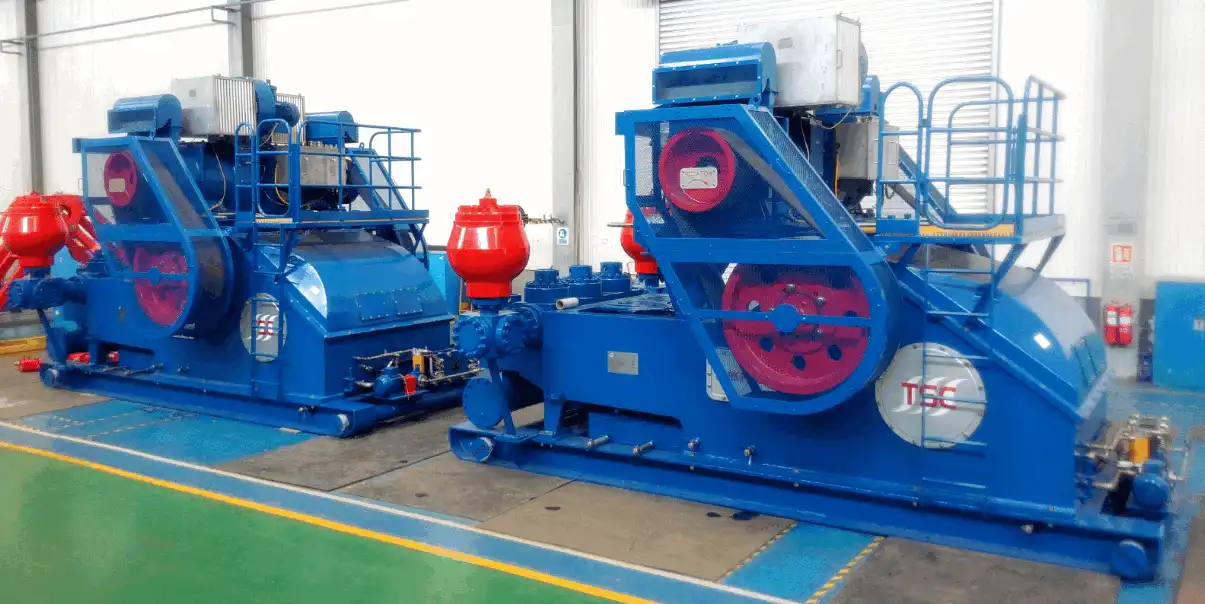
The WF Series Mud Pump has cutting-edge technology. TSC's triplex design delivers 500HP to 2,200HP while remaining compact, which is ideal for jack-up platforms and semi-submersible rigs. The combined herringbone gear design reduces vibrations, extending part life and reducing drilling boat stress.
Common Causes of Mud Pump Failures and Performance Issues
Drilling equipment breakdowns are costly. It may cost tens of thousands per hour offshore. Procurement and repair engineers may create targeted preventative strategies to keep operations operating smoothly by analysing problems.
Abrasive Wear from Drilling Fluid Characteristics
A gritty slurry of barite, bentonite, and formation fragments is combined with drilling fluids. This combination rapidly wears liner surfaces and valve seats in the fluid end. Even high-quality materials degrade under these conditions. Liner wear leaves gap between the piston seal and liner surface, lowering volumetric efficiency and allowing pressure variations to screw with drilling parameters.
Valve parts are prone to erosion. Solid particles between the valve seats and covering surface prevent full valve closure. Upon impact, high-pressure fluid cuts through metal, destroying a valve system within hours. Drilling for environmental remediation and mining core samples sometimes fails because formation materials change unexpectedly.
Overload Conditions and Operational Stress
Pushing machinery beyond its limitations wears components quicker. Running at maximum discharge pressure for extended periods heats the fluid end and stresses the crankshaft. Overloaded bearings that should last 30,000 hours at their rated loads may shatter within weeks.
Dynamic loading adds to the problems that offshore drilling platforms and deepwater research boats have to deal with. When waves move a ship, they cause acceleration forces that make standard operational stresses worse. The WF Series Mud Pump solves these problems with its rigidly built frame and forged-core crankshaft, which make it very stable in size even when loads change, which is common in coastal settings.
Inadequate Maintenance and Component Quality Issues
Putting off drilling maintenance wastes money. Skipping scheduled inspections allows modest issues blossom into catastrophic failures. Aftermarket parts may be cheaper, but they typically lack the metal quality and dimensions needed for reliable service.
Tribologically suitable connection surfaces are ensured via API Spec 7K-compliant interchangeable components. Fake liners seem the same, but their heat treatment varies, making them wear out quicker. Piston rubber compounds must withstand particular temperatures and chemical reactions, which low-quality materials cannot.
Mechanical Failures: Seals, Valves, and Alignment Problems
Not enough cooling water flow, unclean grease, or worn elastomer materials might cause seal failure. When a seal breaks, abrasive fluid enters the power end, spoiling the lubricating oil and accelerating bearing wear. If not fixed immediately, this failure scenario might ruin a pump system.
When the power and fluid ends are misaligned, pistons and connecting rods are unevenly loaded. Even slight angle changes produce side stresses that accelerate liner wear and twist piston rods. Poor construction procedures or foundation settling in land-based operations produce alignment issues.
Environmental Stresses and Corrosion Impacts
Offshore drilling equipment rusts faster due to salt spray, excessive humidity, and rapid temperature fluctuations. Even well-coated portions deteriorate, bringing water into vital joints and connections. Hydrogen Sulphide in formation fluids degrades steel and structural materials without visible damage.
Geothermal well drilling complicates heating. Operating adds heat to high ambient temperatures, raising fluid end temperatures exceeding elastomer service limitations. Modern Mud Pumps' additional spray system keeps potentially damaged sections cool to bear severe heat loads.
Effective Mud Pump Maintenance and Prevention Strategies
Reactive firefighting becomes regulated, repeatable equipment reliability with proactive maintenance. When drilling contractors implement extensive maintenance plans, TCO drops and operations are more frequent.
Routine Inspection Protocols and Monitoring Systems
Walk-around checks should check cooling water systems, exterior leaks, bearing temperatures and strange sounds or vibrations daily. Pressure gauges indicate modest pump performance variations that indicate immediate concerns. A continuous reduction in discharge pressure indicates worn valves, whereas rapid pressure variations indicate liner or piston seal failure.
Now vibration tracking may be used for enhanced diagnosis. Accelerometers on bearing housings detect failure mode frequency patterns. Unbalanced crankshafts sound different than damaged bearings or misaligned connections. It allows condition-based repair, which replaces components based on wear rather than randomness.
As part of weekly checkups, the lubrication system should be checked, and the oil's state should be checked for metal pollution or water entry. More thorough checks are done every month, like using bore gauges to measure liner wear, making sure valve springs are properly tensioned, and checking that important fasteners meet torque standards. The TSC WF Series Mud Pump's Super Bolt design makes bearing repair easier by cutting down on the time needed to take the pump apart compared to traditional bolted designs.
Quality Component Selection and Supply Chain Management
Replaceable OEM and aftermarket parts come in several grades. People should consider both the original purchase price and the entire cost of ownership while buying. Premium liners constructed of high-chrome iron or ceramic materials cost more upfront but last longer and need less maintenance, reducing downtime and saving money.
Building relationships with dependable manufacturers ensures you obtain genuine parts that match size and material specifications. High chromium iron or ceramic sleeve liners are available for the CM Energy WF Series. These liners withstand tough shale gas drilling and tunnelling environments. The API Q1, API 7K, ISO 9001, ISO 14001, and ISO 45001 standards demonstrate tight quality control for these components.
Operational Parameter Optimization
Running equipment within its limitations extends its lifespan. Flow rates should match the wellbore and discharge pressure shouldn't be greater than the manufacturer recommends. By altering stroke rate, supply may be adjusted. Running slower when full flow is not required reduces wear on all moving parts.
Equipment durability depends on drilling fluid quality. Keep fluid flow, solids, and temperature in check to ensure pump safety. Together with mud engineers, fluid characteristics are maintained to balance wellbore stability and equipment wear.
Operator Training and Standard Operating Procedures
Even powerful tools can't repair operator errors. Comprehensive training should include normal startup and shutdown, emergency response, and basic repair. Operators must understand how working circumstances impact equipment health and that pushing it too hard every shift wears it out quicker.
Standard processes ensure all shifts and personnel follow the same procedures. Documented methods for altering settings, reacting to alerts, and monitoring eliminate unpredictability that causes early failures. Regular training refreshes abilities and lets workers discuss equipment issues.
Together, these repair plans protect against unexpected downtime. Comprehensive programs boost dependability by over 30% in organisations. Because they can service parts more regularly and perform fewer emergency repairs, they have cheaper maintenance expenses.
Troubleshooting Guide for Common Mud Pump Problems
A rapid investigation reduces downtime when equipment goes down. Systematic troubleshooting helps maintenance teams uncover core issues rather than simply symptoms. This prevents repeated failures, which reduces operations efficiency.
Diagnosing Pressure and Flow Anomalies
Discharge pressure decreases usually indicate fluid end issues. A quick pressure decrease might indicate a catastrophic valve failure or liner break. Slow pressure decrease may indicate wear worsening. You can diagnose the issue by measuring suction pressure. If suction pressure remains the same but discharge pressure lowers, the pump is the issue, not supply lines or tank levels.
Due to flow issues, rig floor standpipe pressure varies constantly. Unseated valves may cause backflow during the suction stroke, reducing net forward flow. Comparing volumetric output to stroke counter numbers demonstrates efficiency loss. If a pump is working at its advertised speed but not producing adequate volume, examine the fluid end immediately.
Addressing Vibration and Noise Issues
Too much vibration hurts not only the pump but also the tools and supports around it. The most likely cause is loose base nuts, which should be checked right away. If the foundations are strong, the vibration is probably caused by an imbalance inside the building or worn bearings.
Strange noise patterns can help with diagnosis. When the crankshaft makes knocking sounds, it means that the connecting rods or crossheads are wearing out. High-frequency screaming is often a sign of a problem with the bearings, while regular thumping could mean that the valves are slamming because the springs are weak or the guides are worn out. The WF Series Mud Pump is made with cast crossheads and guides that make it more resistant to wear. This makes these failure modes less common in tough situations like horizontal directional drilling.
Solving Overheating and Seal Failure Challenges
High temperatures accelerate elastomer degradation and reduce lubricant effectiveness. Check the liner cooling system's cold water flow when temperature warnings sound. Blocked cooling fans or spray tubes are usually to blame. When cooling is restored, temperatures should return to normal rapidly.
Overheating that persists despite cooling flow indicates internal friction. Unaligned pistons generate too much heat when they drag on liner surfaces. Bearing oil loses protection when unclean, allowing metals to contact and swiftly raising temperatures. Shutting down immediately prevents serious harm.
Seal breaches must be repaired immediately to prevent abrasive fluids from entering the power end. The supplementary lubrication system protects pumps when designed properly, but only if maintained. Replacing seals at specified intervals prevents leakage.
Real-World Case Study: Offshore Platform Recovery
During a shale gas drilling effort, an offshore jack-up platform had multiple failures of its discharge valves, with an average of one failure every 48 hours. An investigation showed that formation cuttings with unusually sharp angles were wearing down valve seats. To fix the problem, ceramic-seat valves with better corrosion resistance were used, and the drilling fluid had more active solids control put in place. These changes increased the life of the valves to over 300 hours, which improved operating efficiency and got the project back on track.
This example shows how thorough fixing and choosing the right parts can solve problems that seem impossible to solve. The drilling team didn't just accept that failures would happen; they found out why they were happening and put in place answers that were tailored to the unique operational problems.
How to Choose the Right Mud Pump to Minimize Operational Risks
A job's progress might be delayed by the equipment selection for the Mud Pump. Choosing the correct tools requires considering cost, flexibility, and lifetime usage.
Comparing Pump Configurations and Drive Systems
Triplex pumps are easier to repair and maintain flow than duplex pumps. The fewer reciprocating parts make additional parts simpler to monitor and save inspection time. Triplex arrangements reduce pulsation, which reduces stress on downstream pipe systems and surface equipment. Geothermal wells and directional drilling need accurate pressure control, this is beneficial.
Drive system selection depends on the operational environment and infrastructure. Electric motors generate less pollution, are more efficient, and quieter. These are essential for city infrastructure and businesses near people. Rural locations and mobile drilling spreads benefit from diesel-powered machines' power grid independence. TSC's WF Series Mud Pump is available in diesel and electric variants for easy project adaptation.
Evaluating Performance Specifications
By matching pump capacity to wellbore demands, you prevent poor performance and wasteful overcapacity. Hydraulic horsepower depends on hole size, depth, and rock type. Shallow, wide wells require high flow rates at low pressures, whereas deep wells demand the greatest pressures. WF Series models of 500HP to 2,200HP and output pressures up to 7,500 psi may be utilised for drilling, workover, and other operations.
Volumetric efficiency impacts fuel usage and part wear. Maintaining high efficiency at design working points reduces energy expenses and heat generation, speeding part degradation. Reputable manufacturers provide performance graphs showing their efficiency over the operating range. It helps you compare alternatives wisely.
Assessing Supplier Capabilities and Support Infrastructure
Equipment purchases start the provider relationship, not terminate it. Warranty coverage, professional assistance, and replacement component shipping charges impact total ownership expenses. Established service networks let vendors react faster to issues. This is crucial for international operations when parts are difficult to get.
CM Energy provides worldwide and local drilling services via its network. Our professional technical assistance is accessible 24/7/365, regardless of location or time zone. Full pump repairs improve equipment life, and tailored solutions fulfil microtunneling and environmental cleanup drilling demands.
Manufacturing quality affects reliability. API Q1, API 7K, ISO 9001, ISO 14001, and ISO 45001 certifications demonstrate a company's quality commitment. ABS, DNV GL, and CCS approvals demonstrate the idea and manufacturing process's quality. Each TSC WF Series Mud Pump is tested under full load before shipping to ensure quality.
Design Features That Enhance Reliability
Looking at some design elements reveals how decent tools vary from amazing solutions. Wear resistance is better with forged crankshafts than with cast ones. Precisely machined herringbone gears decrease noise and vibration and last longer. Force lubrication ensures bearings get the proper quantity of oil under all situations.
The WF Series' strong, oilfield-style frame gives it a solid working platform that keeps put when shifted when ground conditions change, as is frequent in drilling. Critical elements are made of high-strength steel, while cast crossheads and guides reduce wear in harsh situations.
These design criteria affect whether equipment operates successfully over extended periods or requires regular monitoring and premature part replacement. These characteristics reduce pump ownership costs and increase use time.
Conclusion
Mud Pump problems can be avoided with a thorough strategy that combines high-quality equipment, regular upkeep, and knowledgeable operators. Because unplanned downtime in drilling operations costs a lot of money, investing in dependability is one of the best choices contractors can make. Knowing the most common reasons why things break—abrasive wear, overloading, poor upkeep, seal degradation, and environmental stresses—allows for focused prevention tactics that greatly increase the availability of equipment. A strong defense against surprising failures can be made by putting in place regular inspection routines, getting quality parts, making sure that operational parameters are optimised, and spending money on teaching operators. If you choose reliable equipment, like the WF Series from TSC, you can run successful operations in a wide range of settings, from offshore platforms to geothermal wells. This is because the WF Series ensures continuous fluid movement, which keeps drilling projects on schedule and on budget.
FAQ
1. How often should mud pump expendable components be replaced?
Fluid type, operating circumstances, and part quality affect replacement times. Premium liners may last up to 4,000 hours with clean drilling fluids, but abrasive applications like mine core sampling may need replacement every 500 to 800 hours. Pistons survive 800–1,500 hours and valves 300–1,000 hours, depending on solids. Performance variables like discharge pressure stability and volumetric efficiency are stronger indicators of replacement than time intervals. Check worn Mud Pump parts periodically to avoid failure.
2. What are the earliest warning signs of impending pump failure?
Changes in operation typically precede big errors. When discharge pressure progressively lowers, vibration levels rise, bearing temperatures rise, and sound patterns shift, problems begin. External leaks near seals indicate damaged parts. Regular inspections and sensors monitor these signals for predictive maintenance to prevent unplanned shutdowns and wasted time.
3. Does regular servicing actually extend equipment life significantly?
Many drilling companies have shown that maintenance works. Operations using full preventive maintenance strategies claim 40% to 60% service life gains over reactive maintenance. By monitoring oil periodically, lubrication issues may be detected before they harm bearings. Regular valve inspections prevent fluid end component washout or damage. Taking care of little issues before they grow worse reduces maintenance costs by extending part life and reducing emergency repairs.
Partner with CM Energy for Superior Mud Pump Solutions
CM Energy is ready to help you with your digging projects by providing the best Mud Pump equipment and full-service support. Our TSC WF Series gives your operations the dependability they need, with API approvals and performance that has been tested in global drilling efforts. Our engineering team creates unique solutions that solve your problems, whether you need tools for offshore platforms, shale gas operations, or other specialised uses. We know how hard it is to run your business because we are a known manufacturer with over 25% of the offshore drilling equipment market. Our technical support is available 24/7/365, so you can always get help from a professional. Additionally, our global service network offers fast delivery of parts and repair services to keep your business running as smoothly as possible. Get in touch with our team at info.cn@cm-energy.com to talk about how our WF Series Mud Pump can help your business run more smoothly, cut down on wasted time, and give your projects the performance stability they need.
References
1. American Petroleum Institute. (2018). Specification for Drilling and Well Servicing Equipment (API Spec 7K). API Publishing Services, Washington, D.C.
2. Johnson, R.T. & Williams, M.E. (2019). Mud Pump Systems: Design, Operation, and Maintenance Practices for Drilling Applications. Petroleum Engineering Press, Houston, Texas.
3. Mitchell, B.S. & Robertson, K.L. (2020). "Reliability Analysis of High-Pressure Reciprocating Pumps in Offshore Drilling Operations." Journal of Petroleum Technology, Vol. 72, Issue 4, pp. 45-62.
4. National Drilling Association. (2021). Best Practices for Equipment Maintenance in Drilling Operations. NDA Technical Manual Series, Cleveland, Ohio.
5. Peterson, D.W. (2017). Drilling Fluid Circulation Systems: Engineering Principles and Failure Prevention. Offshore Technology Publications, London, United Kingdom.
6. Zhang, H. & Anderson, P.R. (2022). "Tribological Performance of Mud Pump Components Under Abrasive Slurry Conditions." Wear: An International Journal on the Science and Technology of Friction, Lubrication and Wear, Vol. 498-499, pp. 204-218.