Choosing a Trusted Methanol Fuel Feed System Supplier
To find a reliable Methanol Fuel Feed System provider, you need to look at their technical knowledge, ability to meet certification requirements, and ability to provide long-term assistance. The right partner can provide well-thought-out solutions for handling low-flashpoint fuel, protecting against corrosion, and making sure operations are safe in both marine and commercial settings. A trustworthy seller has worked on dual-fuel vessel projects before, follows strict quality control standards like DNV certification, and provides full lifecycle support from design to installation and upkeep. This makes sure that your investment meets the needs of regulators and keeps working well even when operating conditions are tough.
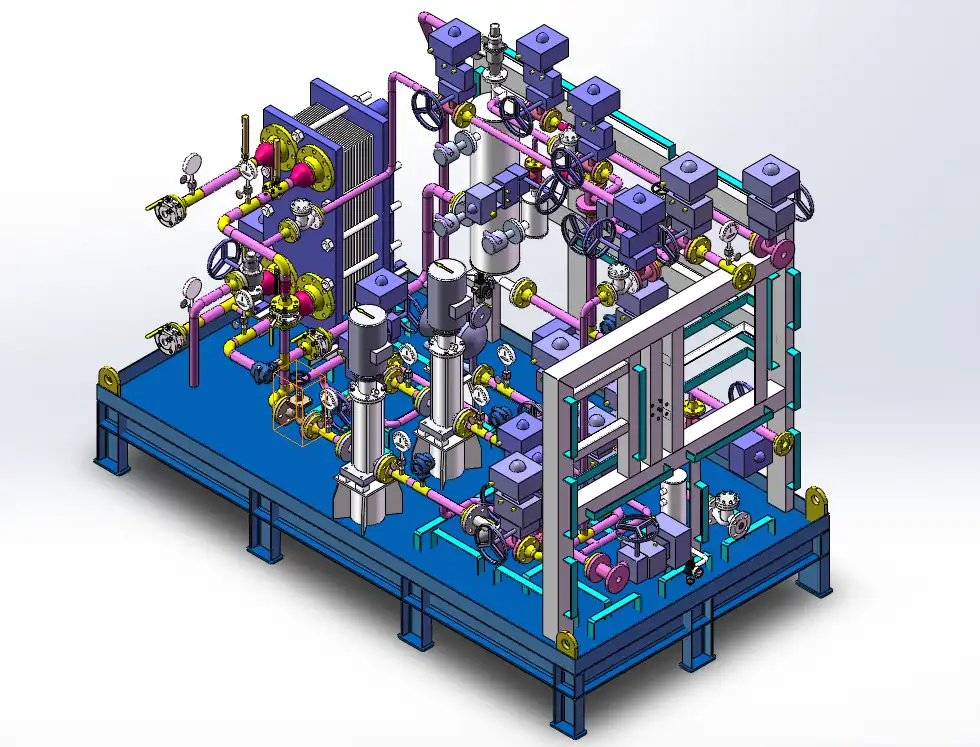
Understanding Methanol Fuel Feed Systems: Key Principles and Advantages
What Makes Methanol Fuel Supply Different from Conventional Systems
Traditional diesel or heavy fuel oil infrastructure is very different from Methanol Fuel Feed Systems. The main problem is that methanol has special chemical qualities that make it dangerous: it has a low freezing point, corrodes metal, and is poisonous. Because of these factors, special building methods are needed that aren't possible with regular fuel systems.
Keeping tight control over pressure, temperature, and flow rate throughout the whole supply chain is the key to delivering methanol fuel efficiently. Diesel systems can handle bigger operating margins, but methanol systems need to be watched all the time to avoid vapour lock, cavitation, and material degradation. This accuracy is especially important when engines change from one type of fuel to another or from one load situation to another while they are running.
Core Components That Ensure Reliable Operation
A full Methanol Fuel Feed System is made up of several specialised parts that work together. No matter how much work is being done, the supply unit keeps delivering fuel according to the exact specs set by the engine maker. The filling and transportation device takes care of bunkering while following the rules set by the SOLAS-IBC Code for chemical vessels. Auxiliary systems do important support work, and control and safety systems keep an eye on parameters and, if needed, follow emergency stop procedures.
The choice of material is very important in these parts. The corrosive traits of methanol don't affect stainless steel buildings, usually 316L grade or higher. Materials used for sealing must not break down when exposed to chemicals or changes in temperature. Continuous tracking of air in double-walled pipes adds another layer of safety by finding any leaks right away, before they become dangerous.
Environmental and Operational Advantages Driving Adoption
Methanol is eco-friendly, thus the maritime industry appreciates it. Burning methanol produces fewer sulphur fumes, nitrogen oxides, and particulate matter than other marine fuels. Ship operators may comply with the IMO's harsher requirements without affecting their commercial operations with this cleaner emission profile.
Environmental compliance isn't the sole operational gain. Methanol is liquid at ambient temperature and pressure, it doesn't require cold storage like LNG. Because fuel molecules are simple, existing engine designs can be converted to dual-fuel without replacing them. Bunkering infrastructure is being developed swiftly at key ports, easing supply chain concerns that slowed acceptance.
As production increases, cost reasons favour methanol. Green methanol from renewable sources might make maritime operations carbon-neutral. The fuel's compatibility with crew training and operational routines makes it simpler to understand than new propulsion technology.
Comparing Methanol Fuel Feed Systems with Alternative Solutions
Performance Characteristics Across Different Fuel Types
Performance measures show different operational patterns when looking at fuel supply systems. Methanol Fuel Feed Systems keep the supply pressure between 4 and 10 bar for low-pressure delivery or higher amounts based on how the engine is built. Temperature treatment keeps the viscosity of the fuel in the best ranges so that it can be atomised consistently. These factors are very different from diesel engines, which work at higher pressures and need different temperatures.
Being able to use two types of fuel is a big plus for methanol engines. When ships have the right fuel supply facilities, they can switch between methanol and marine petrol oil without stopping the engines. This gives operating security when there are problems getting methanol or when entering places that don't have methanol bunkering facilities. The automatic switching process has purging steps that keep the engine's integrity and keep the fuel from getting dirty.
Emission Profiles and Regulatory Compliance
More and more, regulations are favouring fuels with lower emissions. The burning of methanol doesn't release much sulphur, so it meets the tightest sulphur cap standards without the need for expensive systems that clean the exhaust gas. Nitrogen gas pollution can still be controlled with the tools we already have. Compared to heavy fuel oil, the amount of particulate matter released drops a lot. This makes health effects in port towns less severe.
Meeting the standards of the IGF Code for low-flashpoint fuels is a key difference. Methanol fuel supply systems need to have extra safety features that regular fuel systems don't have. Some of these are double-walled pipes that can find leaks, nitrogen cleaning systems, and better air systems. These standards make things more complicated, but they make sure that the ship can be used safely for as long as it is in service.
Long-Term Maintenance and Lifecycle Costs
Different fuel source systems have very different maintenance needs. Because methanol isn't very lubricating, it needs special pump designs with the right coatings or magnetic drive setups. Maintenance on mechanical seals happens at set times based on how many hours they are used, but maintenance on magnetic drive pumps lasts a lot longer. Filtration systems need to be closely watched to keep injectors from getting clogged up with dirt.
The supply of fuel, the investment in infrastructure, and the flexibility of operations must all be taken into account in a lifecycle cost study. When compared to traditional gasoline infrastructure, methanol systems need more money to get started. But over the life of the vessel, lower fuel prices and lower costs for pollution control add up to lower operating costs. The option to use existing engine designs by converting them to run on both petrol and diesel instead of replacing them completely makes the return on investment figures much better.
How to Choose a Trusted Methanol Fuel Feed System Supplier
Defining Your Application-Specific Requirements
To choose the proper service, know your company's demands. Space requirements depend on vessel type and size. Tankers and bulk ships of 40,000 to 400,000 DWT require powerful systems to sustain their huge engines throughout extended ocean trips. Chemical trucks and LPG carriers complicate shipping fit and compliance with requirements. Land-based river boats are tiny and modular due to space constraints.
Engine manufacturer standards determine fuel pressure, temperature, flow rate, and cleanliness. The Methanol Fuel Feed System must transmit methanol within limitations regardless of sea conditions or load. Knowing your engine's fuel switching, starting, and emergency stop procedures guides system design.
Budget worries go beyond purchase price. Construction expenses, commissioning costs, personnel training, and estimated maintenance are reviewed. Prefabricated skid-mounted modular designs save shipyard and aboard installation time. Because they know their goods' prices, "turnkey" suppliers that handle design, manufacture, delivery, installation, and testing make project budgeting simpler.
Evaluating Supplier Credentials and Technical Capabilities
Compliance with certification is an objective technique to verify supplier qualifications. Before construction begins, DNV AIP certifications verify that system designs fulfil classification society criteria. DNV Product Certificates verify that a company's systems have completed quality tests. These licenced suppliers have invested in technical expertise and quality control methods to produce reliable solutions.
Leaders may develop new technology before others. Research-and-development suppliers constantly improve their goods. Working on dual-fuel vessels, liquefied petrol ships, and chemical trucks displays your technological knowledge. Connecting methanol fuel supply systems to LNG, ammonia, and LPG cargo handling systems requires extensive low-flashpoint fuel management expertise.
A supplier's production history proves their reliability. Completed project references enable you to ask former customers about the system's performance, testing issues, and after-sales assistance. Successful deliveries to well-known shipowners and operators demonstrate suppliers' ability to fulfil demanding deadlines. Projects like Methanol Fuel Feed System skids for big RoRo operators and specialised trucks support claims.
Assessing After-Sales Support and Technical Assistance
The long-term practical success of a system depends on supplier support. Execute documentation bundles with operating instructions, maintenance plans, and troubleshooting guides, enabling crew members to execute normal chores. Customised training programs teach staff how to utilise the system, observe safety standards, and handle situations.
Remote expert advice reduces ship shutdowns for operational difficulties. Suppliers with 24-hour expert hotlines react quickly to unexpected issues. Advanced providers use remote tracking to discover issues before system failures. This predictive maintenance strategy reduces unplanned repairs and extends component life.
The availability of replacement parts affects operations. Suppliers with vast spare part inventories and strategically situated shipping locations ensure ships worldwide get their parts swiftly. Clear catalogues of supplementary parts with labels simplify purchase. Based on system configuration and operating profile, suppliers may advise spare parts packages to enable operators to maintain the proper quantity of parts without wasting funds.
Understanding Customization Capabilities and Delivery Flexibility
Standard products may not fit a vessel. Suppliers who update systems demonstrate they care about consumers. With a modular design, elements may be assembled differently to meet machine space. Manufacturers and suppliers who have worked on new building and remodelling projects understand their specific problems.
Integrating ship systems requires careful consideration of interfaces. The Methanol Fuel Feed System must communicate with safety tracking networks, engine control systems, and ship automation platforms. Suppliers that know many engine makers' control and communication standards may address integration challenges faster. Knowing classification society standards ensures that designs obey the regulations regardless of flag state or sales location.
Delivery timings must meet the port construction or ship dry docking. Good supply chain management and manufacturing experience help suppliers deliver systems on schedule and with high quality. Clear communication throughout the production process, including plant testing, boosts on-time delivery confidence. Transportation logistics professionals ensure safe transport to ports worldwide and manage international shipping documentation.
Ensuring Optimal Performance: Technical Support and Troubleshooting Essentials
Common Operational Challenges and Practical Solutions
Methanol Fuel Feed Systems have specific issues that must be handled responsibly. Cavitation hazards increase as supply pressure drops below vapour saturation thresholds, leaving engines without fuel while load grows. Proper system design maintains pressure margins throughout the operating range, although monitoring is still necessary. Crew training teaches them to recognise early warning signals and correct issues before they worsen.
Constant care is essential for contamination management. As a solvent, methanol is readily polluted by holding tank sediments or pipe corrosion. Particulates are eliminated by multistage filtering before fuel injection. Based on differential pressure values, filter components must be examined and changed routinely. Proper bunkering, such as fuel collection and analysis, prevents filthy gasoline from entering ship tanks.
Temperature control is crucial in tough workplaces. Cold weather affects methanol viscosity and pump performance. Hot weather increases vapour pressure and evaporation losses. Well-built systems incorporate heating and cooling to maintain fuel at the optimum temperature regardless of the weather. Insulating supply pipes reduces heat loss in cold regions and gains in machinery rooms.
Preventive Maintenance Strategies That Extend System Life
Maintenance schedules based on working hours prevent unexpected failures. Pump mechanical parts must be examined and changed as suggested by the manufacturer for regular maintenance. Maintaining thorough maintenance records helps identify parts nearing their service limitations before they fail. Vibration monitoring and performance trends in predictive maintenance may detect issues early.
Maintenance on the nitrogen purge system ensures emergency stop functionality. Regular purge tests ensure nitrogen supply pressure and valve functionality. Leak monitoring system calibration ensures vapour sensors sound alerts at the proper concentrations. Even when everything is normal, these safety-critical procedures must be monitored.
Control system software and security updates prevent disruptions. Suppliers correct faults and offer practical enhancements based on fleet-wide learning in frequent software updates. Updating software ensures compatibility with new communication channels and classification society cyber resilience criteria.
Leveraging Supplier Technical Support for Continuous Optimization
Strong relationships with provider technical support teams have advantages beyond troubleshooting. Experienced suppliers gather data from multiple locations and suggest methods to enhance items that operators may overlook. Comparing a ship's performance to comparable ships illustrates where operational adjustments might reduce fuel usage or increase maintenance times.
Refresher training programs keep crew members proficient when they switch vessel tasks. Suppliers that provide frequent training updates ensure that new hires get the necessary training and that experienced workers are informed of system changes and best practices. Online training tools allow crew members to customise course materials that fit their plans.
Together, operators and suppliers create system performance monitoring systems that boost growth. Business data trends might reveal new issues or improvements. These cooperative initiatives improve system reliability, customer satisfaction, and product planning, so suppliers that desire long-term customers invest in them.
Building Long-Term Partnerships with Trusted Methanol Fuel Feed System Suppliers
Strategic Value of Supplier Relationships Beyond Transactions
Buyers' impacts persist long after the device arrives. Long-term partners, suppliers' professional expertise, and support devotion affect a vessel's running performance over many years. Quality and reliable companies make the partnership more solid, reducing provider business lifespan threats.
Product success is strongly linked to brand reputation. Learning from real-world operations has helped established Methanol Fuel Feed System vendors improve their designs across several project iterations. When a manufacturing process is mature, system suppliers might share quality. A quality control structure with rigorous testing and documentation methods ensures that every system satisfies criteria, regardless of sequence.
A relationship with the OEM might aid with technical support and parts. Direct manufacturer ties eliminate intermediaries who slow communication and response times. Manufacturers have a lot of specific knowledge and understand system operation. This understanding helps solve odd practical situations and evaluate suggested adjustments.
Positioning for Future Technology Evolution
The maritime industry's carbon reduction strategy is evolving. Suppliers who study and develop new fuel technologies prepare their clients for future developments. Companies developing LNG, ammonia, and green hydrogen fuel paths demonstrate their commitment to long-term maritime solutions beyond commercial opportunities.
Consider scalability to ensure that your system investments will continue to meet practical demands. Modular designs may add room or adjust their layout as ship commerce evolves. Suppliers that design expandable systems reduce upgrade costs and ship downtime.
Digital technology is another future-proofing method. As the maritime sector digitises, vendors with sophisticated tracking, predictive maintenance, and remote diagnostic technologies will benefit. By supporting new data formats and communication protocols, systems may adapt to vessel automation designs.
Conclusion
To find the best provider for Methanol Fuel Feed Systems, you need to carefully look at their technical skills, quality qualifications, and commitment to long-term support. Partnerships that work well combine the performance of the system at the start with its dependability over its lifetime, compliance with regulations, and ability to change to meet new operating needs. The best long-term value comes from suppliers who have a lot of experience with a wide range of maritime uses, keep strict quality control standards, and invest in ongoing technical innovation. The switch to cleaner marine fuels is more than just following the rules; it's also a chance to work with suppliers who are committed to environmentally friendly seafaring activities. By putting these selection factors at the top of their list, companies set themselves up for operating success throughout the service lives of their vessels and help the industry reach its environmental goals.
FAQ
1. What certifications should I verify when evaluating potential suppliers?
Verification of DNV approval for the Methanol Fuel Feed System is an important way to make sure of quality. Before production starts, DNV AIP certificates make sure that the design is compliant, and DNV Product Certificates make sure that the finished systems pass all of their tests. Suppliers with these licenses show that they are good at both technical and quality control in manufacturing. Check that the SOLAS-IBC Code for handling chemicals and the IGF Code for low-flashpoint fuels are being followed in addition to the classification society's licenses. Suppliers should be able to easily show proof of their systems' approval and explain how they meet the needs of your ship's flag state and the areas where it will be operating.
2. How does dual-fuel capability affect system complexity and cost?
Dual-fuel systems are more complicated because they have more valves, control logic, and purge options. Automatic fuel switch systems need to be able to switch between methanol and marine petrol oil without stopping the engine. Cross-contamination of fuel is stopped by nitrogen purge processes. Even though it's more complicated, being able to use two fuels at once gives you peace of mind when there are problems with your methanol supply and gives you options when entering places that don't have methanol bunkering facilities. Given the operating benefits and risk reduction benefits, the extra cost is worth it for most businesses.
3. What maintenance support should suppliers provide beyond warranty periods?
Full lifecycle support includes having access to spare parts, technical documents, training programs for team members, and ongoing technical help. Suppliers who keep extra parts in stock and can ship them all over the world help keep ship downtime to a minimum. Crews can handle regular problems on their own thanks to detailed repair manuals that include troubleshooting tips. Having access to expert technical support workers through a hotline or remote help makes it easy to solve complicated issues fast. Training refresher programs make sure that team members stay skilled as they move between jobs.
Partner with CM Energy for Advanced Methanol Fuel Supply Solutions
CM Energy, which does business under the TSC name, offers the best Methanol Fuel Feed Systems in the business. They do this because they have a lot of experience with dual-fuel vessel projects and clean fuel technologies. Large companies, such as Stena RoRo, have asked our team to design and build Methanol Fuel Feed System skids, showing that they can handle tough jobs. We have cross-platform knowledge that helps us create better methanol systems because we offer complete solutions for LNG, ammonia, and LPG fuel systems.
Our adaptable Methanol Fuel Feed Systems meet strict DNV approval requirements and can be set up in a variety of ways for bulk carriers, tankers, and specialised vessels, whether they are brand new or being retrofitted. Full lifetime support includes planning, making, installing, commissioning, and providing ongoing expert support. As one of the first companies in the United States to offer Methanol Fuel Feed Systems, TSC led the way in developing this important technology beginning in late 2022. Get in touch with our engineering team at info.cn@cm-energy.com to talk about your needs and find out why top shipowners trust CM Energy as their provider.
References
1. International Maritime Organization. "IGF Code: International Code of Safety for Ships Using Gases or Other Low-flashpoint Fuels." IMO Publishing, 2023.
2. Lloyd's Register. "Methanol as Marine Fuel: Environmental Benefits, Technology Readiness, and Economic Feasibility." Lloyd's Register Marine Technical Report, 2024.
3. DNV GL. "Alternative Fuels for Shipping: Technology and Safety Assessment of Methanol Fuel Supply Systems." DNV Maritime Advisory Services, 2023.
4. Society of Naval Architects and Marine Engineers. "Design Considerations for Low-Flashpoint Fuel Systems in Commercial Vessels." SNAME Technical Journal, Volume 45, 2024.
5. American Bureau of Shipping. "Guide for Methanol and Ethanol Fueled Vessels: System Design, Material Selection, and Operational Requirements." ABS Technical Publications, 2023.
6. Maritime and Port Authority Research Institute. "Comparative Analysis of Alternative Marine Fuels: Performance, Emissions, and Infrastructure Requirements." MPARI Industry White Paper Series, 2024.