WAPS Benefits for Reducing Maritime Carbon Emissions
By using natural wind energy to help with normal propulsion, Wind-Assisted Propulsion Systems (WAPS) help marine companies cut down on carbon emissions in a big way. With these modern rigid sail technologies, ships can save anywhere from 10% to 30% on fuel, which directly reduces greenhouse gas emissions. Shipowners can meet Carbon Intensity Indicator (CII) standards by adding WAPS to commercial ships like chemical tankers, Newcastlemax bulk carriers, and LR2 tankers. This also lowers running costs and shows environmental leadership to charterers and regulatory bodies.
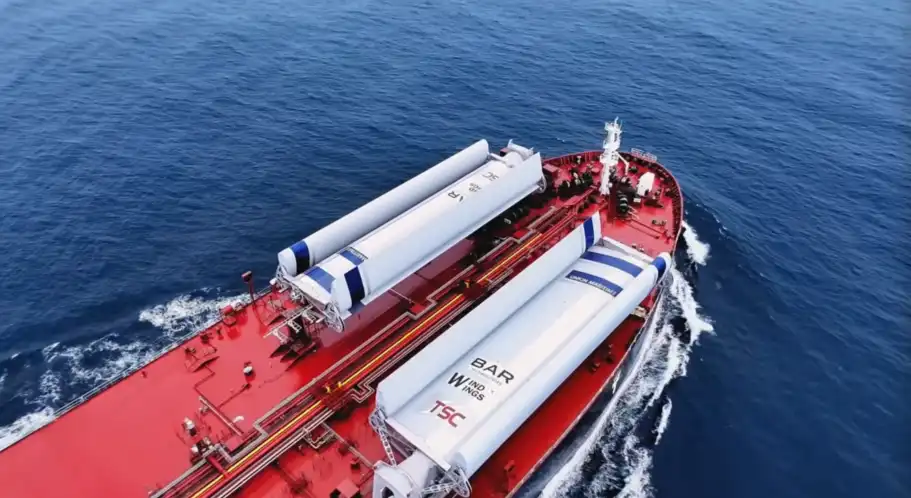
Understanding WAPS Technology and Its Role in Maritime Emission Reduction
Wind-assisted movement is a big step forward for shipping companies that want to be environmentally friendly without giving up their ability to make money. WAPS technology uses rigid sails that are automatically adjusted to the wind. This creates aerodynamic power that cuts down on the need for fossil fuels.
Core Technology Behind Modern Wind-Assisted Propulsion
Modern WAPS systems like WindWings from CM Energy and BAR Technologies feature three-element rigid wing shapes made from marine-grade steel and industrial composites. These systems automatically adjust sail angle and camber based on real-time weather data, achieving aerodynamic lift coefficients over 2.5 times higher than standard single-wing designs. Automatic controls constantly monitor conditions without crew intervention, ensuring consistent fuel savings and emission reductions throughout voyages.
Advantages Over Traditional Propulsion Methods
Traditional marine propulsion relies on burning fuel, creating a direct link between operational costs and carbon pollution. WAPS technology adds a green energy source compatible with regular engines while maintaining full operational freedom. Captains control speed and schedules while using significantly less fuel. Unlike experimental sail technologies, modern WAPS systems integrate with onboard equipment. Laydown devices moving wings horizontally enable cargo operations, port maneuvering, and bad weather routines without operational problems.
Security and Certification Standards in Maritime Applications
Procurement managers prioritize certifications from well-known classification groups. WindWings technology holds type approvals from DNV, Bureau Veritas, Lloyd's Register, and China Classification Society, guaranteeing designs meet strict safety and efficiency standards. Hydrodynamic and aerodynamic performance claims used in fuel savings estimates have been verified by outside groups including the Wolfson Unit. Certifications address structural durability, international maritime compliance, and proven emission reduction capability.
Challenges in Maritime Carbon Emission Reduction and How WAPS Helps?
There is more and more pressure on the shipping business around the world to lower its carbon footprint while also keeping prices low and service reliability high. Regulatory systems, such as the International Maritime Organization's CII grades, make reducing emissions more appealing by offering cash rewards and punishing ships that don't meet standards.
Traditional Limitations Facing Maritime Operators
Chemical tanker owners must balance emission reduction with strict dangerous cargo safety rules. Newcastlemax bulk carrier owners operate on thin charter market margins where fuel savings directly affect competitiveness. LR2 tanker fleets serving global oil distribution need solutions maintaining schedule reliability across varied route patterns. Each vessel type presents unique constraints that wind-assisted technology must address while preserving existing operational capabilities and safety standards.
Quantifiable Emission Reductions Through Wind Assistance
WAPS technology solves these problems with measurable carbon emission reductions without harming commercial performance. Installing a single wing can save tons of fuel daily, equating to many tons of CO2 reduction each day. These benefits multiply with fleet deployment. A multi-wing ship on optimal routes can cut annual emissions equivalent to removing dozens of cars from roads. DNV-verified monitoring of WindWings-equipped bulk carriers provides procurement teams proof for accurate ROI calculations.
Case Evidence From Maritime Implementations
Early adopter fleets demonstrate the commercial viability of wind-assisted propulsion. Ships with WAPS can keep carrying goods as usual while also benefiting from wind energy. This keeps them competitive in charter markets and raises their CII scores. The systems work on their own while the ship is navigating, so the crew doesn't have to learn how to use them or add to the complexity of operations.
These tests show that WAPS is a real way to cut down on pollution, not just a trial device. Ferry and coastal vessel owners gain the most from the quick return on investment features. Ships that run regular trips with good wind profiles see their money back in less than five years. The track record takes away the risk of acceptance for procurement managers who are looking at decarbonization plans.
Evaluating WAPS Solutions for Maritime Procurement
To choose the right wind-assisted transportation technology, you need to carefully look at the features of the vessel, its expected use, and the supplier's abilities. Professionals in procurement have to find a mix between technical efficiency, lifecycle costs, and strategy alignment with the sustainability goals of the company.
Comparative Analysis of Available Technologies
There are different wind-assistance methods on the market, and each one has its own unique features. The Magnus effect is used to make power by spinning cylinders in rotor sails. To improve their aerodynamic performance, suction wings use boundary layer control. WindWings technology shows how rigid wing sails can provide the best thrust-to-weight ratios and most efficient wind energy gathering in the most situations. When deciding between choices, buying teams should give the most weight to performance data that has been checked by a third party. WAPS solutions that have been approved by the classification society and been tested in the real world are less likely to fail when put into action than ideas that haven't been tried and tested. The level of technology development is shown by the size of the installed fleet and the number of hours it has been used. This level shows how reliable and stable the provider is.
Supplier Evaluation Criteria for B2B Procurement
Leading WAPS providers set themselves apart by offering full lifecycle support that goes beyond just delivering tools. CM Energy offers a full range of services, from figuring out if two systems will work together to installing, starting, and ongoing care. IoT monitoring tools allow for planned repair and performance improvement, which maximizes return on investment over the life of the equipment. Suppliers who have a history of making marine tools can help WAPS applications in important ways. Because CM Energy has made deck cranes and other specialized maritime equipment that is used by global fleets and has a big presence in the drilling and platform markets, they know what marine operators need and how to meet quality standards. This background makes sure that WAPS setups work well with the systems already on board and can handle the hard conditions of the sea.
Commercial Considerations and Procurement Guidelines
When making choices about WAPS investments, it's important to look at the total cost of ownership, not just the initial capital spending. When figuring out how much fuel a vessel saves, you should take into account things like its normal route wind profiles, working speeds, and number of sailing days per year. Payback time predictions that are based on conservative modeling methods that take operational variability into account are more accurate. Existing fleet owners can cut down on emissions without having to spend money on new vehicles by installing retrofit kits. Modern WAPS designs allow installation on ships that are already in use during planned drydock times, so service interruptions are kept to a minimum. Newbuild shipyards and design firms are adding wind-assisted power to vessels more and more. These turnkey solutions appeal to environmentally aware charterers and make assets easier to sell.
Best Practices for Installing and Optimizing WAPS on Ships
Successful wind-assisted propulsion implementation depends on thorough planning, professional installation, and ongoing performance optimization. Vessel owners benefit from partnering with experienced suppliers offering complete project management.
Installation Planning and Integration Strategies
Before installing WAPS, the ship is fully inspected to check its structural strength, deck plan, and operating needs. Engineering research figures out where the wings should be placed so that they catch the most wind while still being efficient at moving goods. Bulk ships usually put systems between cargo holds so that the hatch cover can be used and the crane can move freely. The installation process is organized into stages: factory acceptance testing makes sure the equipment works before it's sent, site preparation makes sure the ship is ready to go, and approved workers watch over the installation to make sure it's done right. During commissioning, all systems are checked to make sure they work properly. This includes automated controls, safety interlocks, and tracking links.
Operational Optimization for Maximum Emission Reduction
Once WAPS is installed, its efficiency is optimized to save as much fuel as possible in real-world situations. Advanced weather planning tools made just for wind-assisted ships help operations teams on land and crew members on board find ways that take advantage of good wind patterns. These tools work with processes for planning trips, so choices can be made based on data that balances usual factors like distance and weather with the amount of wind energy available. Crew training makes sure that the system is used and maintained correctly. Modern WAPS designs have easy-to-use screens that look and work like common deck equipment, which makes them easier to learn. In normal sailing conditions, automated operation cuts down on work, and human control choices give sailors more options for when things go wrong. Long-term service deals from companies like TSC keep systems running smoothly and fix any technology problems right away.
Regulatory Compliance and Quality Assurance
International rules about changes to vessels and safety gear must be followed by maritime sites. Flag state officials and classification societies must approve WAPS applications to make sure they meet stability requirements, structure standards, and operating safety procedures. This clearance process is handled by suppliers who offer turnkey solutions, which makes it easier for vessel owners to do their work. Quality control during production and installation makes sure that the product will work reliably for a long time. WAPS installations are sure to meet the quality standards of the marine industry because they use parts from sources that are ISO-certified, have strict testing processes, and are supervised by a classification society during production. The systems that are made can reliably lower emissions for as long as they are supposed to, which is usually decades with only a few major parts needing to be replaced.
Future Outlook: WAPS and the Evolution of Maritime Sustainability
As decarbonization in the marine sector speeds up, wind-assisted transportation technology keeps getting better. WAPS is an important part of sustainable shipping plans because it works with new digital systems and green technologies that work well with them.
Emerging Trends in Wind-Assisted Maritime Technology
The next version of WAPS will focus on better automation, lighter materials, and better mechanical efficiency. Digital twin technologies make it possible to try wing designs and operational tactics virtually, which speeds up the innovation cycle. Based on collected operating data, machine learning algorithms improve fuel saves by constantly tweaking wing control strategies. When wind aid is combined with other tools that reduce emissions, the results are positive. WAPS setups lower the base power needs, which makes battery-electric or hydrogen fuel cell backup systems better for moving things around and carrying hotel loads. With this hybrid method, ships can operate in ports without releasing any pollution while still being able to go far by using normal propulsion with wind assistance.
Strategic Planning for Procurement Decision-Makers
Forward-thinking ship owners see using WAPS as an important part of their overall plans to reduce carbon emissions from their fleet. When making investment choices, people think about both the current rules and the rules they think will be in place in the future. The IMO's plan for net-zero shipping by the middle of the century means that pollution limits will get stricter over time. Adopting WAPS early is a way to protect yourself from regulation risk and future compliance costs. When shipowners, technology providers, and classification groups work together, adoption across the whole business is sped up. Maritime players work with companies like CM Energy to create standard integration methods that cut down on technical costs and deployment times. These models for working together help the industry as a whole by laying out best practices and boosting faith in wind-assisted power as a common technology.
Long-Term Value Creation Through Sustainable Technology
In addition to meeting legal requirements, using WAPS gives businesses an edge in the changing rental market. More and more, cargo interests ask for low-emission vessels in tenders, which creates great chances for owners who do a better job of protecting the environment. Major companies' public promises to sustainability increase demand for "green tonnage," which puts WAPS-equipped ships in a better position when negotiating contracts. The fact that the technology can be used on different ships protects the worth of investments. WAPS systems that are made to last longer can switch to new tonnage, which protects the value of the capital as the fleet changes. Wind-assisted propulsion is different from vessel-specific changes that don't have much value left over, so asset managers looking at long-term fleet plans may find it appealing.
Conclusion
Wind-assisted propulsion systems have been shown to lower carbon emissions for commercial maritime activities. They also improve financial success by saving a lot of fuel. The technology solves some of the industry's biggest problems, like meeting CII safety standards, keeping running costs low when fuel prices go up and down, and meeting market demand for environmentally friendly shipping services. With full approval, practical validation in the real world, and supporting infrastructure from experienced providers, WAPS is a mature, low-risk way to reduce carbon emissions in the marine sector. Wind assistance technology that is adapted to the needs of different types of ships, such as chemical tankers, bulk carriers, and coastal boats, helps the environment right away and gives companies a long-term economic edge.
FAQ
1. Why does WAPS technology offer advantages over traditional propulsion systems?
Wind-assisted power works with regular engines instead of replacing them. It saves fuel without limiting how the machine can be used. While collecting green wind energy, ships stay at full speed and can change their schedules as needed. The automatic systems don't need much help from the crew and work with how things are already done for tracking and cargo handling. This lowers emissions without stopping operations.
2. How do WAPS installations contribute to measurable carbon reduction?
About 3.1 tons of CO2 are kept from being released for every ton of fuel saved through wind help. Depending on the size of the ship and the route it takes, installations save fuel every day, which adds up to hundreds or thousands of tons less pollution every year. These benefits are confirmed by independent verification by classification societies, which keep an eye on how the ships work and provide auditable data for environmental reporting and CII figures.
3. What specialized considerations apply to maritime WAPS implementations?
Marine environments demand robust construction, corrosion resistance, and reliable operation under extreme conditions. Purpose-designed maritime systems utilize marine-grade materials, redundant safety systems, and certifications from recognized classification societies. The installations meet the needs of the individual vessel, such as cargo operations, bridge vision, and navigation light compliance, so they don't get in the way of current operations.
Partner with CM Energy for Maritime Decarbonization Solutions
CM Energy is ready to help your fleet switch to environmentally friendly methods by using tried-and-true wind-assisted transportation technology. Together with BAR Technologies, we created the WindWings systems, which have been approved by the world's top classification societies and have been shown to reduce emissions in real-life ship operations. Whether you run chemical ships that need to improve their CII, bulk carriers that want to be more fuel efficient, or coastal boats that need a quick return on their investment, our team can make WAPS solutions that fit your needs. As a reliable WAPS provider with a lot of experience making marine equipment, we offer full lifetime support, from the initial compatibility check to installation and ongoing upkeep. Get in touch with our expert team at info.cn@cm-energy.com to talk about how wind-assisted power can help your business be more competitive and better for the environment.
References
1. International Maritime Organization (2023). "Guidelines on Operational Carbon Intensity Indicators and Calculation Methods." Maritime Environmental Protection Committee, IMO Publications.
2. Wolfson Unit MTIA (2022). "Independent Verification of Rigid Wing Sail Aerodynamic Performance for Commercial Vessel Applications." University of Southampton Marine Research Institute.
3. DNV (2023). "Wind-Assisted Propulsion: Pathways to Emission Reduction in Commercial Shipping." DNV Maritime Technical Reports and Classification Guidance.
4. Lloyd's Register (2022). "Decarbonization Pathways for Bulk Carriers and Tankers: Technology Assessment and Implementation Guidelines." Lloyd's Register Marine Publications.
5. Bureau Veritas (2023). "Rigid Sail Systems: Type Approval Requirements and Installation Standards for Commercial Vessels." Bureau Veritas Marine & Offshore Technical Reference.
6. Maritime Executive Research (2023). "Wind-Assisted Propulsion Technology: Market Adoption Trends and Operational Performance Data from Global Fleet Implementations." Maritime Industry Analysis Reports.