The Contribution of Hydrogen Fueling Stations to Reducing Carbon Emissions
In order to decarbonize heavy-duty transportation and industrial processes, Hydrogen Fueling Stations reflect a game-changing step. These facilities make it easy for fuel cell electric vehicles (FCEVs) to get fuel quickly. This is a cleaner choice to burning fossil fuels. By releasing high-purity hydrogen at set pressures, these stations completely get rid of tailpipe fumes, leaving behind only water vapor. In addition to reducing local emissions to zero, using green energy sources to make hydrogen can make the whole energy cycle almost carbon-neutral. This directly helps with climate goals and air quality problems in industrial and urban areas.
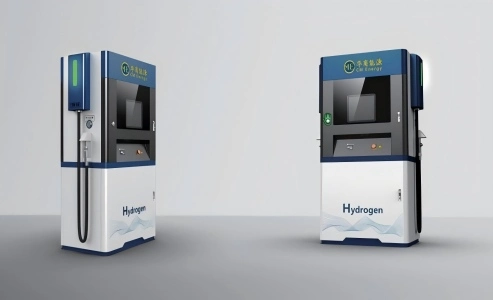
Understanding Hydrogen Fueling Stations and Their Environmental Impact
Core Components and Operational Principles
High-tech hydrogen fuelling stations compress, store, cool, and release hydrogen gas to electric automobiles. These stations operate at 35–70 MPa, depending on the car's demands, unlike ordinary fuel stations. A skid-mounted compressor with diaphragm or piston technology, high-pressure storage banks, pre-cooling devices to manage thermodynamic heat during compression, and precision dispensers with monitoring systems are crucial to the station's design.
It operates like regular fuelling but with greater safety regulations. Hydrogen arrives at the station via tube cart or electrolysis. A gas discharge column securely unloads the delivery vehicle's hydrogen into the station's buffer storage. The compressor then increases pressure for delivery. The pressure is pumped into cascaded storage tanks with low, medium, and high pressures. A sequence control module selects the appropriate pressure bank to maximise fill times and tank safety.
Pre-cooling is unique. When hydrogen gas is swiftly squeezed into an automobile tank, the Joule-Thomson effect heats it. To prevent this and fill tanks securely without exceeding temperature limitations, stations chill hydrogen to below zero before distributing it. Thermal management and real-time infrared data transmission between the dispenser and automobile ensure SAE J2601 fuelling standards. These measures avoid the fuel from being too hot or excessively pressured.
Direct Reduction of Greenhouse Gases
The environmental impact of hydrogen fuelling infrastructure relies on how successfully it replaces carbon-intensive energy sources. Transportation accounts for 27% of U.S. greenhouse gas emissions. Heavy-duty vehicles, buses, and industrial automobiles emit most of these. Chemical energy is directly converted to electricity by hydrogen fuel cells. They solely emit heat and water. Each hydrogen-powered truck that replaces a diesel truck saves many tonnes of CO2 annually.
Hydrogen-powered public buses may reduce CO2 emissions by 100 tonnes per year compared to diesel buses of the same capacity, according to studies. These advantages are considerably boosted along highway hydrogen refuelling routes and in towns with FCEV networks. Mining businesses that employ hydrogen haul trucks and ports that convert straddle carriers to fuel cell power may reduce emissions significantly while maintaining activity. Hydrogen carts in distribution facilities eliminate propane and lead-acid battery charging, interior air pollution. This improves worker health and reduces pollution.
When hydrogen is created using renewable techniques like wind, sun, or water electrolysis, carbon emissions decrease. Hydrogen Fueling Station. Making green hydrogen eliminates upstream pollutants, creating a closed-loop sustainable energy source. Even blue hydrogen created from natural gas with carbon capture and storage has fewer lifetime emissions than diesel or petrol.
Air Quality Improvements and Local Health Benefits
Hydrogen Fuelling Stations affect the global climate and improve air quality immediately in densely populated areas with industry. The pollution from conventional combustion engines is NOx, particulate matter, sulphur dioxide, and volatile organic compounds. Lung, heart, and premature mortality are associated to them. Hydrogen fuelling stations correctly placed to power city fuel cell electric vehicle networks may greatly reduce these harmful pollutants.
Bus depot rapid-refueling systems demonstrate this value. By using hydrogen cars, transportation agencies reduce particle pollution in neighbourhoods along busy routes, improving health. Additionally, port hydrogen infrastructure reduces diesel particulate matter in nearby neighbourhoods. This aids environmental justice in long-polluted areas by products and ships.
Industrial parks that employ hydrogen-powered automobiles avoid the pollution from thousands of daily vehicle journeys. Inside, air quality improves. Hydrogen fuel cell forklift charging hubs eliminate battery charging pollutants and reduce ventilation, saving energy and making workers safer.
Maintenance Practices and Infrastructure Reliability
To ensure reliability and safety, hydrogen fuelling stations need precise maintenance processes. Regular inspection and part replacement are needed for compressor systems, particularly diaphragm-based ones, to prevent hydrogen from weakening parts and destroying seals. To maintain zero-leakage performance, PDC compressors' three-layer metal diaphragm groups must be changed every few thousand hours due to cycle stress.
For accurate invoicing and metering, hydrogen stations require calibrated Coriolis mass flow meters. Checking leak detection systems like hydrogen monitors, UV/IR flame detectors, and automated shutdown logic regularly maintains safety integrity. Helium leak testing and visual inspections are performed regularly on high-pressure pipelines, valves, couplings, and fittings constructed of dependable stainless steel to identify weak places before they disrupt operations.
These maintenance methods ensure equipment durability and reliability. By improving station uptime, they promote emission reduction targets. When Hydrogen Fuelling Stations constantly function, fleet owners may convert from fossil fuels to hydrogen without worrying about downtime.
Comparing Hydrogen Fueling Stations to Alternative Fuel Solutions
Refueling Speed and Operational Efficiency
Speed is a benefit of hydrogen refuelling stations. Hydrogen Fuelling Stations can refill a heavy-duty truck or transit bus in about 15 minutes, making them as convenient to use as petrol stations. Fuelling an FCEV for a passenger takes 3–5 minutes. This is distinct from charging a battery electric vehicle (BEV), which might take 30 minutes to several hours, depending on battery size and charger capacity.
In businesses and industries where vehicle utilisation rates affect earnings, the speed advantage is crucial. Hydrogen refuelling stations keep mining transport trucks running. Due to lengthier charging periods, battery-electric alternatives cannot do this. Bus depot rapid-refueling systems help transit agencies keep to their schedules and maximise fleet performance without spending a lot on batteries or charging stations.
Offshore hydrogen supply systems aid naval operations. Vessels and equipment can swiftly refuel between shifts, keeping work moving and reducing diesel odours in sensitive coastal locations. Fast refuelling makes firms more competitive, strengthening the commercial case for hydrogen and its environmental advantages.
Energy Efficiency and Range Considerations
Hydrogen fuel cells convert chemical energy into electricity better than internal combustion engines, while battery-electric drivetrains are superior at energy routes from the well to the wheels. Energy density affects the equation for heavy-duty usage. Hydrogen tanks provide more energy per unit weight than batteries. You can go further with less weight.
Long-haul trucking trips with 500-mile ranges and fast turns benefit from highway hydrogen refuelling at a Hydrogen Fueling Station. Battery weight and charge time are major issues in these activities. Equipment usage must be included in the energy economy calculation. Battery charging stations must improve the grid and regulate demand to prevent severe load penalties. However, hydrogen fuelling stations may manage demand and use renewable energy.
Making hydrogen from wind and solar electricity that wouldn't be utilised improves system efficiency. Extra energy from green sources is stored in hydrogen and used for transportation when required.
Infrastructure Scalability and Investment Requirements
Hydrogen fuelling infrastructure requires a large initial investment, notably high-pressure compression, storage, and cooling systems. Station prices vary greatly depending on capacity. Stations handling 500–3000 kg per day demand large financial inputs. Modularity and standardisation make expanding distribution techniques simpler.
Installing skid-mounted compressors and pre-engineered equipment sets is faster and simpler. EPC services for compressors, dispensers, sequence control modules, gas output columns, and control systems simplify purchasing and installation. Battery charge infrastructure increases more slowly and requires large energy distribution upgrades to provide high-power, quick charging.
The scale question has network consequences. Individual hydrogen fuelling stations aren't practical, but they operate effectively as refuelling ecosystems in important locations like highways, metropolitan regions, and industrial groupings. Because hydrogen usage requires network density, government financing and incentive schemes are organising infrastructure construction more and more. Strategic partnerships between energy suppliers, automakers, and fleet operators balance operational promises and investment risks to hasten deployment.
Procurement Insights: Investing in Hydrogen Fueling Station Solutions
Technical Specifications and Supplier Evaluation
B2B procurement specialists must consider several technical considerations when assessing hydrogen fuelling facilities for practicality. The station's dispensing pressure—35 MPa for heavy-duty automobiles, 70 MPa for passenger FCEVs, or both—affects fleet performance. Throughput capacity, defined in kilos per day, determines how many vehicles the station can handle and if it can accommodate fleet expansion.
A key characteristic is compressor technology. Because they don't pollute or leak and are efficient, PDC diaphragm compressors are the most stable and environmentally friendly. Explosion-proof ratings (Ex DIICT4) and temperature ranges (-25°C to 55°C) provide equipment safety in various weather and installation conditions. IP55 protection standards ensure business equipment can withstand dust and water.
Not merely technical datasheets are utilised to assess providers. Procurement teams should check HyStEP testing and SAE J2601 compliance in production. References from real-world configurations demonstrate the product's performance and after-sales support. Fully integrated EPC suppliers make collaborating simpler and reduce the danger of missing deployment deadlines.
Financial Considerations and Financing Models
Hydrogen Fuelling Stations have several capital expenditures depending on size and configuration. The major investment includes skid-mounted compressors, hydrogen dispensers with dual fuelling guns, sequence control modules, gas discharge columns, and control systems. Preparing the site, connecting utilities, securing permits, and commencing the project all cost money. Procurement managers must create comprehensive project budgets.
Financing models let companies reconcile short-term financial requirements with long-term aspirations. Buying anything altogether gives you complete ownership and control, but it's expensive. Leasing distributes expenses over time, saving money for other assets and facilities. Power purchase agreements (PPAs) enable third parties to operate stations. Fleet operators eliminate practical and maintenance concerns by paying specialised infrastructure suppliers per kilogram of hydrogen supplied.
Government grants and rewards boost project profits. Money from federal programs that assist clean transportation infrastructure, state-level low-carbon fuel regulations with credit mechanisms, and regional air quality improvement activities decreases construction costs. Procurement teams must research incentives and arrange projects to maximise grant eligibility. This is because decarbonisation policy aims to modify incentive landscapes.
Maintenance Contracts and Operational Reliability
Long-term running efficiency requires structured maintenance plans for hydrogen fuelling stations' complexity. Maintenance contracts with equipment manufacturers or specialised service providers ensure that skilled high-pressure hydrogen system operators are constantly available. Contracts often include frequent checkups, compressor diaphragm and seal replacement, metering system calibration, and leak detection system testing.
Improved stability comes from predictive repair. Remotely monitored and diagnosed control systems provide real-time performance tracking and early detection of issues. This reduces unexpected downtime that delays fleet operations and lowers hydrogen infrastructure confidence. Remote monitoring and system availability metrics like 95% uptime should be included in the procurement requirements.
Contract conditions like spare part availability and response time are crucial. Store additional parts and ensure suppliers can react quickly to prevent faults in hydrogen fuelling equipment, which is highly specialised. Procurement teams should define service level agreements with rapid response times and high availability. Clear contractual solutions should safeguard infrastructure investments and keep operations going if a service level agreement isn't satisfied.
Leading Brands and Technology Providers in Hydrogen Fueling Stations
Global Industry Leaders and Their Technologies
Famous energy companies and specialist technology vendors supply hydrogen fuelling infrastructure. Skills supplement. Global industrial gas leaders Linde and Air Liquide provide integrated hydrogen generation, delivery, and dispensing solutions. Shell installs Hydrogen Fuelling Stations in strategic areas to promote energy transition and petrol sales.
Tech companies build tools and integrate systems. These companies provide modern compressors, pouring systems, and control tools to make fuelling faster, safer, and more efficient. Hydrogen infrastructure projects use CM Energy's TSC marine energy solutions and high-pressure equipment. CM Energy has high technical criteria for hydrogen fuelling systems due to its decades of experience selling offshore drilling tools globally and its performance in harsh maritime settings.
Per application, the company customises skid-mounted compressors, gas output columns, sequence control modules, hydrogen dispensers, and control systems. From local bus terminals to industrial captive fleets, 12.5 MPa (expandable to 35 MPa) capacity ranges from 500 to 3000 kg per 12 hours. Smart control systems discover weaknesses to ensure safety. High-pressure hydrogen pipelines, valves, couplings, and flowmeters are made of robust materials.
Recent Technological Advancements
Improved hydrogen fuelling technologies are underway. New compressors aim to be more dependable, efficient, and low-maintenance. Due to superior hydraulic oil movement and diaphragm materials, PDC diaphragm compressor designs survive longer between component replacements, lowering the total cost of ownership. Some systems can now last 4,400 hours without servicing, doubling their power.
In pre-cooling systems, energy-efficient heat exchanges and refrigeration operations manage temperature while saving energy. In advanced materials, hydrogen embrittlement is monitored. It makes storage tanks and piping systems lighter and cheaper. Dispenser innovations include detachable tips and greater communication. These simplify refuelling and improve usability.
The latest control systems integrate AI and machine learning algorithms to monitor safety, optimise fuelling, and forecast maintenance needs. Real-time data analytics assist fleet operators in planning operations and save expenses by showing fuel use. All of these technological improvements make hydrogen infrastructure investment better since they reduce early acceptance obstacles and hasten implementation.
Strategic Partnerships and Collaboration Benefits
Energy suppliers, fleet owners, and manufacturers increasingly combine to develop hydrogen infrastructure. Hyundai and Toyota work with infrastructure developers to release new cars when refuelling stations are available. It ensures petrol supply. Infrastructure investments and hydrogen promotion are common in these relationships.
Energy companies partner with commercial and industrial fleet owners to install fleet-specific refuelling stations. Tech and mining companies combine to install hydrogen haul truck recharging stations in maintenance facilities. Port officials work with equipment manufacturers to construct hydrogen infrastructure for straddle carriers and terminal tractors without disruption.
Organisations benefit beyond tools by working with well-known IT businesses. Pre-made plans and high-quality manufacturing eliminate new technology technical risks. Fully integrated engineering and EPC services streamline purchasing management and accelerate project completion. Competent vendors' after-sales support supports fleet uptime, infrastructure investments, and operational dependability. Partnerships help organisations commit to hydrogen transformations despite the technology's infancy.
Future Trends and Strategic Considerations for Hydrogen Fueling Station Deployment
Emerging Market Dynamics and Policy Support
Hydrogen infrastructure is being built faster due to decarbonisation policies. To ease freight and public transport transitions, the EU's hydrogen strategy aims for massive refuelling networks. North America has low-carbon fuel rules, making hydrogen cheaper. Federal infrastructure legislation funds hydrogen refuelling lanes along important freight routes.
These legislative improvements reduce financial risks and boost infrastructure profits from Hydrogen Fueling Station, making investment simpler. Procurement planners should monitor rule and incentive changes and time purchases for maximum benefit. Engaging with politicians and industry organisations improves regulatory frameworks and prepares firms for new opportunities.
The market is shifting because more individuals are realising that hydrogen is a superior fuel for heavy-duty vehicles, transit buses, yachts, and industrial equipment. This segmentation focuses infrastructure expenditures on hydrogen's most beneficial places, speeding up the creation of a sustainable market rather than attempting to make it work for everyone.
Scalability Challenges and Network Expansion
Businesses and the government must work together to build huge hydrogen fuelling networks. Insufficient stations in a network make individual stations useless for automobile operation. Hydrogen refuelling lanes need optimum station spacing along important roads. To allow cars to access FCEV networks across cities, they must be covered.
Scalability issues may be solved by standardising equipment specifications and use. Making mass-produced manufacturing and installation more efficient will reduce expenses. As demand develops, modular, skid-mounted designs make capacity addition easier and operating quicker. Common infrastructure arrangements, where several fleet owners utilise common stations, improve utilisation and profitability over captive locations.
Scalability includes green hydrogen generation and refuelling facilities. On-site electrolysis powered by renewable energy eliminates hydrogen transfer and makes operations carbon-neutral. As electrolysers get cheaper and renewable energy becomes more accessible, hydrogen infrastructure deployment plans will emphasise centralising production and dispensing.
Strategic Recommendations for Procurement and Investment
Stagger hydrogen fuelling infrastructure investments to meet fleet changeover timelines. Pilots may build stakeholder trust and give practical experience before large-scale rollouts. Choosing hydrogen for high-use cars with rigorous task cycles confirms its practicality and increases adoption.
Purchase specs should highlight expansion and flexibility. Expandable compression or storage devices protect and expand investments. As the industry changes, infrastructure with new technology upgrade channels will assist.
Adoption is easier and safer with skilled IT professionals. Hydrogen startups may benefit from CM Energy's high-pressure system and global service network experience. Suppliers' planning, installation, commissioning, and support skills speed up projects and free up internal teams to concentrate on fleet operations and other business tasks.
Flexible procurement helps with market and technological changes. As hydrogen prices decrease, infrastructure standardises, and vehicle numbers rise, early adopters with scalable infrastructure and operational knowledge will be more sustainable leaders and run their organisations better.
Conclusion
In both the transportation and commercial areas, Hydrogen Fueling Stations significantly reduce carbon pollution. This infrastructure removes important hurdles to decarbonising fleets by letting fuel cell vehicles run with the same ease of refueling as fossil fuel vehicles. The natural benefits include getting rid of direct pollution and making the air quality better, which is good for people's health in cities and factories. As production of renewable hydrogen grows and building networks get bigger, the ability to cut carbon emissions goes up a lot. Companies that spend strategically in hydrogen fueling technology will be able to keep their environmental promises while also keeping up the operational performance and economic competitiveness that are necessary for long-term success.
FAQ
1. What is the typical lifespan of hydrogen fueling station equipment?
Well-maintained hydrogen fuelling infrastructure lasts 15–20 years before requiring substantial equipment upgrades. Maintenance is hardest for compressor systems, which require new diaphragms and seals every few thousand hours. But with appropriate care, they may survive decades. Non-rusting storage tanks and high-pressure pipelines last longer. New technologies may be needed to upgrade control systems and gadgets to meet evolving automotive specifications. Updates contribute to core infrastructure, not replace it.
2. How does hydrogen purity affect fuel cell vehicle performance?
Contaminants may easily degrade fuel cell membranes, damaging catalyst materials and lowering performance permanently. The ISO 14687-2 and SAE J2719 hydrogen purity standards demand 99.97% purity and strict restrictions on water, sulphur compounds, hydrocarbons, and particulates. High-quality Hydrogen Fuelling Stations feature monitoring and filtering systems to guarantee hydrogen satisfies these criteria. When picking infrastructure providers and operating procedures, hydrogen purity is crucial since poor hydrogen quality ruins fuel cells irreparably.
3. What is the typical lifespan of hydrogen fueling station equipment?
Well-maintained hydrogen fuelling infrastructure lasts 15–20 years before requiring substantial equipment upgrades. Maintenance is hardest for compressor systems, which require new diaphragms and seals every few thousand hours. But with appropriate care, they may survive decades. Non-rusting storage tanks and high-pressure pipelines last longer. New technologies may be needed to upgrade control systems and gadgets to meet evolving automotive specifications. Updates contribute to core infrastructure, not replace it.
Partner with CM Energy for Advanced Hydrogen Fueling Infrastructure
CM Energy is ready to help your business switch to clean hydrogen-powered processes by providing complete fueling infrastructure options. Our TSC brand has decades of experience making high-pressure systems for tough naval and industrial uses. This brings a track record of dependability to the rollout of hydrogen fueling stations. As a top Hydrogen Fueling Station provider, we can make equipment packages and provide full EPC services that include skid-mounted compressors, dispensers, sequence control modules, gas output columns, and smart control systems that are specifically designed to meet your needs.
Our hydrogen fueling options use PDC diaphragm compressor technology, which means they don't pollute, leak, or waste energy. All of the important parts are made of highly reliable materials that ensure safety and long life in high-pressure service. Capacity ranges from 500 kg to 3000 kg per 12 hours at pressures up to 35 MPa. These ranges cover a wide range of uses, from quick refueling systems for buses to hydrogen refueling stations for mining haul trucks. Get in touch with us at info.cn@cm-energy.com to talk about how CM Energy can help you reach your decarbonization goals by providing you with safe and efficient hydrogen fueling facilities.
References
1. International Energy Agency (2023). "Global Hydrogen Review: Infrastructure Development and Carbon Reduction Potential in Transportation Sectors."
2. U.S. Department of Energy, Office of Energy Efficiency and Renewable Energy (2022). "Hydrogen Fueling Station Technology Assessment and Environmental Impact Analysis."
3. SAE International (2021). "J2601 Hydrogen Fueling Protocol Standards: Safety, Performance, and Emissions Implications for Commercial Vehicle Applications."
4. National Renewable Energy Laboratory (2023). "Life Cycle Carbon Assessment of Hydrogen Fuel Cell Vehicles and Supporting Infrastructure Systems."
5. European Commission Joint Research Centre (2022). "Hydrogen Infrastructure Deployment Strategies: Technical, Economic, and Environmental Considerations for Heavy-Duty Transportation."
6. Clean Transportation Partnership (2023). "Hydrogen Fueling Networks and Carbon Emissions Reduction: Case Studies from Transit, Freight, and Industrial Fleet Applications."