The Benefits of Linear Motion Shale Shakers in 2026
Linear motion shale shakers remain one of the most reliable workhorses in drilling fluid management. As the first line of defense in any solids control system, a well-selected shale shaker directly determines how efficiently your operation separates drilled cuttings from valuable drilling fluid. In 2026, with tighter environmental standards and rising mud costs, getting this equipment right matters more than ever. This guide breaks down everything procurement managers and mud engineers need to know before making their next purchase decision.
Understanding Linear Motion Shale Shakers and Their Functionality
How Linear Motion Works
The two vibrator motors on a linear motion Shale Shaker are mounted at an angle to the screen deck so that they move in a straight line. Cuttings are moved forward in a clear path by this motion, while drilling fluid flows through the screen panels. Linear motion is more constant in moving cuttings along the whole length of the deck, even if the fluid pool level or mud weight changes, compared to balanced elliptical shakers, which create an oval motion path.
Key Components That Drive Performance
The vibrator motors, the screen deck, the basket frame, and the support system make up the main part of a linear motion Shale Shaker. Screen panels are probably the most important part for operations because they are products that directly affect the accuracy of the cut-point. How well the unit can handle constant high-frequency vibration without fatigue cracking depends on the material of the basket, such as marine-grade coated steel or stress-relieved alloy steel.
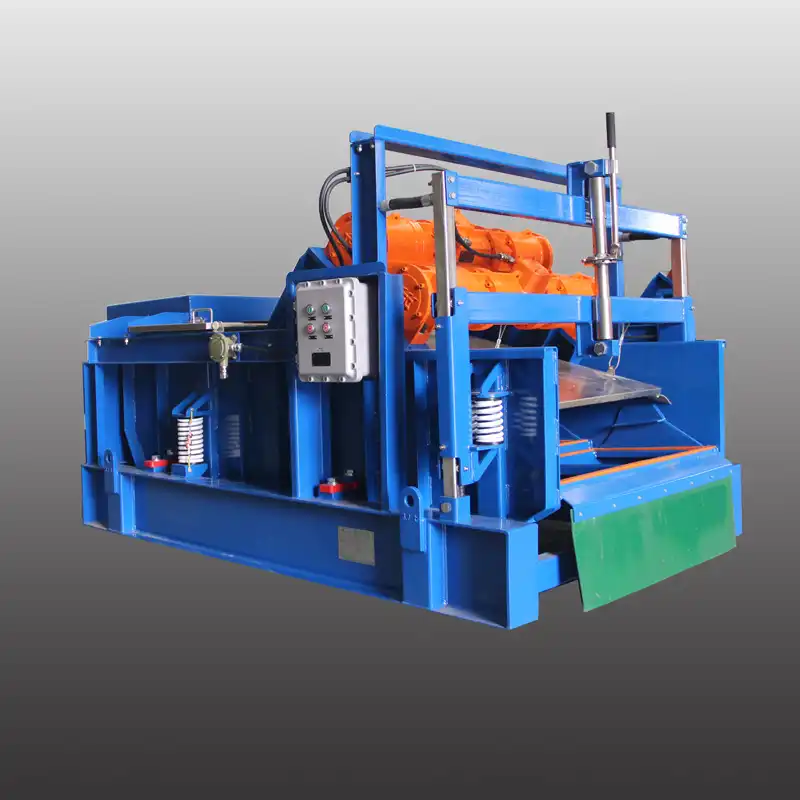
The CM Energy TSC HS270 Shale Shaker has a hill deck design that is a bit cylinder-shaped. This keeps the screens in place and flat against the deck. This small technical feature makes the sieving more consistent across the whole screen area.
Core Benefits of Linear Motion Shale Shakers in 2026
Operational Advantages and Cost-Saving Performance
Now that drilling programs are going into harder formations, the operational benefits of linear motion technology are even more important. Here are the main benefits that this type of tools offers:
- Higher throughput capacity: The straight-line vibration path lets linear motion Shale Shakers handle large amounts of drilling fluid without affecting the quality of separation. This makes them ideal for high-flow applications on both onshore and offshore platforms.
- Drier cuttings discharge: When solids are moved efficiently, they spend more time on the screen surface, which means cuttings hold less liquid. This lowers the cost of removal, cuts down on the amount of drilling fluid that needs to be thrown away with the Shale Shaker, and helps meet stricter environmental rules around the world in 2026.
- Reduced screen blinding: Consistent vibration intensity across the deck reduces fluid pooling and screen blockage, which is a common problem with motion types that aren't always predictable when working with thick or heavy muds.
- Broad mud system compatibility: Linear motion Shale Shakers work effectively with water-based, oil-based, and manufactured mud systems. These different types of fluids can be used with the HS270 series from TSC, which doesn't need major configuration changes between jobs.
These benefits can successfully solve the most recurring problems that drilling teams meet at the first stage of solids control, such as fluid loss, screen blinding, and inconsistent cuttings dryness. These issues add up to big cost issues over the course of a multi-month drilling program.
This is clearly shown by a field operation in an HPHT well setting. A linear motion Shale Shaker kept the separation integrity without removing barite from the fluid when heavy-weighted muds with high solids loading were being used. This protected both the stability of the mud weight and the equipment further downstream from fine, abrasive solids.
Comparing Linear Motion Shale Shakers with Alternative Solutions
Application-Specific Selection and Downstream Equipment Protection
When procurement teams look at solids control tools, they need to know where each technology fits in. Balanced elliptical shakers make a motion path that works well for lighter mud uses, but when fluid density or flow rate goes up, they may not be able to handle moving cuts quickly. Because they work better in a wider range of drilling situations, linear motion Shale Shakers are the standard choice for primary separation on most current rigs.
In the bigger picture of solids control, a Shale Shaker is not an alternative for mud cleaners, desanders, or decanter centrifuges; it is the guardian that keeps those other equipment safe. A linear motion Shale Shaker of the right size removes most of the coarse drilled solids at the flow line. This keeps all the equipment downstream from wearing out as quickly and between services.
When it comes to power sources, electric vibrator motors are the norm for use on the rig floor because they allow for precise speed control and require less long-term maintenance. The TSC HS270 Shale Shaker has two explosion-proof vibrator motors that are rated for hazardous area ratings. This makes it safe for both offshore and onshore gas settings.
Procurement Considerations for Selecting Linear Motion Shale Shakers
Evaluating Price-to-Performance and Support
The unit price is only one part of the total cost of a linear motion Shale Shaker that you are looking for. The real operational cost over a rig contract depends on how often the screen is used, how easy it is to get spare parts, and how quickly technical support can help. Procurement managers should ask for proof of the Factory Acceptance Test, which should show that the shaking amplitude is the same across the whole deck. Dead spots cause fluid to pool and cuttings to release unevenly.
New Equipment vs. Refurbished Units
New tools from a qualified Shale Shaker maker comes with a full warranty, up-to-date engineering standards, and the promise that all of the parts will work together. While refurbished units are cheaper, they come with the risk of basket fatigue and motor damage. For important drilling projects, the risk of using used tools rarely outweighs the money saved up front.
What CM Energy TSC Offers
The HS270 Shale Shaker series from CM Energy's TSC brand can be fully customized for both new builds and retrofits. Some important benefits of the procurement stage are:
- Drawings and BOM development based on the technical agreement: Based on the technical understanding, make drawings and a bill of materials (BOM).
- Localized service through a global network, reducing parts lead time at remote well sites: Localized service through a global network cuts down on the time it takes for parts to get to faraway well sites.
- 24×7×365 technical support to minimize non-productive time: 24x7x365 expert help to cut down on wasted time.
- PTS pre-tensioned plane screens with high-strength, corrosion-resistant materials for extended screen service life: PTS pre-tensioned plane screens made of high-strength, anti-corrosion materials to make the screens last longer.
- Adjustable deck angle without equipment shutdown, allowing on-the-fly optimization during drilling: Deck angle can be changed without shutting down the equipment, which lets optimization happen on the fly during drilling.
CM Energy covers more than 25% of the world market for offshore drilling tools. As of August 2024, the company had over 159 authorized patents, including 10 invention patents. This level of technical depth directly translates into product reliability for teams in charge of buying things that have a lot of capital at stake per unit.
Best Practices for Operation and Maintenance of Linear Motion Shale Shakers
Daily Operation and Deck Angle Management
When you set the deck angle on a linear motion Shale Shaker, it changes the depth of the fluid pool and how dry the cuts are. A small positive angle keeps the fluid pool at the feed end while causing dry discharge at the possum belly during normal drilling. With the HS270, you can change the deck position without turning off the unit, which is very useful for long drilling jobs.
Maintenance Intervals That Protect Your Investment
Every month, you should check the rubber or steel damping springs. In 24/7 drilling operations, a full spring set replacement is common every 12 to 18 months, or right away if there are any signs of the deck moving unevenly. Every tour, the screen panels should be checked to make sure the wires are still connected, the panels are properly tensioned, and the seals along the deck edges are still in good shape. Solid particles can't get into the mud tank because the HS270 is fully sealed, but this protection depends on the screen being installed correctly every time it needs to be changed.
The HS270's splash protection is a shutter-type moving cloth device that covers the full fluid impact zone without the need for bulky fixed guards. This saves deck room while protecting people and equipment nearby.
Conclusion
In 2026, linear motion Shale Shakers will still be the most reliable primary solids sorting tool that drilling companies can use. Their consistent vibration mechanics, ability to work with a variety of mud systems, and measured effect on the dryness of cuttings make them the best choice for procurement teams that are trying to keep both capital and maintenance costs low. The HS270 Shale Shaker from CM Energy's TSC brand can be used in a wide range of fields, from offshore deepwater platforms to HPHT onshore wells. It comes with a global service infrastructure and engineering customization options that lower the total cost of ownership over the lifecycle of the equipment.
FAQ
1. Why does linear motion outperform elliptical motion for most drilling applications?
Linear motion Shale Shakers make a steady, directional path for cuttings to move along that works with a lot of different mud weights and flow rates. When the fluid has a low density, elliptical motion can work, but linear motion keeps the separation intact when drilling factors change, which happens all the time on any well.
2. How often should screen panels be replaced on a linear motion shale shaker?
How long a screen lasts depends on how rough the formation is, the chemistry of the mud, and the G-force settings. Screens that are always on are usually checked every 24 to 72 hours. The HS270's PTS pre-tensioned screen design uses high-strength, corrosion-resistant materials to make panels last longer. However, no screen lasts forever, so it's important to keep a reliable spare inventory at the well site.
3. Can the HS270 Shale Shaker handle both water-based and oil-based muds?
Yes. It is designed so that the HS270 Shale Shaker can work with both water-based and oil-based drilling fluid systems. Because it has a fully sealed basket structure and a surface treatment that resists corrosion, it can be used in chemically harsh OBM environments.
Partner with CM Energy for Your Next Shale Shaker Procurement
Engineered solids control solutions are what CM Energy and its TSC brand offer. They are backed by global service reach and deep drilling tools experience. The HS270 Shale Shaker line can be used as an approved Shale Shaker supplier for building new rigs, updating old systems, and refilling screens. You can email our technical team at info.cn@cm-energy.com or go to cm-energy.com to get specifications, drawings, or a quote that is tailored to your project.
References
1. American Petroleum Institute. API RP 13C: Recommended Practice on Drilling Fluids Processing Systems Evaluation. API Publishing Services, 2022.
2. Bourgoyne, A.T., et al. Applied Drilling Engineering. Society of Petroleum Engineers Textbook Series, 1986 (revised reprint 2020).
3. Society of Petroleum Engineers. SPE-174942-MS: Optimization of Solids Control Equipment for High-Performance Drilling Programs. SPE International, 2015.
4. Drilling Contractor Magazine. Solids Control Technology Review: Linear Motion Systems in Modern Drilling Operations. IADC, 2023.
5. Caenn, R., Darley, H.C.H., and Gray, G.R. Composition and Properties of Drilling and Completion Fluids. Gulf Professional Publishing, 7th Edition, 2017.
6. International Association of Drilling Contractors. IADC Drilling Manual, 12th Edition. IADC Publications, 2021.