Splash Zone Protection Systems for Jack-up Rig Legs
Splash zone protection systems are among the most consequential investments in offshore platform engineering. The jack-up rig leg operates across three distinct marine exposure zones, and the splash zone — the dynamic tidal interface where structural members cyclically emerge from and submerge into seawater — imposes the harshest combined degradation conditions of all three. Protecting this zone is not merely a maintenance concern; it is a structural integrity mandate. This guide walks procurement directors, materials engineers, and platform builders through the full scope of splash zone protection, from corrosion mechanics to supplier selection.
Understanding Splash Zone Corrosion Challenges on Jack-up Rig Legs
Why the Splash Zone Is the Most Aggressive Corrosion Environment
The splash zone on a Jack-up Rig Leg has to deal with constant wet-dry cycling, wave impact loading, changes in dissolved oxygen, and biological fouling all at the same time. In contrast to parts that are submerged (which get cathodic protection) or those that are exposed to air (which stay mostly dry), the splash zone is not covered by most standard protection plans. Corrosion Science research has shown over and over that the splash zone has two to four times higher corrosion rates than fully submerged steel surfaces.
Three types of rust come together here in a very bad way. Pitting rust cuts into the steel surface in an uneven way, making stress spots that interact dangerously with cyclic wave loads. Where oxygen levels drop and electrochemical differences happen, crevice corrosion happens. This can happen in film flaws and lap joints. Galvanic corrosion speeds up anywhere that different metals, like hardware, anodes, and clamps, touch the leg structure. If safety isn't good enough, these systems can lower the wall thickness of a main chord or scale component in just one service cycle.
For people who work in procurement who are in charge of building platforms in places like the South China Sea, the North Sea, or the Arabian Gulf, knowing about these processes helps them choose the right materials and safety systems.
Key Components and Design Principles of Splash Zone Protection Systems
Layered Defense Architecture for Structural Leg Members
Splash zone defense that works can't be done with just one tool. It needs a multi-layered structure that can handle both chemical and mechanical breakdowns. The main layers that are usually used on offshore leg structures are:
- High-build epoxy or polyurethane coatings Chemical resistance and adhesion resilience against wave impact damage are built into high-build epoxy or polyurethane coats that are designed for repeated immersion service.
- Metallic cladding or thermal spray coatings metallic covering or thermal spray coats, like arc-sprayed zinc-aluminum alloys, which protect against galvanic corrosion and can handle mechanical damage.
- Fiberglass composite wraps or rubber-based sheathing systems Fiberglass composite wraps or rubber-based covering systems keep the steel core from coming into direct contact with water and UV light.
- Impressed current cathodic protection (ICCP) extensions To cover more of the splash border, impressed current cathodic protection (ICCP) extensions or sacrificial anode reinforcement are used.
It looks at a different way that things could go wrong in each of these layers. Coatings make the steel surface less able to move ions. Electrochemical stabilization is provided by metallic claddings. The wet-dry cycling that speeds up oxidation is stopped by physical sheathings. When choosing a coating system to protect a Jack-up Rig Leg made of high-strength steel like EH690 or similar materials, it must also be able to work with any chemical residues left over from the welding process and any surface chemistry that was changed by heating.
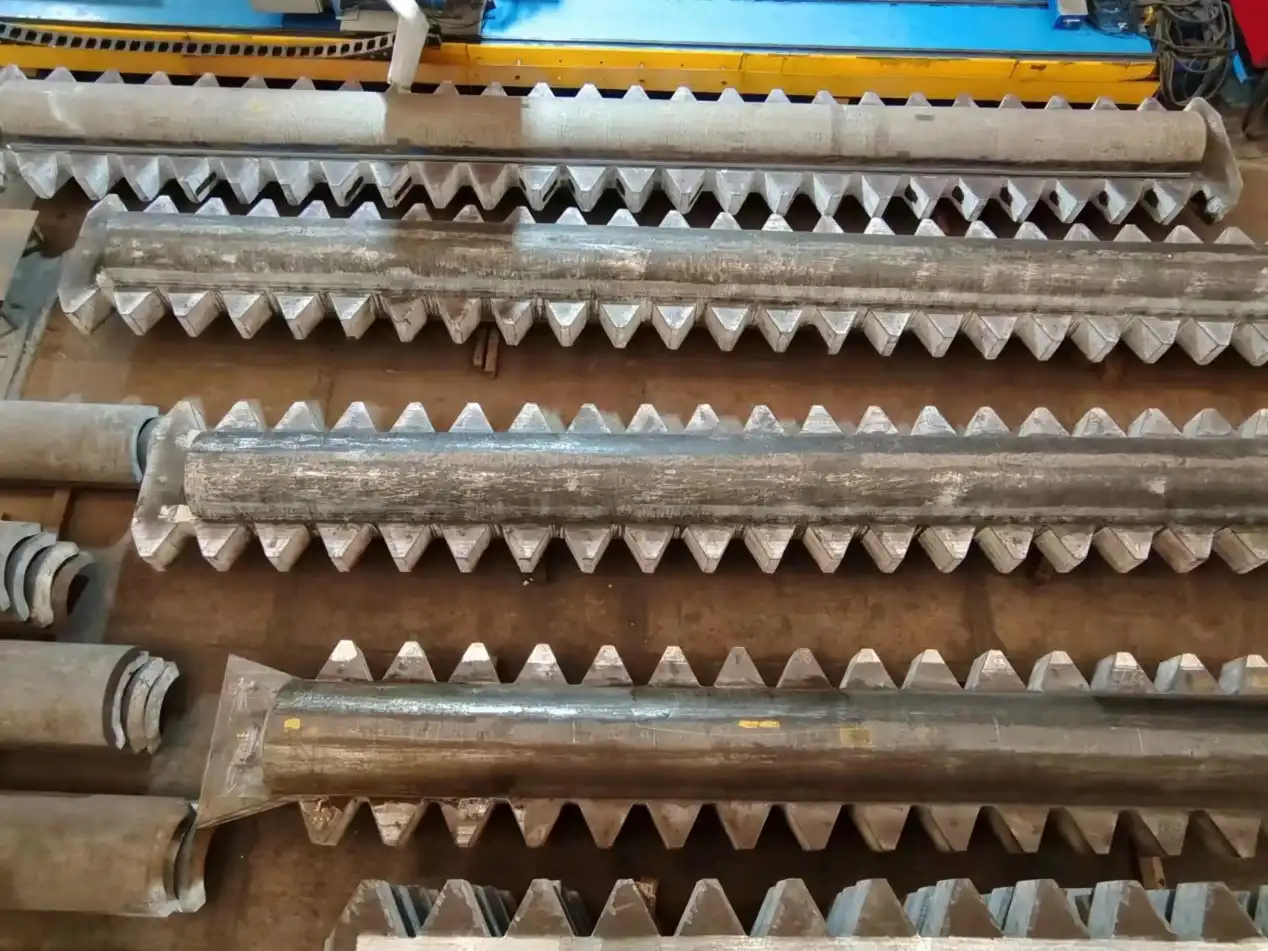
The shape of the leg structure must be taken into account when designing a safety system. The surface shape of a truss-leg structure with main chords, racks, and scales is more complicated than that of a cylindrical column. Coating applicators and cladding makers have to work with re-entrant angles, rack tooth profiles, and welded joint transitions.
Evaluating and Choosing the Right Splash Zone Protection Solutions
Comparing Protection Technologies Across Offshore Service Conditions
To choose the right splash zone protection method, you need to be honest about how well it works in the real service environment. Coating-only systems work well in moderate exposure conditions, but they are risky in high-energy splash zones where the film wears down over time from impact with waves and suspended sediment. Metallic coating systems, especially zinc-aluminum thermal spray, can handle damage better from mechanical means, but they need to be applied by professionals and their surfaces need to be properly prepared in order to bond strongly to high-strength steels.
When a corrosion-resistant coating is combined with a protective steel layer or a composite overwrap, integrated systems always do better than single-technology methods in independent lifecycle tests. A platform operator in the Asia-Pacific region said that the time between inspections was cut by 40% when the splash zone parts of their Jack-up Rig Legs switched from a standard epoxy system to an integrated spray-and-wrap solution. The names of the operators involved will stay secret, but this result is in line with what Ocean Engineering found about how well composite protection works in tropical marine settings.
The most important things for procurement teams to look at are how well the coating sticks to high-strength steel, how well it resists cathodic disbondment, how well it handles mechanical impact, how well it works with the leg fabrication and welding sequence, and how well it is accepted by the classification society. ABS, DNV, and CCS all put out guidelines on what kinds of protection systems are accepted for offshore structural members. Supplier licenses that meet these standards are very important in the approval process.
Maintenance, Inspection, and Safety Measures for Splash Zone Protection
Sustaining Protection System Integrity Over the Platform Life Cycle
Without regular review and repair, even the strongest protection system breaks down. The splash zone is naturally dangerous to get to because you need trained professionals, the right marine vessels or ROV-assisted inspection tools, and to follow strict offshore working-at-height and confined-space rules. Splash zone coatings on remote sites should be inspected every 12 to 24 months, but this depends on how often they are used and how the system was designed in the first place.
Some ways to find problems on a Jack-up Rig Leg are to look for blistering, delamination, and mechanical damage visually, measure the thickness of the dry film to see how much material is being lost, look for tiny flaws during holidays, and use ultrasonic thickness gaging to see how the steel underneath is doing. Any area where the coating film has been broken should be fixed as soon as possible, before the next operating season, because a single flaw in the splash zone that isn't covered can start pitting that spreads to the steel-coating interface.
Safety compliance frameworks like ISO 12944 and NACE SP0108 give useful information on choosing the right coating, following application standards, and inspecting procedures for immersion and splash zone service offshore. When procurement and engineering teams include these standards in their protection system specifications, it makes it easier to track quality assurance and clearer for suppliers.
Procurement Considerations for Splash Zone Protection Systems
What B2B Buyers Must Evaluate Before Committing to a Supplier
When procurement managers look for splash zone protection for a big platform build, they need to look at more than just unit price. There are clear risks for the finished platform that depend on the supplier qualification, the ability to customize, the ability to track certifications, and the technical help provided after the sale.
Here are the core procurement criteria that experienced materials directors prioritize:
- Classification society certification: Make sure that coating systems and metal cladding goods have valid ABS, DNV, CCS, or BV product approvals for the level of risk you want them to be exposed to.
- Substrate compatibility documentation: Ask for proof of tests that showed adhesion and rust performance on high-strength steel types, especially those with yield strengths above 690 MPa, where the surface chemistry is different from mild steel.
- Fabrication sequence integration: Find out if the supplier can help with the technical side of putting protection systems in place during the leg fabrication sequence. This includes making sure that the systems work with the preheating, post-weld heat treatment, and dimensional inspection needs.
- Bulk supply and logistics capability: For projects with fabrication windows of 12 to 24 months, make sure the supplier has shown they can keep up a steady supply across phased delivery schedules.
- Warranty and remediation terms: Carefully read the warranty terms for failure modes that only happen in splash zones and make sure they cover delamination, cathodic disbondment, and mechanical damage within a certain service time.
Using these factors together, you can tell if a company that sells security systems can really support a big platform project and not just fill an initial order. When you buy protection systems at the same time as you buy structural materials, especially for projects with TSC leg parts, it makes coordination easier and lowers the risk of interface problems during final assembly.
Conclusion
Protecting splash zones on the Jack-up Rig Leg is a technical and business matter that needs well-thought-out decisions at every stage. In this area, corrosion attacks structural members that carry huge design loads. Not having enough protection directly leads to unplanned downtime, expensive underwater remediation, and faster asset depreciation. The safest way for procurement and engineering professionals to build or run jack-up platforms right now is to choose a layered, approved safety system and pair it with a strict inspection and maintenance program.
FAQ
1. What is the expected service life of a splash zone protection system on an offshore platform?
Service life depends a lot on the type of system, the quality of the application, and how harsh the environment is. Integrated systems with high-build coatings and metallic casings that are well-designed usually aim for 10–15 year inspection rounds under normal marine service circumstances. In harsh environments, this could be cut down to 7–10 years without any maintenance in between.
2. Which certifications should procurement teams require from splash zone protection suppliers?
Buyers should ask for product approval from ABS, DNV, CCS, or BV if the product is for offshore splash zone service at the very least. The supplier's technical rigor can also be seen in the NACE SP0108 compliance paperwork and the ISO 12944-6 rating for immersion and splash exposure categories.
3. Can splash zone protection systems be applied after the jack-up rig leg has already been fabricated?
It is possible to apply systems retrofit, but it is harder to do properly than applying systems in a shop. Access to and quality of surface preparation are limited in the field, and adhesion values are always lower on steel substrates that have been weathered or partially corroded. Shop application during production is still the best way to do things.
Partner with CM Energy for Certified Jack-up Rig Leg Solutions
CM Energy, through its TSC brand, brings over 15 years of verified manufacturing experience in jack-up rig leg components to every project engagement. TSC holds ABS, CCS, DNV, and BV certifications across its leg material product range, including main chords, racks, and scales built to serve the most demanding offshore environments. As a proven Jack-up Rig Leg manufacturer with a global track record spanning nearly 50 platforms, CM Energy delivers the technical depth, supply chain stability, and classification society compliance that large-scale platform projects require. Contact our engineering team at info.cn@cm-energy.com or visit cm-energy.com to request a consultation or project-specific quotation.
References
1. NACE International. NACE SP0108: Corrosion Control of Offshore Structures by Protective Coatings. NACE International, 2008.
2. ISO. ISO 12944-6: Paints and Varnishes — Corrosion Protection of Steel Structures by Protective Paint Systems — Part 6: Laboratory Performance Test Methods. International Organization for Standardization, 2018.
3. Melchers, R.E. "Corrosion of Steel Piling in Marine Environments." Ocean Engineering, vol. 30, no. 15, 2003, pp. 1869–1887.
4. DNV GL. DNVGL-RP-0416: Corrosion Protection for Wind Turbines. DNV GL, 2016.
5. American Bureau of Shipping (ABS). ABS Guide for the Inspection and Condition Assessment of Offshore Structures. ABS, 2020.
6. Bhaskaran, R., et al. "Corrosion Performance of Offshore Structures in Tropical Marine Environments." Corrosion Science, vol. 47, no. 1, 2005, pp. 257–271.