How Rigid Sail Integrates with Weather Routing for Maximum Wind Efficiency
When a rigid sail works in tandem with a purpose-built weather routing system, the result is far more than simple fuel savings. A rigid sail — the solid, airfoil-shaped wind-assisted propulsion structure now gaining serious traction across bulk carrier and tanker fleets — generates thrust most efficiently when its angle of attack and camber are continuously matched to live atmospheric conditions. Weather routing provides exactly that intelligence layer, feeding real-time wind, pressure, and sea-state data directly into the sail control software so the wingsail always operates at its aerodynamic peak. Together, they form a closed-loop efficiency engine.
Understanding Rigid Sail Technology and Its Aerodynamic Advantages
What Makes a Wingsail Fundamentally Different
A Rigid Sail is not a fabric canvas that has been blown up. The structure of the multi-element airfoil is designed to be more like the wing of an airplane than like anything on a boat. Strong profiles keep their best shape even when there is a lot of wind, and they don't twist like soft sails do when wind shear acts across their height. With precise angle-of-attack and variable camber control, the wing can produce a lift coefficient that is more than 2.5 times that of a normal single-element sail. This directly translates into measured propelling force.
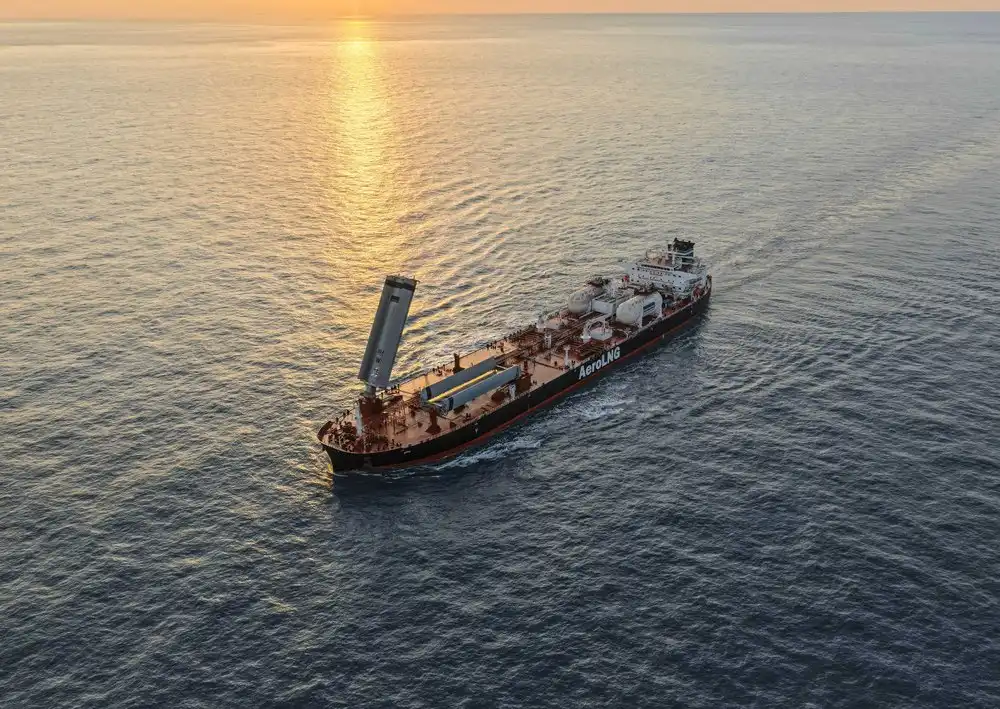
This way of thinking in engineering is shown by CM Energy's WindWings®, which was made in the UK through an approved relationship with BAR Technologies (BART). The three-part Rigid Sail design is made of ship-grade steel and industrial E-glass composite panels, which make the structure strong without being too heavy. Software constantly figures out the best orientation and camber shape and sends real-time push success reports to both the bridge team and operations on land. The Wolfson Unit and Lloyd's have both separately checked the system's performance. The system also has DNV type approval and AIP certification from both DNV and BV, which are important credentials during talks with charterers and port state control inspections.
Why Aerodynamic Precision Drives Commercial Value
It's easy to see what this mechanical accuracy means in real life. Each TSC WindWings® unit can save up to 1.6 tons of fuel every day, which means that each wing can cut CO2 emissions by more than 5 tons every day. Over a long-haul bulk carrier route, like the grain corridor from Brazil to China, these daily numbers add up to real drops in both operating costs and carbon intensity indicator (CII) scores. Ships that already have WindWings® on them have made calls at more than 20 major ports around the world without any problems, proving that they are reliable in real-world commercial operating conditions.
The Role of Weather Routing in Sailing Efficiency
Turning Forecast Data into Propulsion Strategy
Weather routing has changed a lot from the old way of planning passages. Modern systems use high-resolution numerical weather prediction models, ocean current data from satellites, and barometric pressure analysis to build a moving picture of the weather ahead. For a ship with traditional engines, this intelligence is mostly used for safety and making the plan work better. It turns into a propulsion input for a wind-assisted ship with a Rigid Sail.
This is important because a wingsail's output depends on how much wind it has, where it comes from, and how stable it is. A weather routing platform made for ships that use wind power doesn't just suggest the quickest or calmest route; it finds the corridor where wind conditions will keep up the most sail-generated thrust for the whole trip. The voyage planners on land and the navigation officer on board both use the same web-based interface. This lets everyone in the operation make decisions in the same way.
Integration of Rigid Sail Technology with Weather Routing
Closed-Loop Control Between Wing and Route
When both the Rigid Sail and weather routing tools share the same data design, they work better together. CM Energy's WindWings® have an automated alignment and camber-change module. This module's special software talks to the vessel's routing platform directly. Every time the weather routing system updates its forecast of the weather, which happens about every six hours, the wing control software recalculates the best way to set up the sails and makes the change without any input from the crew.
This closed-loop integration gets rid of the delay that would happen between when the wind changes and when people react. The web-based interface of the system can be used by both shore teams and staff onboard at the same time. It supports automatic scheduling tools that keep both groups on the same page. Operators who have used TSC WindWings® say that this live timing is what turns a good weather window into a real chance to save fuel instead of a missed one.
Here are the core integration advantages this combined architecture delivers:
- Continuous sail optimization: The wing's slope and angle of attack change every time the forecast changes. This keeps the aerodynamic efficiency at its best level all the way through the trip, not just when the wind is blowing in the right direction.
- Proactive route adjustment: Shore voyage planners can direct the ship toward wind-rich areas noted in the updated forecast. This will maximize the number of hours per day that the Rigid Sail can really help move the ship forward.
- Real-time performance transparency: The bridge and the fleet operations center both get live thrust reports. This gives technical superintendents the information they need to prove saves and gather proof at the voyage level for CII submissions and charterer reports.
With these integration features, the Rigid Sail goes from being an inactive energy-harvesting device to an active partner in voyage management. It helps meet the decarbonization KPIs that class societies, bankers, and forward-thinking charterers now closely examine.
Comparative Analysis: Rigid Sails vs Traditional Sails in the Context of Weather Routing
Performance, Compliance, and Lifecycle Cost
When used with weather routing, soft sails and other standard fabric-based wind-assist devices must be furled because their aerodynamic shape changes when they are loaded and a Rigid Sail can safely continue to create thrust. This operating ceiling limits the number of voyage hours that the wind-assist device can help, which lowers the return on investment in terms of both money and safety.
Over a much wider range of wind speeds and sea conditions, a Rigid Sail keeps its designed airfoil shape. Because it can instantly depower by turning into a feathered position to reduce loads, it can stay out in the open for longer, only coming back in during port entry, hatch cover operations, or extreme weather. WindWings® can be rotated into a lay-down position that keeps hatch covers and cargo handling equipment completely clear. This is an important feature for bulk ships that often have problems with deck disturbance.
The TSC WindWings® system is made to last 25 years without any major parts needing to be replaced. It can also be moved from one ship to another, which is an important thing to think about when deciding how to spend money on a managed fleet. All of the materials come from companies that are ISO-certified, and the building meets the structural standards needed for DNV, LR, and BV class clearance.
Procurement and Implementation Strategies for Businesses
Selecting the Right Rigid Sail Supplier and Integration Partner
Getting a Rigid Sail system is an investment, not a purchase of a good. Fleet technical directors and newbuild project managers should be judged on three things that can be checked: the supplier's ability to provide full lifetime support, the supplier's ability to provide broad class society recognition, and the supplier's ability to validate performance.
All three are taken care of by CM Energy (TSC). The Wolfson Unit and DNV have both checked the performance data for WindWings® by using them on real ships. Certification comes from DNV, BV, LR, and CCS, which are the four classification societies that owners working under the IMO, EU ETS, and FuelEU Maritime standards should be most interested in. Compatibility testing, on-site assembly, factory acceptance testing, and supervised onboard commissioning are all parts of the installation process. Long-term IoT remote monitoring and maintenance packages come next.
CM Energy suggests that owners who are thinking about doing their first upgrade do a pilot project with a single vessel. This will help them get the route-specific savings data they need to get board-level approval for deploying the technology across the whole fleet. The web-based weather routing tool helps with this step-by-step method by creating success records for each trip that directly help with justifying CAPEX and getting charterers involved.
Conclusion
When a Rigid Sail is combined with weather routing software, it provides the most reliable way for business fleet owners looking to make real, measurable cuts in fuel use and carbon intensity. The wingsail has the aerodynamic hardware, and the routing platform has the information about the weather. In CM Energy's WindWings® solution, both systems share real-time data and a common control architecture. This makes the total output always higher than what either system could achieve on its own. This integration is not a goal for fleet owners who have to deal with IMO CII responsibilities, EU ETS costs, and charterer ESG standards all at the same time. It is a tool that can be used and has been shown to work.
FAQ
1. What class certifications does the WindWings® rigid sail hold?
Type approval and AIP certification for WindWings® come from DNV and BV. LR and CCS also recognize the product. These permissions cover the design of the structure, the safety of operation, and the wind-assisted propulsion notation needed for CII and EEXI paperwork.
2. How does weather routing software communicate with the rigid sail control system?
Through a shared data interface, the Rigid Sail's automated alignment and camber-change module is linked to the ship's routing platform. Every time the estimate changes, the control system recalculates the best way to position the wings. This is done automatically, without any help from the crew.
3. Can WindWings® be installed on vessels already in commercial service?
Yes, CM Energy's installation method includes a step called "compatibility analysis" that is meant to make sure that the new systems will work with the old ones on working ships. The system can also be moved from one ship to another, which protects the initial investment over the life of the fleet.
Partner with CM Energy for Proven Rigid Sail Solutions
CM Energy (TSC) offers the best Rigid Sail technology on the market, with full approval from four major class societies and confirmed fuel savings from DNV. TSC is a reliable Rigid Sail supplier with WindWings® units used all over the world and full lifecycle support, from installation to IoT monitoring. We can help your fleet meet CII goals while lowering operating costs. Visit cm-energy.com or email our team at info.cn@cm-energy.com to start your vessel fit study right away.
References
1. International Maritime Organization. 2023 IMO Strategy on Reduction of GHG Emissions from Ships. IMO, 2023.
2. DNV GL. Wind-Assisted Propulsion: Technology Outlook and Regulatory Framework. DNV, 2022.
3. Traut, M., et al. "Propulsive Power Contribution of a Kite and a Rigid Wing on Selected Shipping Routes." Applied Energy, 2014.
4. Wolfson Unit MTIA. Aerodynamic Performance Assessment of Wingsail Systems for Commercial Shipping. University of Southampton, 2021.
5. Lloyd's Register. Wind-Assisted Ship Propulsion: Guidance Notes for Classification. Lloyd's Register, 2023.
6. European Commission. FuelEU Maritime Regulation: Reducing Greenhouse Gas Intensity of Maritime Fuels. Official Journal of the European Union, 2023.