How does the hook parking device prevent overtopping on luffing cranes?
A hook parking device prevents overtopping on a luffing crane by mechanically restraining the hook block at a fixed, designated rest position whenever the boom is raised or lowered during luffing operations. On a Slew-bearing Crane-wire Rope Luffing Crane, the device engages automatically through the integrated electrical control system, locking the hook against uncontrolled upward travel before it can strike the boom head. This removes the single most common cause of overtopping: an unrestrained hook swinging freely as the wire rope luffing system adjusts boom angle, protecting both the lattice boom structure and deck personnel.
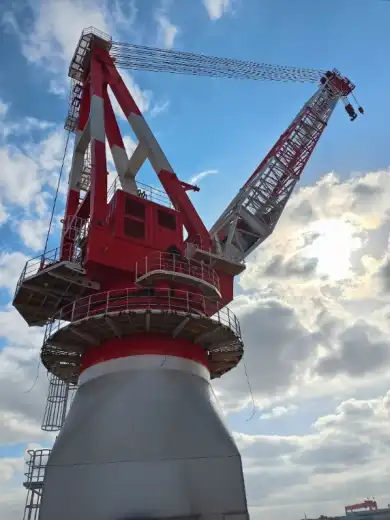
Why Overtopping Is a Real Threat on Marine Luffing Cranes
Overtopping may sound like a scientific term, but the results are very real-world. When a crane hook goes past its safe upper limit, it hits the sheave assembly at the end of the boom. When that happens, it can break sheave guards, wire ropes, and hardware that falls to the deck below. When people work directly under busy lifts on a ship or offshore platform, there is almost no room for error.
What Triggers Overtopping in the Field
Most of the time, triggers are not just mechanical problems. They happen when a number of things come together in real life, such as a rising deck that temporarily loosens the hoist rope, an operator guessing wrongly about the hook's height during a fast luffing cycle, or a load that suddenly lets go, letting the hook race upward without being stopped. On wire rope luffing systems, the speed of the luffing winch and the tension of the hoist rope change over time, leaving short gaps where the hook can go over if there isn't a separate restraint system in place.
The Maintenance and Safety Cost of Ignoring It
A single overtopping event causes more than just instant damage. It also leads to reviews by the classification society, possible downtime for the vessel, and problems with the warranty. When naval cranes need to replace their boom-tip sheave assemblies, the wait time is measured in weeks, not days. For bulk carriers or multipurpose ships in the middle of a trip, that downtime means charter fees and missed cargo responsibilities.
How the Hook Parking Device Works
The hook parking device is a specially designed cradle or latching mechanism that is built into the boom of the crane. The device grabs the hook block and presses it against a rated structural hard point as the boom gets close to its maximum lifting angle. The hook can't go any higher, no matter how the hoist drum turns or how loose the line is.
Integration With the Electrical Control System
The hook parking device on a modern Slew-bearing Crane-wire Rope Luffing Crane is really reliable because it works with the crane's built-in electrical control system. The TSC integrated electrical control platform has safety warning outputs and load management logic built in that talk to the hook parking circuit in real time. If a monitor sees that the hook is getting close to the top safe limit, the control system slows down the hoist drum and opens the parking latch at the same time. This way, two separate layers of safety work together instead of one after the other.
Why Wire Rope Luffing Makes the Device More Effective
Through a rigid mechanical push-pull action, a hydraulic cylinder luffing system changes the angle of the boom. A wire rope luffing method makes the structure more flexible, which means that small changes in the deck and the way the load moves cause the rope to move more. Because of this, an active hook parking device is better for wire rope luffing platforms because it gets rid of the kinetic energy that builds up in a loose hook during those dynamic cycles. TSC designs its hook parking devices to fit the luffing geometry of each crane configuration. This makes sure that the capture geometry matches real boom-angle envelopes instead of general assumptions.
Technical Backbone: Slew-Bearing and Wire Rope Luffing Crane Design
Structural Design, Safety Features, and Maintenance Advantages
To understand why the hook parking device on these cranes works so well, we need to look at the platform it's on. A Slew-bearing Crane-wire Rope Luffing Crane has a large-diameter slewing ring base, a lattice boom, and a wire rope luffing winch that is only used for that purpose. This design covers the entire deck, takes up little space, and has great reach, which is why it is the most popular choice on jack-up platforms, semi-submersibles, FPSOs, and general cargo ships around the world.
The slewing pedestal is designed by TSC to rotate smoothly and fluidly, without any backlash or jerk that would put stress on the rigging. The lattice boom keeps the weight-to-capacity ratio low, and the wire rope luffing winch makes it easy to check for damage in a way that sealed hydraulic rams can't. During routine rounds, the condition of the rope, the wear on the reeving, and the integrity of the termination can all be seen directly. This is a big benefit in remote offshore locations where specialist technicians might not be available right away.
Here are the core structural and safety advantages that distinguish this crane class:
- Dedicated hydraulic pump circuits isolate each crane function. This way, actions like hoisting, slewing, and luffing that happen at the same time don't fight for hydraulic flow, which lowers pressure changes that can make the hook unstable.
- Emergency crane operating capability keeps the full crane function available if the main mover or a hydraulic pump breaks. This stops the load from getting stuck, which would be a risk of overturning during recovery.
- Centralized lubrication systems — which can be either manual or electric — make sure that the slewing bearing and luffing rope terminations keep up with their lubrication plans without having to rely on the operator's memory alone.
- Modular, standardized components across the product range mean replacement parts can get to the vessels quickly. This cuts down on the time needed for corrective maintenance after an accident.
Real-World Applications and Procurement Guidance
Class-Certified Compliance and Audit-Ready Procurement Pathways
Slew-bearing Crane-wire Rope Luffing Cranes with hook parking devices are used on floating crane barges that move bulk cargo, MPV decks that handle general cargo, and offshore drilling platforms that must comply with API 2C. The TSC brand from CM Energy is certified by the CCS, DNV, ABS, BV, and LR classification societies. This directly meets the requirement set by the classification society, which is one of the most important factors for most ship owners and platform operators.
When purchasing engineers compare suppliers, the practical checklist should include the classification society scope, load test records at 110% SWL dynamic and 125% SWL static, and hook parking device test protocols that have been shown as part of factory acceptance testing. From analyzing customer needs to factory assembly, factory acceptance test, product delivery, and on-board installation, TSC's installation method leaves a clear audit trail that meets the needs of both internal engineering review and external class surveyors.
Future Trends in Hook Parking and Luffing Crane Safety
Data-Driven Predictive Maintenance and Regulatory Alignment
Adding sensors is changing how safety is managed for hook parking throughout the lifecycle of a vessel. When you mix real-time hook position telemetry with cloud-based operational data logging, you can plan repair ahead of time instead of replacing parts when they break. TSC's crane control system already records practical data on a regular basis. This gives fleet technical managers a growing set of data to look at for trends.
As global classification societies make it harder to get offshore lifting equipment with automated safety systems, cranes that already have built-in monitoring and multi-layer hook protection will need less money to be retrofitted to meet new survey requirements. This is something that experienced procurement managers are starting to look at along with the initial purchase price.
Conclusion
It's not a small extra that a hook parking device is—it's an important safety feature that stops the worst kind of failure in wire rope luffing crane operation. On a Slew-bearing Crane-wire Rope Luffing Crane, how well it works depends on how well it works with the electrical control system, how well the design fits the luffing geometry, and how well the architecture of the crane is built to meet international standards. TSC's method does all three, and it's backed by multi-society certification and the fact that more than 350 deck cranes have been used around the world under the CM Energy umbrella.
FAQ
1. How often should a hook parking device be inspected?
According to classification society rules, all crane safety devices should be functionally tested during yearly surveys. A visual check of the latching mechanism and its engagement geometry should be part of the pre-operation checklist before every work session. This is especially important on ships that work in rough seas where dynamic loads speed up wear.
2. Can a hook parking device be retrofitted to an older wire rope luffing crane?
How possible it is to retrofit depends on the shape of the boom-tip and how the electrical controls are set up now. As part of its customization service, TSC's engineering team looks at each retrofit request on its own. Most of the time, a specially made mounting clamp and control interface module can make the device fit without having to change the structure of the boom.
3. What classification society certifications should a wire rope luffing crane carry?
The crane should have at least a certificate from the classification society that rated the ship. For foreign operations, this is usually DNV, ABS, BV, LR, or CCS. All five of these societies certify TSC products, which makes the approval process easier no matter where the vessel is registered.
Partner With CM Energy for Certified Slew-Bearing Crane-Wire Rope Luffing Crane Solutions
The TSC brand from CM Energy offers tried-and-true Slew-bearing Crane-wire Rope Luffing Crane options to ship owners, shipyards, and platform workers all over the world. With more than 350 deck cranes in use around the world and certifications from DNV, ABS, BV, LR, and CCS, TSC is a well-known Slew-bearing Crane-wire Rope Luffing Crane producer. You can email our engineering team at info.cn@cm-energy.com or go to cm-energy.com to get a personalized quote or set up a technical meeting.
References
1. American Petroleum Institute. API Specification 2C: Offshore Pedestal-Mounted Cranes. 7th ed. API, 2012.
2. Det Norske Veritas. DNV-ST-0378: Standard for Offshore and Platform Lifting Appliances. DNV, 2021.
3. International Organization for Standardization. ISO 4309: Cranes — Wire Ropes — Care and Maintenance, Inspection and Discard. ISO, 2010.
4. Feyrer, K. Wire Ropes: Tension, Endurance, Reliability. 2nd ed. Springer, 2015.
5. Wrigley, P., and W. Sherrat. "Safety Systems Integration in Marine Pedestal Cranes." Journal of Marine Engineering & Technology, vol. 18, no. 2, 2019, pp. 74–83.
6. Bureau Veritas. NR 526: Rules for the Certification of Lifting Appliances Onboard Ships and Offshore Units. Bureau Veritas, 2020.