Leg Materials
MAIN CHORD
The main chord of the pile legs are the core load-bearing components of the pile legs of self-elevating offshore platforms (such as drilling platforms and offshore wind turbine installation vessels), and they play a key role in supporting the platform's weight, transmitting the lifting loads, and resisting the marine environment loads. Leg Materials are made by welding pile leg racks and semi-circular plates. In the future, with the increasing demands for deep-sea and new energy development, the main chord tubes will develop towards higher strength, better corrosion resistance, and more intelligence.
The main chord of the pile legs are high-strength steel, and their weldability is poor. Preheating is required before welding. Due to the poor weldability of the material, the product size accuracy is high, which requires a complete set of welding procedures to control the welding deformation and welding quality of the products.
RACK
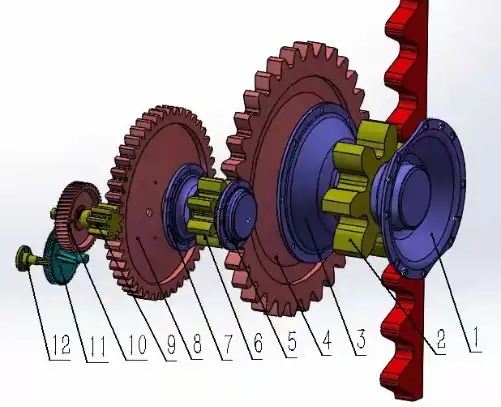
The rack is the core safety component of an all-towable platform. It is usually made of high-strength steel plates. The surface of the rack is precisely machined with teeth, which mesh with the gearbox to form a lifting system for the platform to achieve its elevation and lowering.
The dimensions of the teeth of the pile leg rack are subject to high precision requirements. Usually, the pitch deviation is required to be ±0.5mm, and the flatness requirement is less than 3mm per 8 meters. Since the surface of the rack needs to be machined by gears for meshing, the cutting surface of the rack is required to be of high quality. The usage environment of the pile leg rack determines that it also has high requirements for the material. It is necessary to strictly control impurity elements (such as sulfur, phosphorus) and gas content (such as hydrogen) to ensure welding performance and toughness. The material cost of a single rack is relatively high. The actual production process of the pile leg rack is flame cutting and one-time forming. This requires a good process flow and execution procedures to control the deformation, surface quality and qualification rate of the product.
SCALES
The scales is a core component in the leg structure of self-elevating offshore platforms (such as drilling platforms and offshore wind turbine installation vessels), mainly used to enhance the radial support strength and fatigue resistance of the leg, and to ensure the stability and safety of the platform in complex marine environments. These Leg Materials play a crucial role in overall leg performance.
The scales are combined with the main tension tubes of the pile legs and the rack plates to form an arch frame structure of the pile legs, which distributes the platform loads to the seabed and resists the impact of wind waves and ocean currents. The scales of the pile legs are the key load-bearing components of deep-sea engineering equipment, and their technological development reflects the coordinated progress of materials, processes and standardization.

WHY CHOOSE US?
1. We are one of the earliest domestic companies to produce and process pile leg toothed bars. We started processing pile leg toothed bars in 2008.
2. We have provided processing services for pile leg rack teeth for nearly 50 platforms at home and abroad, and have gained a high reputation and excellent service quality.
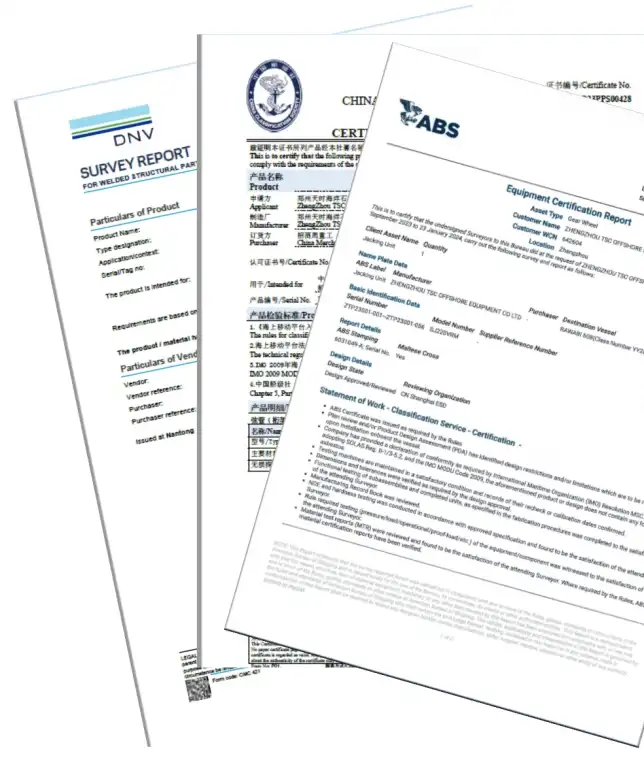
3. We have obtained product certifications from ABS, CCS, DNV and BV.
4. We have abundant production experience and mature techniques, and are capable of providing efficient and high-quality services to our clients.
5. We have a 10,000-ton forming press machine, which is capable of meeting the pressing requirements for all sccale of the current self-elevating platforms.
6. It is equipped with 10 sets of submerged arc welding for main chord pipes, which can meet the welding requirements for all main chord pipes of current self-elevating platforms.
Product Parameters
|
|
||
|
Chord Main Parameter |
||
|
The thickness of the scale |
20~100mm |
|
|
The thickness of the rack |
50~260mm |
|
|
Material composition |
EH690 or A514 or EQ70 or other |
|
|
Flatness |
±3mm/ Length |
|
|
Camber |
±3mm/ Length |
|
|
|
||
|
Rack Main Parameter |
||
|
Thickness of rack |
50~260mm |
|
|
Tooth to tooth (pitch) |
Customized size±0.5mm |
|
|
Rack width (tip to tip) |
Customized size±1.5mm |
|
|
Root to root (teeth) |
Customized size±1.5mm |
|
|
Offset opposite teeth |
±1mm |
|
|
Longitudinal Rack flatness |
≤3mm in 28teeth |
|
|
Rack flatness (transverse) |
≤2mm |
|
|
Camber rack |
3mm/28 teeth |
|
|
Tooth cut squareness |
≤0.01* Thickness |
|
|
Tooth cut surface finish |
<0.5mm |
|
|
Pressure angle |
Customized size±10’ |
|
|
|
||
|
SCALES Main Parameter |
||
|
The thickness of the scale |
20~100mm |
|
|
The radius of the scale |
Customized size |
|
|
Material composition |
EH690or A514or EQ70 or other |
|
|
Longitudinal scale flatness |
±3mm/ length |
|
|
Camber scale |
±3mm/ length |
|
|
Length |
±1.5mm |
|
|
Scale width |
±2mm |
|
|
Height of scale |
±3mm |
|
Product Details
1. The main chord is made by welding the rack and the scale. It is characterized by high material strength, good toughness and poor weldability. Therefore, strict quality control is necessary.
2. The dimensions of the main chord and the quality of the weld seam are demanding. High precision is required for both. Only with excellent assembly and welding techniques can the production of the product be carried out with high quality.
3. The material of the rack needs to have a yield strength of ≥ 690 MPa and a tensile strength of ≥ 790 MPa to ensure that it does not deform under the load of a 10,000-ton platform. The unit price of the material is relatively high and the production cycle is long. Therefore, the qualified rate of processing has a significant impact on economic benefits.
4. The surface of the rack requires precise requirements and high dimensional accuracy, and it is necessary to have mature processes and production procedures to ensure these requirements.
5. The scale material should have a yield strength of ≥ 690 MPa and a tensile strength of ≥ 790 MPa. This material has high strength and good toughness, and it needs to be formed by hot pressing.
6 .After hot-pressing molding, the semi-circular plates need to undergo quenching and tempering treatment to ensure that their properties meet the technical requirements.
Quality Control
1. Approved by ABS,CCS and DNV.
Installation
Main chord
1. Carry out acceptance inspection on the rack and the scale.
2. Performing string chord alignment and preheating.
3. Welding of the main chord.
4. Post-weld dehydrogenation treatment.
5. Dimensional inspection and NDT inspection.
6. Product classification society certification and delivery.
Rack
1. Select and procure materials based on the design.
2. Material acceptance inspection.
3. Toothed cutting.
4. Dimensional inspection and NDT inspection.
5. Product classification society certification and delivery.
Scales
1. Select and procure materials based on the design.
2. Material acceptance inspection.
3. Pressing of scale.
4. Quenching and tempering of scale and performance testing.
5. Dimensional inspection and NDT inspection.
6. Product classification society certification and delivery.
For more product information about Leg Materials, please leave a message below.