Rigid Wing Sail Buyer's Guide: Key Features to Compare
Choosing the right rigid wing sail for a commercial vessel is one of the most significant capital decisions a fleet technical director or newbuild project manager will make. This guide walks through what separates a high-performing wind-assisted propulsion system from an underperforming one, covering design principles, comparison criteria, supplier evaluation, and practical procurement steps. Whether you manage a fleet of bulk carriers or tankers, the goal here is to give you a clear, fact-based framework for comparing rigid wing sail options before you commit.
Understanding Rigid Wing Sails: Design and Functionality
What Makes a Rigid Wing Sail Different?
Instead of flexible sailcloth, a rigid wing sail has a set airfoil shape. This means that the shape stays the same at all wind speeds, giving it a better lift coefficient than soft sails. A rigid wing sail produces lift consistently, unlike traditional sails that bend when they're loaded. This directly leads to more power and less fuel use on long ocean crossings.
The Three-Element Advantage
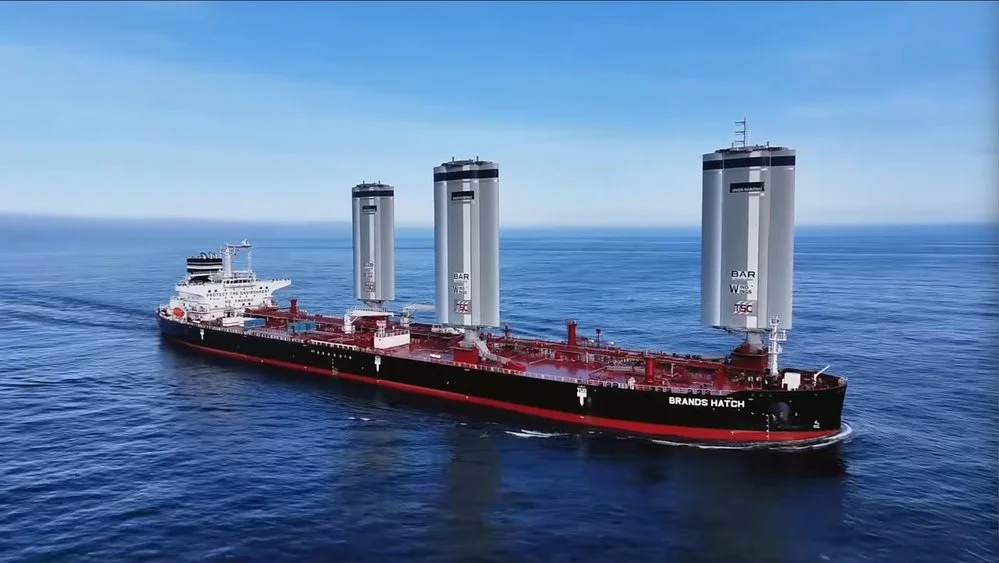
The three-element technology that CM Energy and BAR Technologies in the UK worked together to create is what makes the TSC WindWings® system work. The three-element design makes more than 2.5 times as much lift as a normal wing sail with only one element. The camber and the angle of attack can both be changed in real time, which means that the system can adapt to changing wind conditions without any help from the crew.
Verified Aerodynamic Performance
Any rigid wing sail supplier should be able to back up claims of performance with proof from a third party. Two separate groups, the Wolfson Unit and Lloyd's, have confirmed that TSC WindWings® works, and DNV has confirmed that it saves fuel in real-world ship operations. Bulk carriers that have this method have made calls at more than 20 major ports around the world without any problems, showing that they have a good track record of operations.
Comparing Rigid Wing Sails With Other Sail Types
Rigid Wing Sails vs. Soft Sails
Soft sails get saggy when they're loaded and need to be trimmed by hand all the time, which makes them bad for commercial freight ships with small deck crews. No matter how fast the wind seems to be blowing, a rigid wing sail keeps its aerodynamic profile, providing consistent thrust without the need for crew sailing proficiency. The upfront capital cost is higher, but on good lines, fuel savings of up to 30% per wing make the return on investment estimate very different.
Rigid Wing Sails vs. Kite Sails
Kite sails work at high altitudes and can catch stronger winds, but they are hard to set up and take down, and they can't always be used in ports. A rigid wing sail is above deck and can be rotated into a laydown position to make room for hatch covers and cargo handling equipment. It works a lot like a deck crane, which all experienced crew members are familiar with. For people who run bulk carriers and tankers, how easy it is to use is important.
Rigid Wing Sails vs. Rotor Sails
Rotor sails work best in beam winds because they use the Magnus effect, but they can only be used in a smaller range of wind angles. A three-element rigid wing sail can be used in a wider range of apparent wind angles, which makes it more useful on a wider range of trade routes. If you own ships that go on different routes around the world, this bigger speed window is a useful benefit that you should think about when you compare.
Key Features to Evaluate When Buying a Rigid Wing Sail
The technical specs sheet is only one part of the story when looking at rigid wing sail options. Most of the time, operational and logistical factors are what decide long-term worth.
Here are the main criteria that every procurement team should use to judge bids:
- Classification Society Approval: Verify that the rigid wing sail holds type approval and AIP certification from recognized bodies such as DNV, BV, LR, or CCS. TSC WindWings® carries approvals from all four, which is essential for insurance coverage, charterer acceptance, and port state compliance.
- Automated Control and Camber Adjustment: The system should adjust wing orientation and camber shape automatically based on vessel heading, wind speed, and sea state. TSC's automated alignment system includes real-time thrust reporting, removing guesswork from daily operations.
- Laydown and Deck Clearance Mechanism: For bulk carriers, the rigid wing sail must rotate clear of hatch covers during cargo operations. TSC WindWings® features a tilt mechanism that allows the wing to lay flat, ensuring no interference with cargo handling equipment or port operations.
- Construction Materials and Structural Durability: Ship-grade steel and industrial E-glass composites, combined with marine-grade hydraulics, provide the structural integrity needed for open-ocean service. All raw materials in the TSC system are sourced from ISO-certified suppliers.
- Lifecycle and Transferability: A rigid wing sail designed for a 25-year service life and transferable between vessels offers significantly better total cost of ownership than systems tied to a single hull.
Lifespan and Portability: A rigid wing sail with a 25-year service life and the ability to be moved from one ship to another has a much lower total cost of ownership than systems that are permanently attached to one hull.
All of these criteria work together to give you an organized way to compare different rigid wing sail suppliers on things that affect both safety and day-to-day operations.
How to Choose the Right Supplier for a Rigid Wing Sail
Validated Real-World Data, Not Just Spec Sheets
Any trustworthy company that makes rigid wing sails should be able to show fuel savings numbers from real ship operations, not just computer models of fluid dynamics. The fuel-saving abilities of TSC WindWings® have been proven by DNV through live vessel tracking. Before you start talking about business, you should ask each seller for similar third-party proof.
Full Lifecycle Support Capability
Support for installation, training for the crew on board, remote monitoring of IoT devices, and weather routing integration are all parts of the service package that sets a capable rigid wing sail supplier apart from one that only sells hardware. TSC offers a weather routing system that can be used by both shore teams and ship workers through a web-based interface. The system comes with built-in automatic workflow tools.
Certification Coverage Across Key Registries
If your fleet sails under more than one flag or stops at ports that are subject to EU ETS or IMO CII audits, you need a rigid wing sail supplier whose certification covers all the necessary registries. TSC WindWings® has approvals from DNV, BV, LR, and CCS, which means that owners can use them on a wide range of global trade lanes.
Making an Informed Purchase Decision: Practical Steps
Start With a Route and Fuel Savings Analysis
Before you ask for quotes, compare the trade routes of your ship to past wind data. A rigid wing sail saves different amounts of fuel on a route for a bulk ship in the Pacific than on a route for a tanker in the North Atlantic. This analysis can be done by TSC's team as part of the pre-purchase evaluation process. They can give you route-specific savings estimates that you can show to your board.
Run a Pilot Retrofit First
Most shipowners with a lot of experience set up their first rigid wing sail system on a single vessel as a test project. This way, you can compare the DNV-certified savings numbers to your own records of how much fuel you use, boost the confidence of your crew, and set a baseline before signing contracts for installation across your whole fleet.
Ask the Right Technical Questions
When comparing rigid wing sail suppliers, ask specifically about hatch cover clearance procedures, drydock installation scheduling, crew training requirements, and what happens to the system during extreme weather. TSC WindWings® enters a feathering mode during storm conditions, rotating to align with the wind to minimize load on the hull structure.
Conclusion
Choosing a rigid wing sail is a long-term capital choice that affects the cost of fuel, following the rules, running the crew, and your company's ESG stance all at the same time. Not just marketing claims should be used to judge suppliers; performance data, certification depth, and lifecycle support capabilities should also be checked by a third party. The TSC WindWings® device from CM Energy meets all of these requirements. It has been tested in real life by DNV, has been approved by four major classification societies, and has been used in more than 20 places around the world. If you are just starting to think about it, a route-specific fuel savings study is the best thing to do next.
FAQ
1. Can a rigid wing sail be installed during a scheduled drydock?
It is possible to add TSC WindWings® during normal drydock times. CM Energy offers full compatibility analysis, factory acceptance testing, and onboard installation help to keep your ship's plan as smooth as possible.
2. How long does it take to see a return on investment?
ROI changes based on route, fuel cost, and number of wings installed. Based on the current price of bunker fuel and data that has been checked, most operators see payback within a reasonable time frame. The team at CM Energy can do a study of your fleet's routes.
3. Does the crew need special sailing skills to operate a rigid wing sail?
Not at all. Handling a TSC WindWings® is a lot like operating a deck crane. The sail angle and camber are controlled by an automatic system, and the crew can also use a human interface. Not having sailed before is not necessary.
4. What classification society approvals does the system hold?
Type approval and AIP certification for TSC WindWings® come from DNV, BV, LR, and CCS. This meets the needs of most flag states and port states around the world.
5. Can the wing sail be transferred to another vessel?
Yes, TSC WindWings® is made to last for 25 years and can be moved from one ship to another. This protects your initial investment across your fleet.
Take the Next Step With CM Energy's Rigid Wing Sail Solutions
CM Energy and its TSC brand offer a rigid wing sail system that has been used in the real world. The system is backed by DNV certification, BAR Technologies' patented three-element design, and a full lifecycle support package that includes installation, IoT monitoring, and weather routing. As a top rigid wing sail provider that bulk carrier and tanker owners trust on trade routes around the world, TSC offers a single system that saves fuel and meets all regulations. To get a route-specific study and talk about your fleet's upgrade or newbuild needs, contact CM Energy today at info.cn@cm-energy.com or visit cm-energy.com.
References
1. DNV. WASP — Wind Assisted Ship Propulsion: Technology Review and Certification Framework. DNV, 2022.
2. International Maritime Organization. MEPC Resolution on EEXI and CII Carbon Intensity Indicators. IMO, 2021.
3. Wolfson Unit for Marine Technology and Industrial Aerodynamics. Aerodynamic Performance Assessment of Rigid Wing Sail Systems. University of Southampton, 2020.
4. Lloyd's Register. Wind-Assisted Propulsion: Design Guidance and Approval Framework. Lloyd's Register, 2023.
5. Traut, M., et al. "Propulsive power contribution of a kite and a Flettner rotor on selected shipping routes." Applied Energy, Elsevier, 2014.
6. Smith, T.W.P., et al. Third IMO GHG Study 2014. International Maritime Organization, 2015.