Portable Mud Cleaners for Remote Drilling Locations
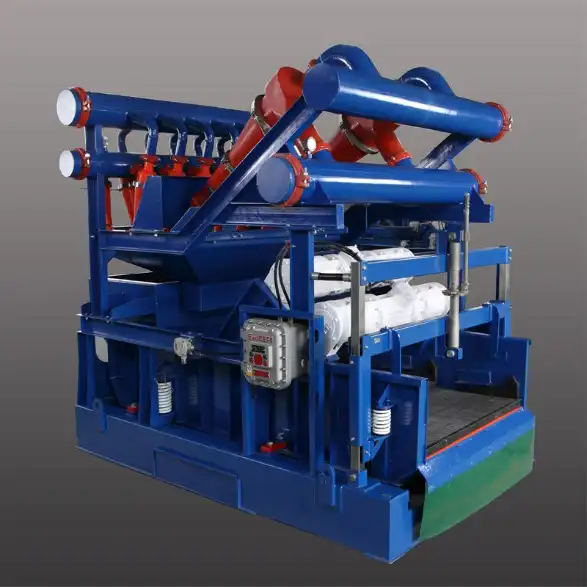
When drilling operations move into remote territories—whether in arid deserts, mountainous terrain, or offshore platforms with limited deck space—managing drilling fluid becomes a logistical puzzle. Portable mud cleaners solve this challenge by integrating desanding, desilting, and screening functions into a single compact unit. These systems enable drilling contractors to maintain fluid quality, recover expensive drilling mud, and reduce hazardous waste disposal costs. The HMC mud cleaner from CM Energy exemplifies this approach, combining a desander assembly targeting 44–74μm particles with a desilter for 20–44μm separation, all while the shale shaker recovers drilling fluid and barites—delivering robust solids control performance exactly where it's needed most.
Understanding Portable Mud Cleaners and Their Benefits
What Defines a Portable Mud Cleaner?
A portable Mud Cleaner is a consolidated solids control station that is made to be mobile and set up quickly. Instead of being permanently attached to mud tank arrays, movable units can be mounted on small skids or trucks. This lets drilling teams move equipment from one wellsite to another without having to take it apart. This difference is important when operations take place in several remote areas or when drilling plans require quick cycles of setting up and taking down the rig.
The main idea behind how it works is that vibration screening is combined with hydrocyclone technology. When drilling fluid goes into the unit under pressure, it goes through desander cones that spin out bigger particles and then desilter cones that go after smaller ones. The underflow from these cyclones falls onto a high-frequency shaking screen, which sorts the solids out and recovers the liquid phase. This three-step process goes on all the time in a space that is smaller than most stand-alone flats.
Core Operational Benefits
When using movable Mud Cleaners, drilling workers working in remote locations can benefit from a number of real benefits. The amount of fluid that can be recycled directly affects the cost of materials; for every gallon of mud that can be recycled, one gallon that needs to be bought, moved, and kept is saved. This is very important when supply chains go hundreds of miles into areas that aren't built up yet.
Adoption is also driven by environmental compliance. Regulatory systems are increasingly punishing companies that dump too much digging waste. Portable Mud Cleaners reduce the amount of trash by up to sixty percent compared to main shakers alone. They do this by drying solids to a semi-solid consistency and recovering liquid mud. This means that there will be fewer haul-off trucks, fewer reserve pits, and easier ways to close the mine.
Protection for equipment is another benefit that is often overlooked until the pump breaks down. Grinding solutions made of fine materials wear down mud pumps, drill bits, and downhole motors. Keeping the solids content below 3% by weight greatly increases the life of components, cutting down on downtime and repair costs during activities that are done in rural areas where extra parts aren't always easy to find.
Why Portability Matters in Harsh Conditions
Drilling sites that are far away rarely have perfect conditions for work. Offshore platforms don't have a lot of room for machine placement choices. In deserts, machinery has to deal with rough dust and extreme temperatures. Arctic operations need materials that can be used in cold weather and people who can move quickly during short drilling windows.
Through design options not present in set systems, Portable Mud Cleaners handle these problems. The modular design lets it be moved in standard shipping containers or as a helicopter sling load. Integrated fluid manifolds get rid of the need for complicated pipe runs between different parts. Skid-mounted designs spread the weight evenly, so they don't settle unevenly on ground that hasn't been prepared. Because of these features, setup time goes from days to hours, which is a big plus when drilling windows are measured in weeks and weather delays are unavoidable.
Performance and Design Features of Portable Mud Cleaners
Configuration Options and Capacity Ranges
The HMC Mud Cleaner is a great example of flexible use because it has four different modes of operation. When digging thin rocks that make rough cuttings, operators can use both the desander and the shaker. When finer solids are present in deeper intervals, switching to a desilter-plus-shaker configuration works best. When high-penetration-rate drilling is being done, running both cyclone units together makes separation work better. If you don't use the cyclones at all, the unit can be used as a fine-screen shaker for weighted mud systems where barite preservation is most important.
Scaling the capacity depends on how many cyclones are used and which motor is chosen. Basic units can handle 500 gallons per minute, which is enough for small research wells or workovers. Mid-range configurations handle 800 to 1,200 GPM, which is the same as the circulation rates of most land rigs. Models with a high capacity get close to 1,500 GPM and can be used for drilling from a floating station or in holes with a large diameter. This range lets procurement teams perfectly match tools to practical needs without spending too much on capacity that won't be used.
Design Elements Supporting Field Reliability
When drilling from a distance, there is no room for fragile tools. The TSC brand puts durability first by choosing the right materials and engineering the structure. The bodies of hydrocyclones are made of polyurethane materials that are resistant to both rough sand and corrosive drilling fluids. This means that they last longer than traditional cones lined with rubber. For environments with a lot of wear and tear, ceramic choices are available. For most uses, however, polyurethane options are a good mix between cost and durability.
Isolation from vibration is another important design factor. Two motors make G-forces that can be adjusted up to 7.5 times gravity. This gives the solids the kinetic energy they need to move across the screen. But this shaking also poses a risk of structural wear. The HMC Mud Cleaner uses a slightly cylinder-shaped hill deck design that keeps the screen tension while allowing for thermal expansion. This small technical improvement keeps the screen from failing early and the frame from cracking during long runs.
Solid particles can't get into the mud tank because the structure is completely sealed. This keeps the system clean and lowers the risk of pollution. This enclosure also keeps noise and shaking within normal limits, which makes the workplace safer and keeps workers from getting too tired during long shifts.
Practical Maintenance Features
Drilling crews like tools that are made to be serviced in the field instead of being sent back to the factory. Adjustable deck angles let operators get the most out of the liquid throughput without having to turn off the machine. By turning a handle, the front spring pedestal can be moved, which changes the screen's angle to match the viscosity of the fluid and the amount of solids it is carrying. This ability to make changes on the fly keeps processing efficient even as drilling conditions change.
Adjusting the cyclone's underflow also takes into account the different qualities of the formation. When the underflow output looks too wet, workers switch out the nozzles for ones with smaller holes. This increases the rotational force and dries out the solids. On the other hand, an underflow that is too dry means that weighted systems are losing too much barite, which means that bigger nozzles need to be installed. This toolless adjustment system lets people in the field improve performance without help from engineers.
How to replace a screen is very important for remote operations. The HMC Mud Cleaner uses PTS (pre-tensioned screen) panels that are easy to put in and take out with quick-release latches. High-strength anticorrosion screen materials don't react chemically with drilling fluid additives, so they last longer than regular screens. When replacement screens need to be sent to faraway well sites, their small size saves money on shipping and storage space.
Comparing Portable Mud Cleaners with Other Mud Cleaning Equipment
Functional Distinctions Among Solids Control Technologies
When drilling companies look at investments in solids control, they often have to choose from a huge number of different pieces of equipment. Figuring out the differences between functions makes it easier to choose the right tools to solve certain practical problems.
Shale shakers are the main tools used to get rid of solids. They do this by filtering out particles bigger than the openings in the mesh, which are usually 75 to 150 microns in size. These units are great at getting rid of drilled waste, but they let smaller particles go through with the drilling fluid. Standalone shakers don't need much upkeep and don't use a lot of power, so they're a cheap way to stop lumps from building up.
To get rid of particles smaller than what a shaker can handle, desanders and desilters use rotational separation through hydrocyclone cones. Desander cones handle particles between 44 and 74 microns, and desilter cones catch particles between 20 and 44 microns. But cyclones need feed pumps that produce certain pressure ranges (usually 35 to 58 PSI inlet pressure) and they produce wet underflow that needs more processing. Putting in separate cyclone banks takes a lot of deck room and complicated manifold plumbing.
Centrifuges are the best way to separate things because they can get rid of particles as small as two microns by spinning quickly. Barite recovery in weighted mud systems and making very dry solids for disposal are two things that these machines do very well. However, centrifuges have high initial costs, need to be operated by skilled professionals, use a lot of power, and need to be serviced often. Because they are so complicated, they can't be used in many remote areas.
Why Integrated Portable Units Outperform Component Systems
The portable Mud Cleaner idea combines desanders, desilters, and shakers into a single system that takes advantage of the best parts of each technology while minimizing the problems that come with them separately. This integration makes synergies that aren't possible with approaches that are based on components.
One of the most immediate benefits is the space economy. Integrated units take up one-third the space of similar separate parts because they mount the cyclone manifolds directly above the shaker deck. This consolidation is very important on offshore sites where every square foot counts and in remote land areas where moving as little equipment as possible saves money on costs.
Integrating processes also makes them more efficient. The cyclone underflow goes straight onto the shaker screen, skipping any pumps or pipes in the middle. This means that there are no transfer places where solids can settle and get clogged. Gravity moves the slurry from the cyclones to the screen, keeping it moving at a steady rate and preventing agglomeration, which lowers the efficiency of separation. Compared to systems with loosely coupled components, this one gives more consistent performance in a range of drilling conditions.
In rural settings, operational ease is just as important. A portable Mud Cleaner has only one control panel, which makes it easier for drilling teams that are already handling complicated wellbore programs to learn how to use it. Less valve handling and pump sequencing is needed during startup and shutdown, which means there are fewer chances for human error during important changes. This simplified process cuts down on time that isn't being used for digging and makes the whole process more efficient.
Procurement Considerations for B2B Clients: How to Choose the Best Portable Mud Cleaner
Matching Equipment Capacity to Drilling Requirements
Equipment capacity should match drilling cycle rates, hole sizes, penetration rates, and peak continuous circulation, with about a 20% margin for surges and future needs. Oversizing increases transport costs, while undersizing limits drilling performance. Fluid compatibility also matters, especially for oil-based and synthetic muds, where preserving valuable additives is essential.
Evaluating Cyclone Longevity and Replacement Economics
Beside replacing the screen, hydrocyclone wear is the main maintenance cost. Abrasive formations speed up cone weathering, which gradually increases the inside diameter and lowers the effectiveness of separation. Managers in charge of buying things have to compare different types of cyclone materials with predictions of how rough the formation will be and the cost of replacing them.
For most drilling jobs, polyurethane cyclones are a good balance between performance and cost. These cones can handle sandstone and shale formations that are moderately rough, and they usually last six to twelve months of continuous use. When internal wear changes the cut point, as shown by wet underflow or a loss of separation efficiency, the filter needs to be replaced. The HMC Mud Cleaner comes with different types of cyclones, including polyurethane, iron-shell polyurethane, and ceramic. This lets users find the best balance between replacement times and acquisition costs based on the specifics of the formation.
Replacement procedures are just as important in rural areas. Procurement teams should make sure that replacing a cyclone only needs hand tools and very little disassembly. This way, field crews can make changes without having to be supervised by a specialist. Checking to see if extra parts are available through area distribution networks keeps factories from having to shut down for long periods of time while parts are shipped from faraway factories. These operating details tell the difference between well-supported tools and purchases that turn out to be problems and have hidden costs over their lifetime.
Service Network and Technical Support Infrastructure
A 24/7 global service network provides remote troubleshooting and expert support for drilling contractors at remote sites, reducing costly service mobilizations. Regional centers also offer preventive maintenance, repairs, and training. Customized engineering solutions address harsh environments, legacy mud systems, and regulatory requirements, ensuring portable Mud Cleaners integrate smoothly.
Maintenance, Troubleshooting, and Operational Tips for Portable Mud Cleaners
Establishing Preventive Maintenance Routines
Preventive maintenance improves reliability during drilling. Daily checks should monitor motor bearings, hydraulic levels, and screen conditions. Weekly inspections verify cyclone pressures, pump performance, leaks, and underflow patterns. Monthly routines include screen replacement, isolator lubrication, and weld inspections, preventing unexpected failures, reducing downtime, and avoiding costly emergency repairs.
Common Operational Issues and Field Solutions
Wet underflow usually indicates low feed pressure, clogged lines, insufficient pumping, or worn vortex nozzles. Screen blinding can result from unsuitable mesh size or high-viscosity fluids and may be reduced by larger API screens and steeper deck angles. Excessive vibration often requires tightening loose bolts or replacing worn isolators.
Training and Installation Best Practices
Proper installation requires accurate leveling, adequate discharge clearance, and correct equipment setup to maintain screening efficiency and prevent blockages. Operator training covers normal operation, pressure effects, screen selection, and emergency shutdowns. CM Energy’s supervised commissioning and training provide practical experience, improve troubleshooting skills, and increase operational independence in remote locations.
Conclusion
Portable Mud Cleaners have gone from being extras that were not required to being important parts of modern drilling fluid systems. This is especially true for work that needs to be done in rural areas where access to services and tools is limited. Putting desanding, desilting, and screening tasks into small, mobile platforms helps drilling contractors deal with the problems they face on the job, like limited room, tight supply lines, and strict environmental rules. The CM Energy HMC Mud Cleaner is a good example of how careful engineering can make effective answers for these problems. It has a variety of operational modes and is designed to be serviced in the field, so it can keep working in a variety of drilling settings. By focusing on core performance parameters, being honest about lifecycle costs, and working with manufacturers that offer full support networks, procurement teams can get mud cleaning tools that improve the efficiency of drilling, lower operational costs, and help with environmental responsibility during remote drilling programs.
FAQ
1.When should desilter cones be bypassed on portable mud cleaners?
Desilter cyclones go after particles 20 to 44 microns in size, which is the same range that barite weighting agents work on. When digging with weighted muds that contain barite, using desilter cones removes expensive weighting material from the system. This means that barite has to be added all the time to keep the mud's weight. This leads to wasteful material costs and large amounts of trash. Bypassing desilters during weighted mud intervals keeps the barite while allowing a slightly higher fine-solids content. This is a fair trade-off considering how expensive barite is and how short most weighted drilling intervals are.
2.What inlet pressure should be maintained for optimal cyclone performance?
According to industry norms, the cyclone manifold should have an input pressure of 35 to 58 PSI. When pressures drop below this range, centrifugal force weakens. This lets small particles escape with the overflow and creates a wet underflow where solids don't separate well. Too much pressure speeds up cyclone wear by making turbulence and friction worse while not doing much to help separation. Keeping the pressure in the right range strikes a balance between how well the components separate and how long they last. By checking the pressure regularly, problems with the feed pump or pipe limits can be found before they seriously hurt performance.
3.How does a portable mud cleaner differ from stackable shaker systems?
Stackable shakers only use mechanical screening through panels with finer and finer mesh to separate particles. This means that they can only separate particles of sizes that can be screened for, which are usually bigger than 75 microns for useful output. Before the final screening takes place, Portable Mud Cleaners add centrifuge separation steps that get rid of particles as small as 20 micron. This mixed method collects small solids that would get through shaker-only systems. The last screen stage dries the cyclone underflow so it can be thrown away. The end result is cleaner drilling fluid and less waste than with stacked shakers alone, which makes the extra work and cost worth it for distant operations where waste control and fluid quality are very important.
Connect with a Mud Cleaner Supplier for Tailored Remote Drilling Solutions
With tested Portable Mud Cleaners made for dependability in difficult environments, CM Energy is ready to support your remote drilling operations. Our HMC Mud Cleaner gives drilling workers the separation speed and operating freedom they need. It's backed by a global service network that offers technical help 24 hours a day, seven days a week. Our engineering team creates solutions that are tailored to your needs, whether you need custom integration for existing mud systems, retrofit solutions for old equipment, or turnkey packages for new drilling programs. CM Energy is a company that makes high-quality products and provides helpful customer service. They have over 159 authorized patents and their equipment is used on 25% of the world's offshore drilling platforms. Email us at info.cn@cm-energy.com to talk about your solids control needs, get full technical specs, or set up a trial at your location. Our application engineers will help you choose the best configuration, give you lifecycle cost analyzes, and make sure that your Portable Mud Cleaner gives you the most value during your remote drilling operations.
References
1. Bourgoyne, A.T., Millheim, K.K., Chenevert, M.E., and Young, F.S. (1991). Applied Drilling Engineering. Society of Petroleum Engineers.
2. American Petroleum Institute. (2019). API Recommended Practice 13C: Drilling Fluid Processing Systems Evaluation. API Publishing Services.
3. Amoco Production Company. (1994). Drilling Fluids Manual. Amoco Production Company Training Department.
4. Mitchell, R.F., and Miska, S.Z. (2011). Fundamentals of Drilling Engineering. Society of Petroleum Engineers.
5. Darley, H.C.H., and Gray, G.R. (1988). Composition and Properties of Drilling and Completion Fluids. Gulf Professional Publishing.
6. Society of Petroleum Engineers. (2017). Drilling Fluid Engineering Principles and Practice. SPE International.