Mud Cleaner Sizing Guide: Choosing the Right Capacity for Your Rig
Choosing the right mud cleaner for your rig is one of the most consequential decisions in solids control planning. A properly sized mud cleaner removes drill cuttings from drilling fluid, recovers valuable barite and base fluid, and protects downstream equipment from premature wear. Size it too small, and you face processing bottlenecks; size it too large, and you pay for capacity you never use. This guide walks procurement managers and mud engineers through every sizing variable — from flow rate and particle cut points to cyclone configuration and screen selection — so you can match the right mud cleaner to your specific rig conditions.
Understanding Mud Cleaner Basics and Functions
Before sizing any equipment, it helps to understand what a mud cleaner actually does and why it sits where it does in a solids control system.
What a Mud Cleaner Does?
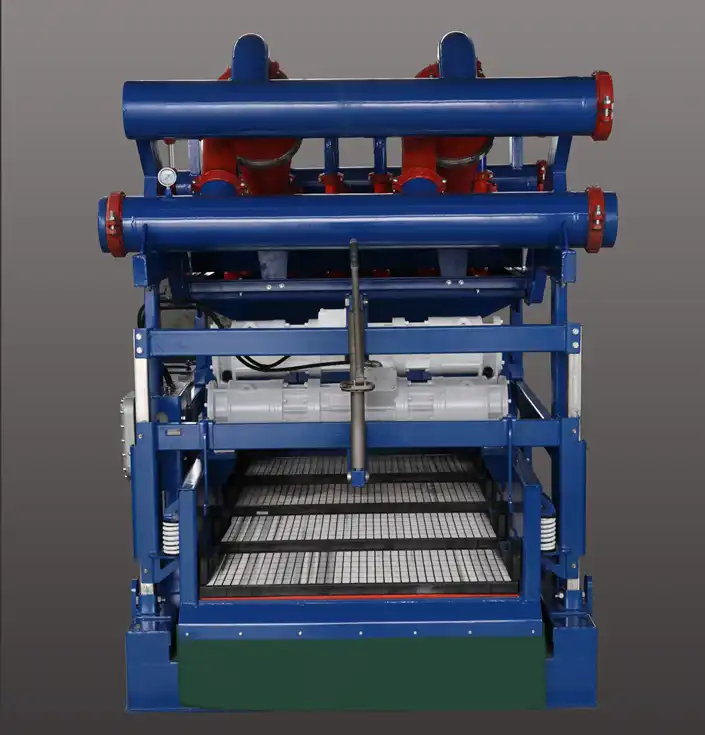
A mud cleaner is a hybrid solids control device that combines hydrocyclone separation with fine-screen vibration. Hydrocyclones — either desander cones or desilter cones — spin incoming drilling fluid and discharge separated solids onto a vibrating shaker screen below. The screen then recovers the liquid-phase mud, sending clean fluid back to the active pit while discarding semi-dry solids. This two-stage action removes fine particles that a primary shaker cannot catch alone.
The Two Separation Stages
Desander cones target particles in the 44–74μm range. Desilter cones handle finer material in the 20–44μm range. Running both assemblies over a single shaker screen — as the HMC mud cleaner from TSC does — means the same unit covers a broad particle size window in one compact footprint. This matters enormously on land rigs and offshore platforms where deck space is limited.
Where a Mud Cleaner Fits in the System?
After the main shaker, there is a mud cleaner, which is the second and third step in the solids control process. It works alongside centrifuges for complete fine-solids removal. In unweighted fluid programs, both desander and desilter assemblies run simultaneously. In weighted programs using barite, operators typically bypass the desilter cones so that the weighting agent doesn't get washed out of the mud.
Core Factors to Consider When Sizing a Mud Cleaner
Sizing is not guesswork. Several concrete variables determine which capacity class fits your operation.
Circulation Rate and Flow Matching
The most important number is your rig's maximum mud circulation rate, measured in gallons per minute (GPM). Your mud cleaner must process 100% of the circulating volume without overflow or bypass. Industry practice adds a 20–25% design margin above peak flow rate to handle surge conditions and prevent hydrocyclone flooding.
Particle Distribution and Mud Weight
Formation geology determines the particle size distribution you are fighting. Soft, sandy formations generate high volumes of fine silt that demand strong desilter capacity. Hard rock intervals produce coarser cuttings where desander performance matters more. Weighted muds with barite require careful cone selection to avoid accidental barite loss, so knowing your mud weight program before finalizing equipment spec is essential.
Rig Type and Environmental Constraints
Land rigs, offshore jackups and drillships all have various mechanical restrictions. Due to space limitations on offshore platforms, the mud cleaner is a small design that combines a desander, desilter and shaker on one skid. On remote land rigs in the Middle East or Southeast Asia, the emphasis will be on ease of maintenance and availability of spares rather than maximum processing bandwidth.
Comparison of Mud Cleaner Capacities and Specifications
Not every mud cleaner handles the same workload. Understanding the capacity range helps narrow your selection quickly.
Low, Medium, and High Capacity Classes
Mud cleaners normally are available in three levels of processing. lower rigs with low circulation rates may use lower capacity units. Mid-range units are suitable for most onshore drilling projects. huge capacity units are used for deepwater operations, huge land rigs and any application where numerous wells are operated back-to-back with minimum downtime between runs. Matching the capacity class to your circulation program can minimize underperformance and excessive capital expense.
Screen Mesh and Cyclone Count
Separation efficiency is determined by the number of hydrocyclone cones deployed and the API screen size rating. More desilter cones process more volume and enhance the removal rates of fine solids. More liquid-phase mud is returned with finer API screen numbers, but they demand more frequent examination on high-solids-loading wells. TSC’s HMC mud cleaner offers numerous cyclone options such as polyurethane, iron-shell polyurethane and ceramic cyclones to let customers customize the cone material based on the abrasiveness of the formation without changing the whole machine.
Equipment Footprint and Integration
One skid that combines desanding, desilting and shaking into a mud cleaner dramatically saves deck load over operating three different pieces of equipment. TSC’s HMC design accomplishes this consolidation with adjustability: The deck tilt adjusts without halting the machine and the underflow nozzles are swappable to optimize solids dryness without shutting down output.
How to Choose the Right Mud Cleaner Capacity for Your Rig
Once you know your flow rate, mud program, and rig constraints, selecting the right mud cleaner follows a logical sequence.
Step One — Gather Rig Data
Collect peak circulation rate, expected mud weights across all hole sections, formation type from the geological prognosis, and available deck space on the mud tanks. These four data points define your boundary conditions before any comparison shopping begins.
Step Two — Calculate Throughput Requirements
Match your peak GPM figure to published mud cleaner processing curves, adding the 20–25% design margin. If your well program includes weighted sections, confirm whether desilter cones will run continuously or be bypassed during those intervals. This directly affects which cone configuration you specify.
Step Three — Avoid Common Sizing Errors
Under-sizing is the more costly mistake. An overloaded mud cleaner passes solids back into the active pit, raises plastic viscosity, and accelerates pump and bit wear. Over-sizing wastes capital but rarely causes operational failure. When in doubt, size up — a mud cleaner with adjustable underflow nozzles and a switchable cyclone configuration gives operators the flexibility to dial back performance rather than scramble for replacement equipment mid-well.
Here are the core advantages the HMC mud cleaner from TSC brings to this sizing equation:
- Four adjustable configurations: desander and shaker, desilter and shaker, complete desander-desilter-shaker combo, or shaker alone—adapting to your well program without changing the hardware.
- Adjustable underflow nozzles: Allows for real-time adjustment of solids dryness, avoiding the problem of wet discharge that saturates screens and leads to downstream pit pollution.
- PTS pre-tensioned plane screens: consistent fluid distribution across the whole screen surface increases screen life and uniform cut-point performance.
- Fully sealed construction prevents fine particulates from circumventing the screen and polluting the clean mud tank below.
These design choices directly address the two most common mud cleaner maintenance complaints: screen blinding from uneven flow distribution and wet slurry discharge from worn or mis-sized underflow nozzles.
Procurement and Supplier Considerations for Mud Cleaner Capacity
Selecting a capable manufacturer matters as much as selecting the right mud cleaner size.
Certifications and Quality Standards
Verify that replacement screens meet API RP 13C compliance for cut-point and conductance. This standard gives procurement teams a verifiable benchmark when comparing screen performance between suppliers, independent of marketing claims.
Supply Chain and Lead Times
For Middle East, North America, or Southeast Asia projects, ensure that replacement components, notably hydrocyclone cones and screen panels, are stored in the area or can be sent within acceptable lead times. The cost of a day-rate rig being down waiting for a new desilter cone considerably outweighs the cost of paying a little extra for guaranteed availability.
Customization and After-Sales Support
Most applications are covered by standard catalog models, although directional drilling programs, geothermal wells, and offshore synthetic based mud operations typically need changed setup. Commissioning time and field modification expenses are reduced by designing to drawings and bill of materials against a technical agreement with a manufacturer, rather than delivering a generic product.
Conclusion
Sizing a mud cleaner correctly protects your drilling fluid investment, reduces hazardous waste volumes, and keeps your solids control system running without bottlenecks. The core variables are circulation rate, particle size distribution, mud weight program, and rig space — gather these before comparing models. The HMC mud cleaner from CM Energy's TSC brand addresses the full sizing range through configurable cyclone assemblies, adjustable underflow, and a compact integrated design that fits constrained mud tank layouts. If your current solids control setup is struggling with fine-solid buildup or excessive mud losses, a correctly specified mud cleaner is the most direct solution available.
FAQ
1. How often should I inspect hydrocyclone cones on a mud cleaner?
Inspect polyurethane cones monthly on abrasive formations such as high-sandstone intervals. Cones typically last six to twelve months under heavy use before internal wear shifts the cut point. Ceramic cones offer longer service life in highly abrasive environments but require different nozzle handling.
2. Can I run one mud cleaner across two rigs with different circulation rates?
Not without re-evaluating the cone configuration and screen selection for each rig. A mud cleaner sized for a lower circulation rate will overflow when placed on a higher-volume rig, sending solids back into the active pit. Always re-confirm throughput requirements against the destination rig's peak GPM before transfer.
3. What indicates that my mud cleaner capacity is insufficient?
Rising plastic viscosity in the active mud system, increasing solids content readings, rapid screen blinding, and wet or flooded hydrocyclone underflow are the four clearest field indicators. Any one of these signals that your mud cleaner is processing more volume than it was designed to handle.
4. When should desilter cones be bypassed?
Bypass desilter cones whenever drilling with weighted fluids containing barite. Desilter cones operating at the 20–44μm cut point cannot differentiate between fine drill solids and barite, and continued operation will strip weighting agent from the mud, causing density loss.
Request a Mud Cleaner Sizing Consultation from CM Energy
CM Energy's TSC brand supplies mud cleaner solutions to drilling contractors and oil service companies across North America, the Middle East, and Southeast Asia. Our engineering team works from your rig's technical data to recommend the right configuration — whether you need a new-build system or a retrofit for an existing solids control setup. Contact us today at info.cn@cm-energy.com or visit cm-energy.com to request a quote from a trusted mud cleaner manufacturer with global service support.
References
1. American Petroleum Institute. API RP 13C: Recommended Practice on Drilling Fluid Processing Systems Evaluation. API Publishing Services, 2010.
2. Bourgoyne, A.T., Millheim, K.K., Chenevert, M.E., & Young, F.S. Applied Drilling Engineering. Society of Petroleum Engineers, 1986.
3. Caenn, R., Darley, H.C.H., & Gray, G.R. Composition and Properties of Drilling and Completion Fluids. 6th ed., Gulf Professional Publishing, 2011.
4. Drilling Contractor Magazine. "Solids Control Equipment Selection and Sizing Best Practices." IADC/SPE Drilling Conference Proceedings, 2018.
5. Rehm, B., Schubert, J., Haghshenas, A., Paknejad, A.S., & Hughes, J. Managed Pressure Drilling. Gulf Publishing Company, 2008.
6. Society of Petroleum Engineers. SPE 84250: Optimization of Solids Control Equipment in Weighted Drilling Fluid Systems. SPE Annual Technical Conference and Exhibition, 2003.
