LNG Fuel Supply System Future: Role in Clean Energy Transition
A quiet change is taking place around the world in engine rooms and fuel storage areas that is changing the future of marine energy. LNG Fuel Supply System solutions are a key technology that connects the shipping business of today to the zero-emission goals of tomorrow. As global maritime regulations get stricter and shipowners look for ways to decarbonize that are also good for business, liquefied natural gas fuel delivery systems have become a practical and proven option that can significantly cut emissions while keeping all types of ships, from bulk carriers to offshore support fleets, fully operational.
Understanding LNG Fuel Supply Systems: Components and Operation
As soon as you walk through a modern dual-fuel vessel, you can see how complicated and high-tech the fuel gas supply systems are. These aren't just fuel tanks hooked up to engines; they're complex cold ecosystems made to deal with one of the toughest fuels ever used at sea.
Core Components Working in Harmony
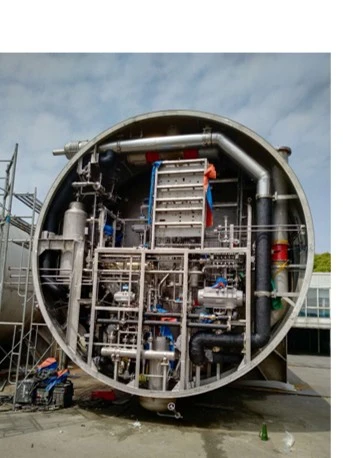
An LNG Fuel Supply System begins with cryogenic storage tanks designed to keep liquefied natural gas near -162°C using vacuum insulation that minimizes heat transfer and vapor generation. Fuel moves through vacuum-insulated piping into conditioning equipment where temperature and pressure are carefully controlled. TSC integrates equipment and piping within the Tank Cooling System to reduce onboard space requirements and improve safety. Vaporizers convert LNG into gas for engine use, while pressure build-up units maintain stable operating conditions. Gas valve units provide emergency shutdown protection, and automated controls continuously monitor system temperatures, pressures, flows, and operational stability.
Operational Workflow and Safety Protocols
The LNG Fuel Supply System process starts during bunkering, when LNG is transferred from shore facilities or bunker vessels into onboard storage tanks through controlled connections protected by safety interlocks, leak monitoring, and grounding systems. Cryogenic pumps or pressure systems move fuel toward engines at pressure levels suited to specific engine types, ranging from low-pressure Otto-cycle systems to high-pressure diesel-cycle engines exceeding 300 bar. Safety systems include emergency shutdown devices, ventilation systems, and double-walled monitored piping that rapidly detect and isolate leaks, allowing gaseous marine fuels to operate safely on modern vessels.
Environmental Impact and Regulatory Compliance
The environmental value of an LNG Fuel Supply System comes from major emissions reductions compared with heavy fuel oil. LNG nearly eliminates sulfur oxides and particulate matter, reduces nitrogen oxides by up to 85%, and lowers carbon dioxide emissions by approximately 20–25%. TSC’s cooperation with MAN on high-pressure systems helps reduce methane slip significantly, improving climate performance. Modern boil-off gas management systems recover evaporated gas for propulsion or auxiliary power instead of venting it, improving overall energy efficiency while supporting IMO sulfur cap and carbon intensity compliance requirements.
Current Challenges in LNG Fuel Supply Systems and How Innovation Drives the Future
Even though they have a lot of benefits, standard LNG Fuel Supply System installations have real problems that have made them less popular in some marine areas. Knowing about these problems helps explain why creativity is still needed to reach more customers.
Investment and Installation Complexity
An LNG Fuel Supply System requires much higher investment than conventional fuel oil systems because cryogenic tanks, insulated piping, cooling equipment, and safety systems are expensive and technically demanding. Retrofit installations are especially complex because older ships were not designed for cryogenic storage systems. Classification approvals and engineering modifications can extend project schedules. CM Energy addresses these challenges through modular prefabricated systems and lifecycle engineering support. Prefabricated modules arrive installation-ready, reducing shipyard labor, structural modifications, and schedule uncertainty during construction or retrofit projects.
Technological Advances Reshaping System Performance
Automation and digitalization are transforming LNG Fuel Supply System performance. Modern control systems automatically adjust fuel conditioning according to engine load, fuel quality, and environmental conditions. Predictive maintenance tools monitor vibration, insulation performance, valve conditions, and pressure trends to identify failures before breakdowns occur. TSC’s low-pressure commercial systems demonstrate how operational feedback improves reliability and durability across different environments, from coastal trade routes to North Atlantic winter operations. These engineering improvements increase confidence in LNG technology and support broader industry adoption.
Real-World Performance Validation
Operational experience from commercial fleets proves the reliability of LNG Fuel Supply System technology. Dual-fuel Pure Car/Truck Carriers have successfully completed long-distance voyages while meeting strict global emission standards. Offshore support vessels and chemical carriers also demonstrate reliable performance despite difficult operating conditions such as frequent load changes and extended station-keeping. Successfully operating systems across many vessel classes and trade routes confirms that LNG technology is now a mature and dependable solution for reducing shipping emissions on a global scale.
Comparing LNG Fuel Supply Systems with Other Fuel Alternatives
When shipowners look at ways to reduce carbon emissions, they have a lot of fuel and technology choices, and each has its own operating and financial features. To make smart decisions, you need to be able to compare things objectively across the important performance factors.
Performance Against Marine Diesel Oil
Marine diesel oil remains widely available and operationally familiar, but it produces high levels of sulfur oxides, nitrogen oxides, particulate matter, and carbon dioxide emissions. An LNG Fuel Supply System eliminates sulfur and particulate emissions while significantly reducing nitrogen oxides and carbon output. Operational reliability is now comparable to diesel systems, although LNG requires larger storage tanks for equivalent energy capacity. Economic performance depends heavily on fuel pricing and carbon taxation, but stricter environmental regulations continue strengthening the business case for LNG-powered vessels.
Comparison with Compressed Natural Gas Systems
Compressed natural gas systems avoid cryogenic handling requirements, but their lower energy density requires much larger storage volumes or higher storage pressures. Because of these limitations, compressed systems are generally suitable only for short-range vessels with frequent refueling access. An LNG Fuel Supply System offers much higher energy density, making long-distance ocean-going operations practical. Although cryogenic management increases technical complexity, LNG systems provide greater operational flexibility and are more suitable for deep-sea commercial shipping applications.
Evaluating Supplier Capabilities
Choosing the right LNG Fuel Supply System supplier strongly affects long-term project success. Buyers should evaluate engineering expertise, IGF Code knowledge, manufacturing quality, and classification society experience. TSC provides integrated solutions covering LNG, methanol, ammonia, and LPG systems, demonstrating broad marine fuel expertise. Manufacturing quality is especially important for cryogenic equipment that requires strict quality control and precision fabrication. Global after-sales support, spare parts availability, and technical service infrastructure also determine long-term reliability and operational efficiency throughout the vessel lifecycle.
Procuring LNG Fuel Supply Systems: What B2B Buyers Need to Know
To successfully purchase a LNG Fuel Supply System, you need to know not only the technical details, but also how the business works, when the deliveries are due, and how the system needs to be integrated. Buyers with a lot of experience come to these projects with detailed plans.
Financial Planning and Investment Structures
An LNG Fuel Supply System project includes equipment costs, vessel modifications, engineering services, installation, classification approvals, and crew training expenses. Buyers should request detailed cost breakdowns separating equipment supply from installation services for accurate comparison between vendors. Financing structures vary widely, including milestone-based payments, leasing arrangements, and maritime financing support. Government incentives for emission-reduction technologies may improve project economics. Warranty conditions should also be carefully reviewed, including coverage periods, operating hour limits, and manufacturer service requirements that affect long-term ownership costs.
Installation and Integration Considerations
Manufacturer involvement during LNG Fuel Supply System installation and commissioning improves system reliability and reduces startup problems. Retrofit projects are especially challenging because existing vessel layouts may require structural reinforcement, deck modifications, and complex equipment placement solutions. CM Energy provides integrated engineering, installation, and post-commissioning support that improves coordination throughout the project lifecycle. This unified approach helps reduce delays, improve installation quality, and ensure that systems operate correctly during sea trials and commercial operation.
Customization and Technical Support
Although standard LNG Fuel Supply System designs fit many vessel types, specialized operations often require customized engineering solutions. TSC provides flexible equipment layouts and compact packaging solutions for vessels with limited installation space. Long-term operational reliability also depends heavily on technical support availability, including local service centers, spare parts warehouses, and rapid-response engineering assistance. Comprehensive training programs covering normal operations, emergency procedures, and troubleshooting help crews safely operate gaseous fuel systems while maximizing system efficiency and performance.
The Future Role of LNG Fuel Supply Systems in the Clean Energy Transition
Maritime decarbonization is one of the trickiest changes that has ever been tried in industry. Ships being built now will be used for 25 to 30 years, which is a critical amount of time when world carbon costs need to drop greatly. Climate goals can be reached with or without the choices we make now about technology.
Bridging Today's Fleet to Tomorrow's Zero-Emission Future
An LNG Fuel Supply System provides commercially proven emission reductions using technology already widely available for deep-sea shipping. Unlike hydrogen fuel cells or fully battery-electric propulsion, LNG systems have accumulated millions of operational hours across many vessel classes and trade routes. LNG acts as a transitional fuel while the industry develops future zero-emission technologies. Existing investments in bunkering infrastructure, crew training, and regulations also create a foundation for future gaseous fuels such as biomethane and synthetic natural gas produced from renewable energy sources.
Impact on Maritime and Industrial Value Chains
The expansion of LNG Fuel Supply System technology affects the entire maritime supply chain. Shipyards develop gas system integration expertise, classification societies refine regulations, and ports invest in LNG bunkering infrastructure to support environmental goals. Equipment suppliers continue improving cryogenic pumps, valves, control systems, and engine technologies to increase reliability and reduce methane slip. Cargo owners increasingly prefer lower-emission transportation providers, creating commercial advantages for operators investing in cleaner propulsion systems and environmentally responsible shipping services.
Strategic Recommendations for Industry Stakeholders
Shipowners and procurement managers should begin LNG Fuel Supply System planning early because gaseous fuel integration requires more preparation than conventional fuel systems. Classification societies should be involved during preliminary design stages to avoid approval delays later in the project. System specifications should closely match vessel operating profiles, route structures, and engine requirements rather than being oversized. Companies should also invest in cross-functional crew training and technical knowledge development because safe and efficient fuel gas system operation depends on strong cooperation between ship crews, engineers, and shore-based technical teams.
Conclusion
As the marine energy shift moves forward, LNG Fuel Supply System solutions are becoming more and more important as a key technology. They cut emissions in a way that can be measured today and pave the way for even better fuels in the future. As environmental laws around the world get stricter and more ways to price carbon are found, the economic case for using natural gas to power most types of vessels gets stronger. Years of business use in a wide range of situations have shown that the technology is mature. As more providers, equipment, and experts join the ecosystem, it becomes easier for more people to use it and lowers the total cost of ownership. Shipowners and workers who use this technology will be in a better position for the changes in regulations and the market that will happen over the next ten years and beyond.
FAQ
1. What vessels benefit most from fuel gas supply systems?
The most benefits are gained by ships that operate in areas with pollution controls or that have lease parties that require them to do good environmental work. Large cruise ships, chemical tanks, container ships, and offshore support boats are all great examples of ideal uses. The technology can also be used by LNG Fuel Supply System solutions on LNG carriers that use goods as fuel, carriers that only carry cars and trucks, and bulk carriers that travel on routes with already-built-in bunkering facilities. Smaller ships with short routes may find cheaper options, but in many places, harbor tugs and ferries are able to use compact fuel gas supply systems effectively.
2. How does system maintenance compare to conventional fuel arrangements?
The maintenance needs are different, but they don't have to be harder. Cryogenic parts need special care, and team training is very important. Cleaner burning, on the other hand, means less engine upkeep than heavy fuel oil operation. Condition-based maintenance is possible with today's systems thanks to predictive tracking technologies, which could make general maintenance easier. Building ties with qualified service providers makes sure that you can get specialized help when you need it for complicated actions.
3. What infrastructure is needed for bunkering operations?
Ship-to-ship bunkering with LNG-only boats is possible in big ports around the world. Truck-to-ship bunkering is useful in places that don't have their own ships. Some ports have pipelines that let you move things directly from land to sea. The world bunkering network is still growing quickly. New facilities are being built or planned in hundreds of ports along all the major trade lines. Vessels should plan their routes with the possibility of bunkering in mind, but the network can now handle most business trading routines.
Partner with CM Energy: Your LNG Fuel Supply System Supplier
To switch your fleet to cleaner energy, you need a partner with a track record of success, a focus on manufacturing excellence, and an unwavering dedication to customer satisfaction. CM Energy, which works under the TSC name, adds more than ten years of experience in new marine energy ideas to every project. Our LNG Fuel Supply System for sale designs are reliable in the field and are designed to use room efficiently so that operations can be changed quickly. We've helped more than 180 bases and completed more than 350 marine projects around the world, which shows that we can be trusted. No matter if you run bulk ships, chemical tankers, offshore boats, or specialized gas carriers, our engineering team can come up with solutions that are perfect for your needs. Contact our experts at info.cn@cm-energy.com to talk about how TSC fuel gas supply systems can help you reach your decarbonization goals while still giving your business the practical stability it needs.
References
1. International Maritime Organization (2021), "Fourth IMO GHG Study 2020 - Reduction of GHG Emissions from Ships," Marine Environment Protection Committee, London.
2. Society for Gas as a Marine Fuel (2022), "LNG Bunkering Safety Guidelines - Ship to Ship Bunkering Procedures and Risk Assessment," International Standards Publication, Maritime Industry Working Group.
3. Maritime Research Institute Netherlands (2023), "Lifecycle Carbon Intensity Analysis of Alternative Marine Fuels Including Well-to-Wake Assessment," Technical Report Series on Sustainable Shipping.
4. Det Norske Veritas (2022), "Energy Transition Outlook 2023: Maritime Forecast to 2050," DNV Maritime Advisory Division, Annual Industry Analysis Report.
5. American Bureau of Shipping (2021), "LNG Fuel Gas Supply Systems for Marine Applications: Engineering and Safety Requirements," ABS Technical Guidelines Publication.
6. International Gas Union (2023), "Global LNG Infrastructure Development and Marine Fuel Applications," World Gas Conference Proceedings, Industrial Applications Committee Report.