LNG Fuel Supply System Components: What You Need to Know
When looking at different fuel options for industrial and marine use, it is very important to know how an LNG Fuel Supply System works. When liquefied natural gas is stored very cold (-162°C), it goes through a controlled phase change before being delivered exactly where it needs to be, ready for use in an engine. As IMO rules get stricter and emission control areas grow in U.S. waters, it's getting harder for owners of bulk carriers, tankers, and offshore boats to find cleaner ways to power their ships without sacrificing dependability or efficiency.
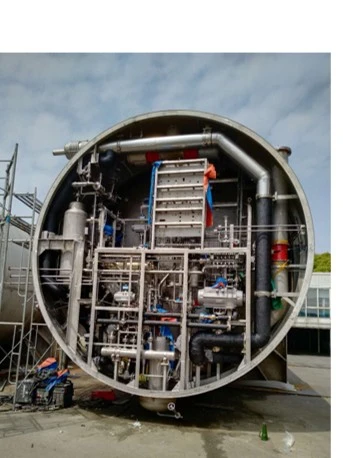
Understanding the LNG Fuel Supply System: General Overview
The switch to natural gas power is more than just a legal requirement; it changes how ships get their energy and how they use it. A Fuel Gas Supply System (FGSS) or LNG Fuel Supply System coordinates different engineering fields to safely handle cryogenic liquids in changing naval settings.
What Makes These Systems Essential
Modern dual-fuel engines need constant fuel supply even when the ship is moving quickly and the load is changing as it pitches and rolls. Through vacuum-insulated infrastructure, the system keeps LNG in a liquid state while preparing gas to burn exactly as planned. When compared to regular heavy fuel oil systems, sulfur oxide pollution from crude oil trucks and chemical carriers are often less than 0.1%, which is very good for the companies that run them.
Core Operational Principles
When it gets to the ship, liquefied natural gas is stored in special tanks that are kept at freezing temperatures. The device then prepares the fuel by slowly heating it up and changing the pressure. Diesel engines get gas at pressures higher than 300 bar from high-pressure configurations, while Otto engines get gas at pressures lower than 16 bar from low-pressure configurations. This adaptability lets ship owners match the system design with the engine technology, so they can use VLCCs on transoceanic routes or Pure Car Truck Carriers in emission control zones along the coast.The use is rising because it has real operational benefits: ships with gas fuel systems report 20–25% lower greenhouse gas emissions than ships that use marine diesel oil. This puts fleets ahead of future carbon intensity rules.
Core Components of an LNG Fuel Supply System
By breaking these LNG Fuel Supply System installations down into their parts, we can see how expert engineering can solve difficult thermodynamic problems.
Cryogenic Storage Tanks
The holding vessel is the most important part of any gas supply system. These are usually C-shaped tanks made of austenitic stainless steel that doesn't shrink when heated. TSC was the first company to come up with packaging solutions that combine equipment and pipes within the tank cooling system (TCS). These solutions have small sizes that are important for engine rooms on offshore support boats and inland river craft that don't have a lot of room.The double-walled design and vacuum insulation keep the temperature stable, which reduces the production of boil-off gas during long trips. Choosing the right tank size is directly related to the working range that is needed. For example, bulk carriers that travel the Pacific usually request bigger reserves than ships that do short-sea trades.
Pressure and Flow Control Equipment
To turn stored LNG into fuel that can be used in an engine, precise changes must be made to the thermodynamic conditions. Before phase-change equipment adds controlled heat, cryogenic pumps raise the pressure of the liquid. Pressure Vaporizing Units (PVU) that send gas above 300 bar were created by TSC working with MAN to make high-pressure systems. These systems allow direct injection engines that reduce methane slip to a tenth of what it is in regular gas engines.Control valves in the distribution network change flow rates in milliseconds in response to signs from the engine that show how much load there is. This keeps the pressure from going up and down. When sensors notice something is wrong, emergency shutdown systems instantly cut off fuel sources to protect against failure.
Vaporization and Conditioning Units
Phase-change equipment connects liquids that are very cold to gases that are ready to burn. Ambient air vaporizers use natural heat exchange in mild areas, while submerged combustion units make sure that remote support boats and ice-class ships can work reliably in the Arctic.Gas cooling units fine-tune the temperature and get rid of small amounts of impurities that could hurt engine parts. These parts keep the delivery temperatures between 45°C and 55°C, which improves the efficiency of burning and keeps equipment further downstream from experiencing heat shock.
Boil-Off Gas Management
Even if the storage area is well insulated, LNG will still take heat from the air, which will eventually turn into vapor. Gas combustion units (GCU) or reliquefaction tools are used in effective systems to handle this boil-off gas in a useful way. Burning extra gas in extra boilers recovers energy value, and advanced reliquefaction systems turn vapor back into liquid storage. This is especially helpful for LNG carriers and tank ships where keeping goods safe is important.TSC's unified method blends GCU features into full system packages, which makes sure that boil-off gas adds to the energy budgets of vessels instead of being released as trash.
Safety and Monitoring Infrastructure
Continuously, gas monitoring networks watch over machine rooms, setting off alarms and directing air flow when amounts reach certain levels. As soon as emergency shutdown routines identify leaks, changes in pressure, or fire conditions, they cut off fuel supplies. The IGF Code and rules from DNV, ABS, and Lloyd's Register, as well as these extra safety layers, say that they must be used.Automation systems keep track of operational parameters, which lets repair planners plan ahead and cut down on unplanned downtime. This is especially important for business ships, where sticking to schedules directly affects profits.
Advantages and Operational Benefits of LNG Fuel Supply Systems
It's less important to understand how the design of the parts works than to understand how these LNG Fuel Supply System configurations change the economic and environmental performance of the craft.
Environmental Compliance and Emission Reductions
IMO Tier III guidelines set strict NOx limits for chemical tanker and VLEC operators who enter pollution control areas. Because gas fuel systems naturally release 85–90% less nitrogen oxide than diesel burning, you don't need to buy expensive selective catalytic reduction systems. Since natural gas doesn't contain many sulfur molecules, sulfur oxide emissions drop to almost nothing.Particulate matter pollution, which are becoming more of a problem in port areas, drop by 95% or more. This clean combustion profile puts ships in a good situation as port authorities tighten air quality rules in coastal towns across the U.S.
Operational Efficiency Gains
Modern engines that use both gasoline and natural gas have better heat efficiency, which means they use less fuel per nautical mile. Compared to regular marine diesel systems, vessels say they use 15-20% less fuel. This is especially helpful when running VLACs or ammonia carriers on well-known trade routes.Because cleaner combustion cuts down on cylinder wear and deposit buildup, repair times for engines are longer. Operators of offshore support boats, whose repair windows are limited, like how often cylinder heads and fuel injectors don't have to be overhauled or replaced.
Economic Competitiveness
The original investment for gas fuel infrastructure is higher than for other systems, but lifetime cost analysis shows that the returns are very good. When it comes to energy-equivalent prices, natural gas in North American markets usually saves 20 to 30 percent compared to sea gas oil. Ships that leave from the U.S. Gulf Coast ports have easy access to a lot of gas sources in the United States, which protects owners from the unstable international fuel markets.Avoiding compliance costs is another way to save money. Ships that meet pollution standards by choosing the right fuel don't have to pay for expensive scrubber setups or the supplies that are used to clean exhaust gases.
Design and Maintenance Considerations for Optimal Performance
A successful execution includes more than just choosing the right parts. It also includes carefully integrating the LNG Fuel Supply System and keeping it in good shape.
Application-Specific Design Requirements
Installing an LNG Fuel Supply System on existing vessels requires careful planning because retrofit projects face major space limitations compared with newbuild ships. TSC uses modular skid-mounted equipment to simplify installation on bulk carriers and trucks with restricted engine room layouts. Weight distribution also requires close evaluation because cryogenic fuel systems differ greatly from traditional fuel arrangements. Naval architects must study vessel stability, especially for offshore support vessels and tugs that operate with changing drafts and varying working conditions.
Installation Best Practices
Successful LNG Fuel Supply System installation depends on close cooperation between shipyards and equipment suppliers. TSC engineering teams work with builders early to optimize pipe routing, reduce heat ingress, and ensure compatibility with propulsion controls. Prefabricated modules arrive preassembled, reducing installation delays and labor requirements. Structural supports are designed for vessel movement and thermal expansion. Cryogenic pipe connections require helium leak testing and vacuum verification before commissioning. Electrical systems use intrinsically safe wiring and redundant control circuits that comply with marine hazardous-area standards.
Maintenance Protocols and Lifecycle Management
Regular LNG Fuel Supply System maintenance includes inspections of cryogenic and conventional marine components. Vacuum-insulated piping requires routine thermal performance monitoring to detect insulation degradation. Valve sealing components need periodic adjustment because cryogenic temperatures accelerate material wear. TSC provides lifecycle support from commissioning through long-term operation, including preventive maintenance and predictive analytics that identify developing faults early. Classification societies also require ongoing inspections to maintain IGF Code compliance and equipment certification, making complete technical support and documentation management essential for vessel operators.
Procurement Insights: Choosing and Purchasing LNG Fuel Supply Systems
When choosing a provider and describing an LNG Fuel Supply System, you need to find a balance between technical skill, business terms, and long-term support infrastructure.
Evaluating Suppliers and Technology Providers
Experience is critical when selecting LNG Fuel Supply System suppliers for safety-sensitive marine applications. CM Energy has experience with dual-fuel vessels, liquid gas carriers, and chemical tankers, supporting complex projects including VLCC and ULCC newbuilds. TSC also cooperates with Norwegian design company WTC to combine manufacturing capability with advanced gas fuel engineering expertise. Classification approvals from organizations such as DNV, Lloyd’s Register, and the American Bureau of Shipping simplify regulatory processes and reduce approval time during vessel construction and commissioning.
System Configuration and Capacity Planning
Choosing the correct LNG Fuel Supply System configuration starts with matching fuel pressure systems to engine technology. High-pressure systems support diesel-cycle engines with improved methane slip control, while low-pressure systems reduce costs for Otto-cycle engines on shorter routes. Fuel storage sizing depends on voyage length, bunkering access, and backup power requirements. FPSOs and offshore units require additional planning because of extended deployment periods. TSC provides flexible customization of equipment layouts, piping arrangements, and control integration to suit retrofits and specialized vessels with nonstandard hull designs.
Commercial Considerations and Support Infrastructure
The total ownership cost of an LNG Fuel Supply System includes installation support, commissioning, spare parts availability, warranty coverage, and technical services throughout operation. Supply chain reliability is important because specialized cryogenic components often require long production lead times. Fleet-wide purchasing programs may reduce costs while simplifying crew training and spare parts management. CM Energy maintains global after-sales support services, including remote diagnostics and field technician dispatch, helping vessel operators resolve operational problems quickly across international shipping routes.
Conclusion
Choosing and putting in place LNG Fuel Supply System infrastructure is a big strategic choice that will affect how ships work for decades to come. All of the parts that make up a system, from the tools used for cryogenic storage to the complex control networks, have to work perfectly in harsh marine settings while also meeting strict safety standards. More and more, the people who run bulk carriers, tankers, offshore boats, and specialized craft are realizing that natural gas propulsion gives them the low-emissions performance that stricter laws require, as well as economic benefits like lower fuel costs and better efficiency. Partnering with experienced suppliers who offer tried-and-true technology, full engineering support, and long-term service promises that protect large capital investments throughout working lifecycles is key to a successful implementation.
FAQ
1. How do LNG fuel supply systems differ from traditional marine diesel installations?
Cryogenic liquids need special materials, insulation, and phase-change equipment that isn't available in regular tank systems. LNG Fuel Supply System installations have these things. Controlling temperatures from -162°C for storage to room temperature for delivery requires vacuum-insulated pipes and complex thermal management. Safety rules take into account the fact that natural gas is easily caught on fire by adding more ventilation, gas monitoring networks, and emergency shutdown systems that go above and beyond what is needed for sites using liquid fuels.
2. What maintenance intervals apply to gas fuel system components?
The number of inspections is based on the survey rounds of the classification society. Safety systems, control functions, and pressure-containing parts are usually checked once a year. Once every three to five years, vacuum-insulated pipes are checked for heat flow. During big overhauls, which are often the same time as main engine surveys, the cryogenic valve seats and seals need to be checked. Condition-based maintenance strategies that replace parts at the best time based on real wear patterns instead of set plans are made possible by predictive tracking.
3. Which certifications should buyers prioritize when evaluating systems?
Compliance with the IGF Code is the minimum standard for ships moving more than the minimum amount of gas. Equipment certificates from well-known classification societies, like ABS, DNV, Lloyd's Register, and Bureau Veritas, make sure that the design is good and that the quality of the making is good. Part approvals under the right ASME standards for pressure tanks and pipes give you even more peace of mind. To avoid problems with approval during registration and operation, buyers should make sure that the certification scope meets the standards of the flag state where the vessel will be registered.
Partner with CM Energy for Advanced LNG Fuel Supply System Solutions
With a lot of experience with dual-fuel vessels and full lifecycle support, CM Energy can provide complete gas fuel systems. As a top company that makes LNG Fuel Supply System solutions, TSC combines its own low-pressure technology—which has been tested by over a year of continuous vessel operation—with high-pressure systems created through a strategic partnership with MAN. These systems serve all types of vessels, from bulk carriers to specialized gas carriers. Our integrated method bundles whole installs inside tank cooling systems, making the best use of the room while still meeting strict safety standards.
We help vessel owners with all parts of a project, from basic design advice to customized engineering, factory testing, installation supervision, commissioning support, and ongoing expert help. Please email our team at info.cn@cm-energy.com to talk about how our tried-and-true gas fuel solutions can improve the environmental performance and practical efficiency of your fleet while also making sure that it meets the changing emissions laws that apply to all global trade routes.
References
1. International Maritime Organization (2015). International Code of Safety for Ships Using Gases or Other Low-flashpoint Fuels (IGF Code). London: IMO Publishing.
2. Lowell, D. & Wang, H. (2018). Alternative Fuels for Marine Applications: A Technical and Economic Assessment. Society of Naval Architects and Marine Engineers Journal, 126(3), 45-68.
3. DNV GL (2019). LNG as Ship Fuel: Guidance on Gas Fuelled Ships. Høvik: DNV GL Maritime.
4. Anderson, M., Salo, K., & Fridell, E. (2015). Particle and Gaseous Emissions from an LNG Powered Ship. Environmental Science & Technology, 49(20), 12568-12575.
5. American Bureau of Shipping (2021). Guide for Propulsion Systems for LNG Fueled Ships. Houston: ABS Technical Publications.
6. Thomson, H., Corbett, J.J., & Winebrake, J.J. (2015). Natural Gas as a Marine Fuel: Energy Policy, Markets, and Technology. Energy Policy, 87, 153-167.