Kingpost Crane Benefits for Compact Deck Operations
Offshore platforms, FPSOs, drilling vessels, and ships that place wind turbines all have limited room, so having the right lifting tools is very important for their operations. Kingpost Crane systems stand out because they were designed to work well on small decks and can lift a lot of weight while taking up very little space. These machines are on pedestals and spin around a strong vertical column. This lets workers move heavy loads quickly and easily in small areas. Because they are easy to build and work reliably, they are essential in fields where every square meter of deck space has a direct effect on profits and productivity.
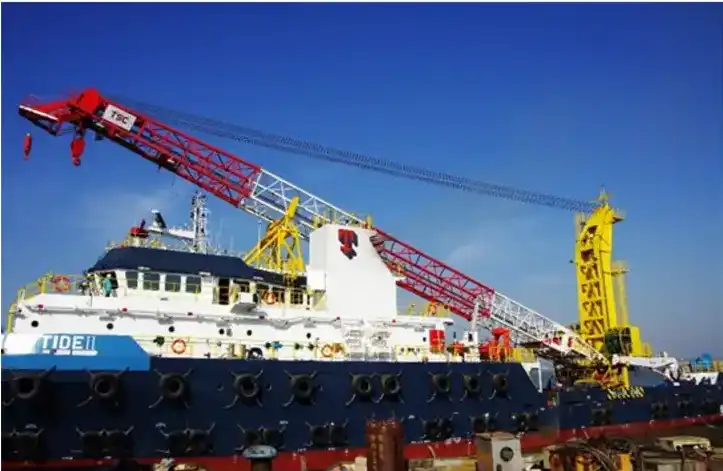
Understanding Kingpost Cranes and Their Design Principles
Kingpost Crane systems are the result of decades of engineering work that has been focused on making them work better in maritime settings with limited room. At CM Energy, we've seen how understanding these design principles helps buying teams make decisions with confidence that improve the way things work.
Core Structural Components
The Kingpost Crane has a vertical mast welded into the ship's frame as the pivot point. Upper and lower plain bearings allow the rotating superstructure to move around this fixed column. This design eliminates catastrophic bearing failure risks. TSC's API Type "E" design mounts on posts built into rig structures. The rope luffing system and lattice boom provide strength without excessive weight, improving the power-to-weight ratio for small deck installations.
Engineering Specifications That Matter
Modern Kingpost Crane systems handle 50 to over 100 metric tons on the main hook, with auxiliary hooks adding flexibility. Boom length ranges from 20 to 55 meters. Larger diameter columns with thicker walls provide greater stiffness for wind and wave resistance. TSC produces models with diameters from 54 to 80 inches, each designed for specific applications. These specifications directly affect stability and load-holding capacity.
Design Evolution and Compactness Advantages
Early offshore cranes required extensive deck space. Pedestal-mounted systems now focus loads straight into hull structures through the vertical post, reducing deck footprint significantly. This evolution enables multiple cranes on platforms where space must balance lifting needs with housing, drilling equipment, and storage. Value-engineered frames offer greater strength at lighter weights. Modern versions feature small slewing radius without compromising safety.
Core Benefits of Kingpost Cranes in Compact Deck Operations
These specialized Kingpost Crane tools are very helpful in marine areas that are limited in more ways than one. We've seen how clients in the offshore wind, oil and gas, and heavy naval building industries use these advantages to make projects more cost-effective and reliable.
Space Efficiency and Workflow Optimization
The centered spinning mechanism needs no extra edge space for swinging beyond boom radius. Multiple units can be placed closer together or next to critical structures without interference. On FPSO units, every deck meter is valuable. Installing lifting equipment with small stern radius and high load lines in one area makes room for process equipment, safety zones, and crew facilities. Operators report faster cargo handling without equipment interference.
Operational Simplicity and Reduced Downtime
Dedicated hydraulic pump circuits for each function enable safe simultaneous multi-function operation. Operators can slew, luff, and hoist together, reducing cycle times for offshore supply or wind turbine installation. TSC's integrated control system manages loads and safety alarms in one place. Emergency running systems allow normal operation even if prime movers fail. Modular designs with standard parts enable quicker repairs and faster parts access.
Cost-Effectiveness and Total Ownership Value
Kingpost Crane models offer low total ownership cost. Installation remains moderate compared to tower systems requiring structural modifications. The post attaches directly to existing rig structures. Quality brass or composite bushings with proper lubrication can last the crane's entire 25-year service life, unlike slewing bearings needing replacement every 5-10 years. Standardized parts across multiple units reduce spare parts inventory and simplify crew training.
Enhanced Safety in Constrained Environments
Kingpost Crane designs are naturally stable with strong structures. Loads go directly through the vertical column into hull sections designed for those forces, rather than through deck-mounted pedestals. Hook overtopping prevention stops boom movement before impact. Load management systems alert operators approaching safe working limits. Certification from DNV, ABS, BV, LR, and CCS plus API-2C approval ensures designs meet strict offshore safety standards.
Comparing Kingpost Cranes with Other Crane Types for Compact Operations
When looking at Kingpost Crane solutions for uses with limited room, procurement teams should know how different crane designs work in deck settings with limited space. This comparison makes it clear why pedestal-mounted spinning column designs work so well in some marine settings.
Spatial Footprint Analysis
Tower cranes need large foundations and guy-wire clearances, unsuitable for offshore platforms. Gantry cranes require parallel runways taking significant deck space. Jib cranes create overturning moments needing heavy counterweights. Kingpost Crane systems put all structural loads through the vertical post into ship frames with no horizontal spread. The rotating top section covers 360 degrees from one position while occupying minimal deck space.
Load Capacity and Operational Versatility
Kingpost configurations handle 50 to 100 metric tons, sufficient for most platform supply, equipment installation, and maintenance needs. Auxiliary hooks enable multi-tasking without repositioning. Derrick cranes lift heavy loads but operate slower with difficult control. Kingpost options eliminate these problems with simultaneous multi-function control. Lattice boom design balances strength and weight economy, enabling longer reach than solid booms of equivalent size.
Installation Complexity and Project Timelines
Kingpost installation uses efficient steps: welding structural posts during platform construction, workshop assembly of superstructure with quality control testing, then delivery and onboard installation. This sequence reduces offshore construction time and enables controlled environment quality control. Post-mounted designs simplify classification society approval by eliminating complex stability calculations needed for base-mounted bearing race cranes. Clients report faster commissioning and earlier revenue start.
Procurement Considerations for Kingpost Cranes in B2B Context
When looking for the best Kingpost Crane provider, you need to look at more than just technical specs. A good buying process strikes a balance between the needs of the current project, the needs of long-term support, and the needs of the company.
Identifying Reliable Manufacturers
CM Energy has over 350 deck cranes operating worldwide on more than 180 self-elevating platforms, covering over 25 percent of global offshore drilling equipment. Verify that potential suppliers have DNV welding plant certification, BV plant approval, and complete ISO quality systems. TSC's 159 authorized patents including 10 invention patents demonstrate commitment to technical innovation. This matters when operational needs change or customization is required.
After-Sales Support and Service Networks
Maintenance quality and parts availability during service life significantly impact equipment longevity. Evaluate potential suppliers' global service networks, especially responsiveness in operating regions. Manufacturers with established service bases in major offshore markets can respond faster to unplanned downtime. Warranty terms should align with industry standards and clarify service response expectations. Technical support including remote troubleshooting and operator training adds value beyond product delivery.
Flexible Procurement Models
Traditional purchase works for long-term asset managers with regular lifting needs. Leasing suits operating expenditure models or limited project timelines. Rental options support short-term projects or temporary capacity needs. Clarify maintenance responsibilities, insurance requirements, and termination conditions. Evaluate customization options from manufacturers willing to modify boom lengths, add specialized controls, or accommodate unusual deck arrangements for solutions that truly optimize operational processes.
Best Practices and Safety Guidelines for Kingpost Crane Operations on Compact Decks
To get the most out of your Kingpost Crane life and keep activities safe, you have to strictly follow maintenance guidelines and operational processes. These methods keep workers safe and get the most out of the money you spend on tools.
Systematic Maintenance and Inspection Protocols
Critical wear spots that are unique to spinning column designs should be checked for on a regular basis. Check the upper and lower joint gaps on a regular basis for too much play, which can be a sign of wear. Keep an eye on the lubrication systems to make sure they consistently send lubricant to the bearing surfaces. In harsh offshore settings, proper lubrication greatly increases the life of parts.
Maintenance on hydraulic systems needs extra care. To keep pumps and motors from wearing out too quickly, check the amounts of contamination in the fluid against ISO 4406 guidelines. Check to see if UV light, salt spray, and hydraulic fluid have damaged the lines and fittings. Replace parts that are breaking down before they fail during important activities.
High-stress areas should be tested without causing damage as part of structural checks. Ultrasonic testing and magnetic particle screening can find cracks below the surface in the welds that connect Kingpost Crane structures to platform structures and at the root-pin connections on booms. Early spotting stops failures before they get out of hand and lets fixes be planned for times when maintenance is normally done instead of having to happen during emergency shutdowns.
Hardware for hooks and rigging needs to be checked before every shift in continuous operations or every day on normal plans. Make sure that the hooks, chains, and wire bands are not worn out, bent, or broken. Keep thorough notes of the results of inspections, the replacement of parts, and any problems that were seen. This information helps with forecast maintenance plans and finding problems that keep happening and need technical help.
Operator Training and Load Management
Comprehensive operator training programs should teach people how to use the tools that come with their equipment, how to read load charts, and what to do in an emergency. When switching to a new platform or type of crane, even experienced crane operators can benefit from training that is tailored to their new tools. Simulator training lets people get used to using complicated lifts and dealing with emergencies without putting people or tools at risk.
Load control is more than just figuring out how much something weighs. Operators need to know how safe working limits are affected by dynamic loads like moving loads, wind forces, and loads shifting. Modern controls with load management systems allow for real-time tracking, but when environmental conditions get worse, human judgment is still needed.
Set up clear ways for crane workers, riggers, and deck managers to talk to each other. Standardized hand signs, radio procedures, and lift planning paperwork help keep everyone on the same page during difficult operations that take place in busy, offshore locations with lots of visual and audio distractions.
Regulatory Compliance and Documentation
Flag states, port officials, and classification societies keep a close eye on maritime activities through a lot of rules and regulations. Keep up-to-date certification records for all lifting equipment, such as records of yearly checks, load tests, and permissions to make changes. Recording operating data on a regular basis is a feature of high-quality modern systems that helps with compliance paperwork and shows that the equipment is being used correctly.
Understanding the rules in each state keeps operations from being held up. Different areas may have different rules about how often to check, how to certify operators, or how to change tools. When regulatory checks find problems, proactive compliance management keeps projects from being held up, which can be expensive.
Safety management tools should make sure that crane operations are safe in line with general platform safety rules. Lifting equipment should be part of emergency response plans, and workers should know how to secure cranes during bad weather, how to use backup systems to operate cranes in an emergency, and how to report and investigate incidents.
Conclusion
Kingpost Crane systems are the best way to work on small decks of offshore platforms, FPSOs, drilling ships, wind installation ships, and other specialized marine uses. Because they don't take up much room, are reliable, and have good lifecycle economics, they are the best choice when deck real estate is valuable. Post-mounted setups offer important safety gaps in offshore settings that are always changing. Modern hydraulic controls and integrated safety systems boost production without lowering worker safety. When looking for lifting solutions for limited maritime areas, procurement teams will find that these specialized cranes offer the best mix of capacity, footprint, and long-term value that supports operating excellence for decades of service life.
FAQ
1. What lifting capacities are typical for compact deck applications?
Most small deck operations use Kingpost Crane systems with main hooks that can hold 50 to 100 metric tons and secondary hooks that can hold 11 to 15 metric tons. These abilities are good for most offshore supply activities, setting up equipment, and repair lifting needs. For specialized heavy-lifting tasks, bigger configurations may be needed, but normal models meet most platform needs well and have small footprints that make them good for installations with limited room.
2. How do maintenance requirements compare with other crane types?
Most of the time, Kingpost Crane setups need less upkeep than regular slewing-bearing designs. If you keep quality bushings oiled, they can last for 25 years, but slewing bearings usually need to be replaced every 5 to 10 years, which can be very expensive. Standard procedures for maintaining marine tools are used for hydraulic systems and structural parts. Compared to more complex crane architectures, the simpler mechanical design cuts down on the number of parts and upkeep jobs that go along with them.
3. Can we lease equipment for short-term projects?
Leasing and renting are open ways to buy things for projects with clear deadlines or when allocating capital favors models for operational spending. Terms depend on the seller and the type of equipment, but short-term deals usually include training for operators and help with upkeep. It's important to be clear about who is responsible for insurance, how much activation costs, and how the contract can be changed to accommodate possible project timeline increases when looking at rental agreements.
Partner with CM Energy for Superior Kingpost Crane Solutions
The TSC brand of CM Energy makes custom-engineered Kingpost Crane systems that are perfect for small offshore deck activities. With over 350 installations around the world, our vast knowledge guarantees that you get equipment that is best suited to your unique operational needs. As a top Kingpost Crane maker, we help our customers with all stages of the equipment's life, from coming up with the first specifications to decades of use. Our engineering team works with your project planners to come up with ideas that take into account the platform's limitations, the surroundings, and the way things need to be done. Our goods meet the greatest safety and dependability standards in the industry and have been certified by major classification societies like DNV, ABS, BV, LR, and CCS. Contact our expert team at info.cn@cm-energy.com to talk about how our custom Kingpost Crane solutions can improve your small deck operations and give you great long-term value.
References
1. American Petroleum Institute. (2020). Specification for Offshore Pedestal Mounted Cranes API 2C. Washington, DC: API Publishing Services.
2. Det Norske Veritas. (2019). Standard for Certification of Lifting Appliances DNV-ST-0377. Høvik, Norway: DNV GL Group.
3. Society of Naval Architects and Marine Engineers. (2018). Marine Crane Design and Operations. Alexandria, VA: SNAME Technical Publications.
4. International Maritime Organization. (2021). Guidelines for Marine Lifting Operations in Offshore Industries. London, UK: IMO Publishing.
5. Offshore Technology Conference. (2022). Advances in Compact Deck Lifting Systems for Space-Constrained Platforms. Houston, TX: OTC Proceedings.
6. British Standards Institution. (2017). Code of Practice for Safe Use of Cranes in Offshore Operations BS 7121-2. London, UK: BSI Standards Limited.