Wind Propulsion System Benefits for Fuel Efficiency
Maritime companies today are under more and more pressure to cut costs while still following environmental rules. A Wind Propulsion System is a tried-and-true method that uses atmospheric forces to help the engine's power. Depending on the route, this can cut fuel use by 10% to 30%. These technologies change the way shipping works by lowering bunker costs, increasing engine service life, and making sure that IMO carbon intensity targets are met. These are big benefits for chemical tanker operators, Newcastlemax bulk carrier owners, and LR2 tanker fleets that have to deal with volatile fuel markets.
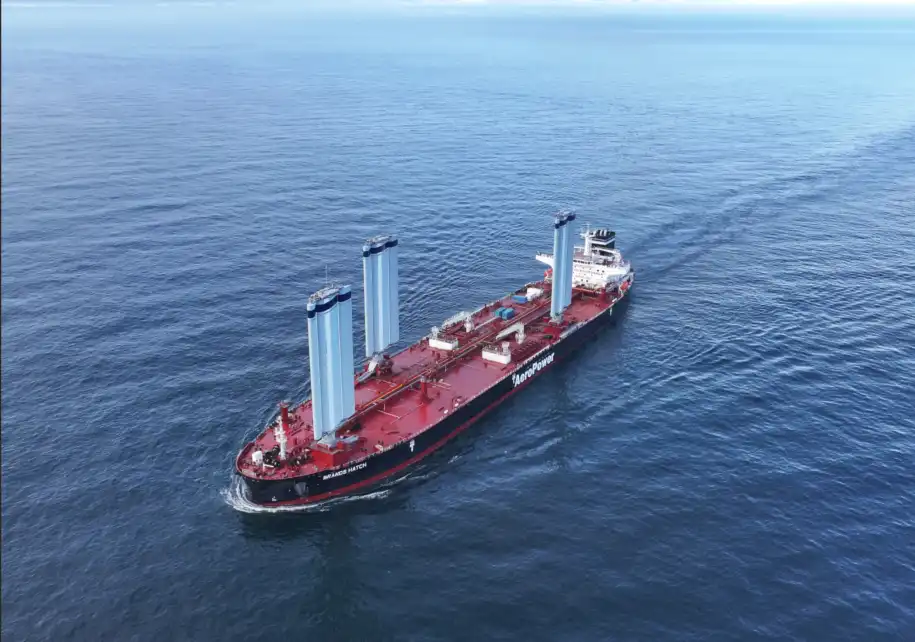
Understanding Wind Propulsion Systems and Their Fuel Efficiency
Advanced sail technologies are a smart move away from only using engines that run on dirty fuels. Modern setups use rotor mechanisms, stiff wing sails, and adaptable control systems to collect wind energy in a range of sailing situations. Canvas sails from the past needed a lot of work from the crew, but today's automatic methods work perfectly with ship navigation systems.
Core Operational Principles
These systems move things forward by using aerodynamic lift, which is similar to how airplane wings work when they are positioned vertically. There is a propelling force that lowers the main engine load when wind moves across the sail surface. How much fuel is saved depends on how much wind there is along certain routes, how fast the ship is going, and how big the system is compared to the hull.
Technology Components and Integration
The structure attachment hardware, electrical control systems, hydraulic actuation mechanisms, and bridge communication software are all part of a full installation. Sensors constantly check the speed, direction, and heading of the wind and the ship, and they automatically change the sail position to get the most thrust while keeping the ship stable. This automation makes sure that the best performance happens without adding more work to the crew, which is very important for business operations that have to stick to tight timelines and have few employees.
The WindWings® system is a good example of this level of technological complexity. This three-element stiff sail was made in collaboration with BAR Technologies. Its slope and angle of attack can be changed, so it can be optimized in real time for changing wind conditions. Independent testing by the Wolfson Unit and approval by DNV back up its performance claims. This gives procurement managers important third-party proof they need to make decisions about capital investments.
Challenges in Traditional Propulsion and the Rise of Wind Technology
Conventional diesel engines are the most common way to move ships, but they are becoming more and more expensive and difficult to regulate. For many managers, bunker fuel makes up 50–60% of the cost of a journey. This means that companies are vulnerable to price changes that can happen as often as 40% in a single fiscal year. In the meantime, the International Maritime Organization's Carbon Intensity Indicator rules punish poor ships with limited operations, which could hurt the route's ability to make money.
Economic and Regulatory Pressures
Changing oil prices make budgets difficult and make long-term planning harder. When fuel prices go up, a ship's finances quickly get worse, especially on longer trips where higher consumption levels make cost rises bigger. In addition to the direct costs of fuel, old engine systems need expensive repairs and upkeep, and overhaul cycles take a lot of money and time away from work. Environmental laws make things even more complicated. The Energy Efficiency Existing Ship Index and the new FuelEU Maritime guidelines will punish ships for pollution, which has a direct effect on their ability to make money. As cargo owners demand more low-emission transportation, ships that don't meet advanced carbon intensity standards could lose their charter contracts.
Wind Technology as Complementary Solution
Modern Wind Propulsion Systems tackle these issues without rebuilding the ship or using untested fuels. These fuel-saving devices add to engines rather than replace them, maintaining plan stability and flexibility. Recent advances in materials science, control algorithms, and structural engineering have made wind aid a practical technique. Retrofitting ships has benefits. Chemical, bulk, and product tankers produced in the previous 20 years may incorporate wind devices in dry dock, saving money on fleet renewal. WindWings® technology upgrades bulk ships by carefully placing installations between cargo holds so hatch covers may be used regularly, and cranes can operate together without impeding cargo handling. Trans-oceanic routes with continuous trade winds have the best business cases. Iron ore ships between Brazil and China, product tanker ships between the Persian Gulf and Asia, and North Atlantic grain ships experience favourable wind conditions for much of their workday. Fuel savings are recorded annually.
Key Benefits of Wind Propulsion Systems for Fuel Efficiency
The main value offering is a measurable drop in fuel use. In the real world, installations of Wind Propulsion Systems show that usage drops by 1.5 to 2.0 tons per wing unit every day when conditions are good. This directly lowers the cost of travel and the amount of pollution released at the same time. These saves add up over the course of a year, and some systems pay for themselves in less than five years.
Direct Operational Savings
At current port prices, each ton of fuel saved cuts CO2 emissions by about 3.1 tons and lowers the cost of the trip by several hundred dollars. Over the remaining service life of a vessel, these savings add up to millions of dollars, which greatly increases the return on assets. The WindWings® system makes the most of this saving potential. Its three-element design gives it over 2.5 times the lift of traditional single-wing designs. Because engines are used less, repair intervals are longer and big overhauls are put off. When extra power from wind helps the main engine derate when the wind is blowing well, mechanical wear goes down in a similar way. This longer service life lowers the total cost of ownership while also making the fleet more reliable. Fewer breakdowns mean better on-time performance and happier customers.
Regulatory Compliance Value
Meeting CII standards without slowing down operations keeps the chance of making money alive. Ships that use Wind Propulsion Systems get better carbon intensity scores while keeping their commercial speeds. This way, they don't lose money when they steam too slowly. As rules get stricter through 2030 and beyond, this compliance cushion will be more and more useful. Emission reductions that can be shown to be real help a company's ecological reputation. Charterers and cargo owners are looking at a ship's environmental performance more and more when giving contracts, and some even require low-emission loads. When it comes to competitive rental markets, wind-assisted boats can stand out and possibly get higher rates and longer-term jobs.
Operational Flexibility and Scalability
These systems can be used with a wide range of vessel kinds and operating profiles. Installations on bulk ships are placed so that they don't get in the way of cargo gear, and tankers can add systems that allow loading arm operations. Because it is flexible, it can be put together in ways that are specific to the vessel's size, the route, and the performance goals. TSC's WindWings® technology comes in three sizes—20m, 24m, and 37.5m wing spans—so that different types of vessels can get solutions that are just right for them. Smaller ships and ferries that go along the coast can use compact systems, while bigger ships that go out to sea can use multiple large units to get the most power. This flexibility makes sure that the right technology is used across a wide range of fleet makeup. Installation flexibility helps with both new construction and retrofitting. Shipyards that are making ships that will work in the future can add wind systems from the time the keel is laid, by making the best use of structure arrangements and electricity systems so that they work together smoothly. Existing teams can get the same benefits through retrofit programs. Structural surveys find good options and list the improvements that are needed.
Comparing Wind Propulsion with Alternative Fuel-Saving Technologies
To properly evaluate fuel economy options, you need to look at all of their costs, including the initial investment, the effects on operations, the upkeep needed, and how they help with regulatory compliance. In a unique way, Wind Propulsion Systems cut emissions right away without relying on fuel infrastructure or posing risks with technology that hasn't been tested yet.
Performance Against Alternative Technologies
Installations of solar panels provide extra electricity, but they don't help with propulsion. Battery-electric systems work well for boats with short routes, but they aren't realistic for oceangoing ships because of their low energy density and lack of charging stations. Converting to LNG lowers carbon intensity somewhat, but it costs a lot to change the fuel system and leaves managers open to changes in the prices of different commodities. Wind power gets around these problems. No special bunkering infrastructure is needed, no new fuel storage systems need to be approved by the government, and no power plant technologies that haven't been tried before pose risks to operations. The technology uses a plentiful, free source of energy and works perfectly with the systems and procedures already in place on the vessel.
Cost-Benefit Analysis Framework
The amount of money needed at the start depends on the size of the tank, the system chosen, and how hard it is to build. The total cost of a retrofit job can range from modest to substantial, based on the state and layout of the vessel. It may require structural assessments, possible reinforcement work, and upgrades to the electrical system. Because the structures are better integrated during building, new systems usually cost less. Calculating the return on investment depends a lot on the features of the road and the number of hours it is open each year. Ships that spend a lot of time in windy weather get their money back faster because they save more fuel over time. Charter rate environments also have an effect on the economy. For example, stable long-term employment boosts investor trust, while spot market volatility raises financial risk. The proven success of the WindWings® system makes it possible to make accurate predictions of savings for financial modeling.
Supplier Evaluation Criteria
Procurement managers can estimate cash flows since DNV's real-world vessel operations verify fuel-saving effectiveness. Financing and long-term service packages reduce costs and ensure long-term performance, making investments more likely to succeed. When selecting technology partners, consider their credentials, track record, and support capabilities. DNV, Bureau Veritas, and Lloyd's Register certifications prove the structure's safety. Real-world installation experience proves you can design beyond academia. CM Energy exemplifies these attributes with its wide variety of maritime tools and global service network. CM Energy helps wind-assisted propulsion spread with project management expertise. They have managed complicated maritime systems and deployed over 350 deck cranes worldwide. Operating expertise streamlines installs, commissioning, and long-term support. Infrastructure for lifetime support is crucial. IoT tracking systems enable scheduled maintenance, remote diagnostics speed response, and global service networks provide local assistance. TSC's comprehensive support methodology ensures maximum uptime and performance throughout the system's 25-year design life via compatibility study, factory acceptance testing, delivery, installation, and maintenance.
Navigating the Procurement Process: Selecting and Implementing Wind Propulsion Systems
A thorough needs assessment is the first step to successfully adopting new technology. Knowing the working profiles, route factors, and baselines for fuel consumption of a vessel is important for choosing the right system and setting realistic performance goals.
Requirements Definition and System Matching
System choice is largely based on the type of ship and its task. Chemical ships that carry dangerous goods have to follow different design rules than dry bulk carriers when it comes to things like electrical equipment certifications and deck arrangement limits. Route research shows which wind resources are available. Larger, more expensive installations are needed for steady trade wind exposure, while smaller, cheaper units may be better for variable wind patterns. The existing equipment on the vessel affects how hard it is to adapt. The available electrical power capacity, deck structural margins, and stable features decide the sizes of Wind Propulsion Systems that can work and the changes that need to be made. These limitations are found early on by thorough surveys of the vessel, which keeps expensive surprises from happening during the specific engineering stages. The WindWings® technology takes these things into account by giving you a choice of how they are set up. Different installation needs can be met by above-deck and below-deck tilt systems, while fixed mounting choices are best for ships with plenty of air draft. Three-element rigid wing design uses ship-grade steel for the main frame and composite aerodynamic surfaces to balance the need for strength with the desire to reduce weight.
Financial Planning and Implementation Timelines
The budget must cover purchasing the systems, employing workers to install them, changing the structure, improving the electrical, obtaining a classification society inspection, and aiding with completion. Operating loans, vendor finance, and green shipping funds may reduce the upfront cost of a project and increase its chances of success. Installation scheduling matches dry dock maintenance cycles, reducing operational downtime. Most retrofit projects need classification society inspector coordination, suitability evaluations, land preparations, and on-board installation. Plan beforehand to maximise dry dock utilisation and minimise costly schedule extensions. Factory acceptance testing checks structural stability, operational safety, and control system functionality before shipping. This pre-delivery examination reduces launch hazards and facilitates ship recovery. CM Energy's installation procedure involves compatibility study, on-site assembly, factory testing, shipment, and installation. This systematic strategy manages project risks and plans.
Vendor Selection and Partnership Criteria
To choose the correct suppliers, consider their professional credentials, project experience, and long-term support. Certified performance data from external sources eliminates guessing. Successful installations on several vessel types demonstrate that the task can be done. Long-term value creation requires aftermarket product support infrastructure. Maintenance plans, replacement parts, remote tracking, and upgrade pathways keep systems working as planned. The TSC's 25-year design life lifetime and flexibility to transfer boats make assets versatile, protecting investments over fleet evolution cycles. Weather route merging enhances value. To optimise Wind Propulsion technologies' travel plans, advanced routing technologies determine the ideal paths. Web-based technologies allow ground operations and crew members to collaborate on trip optimisation. Every passage becomes more efficient.
Conclusion
Adopting Wind Propulsion Systems has clear benefits in terms of saving fuel, following rules, and long-term operations. Proven technologies like WindWings® combine mechanical efficiency with useful marine design, which lets you cut your fuel use by a lot without affecting how the boat works. As carbon rules get stricter and fuel prices stay unstable, these systems offer strategic value that makes a business more competitive and protects fleet assets for the future. When procurement managers look at ways to reduce carbon emissions, wind assistance should be a top choice because it has a direct effect, has been shown to work, and has a high return on investment across a wide range of vessel types and operating patterns.
FAQ
1. How is fuel-saving potential verified?
For savings verification, sea trials are used to compare performance to average consumption data, while ISO 15016 standards are used to account for weather factors. Continuous tracking systems figure out the net force that is sent to the propulsion shaft, separating the power from the main engine from the wind. DNV verification procedures make sure that measurements are correct and provide third-party proof that helps with legal reports and financial modeling.
2. Does installation affect vessel stability or cargo capacity?
When designing, stability is the most important thing—classification groups need up-to-date stability booklets that cover both intact and damaged situations. Even though systems take up some room on the deck, newer designs try to keep their footprint as small as possible by using small tilt mechanisms or clever placement. When WindWings® are installed on bulk carriers, the units are put between the cargo holds. This way, hatch access and crane operations are not hampered, and the cargo handling efficiency is not affected.
3. What occurs during extreme weather?
All systems made for professionals have automatic modes for stowing or feathering. When the wind speed goes above certain levels, usually 20 to 25 meters per second, the stiff sails automatically feather into position with the wind to balance out the drag and structure loads. Automated control systems keep an eye on things all the time, so crews don't have to get involved to keep things running safely during squalls or storms.
Partner with CM Energy for Advanced Marine Propulsion Solutions
CM Energy is ready to help your fleet make the switch to proven Wind Propulsion System technology that uses less fuel. As a well-known marine equipment seller with over 350 installations around the world and full lifecycle support services, we bring execution experience that guarantees project success. Our TSC brand offers WindWings® systems that are backed by DNV approval, work with BAR Technologies, and real-world performance data that has been verified. If you're looking at ways to make current chemical tankers or Newcastlemax bulk carriers more environmentally friendly, or if you're planning a new ship with green propulsion built in, our engineering team can make a study that fits your needs and goals. Get in touch with our experts at info.cn@cm-energy.com to talk about compatibility ratings, performance forecasts, and financing models that can speed up your decarbonization plan and make you more money in the long run. These will help you get the most out of your investment throughout the whole lifecycle of the system.
References
1. International Maritime Organization, "Fourth IMO GHG Study 2020: Full Report," 2021.
2. Smith, T.W.P., et al., "Wind Propulsion for Commercial Shipping: Quantifying Performance and Economic Viability," Journal of Marine Engineering & Technology, vol. 19, no. 3, 2020, pp. 142-159.
3. DNV GL, "Assessment of Selected Alternative Fuels and Technologies: Technical and Economic Analysis," Maritime Advisory Report, 2019.
4. Windship Technology Limited, "Wind Propulsion Innovation Project: Final Report to the Department for Transport," UK Government Publication, 2021.
5. Tillig, F. and Ringsberg, J.W., "Design, Operation and Analysis of Wind-Assisted Cargo Ships," Ocean Engineering, vol. 211, 2020, article 107603.
6. International Windship Association, "Annual Review of Wind Propulsion Technology Development and Market Trends," Industry Report, 2024.