International Trade of Mud Cleaning Equipment Guide
As an important part of the global drilling industry, the international trade of mud cleaning tools includes high-tech items that keep offshore platforms, shale gas operations and geothermal projects running smoothly. The difficulties of finding, selecting, and buying mud cleaning methods around the world are covered in this detailed guide. As the backbone of drilling fluid management, modern mud cleaner technology lets workers keep up the best drilling performance while causing the least amount of damage to the environment. What procurement managers need to know about global trade trends, approval standards, and technology specs are material control options that they can rely on for their operations.
Understanding Global Mud Cleaning Equipment Markets
The global market for drilling tools has changed a lot in the last few decades, thanks to rising energy needs and better technology. A big part of this environment is mud cleaning devices, which are used for many things, from offshore research to urban directional drilling projects.
On different countries, regional production hubs have sprung up, and each one has its own benefits when it comes to technology, cost, and service. North American companies usually do a great job with shale gas technologies, while European companies usually do a great job with overseas uses. Asian companies have gotten a big part of the market by offering low prices and quickly adopting new technologies.
Trade trends show that digging activities happen all over the world. Offshore drilling sites often need tools from more than one country in order to meet their working needs. For semi-submersible rigs to work in difficult settings, they need strong mud disposal systems that can handle tough digging circumstances.
When organising foreign buying, supply chain issues become very important. Lead times, shipping processes, and customs rules all have a big effect on project schedules. Building ties with providers in more than one area is often a part of successful buying strategies to make sure that reliable equipment is always available.
Technical Specifications and Global Standards
International drilling operations must comply with varying regulatory frameworks and technical standards. Equipment specifications, including mud cleaner requirements, often differ between regions, requiring careful attention to compatibility and certification. The mud cleaner industry has developed standardized approaches to address these challenges while maintaining operational flexibility.
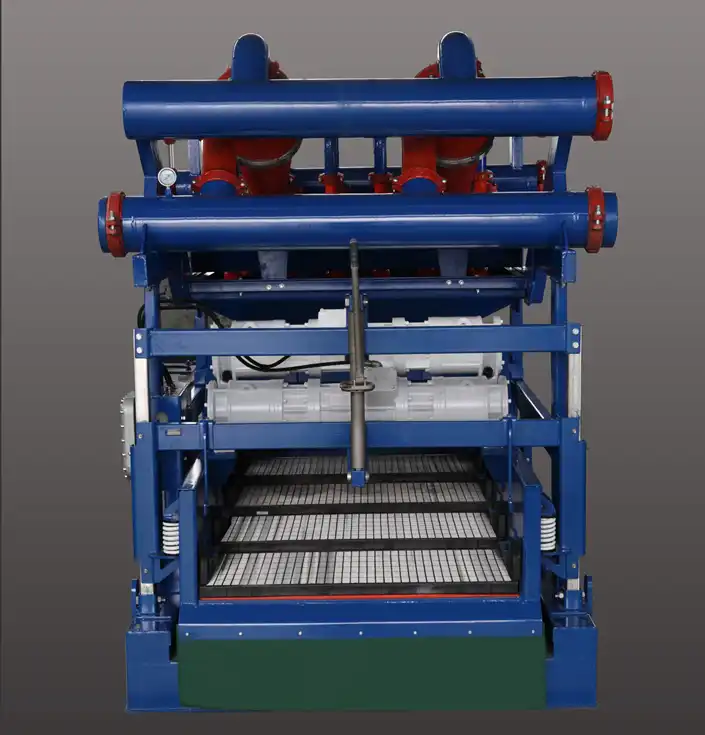
Solids control systems require precise engineering to handle different drilling fluid compositions and cutting characteristics. Desander and desilter assemblies must accommodate particle size distributions that vary based on geological conditions and drilling techniques. The integration of shale shaker technology with hydrocyclone systems demands sophisticated design approaches.
Performance metrics have become increasingly standardized across international markets. Drilling fluid recovery rates, separation efficiency, and environmental compliance parameters serve as common benchmarks for equipment evaluation. These standards facilitate comparison between manufacturers and ensure consistent operational outcomes.
Quality assurance protocols vary significantly between manufacturing regions, influencing equipment reliability and longevity. International buyers often implement comprehensive inspection programs to validate equipment performance before shipment. This approach helps minimize operational risks and ensures compliance with local safety regulations.
Emerging Technologies in Mud Treatment Systems
Innovation continues to drive the evolution of drilling fluid management technologies. Advanced separation techniques, automated control systems, and environmental monitoring capabilities are reshaping the industry landscape. These developments create new opportunities while presenting challenges for international trade.
Centrifuge technology has advanced significantly, offering enhanced separation efficiency for fine particle removal. Modern systems incorporate variable speed control and automated bowl cleaning mechanisms, reducing operational complexity while improving performance. These innovations particularly benefit operations requiring high-quality drilling fluid recovery.
Digital integration represents a significant trend affecting mud cleaning equipment design. Remote monitoring capabilities, predictive maintenance algorithms, and real-time performance optimization systems are becoming standard features. This technological evolution influences procurement decisions and service requirements.
Environmental regulations continue to strengthen globally, driving demand for more efficient waste management solutions. Closed-loop drilling systems and zero-discharge technologies are gaining acceptance across various drilling applications. These trends create new market segments while influencing traditional equipment specifications.
Regional Market Analysis and Procurement Strategies
Different geographic regions present unique opportunities and challenges for mud cleaner equipment procurement. Understanding these regional characteristics enables more effective sourcing strategies and mud cleaner supplier relationship management.
The North American market emphasizes high-volume processing capabilities suitable for shale gas operations. Equipment specifications often prioritize throughput capacity and automation features. Suppliers in this region typically offer comprehensive field service capabilities and rapid parts availability.
European markets frequently focus on offshore applications requiring compact, high-performance systems. Harsh marine environments demand exceptional reliability and corrosion resistance. Suppliers often provide specialized engineering services and customized solutions for unique operational requirements.
Asian manufacturing capabilities have expanded significantly, offering competitive alternatives for standard equipment requirements. Many suppliers in this region provide flexible customization options and competitive pricing structures. Quality systems have improved substantially, meeting international certification standards.
Growing potential are being presented by the Middle Eastern and African markets, which are being driven by the expansion of exploration operations. This is because procurement methods are influenced by local content requirements as well as technology transfer programs. Supply chain companies that are successful often develop regional collaborations and training programs.
Risk Management in International Equipment Trade
The use of global sourcing exposes businesses to a variety of hazards that need for cautious management measures. The results of procurement may be considerably impacted by factors such as fluctuations in currency, political instability, and changes in regulatory policies. Prospective purchasers that are successful establish extensive risk mitigation strategies.
Supply chain disruptions have become increasingly common, affecting equipment availability and project schedules. Diversified supplier networks and strategic inventory management help minimize these risks. Long-term supplier partnerships often provide preferential treatment during capacity constraints.
Technology transfer regulations vary between countries, potentially affecting equipment specifications and service capabilities. Understanding these requirements early in the procurement process prevents delays and compliance issues. Legal counsel specializing in international trade proves valuable for complex transactions.
Quality control becomes more challenging with international suppliers, particularly for custom-engineered equipment. Comprehensive inspection protocols, third-party testing, and performance guarantees help ensure equipment meets specifications. These measures require additional time and resources but significantly reduce operational risks.
Future Trends and Market Outlook
There is a continuous evolution taking place within the mud cleaner equipment business as a result of the shifting needs of the market and the capabilities of technology. A number of significant developments are influencing the future directions of growth and the patterns of commerce in the mud cleaner industry.
It is becoming more common for drilling operations to use technology that utilise automation and artificial intelligence respectively. There is a good chance that intelligent mud cleaning systems that are capable of autonomous optimisation and predictive maintenance will become the norm. This development has an impact on the requirements for service and the specifications of the equipment.
The need for waste reduction systems and separation technologies that are more efficient is being driven by green efforts that promote environmental sustainability. The ideas of the circular economy are being applied to the management of drilling fluid, which is presenting prospects for creative recycling systems. These tendencies have a particularly significant impact on the design of equipment and operating processes.
Policies pertaining to energy transition have an effect on drilling activity patterns and the needs for equipment. The expansion of geothermal energy and initiatives involving carbon capture both result in the creation of new market sectors that have specific technological requirements. Traditional oil and gas operations are continuously progressing towards approaches that are more ecologically friendly and efficient.
There are new business models and methods of service delivery that are made possible by digitalisation. There is a growing acceptance of performance-based contracts and equipment-as-a-service offers. These models have an impact on procurement strategies as well as the management of relationships with suppliers.
Conclusion
To sell mud cleaner tools across foreign borders, you need to have a deep understanding of technical specs, government rules, and how the market works. Procurement strategies that work well match the need for success with the need to save money, all while keeping risks under control. The business keeps moving towards options that are more efficient, automatic, and good for the environment. Operators can get around this complicated situation by keeping their buying options open and building strong relationships with suppliers. For businesses to be successful in the future, they need to be open to new technologies while still focussing on practical efficiency and environmental responsibility.
Partner with CM Energy for Superior Mud Cleaner Solutions
CM Energy stands as a trusted mud cleaner manufacturer with significant global offshore drilling equipment coverage and numerous worldwide installations. Our HMC mud cleaner delivers exceptional solids control performance through advanced desander and desilter technology. Contact our expert team at info.cn@cm-energy.com to discuss your drilling fluid management requirements. We provide customized solutions, comprehensive technical support, and reliable mud cleaner systems for sale globally.
References
1. Society of Petroleum Engineers. "Drilling Fluids and Solids Control Systems: Global Standards and Best Practices." SPE Technical Publications, 2023.
2. International Association of Drilling Contractors. "Mud Cleaning Equipment Specifications and Performance Guidelines." IADC Technical Report, 2023.
3. World Energy Equipment Association. "Global Drilling Equipment Market Analysis and Trade Patterns." WEEA Industry Study, 2024.
4. Offshore Technology Research Center. "Advances in Drilling Fluid Management and Solids Control Technologies." OTRC Annual Review, 2023.
5. International Maritime Organization. "Environmental Regulations for Offshore Drilling Operations and Equipment Standards." IMO Guidelines, 2024.
6. Energy Equipment Institute. "Emerging Technologies in Mud Treatment and Recycling Systems." EEI Technology Forecast, 2023.