How WindWings® Improves Ship Energy Efficiency
Shipping companies have to rethink how they move their ships because of stricter emission rules and higher gas costs. To solve this problem, WindWings® technology uses advanced rigid sail systems to harness wind power. This saves measured amounts of fuel while keeping operating freedom. This unique three-element wing design turns natural wind into power, which makes the main engine less necessary and cuts CO2 emissions by a large amount. This wind-assisted propulsion option has been tested by DNV and proven to work on global trade routes. It gives business shipping a way to meet regulations and make money without losing reliability.
Understanding the Energy Efficiency Challenges in Modern Shipping
There is more and more pressure on commercial ships from many sides. Fuel costs are the highest practical cost for boat owners; based on the route and type of boat, they can take up to 60% of voyage funds. When fuel prices go up without warning, overnight profits are gone.
At the same time, legal systems get stricter. The International Maritime Organization's (IMO) Carbon Intensity Indicator (CII) scores now have a direct effect on the ability to hire a ship. Ships with D or E grades are punished in the market, and charterers are increasingly looking for ships with good environmental records. The Energy Efficiency Existing Ship Index (EEXI) makes these problems even worse and calls for quick action instead of slow progress.
Traditional Efficiency Measures Fall Short
Using traditional methods to cut down on fuel doesn't work very well. Hull coats wear off in a few months. Propeller cleaning gives small benefits. When you derate an engine, you give up speed and plan stability. Charterers get frustrated with slow boiling, and it messes up supply lines. Chemical tankers, Newcastlemax bulk ships, and LR2 tankers all face the same problem: they need to cut their consumption by a significant amount without hurting their ability to do business or having to pay a lot of money to repair.
Fleet managers need solutions that work well with their current ships, don't take too long to build, and give them enough money back quickly to support the cost of the capital. When purchasing managers look at retrofits, they want tried-and-true technology that is backed by approval from the classification society and real-world practical data. They don't want to use novel ideas that put the risk on the shipowners.
What is WindWings® and How Does It Work?
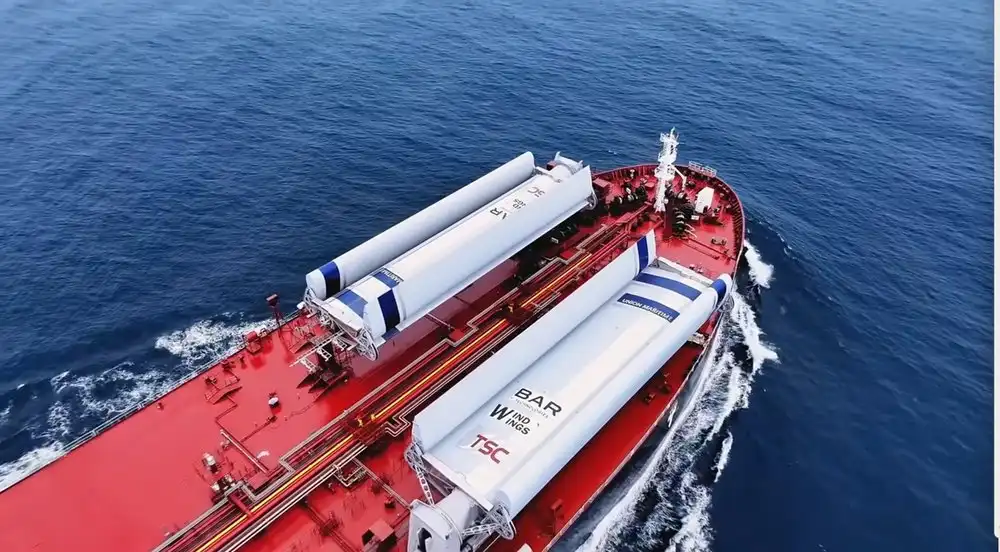
With WindWings®, naval propulsion is done in a completely different way. This system uses rigid wing sails that work like aeroplane wings that are set up vertically on deck. It was created by BAR Technologies, the naval design company behind the innovations in the America's Cup racing, and top marine engineering teams working together.
Depending on the type of ship, each wing is between 20 and 37.5 meters high. The three-part design, with a main part and two movable flaps on either side, creates lift using aerodynamics. With the help of the main engine's power, the wing's bent surface creates forward thrust as wind flows over it.
Intelligent Automation Optimizes Performance
Advanced robotics is what sets this technology apart from older sailing systems. Computers on board constantly check the sea state, wind speed and direction, and the ship's course. Dozens of times per minute, specialised software figures out the best wing angle and camber setup and then adjusts the hydraulic motors to keep the plane running at its best.
During normal activities, the crew doesn't have to do much. The control panel looks like a normal deck crane that merchant sailors are used to using. When getting close to a port or going through restricted seas, the wings can be folded flat against the deck in minutes. This makes room for cargo handling equipment and makes sure the ship can safely go under bridges.
The method works in a variety of situations. When winds are favourable, thrust creation greatly cuts the amount of fuel used. When the direction of the wind isn't good, the wings feather to reduce drag. During severe weather, automated safety measures keep the wings in their folded position to protect the structure without any help from the crew.
Installation is possible on all types of vessels. Bulk ships put their wings between their cargo holds so that the hatch covers can still be used. Tankers connect systems while keeping safety zones and activities on the deck. Installations that are set up for short routes and lots of port calls are good for ferry companies.
Key Benefits of WindWings® for Ship Energy Efficiency
Adopting wind-assisted propulsion technology has many benefits that directly solve the most important issues in business ships.
Substantial Fuel Savings and Cost Reduction
Real-world operating data shows that fuel use can be cut by up to 30% on routes that are optimised and have good wind patterns. In a wide range of situations, the average savings run from 20% to 25%. A 20% drop in fuel use saves eight tonnes per day for a Newcastlemax bulk ship that uses 40 tonnes of fuel every day. At the current price of marine fuel, ships that run more than 300 days a year can easily save over seven figures each year.
These savings mean that the investment will pay off quickly. Most systems pay for themselves in three to five years, and that time frame will shorten even more as carbon pricing methods grow. As of now, maritime travel is part of the European Union Emissions Trading System. This means that every tonne of CO2 decrease is now worth money. WindWings® technology reduces pollution by more than five tonnes per wing per day on large sites. This has a big impact on compliance and goes beyond just saving fuel.
Regulatory Compliance and CII Improvement
Ratings for Carbon Intensity Indicators get better right away after they are installed. The stiff wing sails' thrust immediately lowers the amount of fuel used per transport work unit, which is what the CII metric tracks. Vessels that are getting close to D or E ratings can improve to B or C ratings, which keeps them in the charter market and keeps them from having to pay for expensive operating limits.
It also gets easier to follow EEXI rules. Instead of slowing down engines or taking speed fines, operators use extra wind propulsion to keep service speeds the same while meeting efficiency standards. This method keeps schedules reliable, keeps customers happy, and meets legal requirements.
Operational Reliability and Longevity
Ship-grade steel and marine-composite materials that have been tested in harsh seafaring settings are used to make wings that can be used for 25 years. Structural fatigue testing mimics decades of repeated loads, making sure that the structure won't delaminate or break under stress. Corrosion resistance in harsh saltwater environments is proven by salt spray tests.
Maintenance needs are still pretty low. Hydraulic systems work the same way as other naval devices. Redundancy and backup procedures are built into control electronics. Long-term service deals make repair costs more predictable and keep operations running as smoothly as possible.
Transferability makes it even more valuable. As groups change, wings can be moved from one ship to another. This protects the value of assets and extends the return on investment beyond the span of a single ship. Shipyards and design companies are seeing wind-assisted power as standard equipment for future-proof newbuilds more and more. This makes equipped tonnage more valuable when it comes time to sell.
Comparing WindWings® with Traditional and Alternative Energy Solutions
When judging power aid technologies, it's more important to know how they work in real life than to know what they can do in theory.
Advantages Over Rotor Sails and Traditional Sails
Through the Magnus effect, rotor sails need constant power input to make thrust. WindWings® stiff sails silently make thrust through aerodynamic lift; they only need power to move them around. This difference is important when machines break down or power goes out.
Traditional soft sails need a lot of deck gear, machinery, and crew knowledge that business ships don't have. Nowadays, ships only have a small team that is trained to handle goods instead of sails. These skills are no longer needed at all with rigid-wing robotics.
The difficulty of maintenance also varies a lot. Wear and tear, and UV damage make soft sails need to be replaced often. Rotor sails use spinning parts that can have problems with their bearings and motors. There are fewer moving parts in rigid wings, and they use industrial-grade hydraulic parts that have been used successfully in naval deck gear.
Performance Consistency Across Conditions
Solar screens can provide extra power, but they can't directly make thrust for movement. Battery systems are heavier and can't hold much for long trips at sea. Hydrogen fuel cells are still expensive and don't have any bunkering facilities. Wind-assisted motion works even when these things aren't possible.
Trade paths that go through big wind bands, like shipments of iron ore from Brazil to China or transatlantic container services, always have wind. Routing software made just for wind-assisted ships figures out the best way to plan a course so that the ship gets the most wind exposure without going too far. Web-based tools let shore teams and crew members on board see how much fuel they can expect to save and what the best route is.
Procurement Considerations for WindWings®
Making responsible choices about procurement means looking at what the provider can do, how much it will cost over time, and how to reduce risk.
Certification and Quality Assurance
Approval from a classification society like DNV, Lloyd's Register, Bureau Veritas, or the China Classification Society makes sure that the structure, safety systems, and performance claims are true. Type approval papers show that designs meet strict marine standards for being safe at sea and being insured.
Getting raw materials from sources that are ISO-certified guarantees regular quality. Factory approval testing makes sure the system works before it is sent out. The installation process follows set procedures, and classification inspectors make sure that the building and integration are done correctly on board.
Installation and Integration Support
Before every placement, a compatibility study is done to look at the structural needs, electrical integration, and practical effects. Engineering teams work closely with ship owners and operators to keep downtime to a minimum and make sure that installation schedules work with repair and drydocking times.
Structure reinforcement, hydraulic system installation, electrical links, software setup, and crew training are all part of turnkey integration services. New builders get help with the planning process to make sure that the wings fit in perfectly with the rest of the ship's structure from the keel laying forward.
Conclusion
When it comes to business shipping, problems with energy efficiency need realistic answers that get measurable results without affecting how things work. This is exactly what WindWings® rigid wing sail technology offers: big fuel savings, better compliance with regulations, and proven dependability across all kinds of vessels. Verified performance data from boats working around the world backs up the savings estimates, and certifications from classification societies make sure the systems are safe and can be insured. When purchasing managers look at ways to reduce carbon emissions, wind-assisted transportation with WindWings® offers a quick return on investment, little downtime, and safety against rising fuel costs and carbon prices. The technology is mature and has been tested and proven to work in the real world. This makes WindWings® a cornerstone of sustainable shipping rather than a novel option.
FAQ
1. How Do Rigid Wing Sails Perform During Storms?
Advanced camera systems constantly check the wind conditions. When wind speeds are too high, automatic systems fan the wings to line them up with the flow of air, which eliminates drag. When bad weather hits, the wings fold fully flat against the deck, protecting the structure without any help from the crew. Redundant hydraulic power units make sure that the system can still work even if the power goes out.
2. Will Wings Interfere With Cargo Operations?
By carefully placing it between luggage holds, the hatch cover can still be reached. The device that folds the wings down makes sure that they are fully clear of loading equipment, cranes, and grabs. Ships with this technology have worked at more than twenty major ports around the world without any problems, showing that it works with normal ways of handling goods.
3. What Return on Investment Can Operators Expect?
ROI times are usually between three and five years, but they can be longer or shorter based on fuel prices, route features, and carbon pricing exposure. Daily fuel savings of 1.6 tonnes per wing, which are probably too low for big sites, add up to a lot of money every year. Increasing the carbon tax and making CII standards stricter will increase cash benefits beyond lowering the cost of fuel directly.
Lifecycle Support and Performance Monitoring
IoT-enabled tracking systems keep an eye on the performance of the wings all the time and send information to shore teams about thrust output, fuel savings, and system health. Predictive maintenance algorithms find problems before they break down, organising repairs for planned port calls instead of causing unplanned downtime.
Full service packages cover long-term upkeep, make spare parts available, and offer expert help all over the world. Setting up service networks at the world's busiest ports makes sure that problems are dealt with quickly, keeping operations running smoothly and protecting the value of investments.
CM Energy adds decades of experience with maritime tools to the application of wind-assisted propulsion. We know what business ships have to deal with because we've sold over 350 deck cranes around the world and helped more than 180 self-elevating platforms with lifting equipment. We are committed to new ideas, as shown by our 159 authorised patents, which include creation patents that cover important technologies. CM Energy is a WindWings® seller that specialises in green marine solutions. They offer full integration services, from figuring out if the systems will work together at first to installing, commissioning, and providing support throughout the lifecycle. Our tech teams make sure that hard wing systems work as promised while still letting the ship's operations be flexible. If a shipowner wants a reliable partner to help them meet CII requirements and cut down on fuel costs, they can email our marine solutions experts at info.cn@cm-energy.com to talk about their individual vessel needs and project timelines. We make custom plans for bulk ships, tankers, and commercial shipping fleets around the world that deal with both retrofitting problems and integrating newbuilds.
References
1. International Maritime Organization, "Fourth IMO Greenhouse Gas Study 2020: Executive Summary," IMO Publishing, 2021.
2. Smith, T.W.P., et al., "Wind-Assisted Ship Propulsion: Matching Technology to Operations," Journal of Marine Engineering & Technology, Vol. 19, 2020.
3. DNV GL, "Assessment of Selected Alternative Fuels and Technologies," DNV Maritime Technical Report, 2019.
4. Lloyd's Register and UMAS, "Zero-Emission Vessels 2030: How Do We Get There?," Lloyd's Register Marine Publications, 2019.
5. Bouman, E.A., et al., "State-of-the-Art Technologies, Measures, and Potential for Reducing GHG Emissions from Shipping," Transportation Research Part D: Transport and Environment, Vol. 52, 2017.
6. Rehmatulla, N. and Smith, T., "Barriers to Energy Efficient and Low Carbon Shipping," Ocean Engineering Journal, Vol. 110, Part B, 2015.