How Wind Propulsion Systems Can Lower Operating Costs in Shipping?
By significantly lowering fuel usage through sophisticated aerodynamic design, Wind Propulsion System technology transforms maritime economics. By using natural wind energy to augment conventional propulsion, these cutting-edge solutions reduce operating costs by up to 30% while still meeting environmental regulations. By reducing their reliance on fuel, modern wind-assisted ships realize significant cost savings, making sustainable transport financially feasible for commercial operators all over the world.
The Economic Reality of Modern Shipping Operations
The Economic Impact of Increasing Fuel Prices
Rising fuel prices and strict environmental rules put maritime transportation under unprecedented strain. Every year, shipping companies spend billions on bunker fuel, which accounts for between 50 and 70 percent of their operating costs. The International Maritime Organization's (IMO) regulations, which call for substantial carbon emission reductions by 2030, increase this cost burden.
Environmental Regulations' Effect on Conventional Operations
Fuel market volatility and rising regulatory expenses are challenges for traditional vessel operations. The commercial viability of vessels is now directly impacted by the Carbon Intensity Indicator (CII) rating system. Operational limitations and less charter options are imposed on ships that do not comply with pollution regulations. In this situation, wind-assisted propulsion shows up as a workable answer to problems with the economy and the environment. By complementing current engines rather than completely replacing them, these solutions allow boats to achieve quantifiable cost reductions while preserving operational flexibility.
Core Applications of Wind Propulsion Technology
Enhanced Fuel Efficiency for Bulk Carriers
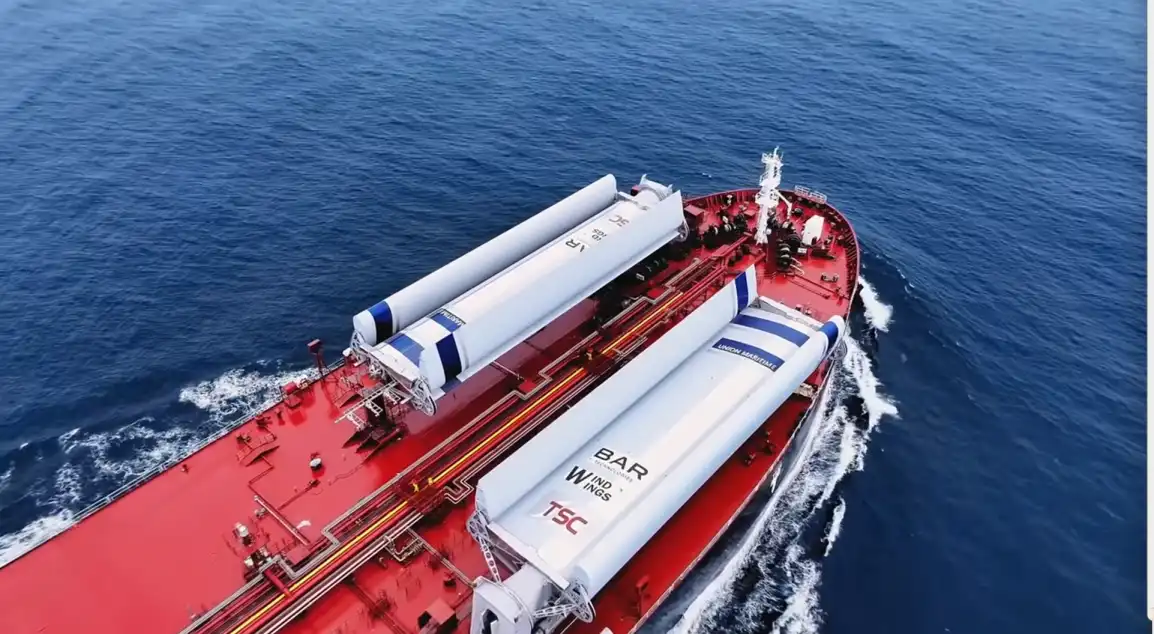
When traveling long distances, bulk transporters often benefit from wind assistance. The WindWings® system optimizes aerodynamic performance in a range of sailing circumstances thanks to CM Energy's collaboration with top industry players. The primary engine load is greatly reduced by the strong thrust produced by these stiff sail systems. By optimizing airflow patterns, the three-part architecture generates lift forces that move ships forward. Depending on the wind, automated control systems continuously modify camber forms and sail angles. Regardless of weather patterns or route changes, this real-time optimization guarantees optimal efficiency. Fuel savings are consistently reported by commercial operators for a variety of cargo categories and vessel sizes. The system's sturdy design endures challenging maritime conditions while preserving operational dependability. Integration with current deck machinery and cargo handling equipment is made possible by installation throughout cargo hold sections.
Chemical Tanker Operations Enhancement
Wind assistance significantly lowers operating costs for chemical tankers on regular trading routes. Vessels with regular schedules between major ports benefit most from this technology. When wind propulsion and route optimization are combined, reliable fuel savings are produced that enhance voyage economics. Weather routing features created especially for wind-assisted vessels are part of TSC's cutting-edge wind systems. Web-based interfaces provide real-time performance data to aboard staff and shore teams. Precise voyage planning and performance tracking are made possible by this connectivity. Crews can optimize wind advantage while adhering to cargo safety regulations with the aid of automated workflow technologies. Wind-powered chemical tankers exhibit improved environmental performance without sacrificing cargo integrity or operational safety.
LR2 Tanker Efficiency Improvements
By strategically implementing wind propulsion, large range 2 (LR2) tankers realize tremendous operational gains. These boats usually go long distances when wind assistance is most advantageous. Both loaded crossings and ballast voyages use less fuel because to the technology. Existing hybrid propulsion technologies are seamlessly complemented by wind propulsion systems. While upholding vessel performance criteria, the integration improves total energy efficiency. Smart sensors provide data for operational optimization by continuously monitoring system performance. Modern building materials provide durability and dependability throughout long service times. When necessary, the systems switch between different vessels, safeguarding the value of the investment. Because of its versatility, wind propulsion is especially appealing to fleet managers that oversee a variety of vessel types.
Ferry and Coastal Vessel Applications
Emission-free port maneuvering capabilities and wind assistance during transit phases are advantageous for short-route ferry operations. The technology makes it possible to reach environmentally sensitive coastal areas with minimal emissions. By using less fuel and adhering to environmental regulations, passenger ferry companies can quickly recoup their investment. Consistent wind assistance on regular routes improves the operational economics of coastal vessels. The systems improve operating safety by offering backup propulsion in an emergency. Ferry profitability depends on low-cost operations, which are supported by minimal maintenance requirements. Existing ferry designs are easily integrated with TSC's wind propulsion technology. The installation procedure minimizes service interruption by taking operational schedules into account. The ability to monitor remotely guarantees excellent performance in a variety of coastal operating circumstances.
Commercial Shipping Fleet Integration
Standardized wind propulsion solutions for various vessel types are advantageous for commercial shipping operators in charge of diversified fleets. Similar wind assistance technologies with vessel-specific improvements are used by bulk carriers, tankers, and roll-on/roll-off vessels. Training needs and maintenance complexity are decreased as a result of this standardization. Economies of scale in crew training, maintenance, and installation are produced by fleet-wide deployment. Across various trade routes and vessel layouts, operators consistently save fuel. The technology increases fleet profitability while assisting with CII compliance initiatives. With payback times of less than five years, retrofitting existing vessels is economically feasible. In order to fully optimize vessel performance, new construction projects use wind propulsion systems from the design stages. Support for class approval guarantees seamless regulatory compliance during the deployment stages.
Newbuild Shipyard Integration Solutions
Wind propulsion technology is included into future-proof vessel designs by shipyards and design businesses. From the very beginning of construction, integrated WAPS designs maximize vessel performance. Delivery schedules are streamlined by classification society approvals, which also guarantee regulatory compliance. For charterers looking for environmentally friendly shipping options, design cooperation between CM Energy and shipbuilders produce turnkey solutions. These partnerships speed up the deployment of technology in a variety of vessel segments. Offering wind-assisted vessels as standard choices gives shipyards a competitive edge. Proper system integration and performance optimization are ensured by technical support during building phases. Prior to vessel delivery, factory acceptance testing verifies system performance. Throughout the vessel's service life, thorough documentation supports operations.
Weather Routing and Performance Optimization
Cutting-edge routing methods optimize wind advantage on international trade routes. Passage planning is optimized by weather routing technology created especially for wind-assisted vessels. The current voyage planning systems are easily integrated with automated workflow tools. Continuous operational improvement is made possible by real-time performance reporting. Based on the present conditions, crews are given instructions for the best sail arrangement. Remote performance monitoring and technical help are provided by shore-based support teams. Synergistic benefits are produced when intelligent routing and wind propulsion are combined. Coordinated technology rollout allows vessels to save more fuel. By using an integrated strategy, environmental impact reduction beyond the capability of individual systems.
Measurable Benefits and Performance Validation
Confirmed Wind Propulsion System Performance
The performance of wind propulsion systems is confirmed by independent verification from reputable research institutions. While DNV certification guarantees system dependability and performance consistency under a variety of operational situations, the Wolfson Unit and Lloyd's Register offer thorough testing confirmation.
Environmental Benefits and Fuel Savings in Practical Operations
Depending on the features of the route, real-world vessel operations consistently show fuel savings of 10% to 30%. Reductions in fuel consumption are directly correlated with carbon emissions, which helps vessels maintain financial viability under changing rules by improving their CII ratings. Additionally, automated system controls maintain operational flexibility, and extreme weather reaction capabilities safeguard cargo and vessels in challenging circumstances. When systems are set up for port environments, berthing activities go well.
Technology Integration and Operational Excellence
Automation and User-Friendliness
Crew workload is greatly reduced by the extensive automation included in modern wind propulsion systems. Because operations are similar to well-known deck crane operating techniques, current crew members need less training. Furthermore, manual operating interfaces provide flexibility and convenience of use by offering crew control as necessary.
Benefits of Advanced Maintenance and Longevity
Predictive maintenance scheduling and performance improvement are made possible by IoT integration. While remote diagnostic capabilities lower service costs and downtime, continuous health monitoring optimizes maintenance intervals and minimizes system failures. Because major component replacements are not required during regular service periods, the 25-year design life guarantees long-term investment protection. Additionally, system transferability across boats improves overall operational efficiency by safeguarding asset value during fleet changes.
Economic Impact Analysis
Immediate Financial Gains from Lower Fuel Prices
Quarterly financial statements make the immediate operational benefits of fuel cost reductions evident. Enhancements in carbon compliance safeguard charter opportunities and raise the value of vessels. Reducing environmental impact also helps businesses achieve their sustainability goals by balancing ecological responsibility with financial performance.
Long-Term Financial Rewards for Adoption of Technology
Depending on the patterns of vessel utilization, wind-assisted systems usually have investment payback periods of three to five years. Annual compounding of operating expense reductions results in significant long-term benefits. While green shipping premiums increasingly reward environmentally compliant vessels, improved vessel marketability boosts charter rates and utilization. Wind-assisted vessels thus take advantage of these market advantages while also lowering operating costs, generating strong financial incentives for the adoption of new technologies.
Conclusion
With its demonstrated fuel savings and advantages for environmental compliance, wind propulsion technology revolutionizes maritime economics. For commercial operators, the combination of sophisticated aerodynamics, automated controls, and all-encompassing support generates attractive value propositions. Wind-assisted propulsion is becoming a crucial technology for sustainable maritime operations as fuel prices continue to rise and regulatory pressure increases. Investing in these systems supports global decarbonization goals while safeguarding fleet competitiveness.
Frequently Asked Questions
1. What maintenance requirements do wind propulsion systems have?
Similar to deck crane operations, wind propulsion devices require less maintenance. Hydraulic systems, control parts, and structural components are the main subjects of routine inspections. IoT monitoring for predictive maintenance scheduling maximizes service intervals and minimizes unplanned downtime.
2. How do wind systems perform in adverse weather conditions?
Automated extreme weather response capabilities are a feature of advanced wind propulsion systems. During strong winds or storms, systems automatically adjust to operate safely. Crews can fully safeguard systems as needed thanks to manual override features.
3. Can existing vessels be retrofitted with wind propulsion technology?
With appropriate engineering analysis, retrofitting is economically feasible for the majority of vessel types. The best installation configurations are determined by compatibility assessments. Prior to onboard installation, factory approval testing guarantees system performance.
Partner with CM Energy for Advanced Wind Propulsion Solutions
CM Energy is prepared to use state-of-the-art wind propulsion technology to revolutionize the operational efficiency of your fleet. Industry-leading WindWings® systems supported by extensive certification and demonstrated performance are provided under our TSC brand. As a leading Wind Propulsion System manufacturer, we provide complete lifecycle support from initial design through long-term maintenance. To learn how wind-assisted propulsion can transform your shipping operations and result in significant cost savings, contact our experts at info.cn@cm-energy.com.
References
1. International Maritime Organization. "Fourth IMO GHG Study 2020: Reduction of GHG Emissions from Ships." Marine Environment Protection Committee, 2021.
2. Smith, T.W.P., et al. "Wind-Assisted Ship Propulsion: Performance Analysis and Economic Assessment." Journal of Marine Science and Technology, Vol. 28, No. 3, 2023.
3. Lloyd's Register. "Wind Propulsion Systems: Technology Assessment and Class Requirements." Maritime Technology Review, 2023.
4. DNV GL. "Alternative Fuels and Wind-Assisted Propulsion for Shipping: Performance Validation Study." Energy Transition Outlook Maritime Forecast, 2023.
5. Wolfson Unit. "Aerodynamic Performance Analysis of Rigid Sail Systems for Commercial Vessels." University of Southampton Marine Research, 2022.
6. Bureau Veritas. "Wind-Assisted Propulsion: Classification Guidelines and Performance Standards." Marine Technology Innovation Report, 2023.