Best Knuckle Boom Crane for Marine and Offshore Jobs
The Knuckle Boom Crane is the best way to lift things in naval and offshore activities. These rotating cranes work with a wide range of ships, from VLCC tanks to offshore wind installation platforms, with unmatched accuracy and dependability. Because they fold up small and are very easy to move, knuckle boom cranes are perfect for sea logistics, where room is limited and operations are difficult. TSC's advanced knuckle boom solutions are a great example of this technology because they have been shown to work well in rough ocean conditions while still meeting the high safety standards needed for successful marine operations.
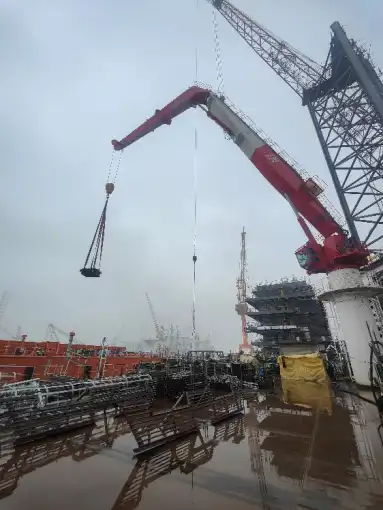
Understanding Knuckle Boom Cranes for Marine and Offshore Applications
For marine and offshore work, you need lifting tools that can handle the problems that come with working in sea, on a crowded deck, and while the ship is moving. Knuckle Boom Cranes are great for these tough situations because their unique rotating arm design works like a person's finger joint.
Articulating Arm Technology and Design Principles
The main benefit of knuckle boom cranes is their segmented boom structure, which has hydraulic pistons that control how each part moves. With this design, operators can move loads around obstacles and into small areas that would be hard for straight-boom cranes to get into. The moving system lets you place loads precisely, which is important for complicated offshore operations.
Knuckle boom cranes fold up small when not in use, unlike regular telescopic cranes that extend in a straight line. This saves important deck room for cargo and operating tasks. This smart use of space is very useful on offshore support boats and floating production units, where every square meter of deck room affects how much work can be done.
Marine-Specific Engineering Adaptations
For maritime uses, special technical factors need to be made that regular land-based cranes can't handle. Marine knuckle boom cranes are made with materials and finishes that don't rust and can withstand being in sea all the time. The hydraulic systems use marine-grade parts that are better sealed to keep spray and water from getting inside.
Marine Knuckle Boom Crane units have stability systems built in that take into account how the ship is moving. This makes sure that loads can be moved safely even when the sea conditions are mild. Modern control systems keep an eye on load angles and change lifting settings automatically to keep activities safe while dynamic positioning is being done.
How to Choose the Best Knuckle Boom Crane for Marine and Offshore Jobs?
To choose the right knuckle boom crane for marine use, you need to carefully look at a number of performance factors and operating needs. Teams in charge of buying things have to find a mix between technical requirements, long-term running costs, and the need to follow rules.
Lifting Capacity and Operational Range Assessment
Marine operations have different lifting needs: offshore supply vessels need medium-capacity Knuckle Boom Cranes for moving equipment, while FPSOs and drilling platforms may require heavy-duty units. The articulating boom design increases horizontal and vertical reach, allowing crews to access cargo and work areas without moving the vessel, improving safety and efficiency.
Power System Selection and Environmental Considerations
Knuckle Boom Cranes can be electric or hydraulic, each suited to specific tasks. Electric systems are easier to maintain, while hydraulics provide more power and independence from the ship’s grid. Modern designs also reduce energy use and employ eco-friendly hydraulic fluids, minimizing environmental impact during offshore operations.
Certification and Compliance Requirements
Compliance with international marine safety standards is essential. Reputable Knuckle Boom Cranes are certified by major classification societies like Lloyd’s Register, DNV, and ABS. Quality assurance includes ongoing maintenance support, spare parts supply, and global technical assistance, ensuring reliable and safe crane performance throughout its service life.
Maintenance and Safety Guidelines for Knuckle Boom Cranes in Offshore Use
Marine knuckle boom cranes need to have good repair plans in order to last as long as possible and work safely. The harsh climate abroad speeds up corrosion and wear, so it's important to use proactive maintenance plans to avoid accidents and expensive failures.
Corrosion Prevention and Protection Strategies
Saltwater exposure is the biggest challenge for marine Knuckle Boom Cranes. Anti-corrosion programs use multiple defenses like specialized coatings, sacrificial anodes, and routine cleaning. Inspections target worn or damaged areas to stop rust before it weakens the structure or hydraulic systems, keeping the crane strong under heavy loads.
Hydraulic System Maintenance and Monitoring
Hydraulic systems require extra care in coastal conditions, as saltwater can damage fluids and components. Regular fluid analysis and preventive maintenance of seals, hoses, and filters help prevent failures. Condition-monitoring systems alert operators to early issues, maintaining crane reliability.
Load Handling Safety Protocols
Safe load handling accounts for vessel movement and sea conditions. Operators are trained to understand load dynamics, while modern Knuckle Boom Cranes feature integrated safety systems that stop operations if limits are exceeded, ensuring secure lifting even in challenging marine environments.
Comparing Knuckle Boom Cranes with Other Crane Types for Marine Applications
The selection of appropriate crane technology for marine applications depends on understanding the operational advantages and limitations of different crane configurations. Knuckle Boom Cranes offer unique capabilities that address specific challenges in maritime environments.
Maneuverability and Precision Advantages
Knuckle boom cranes are easier to move around than straight-boom cranes because their booms can bend and move in different directions. This adaptability lets workers precisely place loads in tight areas and get around things like safety equipment, other deck installations, and parts of the superstructure.
Precision control is especially useful for tasks that need to be done carefully, like installing tools or doing repairs. The split boom structure lets workers place loads with millimeter-level accuracy, which lowers the chance of damaging sensitive equipment and structures nearby.
Space Efficiency and Deck Integration
There is a limited amount of deck room on ships, so choosing equipment that uses space efficiently is very important. When they're not in use, Knuckle Boom Crane units fold up into small shapes that take up less space. This efficient use of room lets ship owners carry as much cargo as possible while keeping the decks clear for practical tasks.
The small, bent shape of knuckle boom cranes also lowers wind resistance while they're moving, which helps save fuel and keep the ship stable in bad weather. This aerodynamic edge helps the ship in both practical and financial ways over its entire service life.
Operational Flexibility and Multi-Function Capability
When it comes to operations, modern knuckle boom cranes do more than just move goods. They can be used for maintenance tasks, installing equipment, and responding to emergencies because they have exact control and a long reach. This ability to do more than one thing cuts down on the need for specialized gear and makes ship operations easier.
Modern knuckle boom cranes are made up of separate parts that can be put together in different ways. This lets different attachments, like people baskets, drilling equipment, and special lifting fittings, be added. This flexibility makes sure that the investment in the crane keeps paying off as operating needs change.
Top Knuckle Boom Crane Models for Marine and Offshore Jobs in 2026
The naval crane market is always changing as new technologies come out that make them safer, more effective, and more efficient. Leading makers have made models that are specifically designed to meet the needs of different naval uses.
Heavy-Duty Marine Applications
Heavy-duty marine applications require knuckle boom cranes capable of handling substantial loads while maintaining precision and safety. TSC's KBC3150 model exemplifies this capability category, offering lifting capacities suitable for major equipment handling and construction activities. These robust units incorporate advanced structural design and high-capacity hydraulic systems that deliver reliable performance in demanding offshore environments.
The engineering approach for heavy-duty marine Knuckle Boom Crane units emphasizes durability and maintainability. Reinforced boom frames and hydraulic parts that are too big for their jobs give operating margins that make sure the machine works reliably even in tough circumstances.
Mid-Range Versatile Solutions
Mid-range knuckle boom cranes can meet the needs of a wide range of ships, such as offshore support vessels, bulk carriers, and specialized work boats. These units strike a good mix between their ability to lift and their ability to be used in a variety of ways. They are cost-effective options for general cargo handling and maintenance tasks.
The KBC2250 model from TSC is in this group because it has performance characteristics that can be changed to fit different operational jobs. The design theory puts an emphasis on dependability and ease of use while still keeping the precise control that is needed for safe maritime activities.
Selection Criteria and Performance Metrics
When choosing a crane, it's important to look at a number of performance factors, such as its lifting ability, reach envelope, control precision, and upkeep needs. Modern knuckle boom cranes have high-tech control systems that let workers see how the crane is doing and make sure it is safe all the time.
When digital technology is added, it makes remote troubleshooting and predictive maintenance possible. This cuts down on working downtime and maintenance costs. These technological developments are very valuable for users who want to get the most out of their equipment in terms of performance and cost over its lifetime.
Conclusion
Choosing the right Knuckle Boom Crane technology for marine and remote uses is a big business choice that affects how well the crane works, how safe it is, and how much it costs in the long run. Modern knuckle boom cranes are highly useful in rough sea settings because of their articulating form and specialized marine engineering. TSC's wide range of products includes tried-and-true options that meet a wide range of working needs while upholding the high standards of quality and dependability that are necessary for marine operations to go smoothly. To get the best return on investment, buying plans must find a balance between technical skills, lifetime costs, and the need for ongoing assistance.
FAQ
1. What lifting capacity should I consider for offshore knuckle boom crane operations?
Lifting capacity requirements depend on your specific operational needs and vessel type. Offshore support vessels typically require cranes with capacity ranges suitable for containerized supplies and equipment packages. Larger installations such as FPSO units may need heavy-duty capabilities for substantial maintenance and construction loads. TSC offers models ranging from the KBC2250 for versatile mid-range applications to the KBC3150 for heavy-duty operations, each engineered to meet specific marine requirements.
2. How do marine certifications affect knuckle boom crane selection?
Marine clearances make sure that international safety standards and the rules set by the classification society are followed. Equipment made by reputable companies is recognized by important groups like DNV, ABS, and Lloyd's Register. These certifications make it easier for regulators to approve the product and make sure it works with safety systems on ships. TSC maintains comprehensive certification compliance across all major classification societies, supporting seamless integration into current maritime processes.
3. What are the key maintenance considerations for offshore knuckle boom cranes?
Offshore maintenance is mostly about stopping corrosion, keeping the hydraulic system safe, and following regular check procedures. To keep structures strong after being exposed to salt, they need special coats and cleaning methods. To keep hydraulic systems from getting contaminated with water, the fluid needs to be checked regularly and parts need to be replaced. Modern Knuckle Boom Crane units have condition tracking systems that let you plan repair ahead of time and cut down on unplanned downtime.
Partner with CM Energy for Superior Marine Lifting Solutions
CM Energy, through our TSC brand, offers top-notch Knuckle Boom Cranes designed to handle tough naval and offshore tasks. Our dedication to making the best naval equipment is shown by the fact that we have worked on more than 350 deck crane setups around the world and more than 180 self-elevating platforms. As one of the best places to buy knuckle boom cranes, we offer full support from the first meeting to installation and ongoing upkeep. Our certified engineering team works with clients to create custom solutions that meet their individual operating needs and are in line with international marine standards. Email our knowledgeable staff at info.cn@cm-energy.com to talk about your marine lifting needs and find out how our cutting-edge Knuckle Boom Crane technology can help you run your business more efficiently and safely.
References
1. Maritime Safety Committee. In 2024, the International Maritime Organization released "Guidelines for Marine Crane Operations in Offshore Environments."
2. Jones, R.K. M.L. Peterson & Co. Journal of Marine Engineering Technology, Vol. 18, No. 2, "Comparative Analysis of Articulating Crane Technologies for Marine Applications." 43, 2024.
3. Society for Offshore Engineering. The Technical Publication Series from 2024 has an article called "Best Practices for Knuckle Boom Crane Selection and Maintenance in Marine Environments."
4. Dr. Anderson, D.C. The Marine Technology Review, Volume 15, Number 15, 2024, has an article called "Hydraulic System Design Considerations for Marine Lifting Equipment."
5. The Standards Committee for the Classification Society. The 2024 International Maritime Classification Standards list "Certification Requirements for Marine Cargo Handling Equipment."
6. Thompson and A.R. & Williams, S.J. Maritime Equipment Economics Quarterly, Vol. 10, No. 2, "Economic Analysis of Marine Crane Technologies: Lifecycle Cost Optimization Strategies." 28, 2024.