How to Maintain an LNG Fuel Supply System Step by Step
Maintaining an LNG fuel supply system correctly is one of the most important responsibilities for any dual-fuel vessel project team. A well-maintained LNG fuel supply system keeps your vessel compliant with IMO Tier III regulations, protects your crew, and extends the operational life of expensive cryogenic equipment. This guide walks you through the core maintenance steps, from pre-inspection routines to advanced monitoring practices, giving procurement managers and engineering teams a practical reference for every phase of the vessel lifecycle.
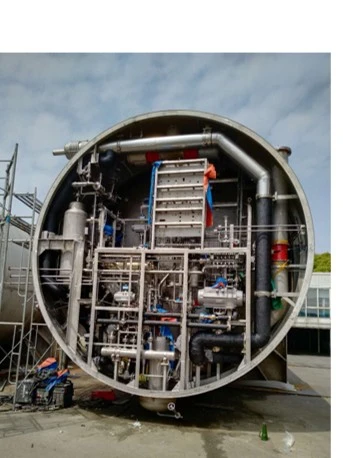
Understanding the LNG Fuel Supply System and Its Maintenance Needs
What the System Actually Does
Liquified natural gas is stored in an LNG Fuel Supply System at very low temperatures. This gas is then sent to the main engine at the exact pressure and temperature that the engine needs. Cryogenic storage tanks, heaters, pressure control valves, pipe networks, and safety shutdown devices are all part of the system. Every part of the chain is under a lot of thermal and mechanical stress during normal operation because natural gas has to change from a liquid state at about -162°C to a controlled gaseous state.
Why Maintenance Cannot Be Deferred
Putting off upkeep on an LNG Fuel Supply System is not a way to save money; it's a risk. Failures that happen over time include cryogenic leaks, erosion of valve seats, and loss of insulation vacuum. They can cause emergency shutdowns, change the results of class surveys, and push back ship arrival dates if they are not stopped. The International Maritime Organization's (IMO) IGF Code says that operators must keep written records of system inspections and safety device tests for as long as the vessel is in service.
The Regulatory Environment You Are Operating In
Different classification societies, such as DNV, ABS, CCS, LR, and BV, make gas fuel system study standards public. It is not a choice to follow these standards. A forgotten maintenance record can make a class certificate invalid during a yearly or special review, which can cost shipowners a lot of money and put their cargo at risk.
Step-by-Step Maintenance Procedures for an LNG Fuel Supply System
Step 1 — Pre-Maintenance Safety Preparation
Before a worker opens an inspection port or disconnects a fitting, they must make sure the system is properly shut down, cleared, and gas-freed. Make sure that everyone who works there has a current gas safety license. Use accurate hydrocarbon monitors to check the results of the atmospheric gas concentration at the work site. Make sure you have the right hot-work permits if you need to do any welding or cutting nearby. Skipping these steps is the main reason why accidents happen with cryogenics during repair times.
Step 2 — Inspection of Cryogenic Tanks and Cold Box
Check the upper shell of the C-type storage tank, the soundness of the vacuum jacket, and the support saddles by looking at them and using instruments. Check the outside for frost patches or ice formations, which are often signs of vacuum loss. If the equipment pipes are part of the Tank Cooling System (TCS), check all the connections inside the cold box for signs of frost bridging or mechanical wear. Compare the check results to the standard record that was set up during commissioning.
Step 3 — Valve, Pump, and Pipeline Servicing
Check all vent valves, pressure release valves, and cold shut-off valves against the set points that were made for them. Cryogenic pump covers should be checked at regular times based on the manufacturer's suggested running-hour plan, which is usually every 4,000 to 8,000 hours. Flush any parts of the pipeline that can be reached, and use sniffer sensors to check the spaces between the walls of double-wall pipes for hydrocarbons. Any gaskets or packing that shows signs of being damaged by cold temperatures should be replaced.
Step 4 — Control System and Sensor Calibration
Accurate sensor data are essential for the automation code that runs an LNG Fuel Supply System. Use approved reference standards to check the accuracy of pressure monitors, temperature sensors, and level gages. Check the Emergency Shutdown (ESD) process from beginning to end to make sure that the times at which the valves close meet the design requirements. Before updating the control software, make sure it works with the engine management system. This is especially important for ships with MAN GI or WinGD dual-fuel engines, where the time of gas admission is closely linked to fuel flow pressure.
Step 5 — BOG Management System Check
Boil-Off Gas (BOG) keeps building up in storage tanks. It is important to check the BOG management circuit to make sure it works correctly, no matter if it is connected to a gas boiler, a Gas Combustion Unit (GCU), or an auxiliary engine. Check the dependability of the GCU pilot lighting and make sure the gas boiler burner is in good shape. If the BOG disposal line is blocked or not working right, the tank can over-pressurize, which can cause safety relief releasing and possibly breaking the law.
Step 6 — Post-Maintenance Testing and Documentation
Do a controlled cool-down and pressurization test on the system before putting it back into service after all the maintenance work is done. Check the fuel switch from diesel to gas mode while the engine is being watched while it is running. In the gas system logbook for the vessel, write down all repair tasks, part replacement serial numbers, and test findings. This documentation helps with both class surveys and fixing problems in the future.
Best Practices and Design Principles for Effective Maintenance
Choose Systems Designed for Maintainability
Maintenance is faster and safer when the LNG Fuel Supply System is well thought out. By putting equipment pipes inside the TCS cold box, TSC cuts down on the number of external connection points that are exposed to the engine room environment. This lowers the risk of leaks and makes it easier to do inspections. Parts can be taken apart and repaired without stopping the whole fuel supply chain thanks to modular skid setups.
Adopt a Balanced Preventive and Predictive Strategy
Preventive maintenance plans based on running hours work well for mechanical parts like pumps and valves. Condition-based tracking, on the other hand, lets you know about problems earlier in insulation systems and electronic monitors. Using both methods together cuts down on unnecessary downtime. These are the main things that experienced operators always do:
- Regular vacuum measurements on cryogenic tank jackets detect insulation degradation before it affects system efficiency or tank pressure behavior.
- Scheduled ESD functional tests at every port call confirm that safety systems will respond correctly in an actual emergency.
- Control system audit reviews every six months catch software drift or parameter corruption introduced by system updates.
All of these things lower the chance of failures in the middle of a journey and help achieve clean class survey results, which directly protect vessel trade certificates.
Invest in Crew and Technician Training
How well equipment works depends on who is using it. Crew members who are in charge of gas fuel should have advanced STCW training for gas-fueled ships. Knowledge-sharing meetings should be led by commissioning engineers from the FGSS provider who are on land during the first voyage cycle. TSC offers full help, from setting up the system to ongoing service after the sale. This makes sure that both the tools and the people who work with it stay up to date.
Common Maintenance Issues and Troubleshooting Tips
Valve Malfunction and Seat Leakage
When heated and cooled many times, cryogenic valve parts made of PTFE or similar materials can change shape, which can lead to leaks inside the valve. The first sign is generally a small but steady rise in pressure downstream when the valve is told to close. Seat leakage needs to be fixed right away; it shouldn't be seen as normal operation.
Vacuum Loss in Tank Insulation
When vacuum breaks down in C-type tank jackets, more heat comes in, which makes boil-off rates higher than what was intended. If the BOG generation is higher than what the GCU or gas boiler can handle, the pressure in the tank will slowly rise. Vacuum restoration needs special tools and should be sent to the service team of the tank manufacturer.
Sensor Drift and False Alarms
It is normal for pressure and temperature sensors to drift after being used in cryogenic settings for a long time. Crews can become less sensitive to real alerts when monitors move and send out false ones. Instead of waiting for a warning to go off to find a problem, calibrate the sensors on a set plan.
Leveraging Technology to Improve Maintenance Outcomes
These new tools let teams on land look at real-time data from the LNG Fuel Supply System even when the ship is at sea. By looking at trends in tank pressure, BOG generation rates, and pump performance, problems can be found days or weeks before they cause a slowdown. These data-driven tools are part of CM Energy's lifecycle support approach. They help project teams plan dry-dock scope more accurately and give shipowners early information on maintenance needs.
Conclusion
Maintaining an LNG Fuel Supply System is a planned, ongoing task that lasts for the full life of a vessel. Every step, from making sure the area is safe before maintenance to checking the BOG system and writing up what happened after service, protects your investment, your crew, and your regulatory standing. When systems are built with good materials and are easy to get to, upkeep is faster and less dangerous every time. The ideas in this article are useful no matter what kind of system your ship has—a low-pressure system for Otto-cycle engines or a high-pressure FGSS for MAN GI power.
FAQ
1. How often should an LNG fuel supply system be formally inspected?
Full system inspections aligned with class survey intervals are mandatory—typically annually for safety devices and every five years for comprehensive surveys. However, operational checks on sensors, valves, and BOG circuits should occur at every port call or watch change.
2. What is the biggest maintenance risk for high-pressure FGSS systems?
For HP systems operating above 300 bar, seal integrity in the high-pressure cryogenic pump is the most critical maintenance focus. Seal failure at high pressure can cause rapid uncontrolled gas release. Follow the manufacturer's recommended seal replacement intervals without exception.
3. Can the BOG management system be maintained while the vessel is trading?
Yes. The GCU and gas boiler components can generally be serviced during scheduled port calls without taking the entire LNG fuel supply system offline, provided the vessel has sufficient tank pressure margin and proper isolation procedures are followed.
4. How does TSC support after-sales maintenance for its FGSS products?
TSC provides full lifecycle support covering commissioning, crew training, spare parts supply, and remote technical assistance. The low-pressure LNG fuel supply system delivered by TSC has been running on actual vessels for over one year with normal operation confirmed, demonstrating the reliability that planned maintenance helps protect.
Partner With CM Energy for Your LNG Fuel Supply System Needs
Every LNG Fuel Supply System comes with full engineering support and real-vessel running knowledge from CM Energy (brand name: TSC). As a reputable company that makes LNG Fuel Supply Systems, TSC provides both low-pressure and high-pressure FGSS configurations, as well as TCS cold box packaging that is fully integrated and close cooperation with the MAN and WinGD engine programs. You can talk to our expert team about your new building project needs by emailing info.cn@cm-energy.com or going to cm-energy.com.
References
1. International Maritime Organization. International Code of Safety for Ships Using Gases or Other Low-Flashpoint Fuels (IGF Code). IMO Publishing, 2016.
2. DNV GL. Rules for Classification: Ships — Part 6 Chapter 2: Gas Fuelled Ship Installations. DNV, 2022.
3. Chorowski, M., & Duda, P. "Thermodynamic Analysis of LNG Storage and Regasification Systems for Marine Applications." Journal of Natural Gas Science and Engineering, 2015.
4. Society of Naval Architects and Marine Engineers (SNAME). Guide for Gas and Other Low-Flashpoint Fuel Ready Vessels. SNAME, 2020.
5. American Bureau of Shipping (ABS). Guide for Gas Fueled Vessels. ABS, 2021.
6. Burel, F., Taccani, R., & Zuliani, N. "Improving Sustainability of Maritime Transport Through LNG and Dual-Fuel Propulsion Systems." Energy, Elsevier, 2013.
