How Do WindWings® Work on Modern Cargo Ships?
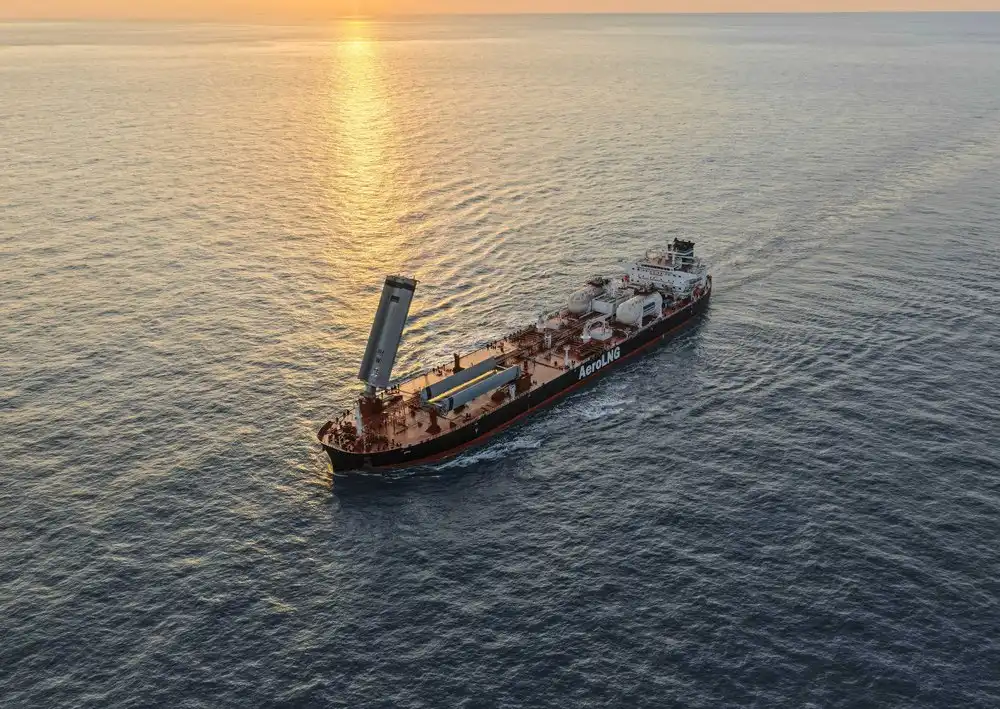
WindWings® are large, rigid three-element sail systems engineered to generate propulsion force from wind, reducing a vessel's reliance on its main engine. Developed through a partnership with BAR Technologies (BART) in the UK, WindWings® apply aerodynamic principles similar to aircraft wing design. The camber and angle of attack adjust automatically in real time, producing over 2.5 times the lift of a conventional single-element sail. Verified by DNV and independently assessed by the Wolfson Unit and Lloyd's, WindWings® offer shipowners a certified, commercially proven path to lower fuel costs and stronger CII performance.
Understanding the Challenges Facing Cargo Ship Operators Today
Today's tankers and bulk carriers have to deal with more and more business and governmental pressure. The IMO's CII and EEXI frameworks, the EU's ETS carbon pricing, and FuelEU Maritime requirements are all changing how shipowners figure out how much it costs to run their ships. At the same time, bunker fuel prices are still unstable, and more and more charterers want ESG qualifications before they sign time charters.
The Cost Burden of Conventional Propulsion
Every day, cargo ships that only use their main engines burn large amounts of heavy fuel oil or LNG. Any decrease in engine load directly leads to lower daily fuel costs. This is why fleet technical directors who are concerned about payback periods are interested in wind-assisted ship propulsion (WASP) technologies.
Why Traditional Wind Solutions Fall Short
Fixed stiff masts and soft sail systems don't let you make many changes. They can't change shape in response to changing apparent wind angles, and their structures often get in the way of how bulk carriers use their hatch covers. Because of these problems, it is hard to add them to ships that stop at many cargo ports every week.
The Regulatory Window Is Narrowing
A ship's business desirability is directly affected by its carbon intensity grade. Ships with a CII rating of D or E can't trade as much and can't use green funding tools. Fleet managers need solutions that reduce emissions in a way that can be checked by a third party, not just predictions based on modeling.
How WindWings® Technology Works?
WindWings® work by using mechanical lift to turn wind energy into forward thrust. They work in addition to the main engine and burn less fuel. A design called a three-element rigid wing structure is used to build the system. This design has been copyrighted by BART in the UK.
The Three-Element Wing Principle
Each WindWings® unit is made up of three rigid parts that are connected to each other. The combined blade makes a lot more lift per unit area than a single flat sail when it is set to the right angle of attack and camber setup. The multi-element design works the same way that high-lift devices on airplanes do during takeoff and landing, but this time it's used for marine power.
Automated Camber and Angle Adjustment
Software on board the ship constantly checks the direction, speed, and strength of the wind. Because of these signals, the system changes the camber shape and rotation angle of each wing on its own. This means that WindWings® always work at almost their best gliding level without any help from the crew. Displays on board and fleet control teams on land both get real-time information about push performance.
The Fold-Down Safety Mechanism
The laydown function is one of the most useful tech tools. WindWings® can turn and fold flat to the deck, which frees up hatch covers and port loading equipment when the ship is carrying goods. The fold-down also happens immediately if the wind speed goes over the safe limits for operation. This protects both the wing structure and the safety of the vessel. Because of this, ships with WindWings® have been able to make calls at more than 20 major ports around the world without any problems.
Performance and Operational Benefits of WindWings®
The business case for WindWings® is based on performance data that has been checked by a third party, not on estimates. DNV has confirmed that ships that use the method actually save fuel in the real world.
Verified Fuel and Emissions Reductions
Under good wind conditions, each wing unit can save about 1.6 tons of fuel every day, which means that each wing can cut its CO₂ emissions by the same amount every day. On a full trade route like the North Atlantic or the route between Brazil and China, the savings from each trip add up to a lot. On routes with steady trade winds, it is possible to cut the total cost of fleet fuel by up to 30%.
CII and EEXI Compliance Support
By lowering the load on the engines, WindWings® lower a ship's carbon intensity rating in ways that can be measured and verified. Since DNV has confirmed that the fuel saves are real, shipowners can show classification societies and charterers proof that can be checked. This directly helps new ships get EEXI ratings and raises the CII scores of ships that are already in service.
Impact on Vessel Operations and Crew
To use WindWings®, team members only need to know how to use the same maritime skills they already use when working on deck machines. The control panel looks and works like a normal deck crane. Master mariners and shore teams can both use the same performance dashboard thanks to TSC's full lifecycle support package, which includes IoT-based remote monitoring and weather routing software. TSC offers long-term upkeep plans to make sure the system works for the full 25 years it was made to last.
WindWings® Versus Other Wind-Assisted Propulsion Options
When shipowners look at WASP options, they come across a number of rival technologies. Knowing the real differences between WindWings® helps technical leaders make smart decisions about what to buy.
Structural Durability in Service
Ship-grade steel and industrial E-glass composite plates are used to make WindWings®. All of the parts come from sources that are ISO-certified, and DNV, BV, LR, and CCS have all given the system their full type approval. The parts that move the hydraulics are made to withstand sea conditions, and all metal joints that are visible must pass salt spray tests to show they can't rust. This type of material approval is necessary for ships that trade in harsh weather or high latitudes.
Lower Lifecycle Maintenance Demands
Total cost of ownership stays the same because the wing is made to last 25 years without any major parts needing to be replaced. The system can also be moved from one ship in a group to another, so the initial investment is protected even if a ship is sold or moved to a different role. This transferability changes the capital expenditure calculation a lot for fleet owners who are in charge of five to fifty ships.
Certification Depth
Approval in Principle (AIP) and design type approval are things that DNV and BV have given to WindWings®. The Wolfson Unit and Lloyd's have both looked at performance on their own. This level of third-party certification sets WindWings® apart from systems that only use computer models. That record of paperwork is important for a ship's technical head who is making a business case for a board.
Installation, Maintenance, and Procurement Process
The whole process of buying and installing WindWings® is handled by CM Energy, which works under the TSC name. There are five structured steps in the workflow: compatibility analysis, on-site assembly, plant acceptance testing, product shipping, and installation on board. At each stage, the shipyard or dry-dock provider has to be consulted so that trading plans are kept as smooth as possible.
Retrofit and New Build Integration
Both retrofitting existing ships with WindWings® and building them into new ships are possible. During the compatibility analysis phase for retrofits, the structural deck reinforcement is looked at. When a new ship is built, the system is built in from the start, with the hatch covers placed between the cargo holds to keep them accessible.
Ongoing Support and IoT Monitoring
Once the work is done, CM Energy and TSC give both shore-based and onboard teams access to a web-based tool for weather routing and performance tracking. Long-term service agreements and scheduled inspection methods make sure that the system always meets class standards.
Conclusion
WindWings® are a technically developed and economically proven way for bulk carriers and tankers to move faster with the help of the wind. The technology directly handles the cost and compliance issues that fleet owners face under current IMO and EU rules. It has a 25-year design life, full classification society approval, and fuel saves that have been confirmed by DNV. CM Energy and TSC handle all aspects of purchase, installation, and lifetime support. This means that shipowners only need to talk to one person from the feasibility study to long-term operation.
FAQ
1. How does the system respond to storms or sudden gusts?
When wind speeds are too high, WindWings® naturally feather to line up with the direction of the wind, which gets rid of the aerodynamic load. The wings can be folded flat to the deck if the weather gets worse. This answer is fully automated and doesn't need any help from the team.
2. Will WindWings® interfere with cargo handling at port?
No, the mechanism that folds down each wing brings them down to deck level, which completely clears the hatch covers and port crane paths. WindWings®-equipped ships have already worked at more than 20 major ports around the world without any problems while handling cargo.
3. What is the expected payback period?
Payback depends on the price of fuel, the wind conditions along the way, and the amount of carbon tax that is paid. Because they save about 1.6 tons of fuel per wing per day and the cost of carbon under the EU ETS is going up, most shipowners think it will pay for itself in three to five years. Routes with strong, steady trade winds shorten that time frame.
4. Can WindWings® be fitted to an existing tanker or bulk carrier?
Yes. Installation of retrofits is something that is usually done. Before agreeing to work together on a project, CM Energy and TSC do a ship-specific compatibility review to make sure the structure is right and that the work won't have a big effect on trading plans.
5. How much crew training does operation require?
Most of the daily work is done by machines. The crew gets to know the manual override interface, what to do in an emergency, and how to do simple hydraulic inspection chores. The learning curve is about the same as for other deck machines.
Start Your WindWings® Procurement Conversation with CM Energy
CM Energy, which does business around the world under the TSC name, is a qualified WindWings® provider with direct project experience on both bulk carrier and tanker fleets. From the first ROI analysis to installation and long-term service, our team helps shipowners. Contact us at info.cn@cm-energy.com or visit cm-energy.com to request a fleet-specific fuel savings assessment or to talk about a retrofit proposal. Let's figure out what configuration will work best for your ships.
References
1. International Maritime Organization (IMO). MEPC.328(76) – Revised Guidelines on the Method of Calculation of the Attained EEXI. IMO, 2021.
2. DNV GL. Fuel Saving Technologies for Ships: Verification and Certification Methodology. DNV, 2022.
3. Wolfson Unit for Marine Technology and Industrial Aerodynamics. Aerodynamic Assessment of Rigid Wing Sail Systems for Commercial Shipping. University of Southampton, 2021.
4. Lloyd's Register. Wind-Assisted Ship Propulsion: Technology Review and Certification Framework. Lloyd's Register, 2023.
5. Traut, M., et al. Propulsive Power Contribution of a Kite and a Flettner Rotor on Selected Shipping Routes. Applied Energy, Elsevier, 2014.
6. Smith, T.W.P., et al. CO₂ Emissions from International Shipping: Possible Reduction Targets and Their Associated Pathways. UMAS / University College London, 2016.
