How to Install a Kingpost Crane on a Vessel?
Installing a Kingpost Crane on a vessel requires meticulous planning and execution to ensure operational safety and compliance with maritime standards. The process begins with thorough structural evaluation of the deck to confirm load-bearing capacity, followed by precise alignment and welding of the kingpost foundation. This revolving superstructure, designed to rotate around a stationary vertical column, eliminates the risk of bearing failure common in traditional slewing designs. Proper integration of hydraulic and electrical systems, combined with rigorous testing protocols per API-2C standards, ensures reliable performance throughout the crane's operational life. Understanding each phase of installation is critical for procurement directors overseeing offshore platform projects where safety and reliability are non-negotiable.
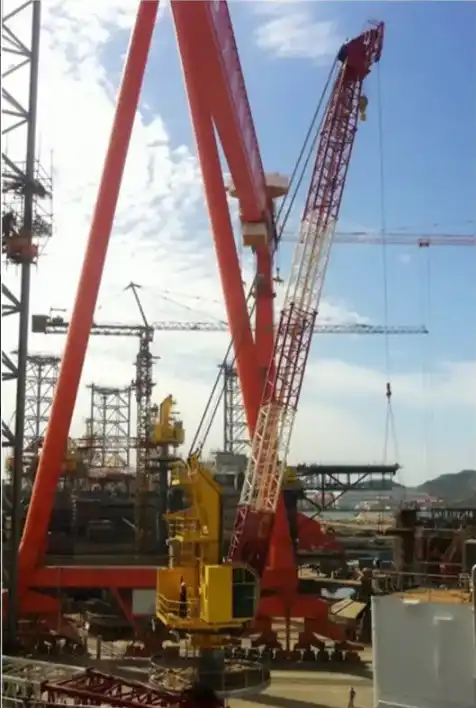
Understanding Kingpost Cranes on Vessels
Lifting equipment used offshore is essential for moving things between drilling platforms, FPSOs, and semi-submersible rigs. Offshore cranes are designed in a way that makes them perfect for the unique problems that procurement directors face when they have to choose equipment for harsh marine environments.
Core Components and Working Principles
Instead of traditional slewing rings, the turning mechanism uses a strong shaft that is built right into the structure of the vessel and is held up by upper and lower plain bearings. The operational loads are moved deep into the hull framework by this arrangement, which makes the ship very stable during big lifts in rough seas. The lattice boom design has rope luffing systems that make it possible to precisely place loads across a range of radii. This is very important for moving supplies and setting up equipment on offshore sites.
Marine Environment Adaptations
Deck-mounted lifting systems have to be able to handle being exposed to corrosive saltwater, huge changes in temperature, and dynamic loads from moving ships. Value-engineered structures are more rigid while weighing less, making the best use of deck room while keeping the structure's stability. The small stern radius reduces the size of the area needed, which is helpful on offshore sites where every square meter is valuable for operations.
Safety Features and Compliance Standards
Maritime lifting operations need fail-safe systems that keep people and property safe. Overtopping accidents can be avoided with hook parking devices, and integrated load management systems keep an eye on all operational parameters all the time. International marine safety rules are followed when a ship gets certification from classification groups like DNV, ABS, BV, CCS, and LR. These certifications give purchasing teams written proof that the equipment meets the strict operational requirements for offshore use set by rules like the SOLAS and IMO conventions.
Preparatory Steps Before Installing a Kingpost Crane on a Vessel
For installations to go smoothly, a lot of work needs to be done to get everything ready before the equipment gets to the port or station.
Vessel Deck Inspection and Structural Assessment
Engineers need to do thorough structural studies to make sure that the deck framing can handle the heavy loads that the mounted crane system puts on it. This review includes a finite element study of stress distributions, an analysis of the quality of the current weld, and confirmation of the material specs. When figuring out a ship's stability, the extra weight on top of it has to be taken into account, along with how it affects the ship's center of gravity. This is especially important for floating production units and jack-up platforms, where the trim and list characteristics change operational safety windows.
Procurement Considerations and Model Selection
To choose the right crane setup, you need to carefully compare the technical requirements to the working needs. Lifting ability needs to be based on the largest loads that are expected, with enough room for error, and boom length needs to be long enough to reach all planned cargo handling scenarios. TSC makes custom solutions with capacities that range from smaller secondary units to heavy-lift configurations with main hook capacities of more than 100 MT. Each one is designed to work with a certain type of platform and in a certain way. Directors of procurement should work with manufacturers early on in the design process to make sure that any customization takes into account the specific needs of the project, such as the environment, the expected duty cycle, and how the new system will connect to existing platform systems.
Regulatory Compliance and Certification Processes
Maritime sites need large packages of paperwork that show they meet all the standards that apply. This paper trail starts with quality certifications from the manufacturer, such as ISO system compliance and welding plant approvals from well-known classification societies. To avoid delivery delays, project specs should make it clear what certifications and testing methods are needed. Setting up clear approval processes between design schools, classification society inspectors, and platform owners speeds up the certification process and lowers the risks that affect project schedules as a whole for Kingpost Crane.
Step-by-Step Installation Process of a Kingpost Crane on a Vessel
Multiple specialized trades must work together in a planned sequence to complete the physical installation process with great accuracy.
Component Mobilization and Deck Assembly
Moving big crane parts around needs special heavy-lifting gear and careful planning to keep them from getting damaged while being moved. When the assembly teams get to the installation site, they put the parts in staging places that make it easier to work while still keeping safe working distances. The main parts of the structure are the base post, the moving machinery house, the lattice boom sections, and the hydraulic power units. For fabrication teams, detailed assembly drawings show how to connect parts, how much torque to use, and where to check for quality.
Foundation Mounting and Deck Reinforcement
The foundation post is attached directly to reinforced deck structures using full-penetration welds done by certified welders who are supervised by a classification society. This method of welding is done according to accepted steps that spell out the required warmup temperatures, interpass requirements, and, if needed, post-weld heat treatment. Installing stiffener plates, doubler plates, or making changes to structural beams can help strengthen the deck and spread the weight across the right supporting structure. Before starting to put together the superstructure, a non-destructive examination using ultrasonic and magnetic particle inspection methods checks the integrity of the weld. The API Type "E" design makes sure that even if the bearings wear out, the crane stays firmly connected to its base, avoiding disastrous detachment situations.
Boom and Pulley System Installation
Lattice boom pieces are joined together with pinned joints that let you control the order of assembly and make it easier to do upkeep in the future. When rope luffing systems move, they go thru sheave blocks that are perfectly lined up to reduce friction losses and wear patterns. Installation teams need to make sure that the wire rope meets the design standards for its breaking strength, type of structure, and coatings that prevent rust. The right way to reeve makes sure that the load lines are spread out fairly across multiple rope parts, which is important for safely reaching the rated lifting capacities.
Hydraulic and Electrical System Integration
Individual crane functions are handled by separate hydraulic pump circuits. This allows for simultaneous multi-function operation, which is necessary for efficient remote goods handling. Swivel joints keep the fluid links strong throughout the crane's rotation range. They connect hydraulic power units to moving machinery. Electrical control systems include load moment indicators, anti-two block devices, and emergency stop circuits that give operators a full picture of what's going on. Load management methods and safety alarm routines built into TSC's combined electrical control systems make operations safer. Emergency working systems make it possible for full-function crane operation to continue even if the main mover fails. This keeps operations going during important lifts.
Before putting equipment into operational service, testing and commissioning make sure the system works as it should. Functional tests show that all motions work smoothly across their entire range, hydraulic pressures stay within the parameters set, and safety devices go off at the right times.
Post-Installation Procedures and Operational Readiness
Finishing the actual installation is only the middle step in the approval process. Strict testing makes sure that the equipment that was put meets the performance standards and legal requirements.
Load Testing and Structural Verification
Classification societies require proof load tests that are written down and show that the structure is solid and can do its job. In static load tests, structural parts are usually loaded beyond their rated capacity and held there for a set amount of time while inspectors look for signs of permanent deformation or distress. Dynamic load tests make sure that the hoisting mechanisms work properly under their rated loads. These tests check the brake holding capacity and the controlled lowering functions. The protocols for testing are based on API-2C standards, which spell out acceptance criteria and documentation needs. The test results give us a starting point for figuring out how well something is working, which helps us plan future maintenance and make operational decisions for Kingpost Crane.
Operator Training and Maintenance Protocols
Crews and repair workers on ships need to be trained in everything from how to operate the ship to what to do in an emergency and how to do routine maintenance jobs. Crane-specific training covers things like how to use the control system, how to read load charts, and how to do pre-operational inspections. Maintenance training focuses on lubrication schedules, monitoring hydraulic systems, and part inspection methods that find problems early on before they become failures. Setting up preventive maintenance schedules based on what the maker suggests makes equipment more reliable and extends its useful life. This is especially helpful for sites that are located offshore, where it costs a lot to bring in people to do corrective maintenance.
Documentation and Service Agreements
Full paperwork packages have records of the work that was done, test certificates, working instructions, and catalogs of spare parts. When you register your warranty, the maker starts providing support and sets up ways for you to get professional help. Service agreements set up structured ways for planned maintenance help, emergency response, and the availability of spare parts. These deals are especially helpful for operators who are in charge of multiple platforms in different parts of the world. They make sure that the quality of service is the same no matter where the assets are located.
Comparison Insights: Kingpost Crane Installation vs Other Marine Cranes
Learning about the pros and cons of the different kinds of cranes helps people make smart buying decisions that meet operational needs and stay within their budget.
Installation Complexity and Timeline Considerations
For traditional slewing bearing cranes to work, they need to have large-diameter races installed with lots of bolt designs that need to be precisely machined and lined up. The post-mounted design makes the base connections easier, which usually cuts down on the time it takes to install compared to traditional pedestal setups. When installing tower cranes and derrick systems, bigger changes need to be made to the structure and they take up more space. For projects with tight building schedules, where every day of delay adds to the carrying costs, these differences in plans have big effects on costs.
Operational Performance and Maintenance Requirements
The plain bearing rotation system gets rid of the need to replace slewing bearings on a regular basis, which is a problem with traditional designs. This makes lifecycle maintenance costs a lot lower. This design benefit is especially useful for FPSOs and long-term production platforms, where repair work needs expensive vessel mobilizations and time away from work. Different types of cranes, like luffing jib setups and derrick systems, have different maintenance needs that procurement teams should look at in light of expected operating situations and the availability of maintenance resources.
Cost-Benefit Analysis for Different Vessel Types
Fixed platforms focus on long-term dependability and low maintenance needs. This makes the robust post-mounted design a great choice, even if it may cost more at first. The small size and better ability to handle changing loads are good for jack-up rigs and semi-submersible boats. Drilling ships that work in tough environments value the built-in safety features that keep bearing failures from being fatal. Total cost of ownership analyzes should be done by procurement directors. These should include costs for buying the equipment, installing it, expected repair needs, operating downtime, and eventually taking it offline, all while taking into account how long the equipment is expected to last.
Conclusion
Installing lifting equipment offshore is a big investment that needs to be carefully thot out during the planning, execution, and commissioning stages. Design features that are unique to post-mounted systems make them very useful for offshore uses where safety, dependability, and low maintenance needs make selection important. When purchasing managers are in charge of platform projects, they should work with experienced manufacturers early on in the planning process to make sure that the equipment specs meet all practical needs and legal requirements. When installing equipment correctly, following thorough testing methods, and keeping up with organized maintenance programs can help Kingpost Crane last for decades, which is how long offshore production assets usually last. When you combine strong engineering, high-quality manufacturing, and careful installation, you get lifting solutions that meet the strict needs of offshore operations and give owners confidence in the long-term performance of their assets.
FAQ
1.What is the typical installation timeline for offshore lifting equipment?
Installation times depend on the size of the crane, the type of vessel, and the conditions at the site. Smaller versions for fixed platforms may need two to three weeks from the time the parts arrive until they are fully operational. For bigger heavy-lift units for FPSOs, the time frame can be six weeks or longer. Foundation welding and inspection, mechanical assembly, system integration, and load testing are all tasks that are on the critical path. Schedules may be pushed back because of things like bad weather and the availability of classification society surveyors.
2.Can existing crane foundations be reused when upgrading equipment?
Foundation reuse options depend on the condition of the structure, how well it can handle loads, and how well the old and new equipment fit together in terms of size. A thorough engineering study is needed to make sure that the underpinnings meet modern standards and can support the extra weight of new equipment. Even if the structural capacity is good enough, changes to the interface usually need new approval paperwork and changes to the welds.
3.What maintenance intervals apply to offshore post-mounted cranes?
Daily pre-operational checks, monthly detailed checks, and yearly full servicing of hydraulic systems, wire ropes, and structural parts are common parts of routine maintenance schedules. Classification societies require thorough inspections to be done at set times listed in the certification paperwork. These times are usually between once a year and five years, but can be longer or shorter depending on the type of equipment and how often it is used. In order to keep track of all inspection results and corrective actions, operators should keep detailed maintenance logs.
Partner with CM Energy for Your Offshore Lifting Solutions
CM Energy, which works under the trusted TSC name, has been making custom-engineered offshore cranes for the marine business around the world for decades. Over 350 deck cranes are in use around the world, and our equipment has been put on more than 180 self-elevating platforms, showing that it is reliable in a wide range of working settings. We have been making Kingpost Cranes for a long time and have full certification from CCS, DNV, ABS, BV, and LR classification societies. We can make solutions that are specific to your project needs and meet strict safety standards.
During the specification, manufacturing, and installation processes, our engineering teams work directly with procurement directors and technical stakeholders to make sure that everything fits perfectly with your vessel or platform. With advanced manufacturing backed by ISO quality systems and 159 approved patents that show constant innovation, TSC equipment gives offshore operations the performance and durability they need. For more information on how our personalized offshore lifting solutions can help your business meet the tough requirements of offshore service conditions, please email our team at info.cn@cm-energy.com.
References
1. American Petroleum Institute. "Specification for Offshore Pedestal-Mounted Cranes - API Specification 2C." Seventh Edition, 2012.
2. Det Norske Veritas. "Rules for Classification of Ships - Part 5 Chapter 2: Lifting Appliances." DNV GL Maritime Standards, 2018.
3. International Maritime Organization. "International Convention for the Safety of Life at Sea (SOLAS) - Chapter II-1: Construction - Subdivision and Stability, Machinery and Electrical Installations." Consolidated Edition, 2020.
4. Marine Technology Society. "Offshore Crane Operations: Best Practices and Safety Guidelines for Offshore Installations." MTS Technical Committee Report, 2019.
5. Society of Naval Architects and Marine Engineers. "Design and Installation of Deck-Mounted Cranes for Offshore Applications." SNAME Technical Research Bulletin, 2017.
6. World Energy Council. "Offshore Oil and Gas Equipment Standards: A Comprehensive Guide to Marine Lifting Systems." WEC Industry Report, 2021.