How Slew-bearing Crane-wire Rope Luffing Crane Works Offshore?
Slew-bearing Crane-wire Rope Luffing Crane operates through a sophisticated mechanical system where the slew bearing enables 360-degree rotation while wire rope mechanisms control boom angle adjustments. This offshore lifting equipment combines a large-diameter slewing bearing with multi-reeve wire rope systems to handle dynamic loads in marine environments. The wire rope luffing system eliminates hydraulic fluid leakage risks common in traditional hydraulic cylinders, making it ideal for continuous offshore operations on drilling platforms, FPSOs, and bulk carriers where reliability and safety are paramount.
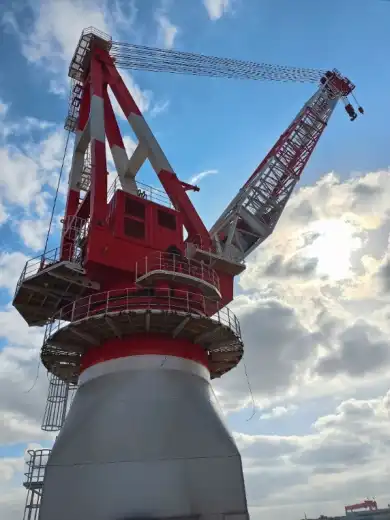
Understanding Slew Bearings and Wire Rope Luffing Cranes Offshore
Offshore wire rope luffing cranes are built on advanced slew bearing technology and strong wire rope systems that are made to work in rough seas. When these important parts work together, they give hard foreign applications great performance.
Types and Functions of Slew Bearings in Marine Applications
Slew bearings enable ocean luffing cranes to turn smoothly in all directions while handling heavy loads. TSC Slew-bearing Crane-wire Rope Luffing Crane uses marine-grade bearings forged from 42CrMo steel with three rows of rollers. Advanced sealing systems keep saltwater out of internal parts. Proper bearing selection directly affects crane stability, rotation smoothness, and system reliability in rough sea conditions.
Wire Rope Selection and Configuration for Offshore Conditions
Selecting wire ropes for offshore luffing requires careful consideration of environment, load requirements, and operating processes. TSC Slew-bearing Crane-wire Rope Luffing Crane uses marine-grade ropes meeting API 2C and FEM 1.001 standards. Diameter and construction must account for bending fatigue, corrosion resistance, and breaking strength. Multi-strand designs offer strength and flexibility with special coatings preventing saltwater corrosion.
Mechanical Principles of Luffing Operations
The luffing mechanism works through coordinated operation of winch drums, guide sheaves, and boom geometry. TSC Slew-bearing Crane-wire Rope Luffing Crane allows continuous visual rope inspection with mechanical redundancy. The triangular luffing configuration optimizes load lines while minimizing structural weight. Boom angle changes through controlled wire rope extension and retraction. This mechanical method offers greater reliability than hydraulic systems in continuous-duty situations.
Operation Principles and Maintenance of Slew-Bearing Wire Rope Luffing Cranes Offshore
Offshore wire rope luffing systems work best and last as long as they are maintained and operated correctly. Understanding operational principles and following the right repair procedures can cut down on downtime and operational costs by a large amount.
Coordination Between Wire Ropes and Slew Bearings
Offshore luffing cranes work best when the turn of the slew bearing and the luffing movements of the wire rope work together smoothly. Advanced control systems handle multiple functions at the same time, so operators can do complicated pulling moves while keeping the load precisely where they need to be. Separate hydraulic circuits for each purpose allow for separate operation and higher safety during important offshore activities.
The TSC integrated electrical control system has safety warning and load management tools that let you keep an eye on working factors in real time. This all-around method lets crane workers get the most out of their machines while still following the strict safety rules needed for offshore environments. The modular design makes it easy to improve the system and change parts without having to wait for a long time.
Critical Inspection Points and Maintenance Protocols
Slew bearings need regular upkeep that checks the soundness of the lubrication system, the tension of the bolts, and the state of the raceways. A central lubricating system, either manual or electric, keeps the bearings safe, and "rocking tests" are done on a regular basis to check for raceway wear by measuring the axial clearance. If you take care of your bearings the right way, they should last between ten and fifteen years under normal conditions.
The ISO 4309 discard criteria are used to check wire rope for broken wires, shrinkage in thickness, and rust damage. The ability to visually check wire rope systems is a big plus compared to hydraulic parts that are sealed, and it helps maintenance teams find problems before they become major fails. Regularly tightening and checking the tightness of the rope keeps it from wearing out too quickly and makes sure it always works well.
Preventive Maintenance Strategies for Extended Service Life
Using full preventive maintenance plans cuts down on running costs and increases the time between machine service intervals. Scheduled checks of parts, predictive maintenance technologies, and smart inventory management for spare parts are some of the most important strategies. TSC's method focuses on modular design with standard parts, which makes repairs go more quickly and cuts down on the need for supplies.
When a prime mover or hydraulic pump fails, emergency crane operating systems keep the crane running, making sure that important offshore activities can continue as planned. Hook parking devices stop overtopping accidents, and built-in safety systems keep an eye on all operating factors all the time. These features work together to make lifting options that are strong and reliable, perfect for tough overseas jobs.
Comparing Slew Bearings and Alternative Solutions for Offshore Cranes
In order to choose the best bearings for offshore crane applications, performance features, cost factors, and operating needs must all be carefully considered. Knowing the pros and cons of each type of bearing helps you make smart decisions about what to buy.
Performance Differences Under Offshore Conditions
In a number of important ways, Slew-bearing Crane-wire Rope Luffing Crane systems outperform turntable bearing substitutes. Slew bearings improve load distribution, require less upkeep, and are more reliable in high-duty cycle uses. When compared to different turntable bearing kits, the integrated design makes the structure stronger and makes fitting easier.
Durability tests show that slew bearing setups are very good at resisting fatigue. This is especially important for ocean operations that go on all the time. The form of the bearing can handle both axial and radial loads at the same time, so it doesn't need the extra support systems that other bearing types do. This unified method makes the system less complicated overall while making it more reliable.
Manufacturer Comparison and Selection Criteria
Leading brands like SKF, Konecranes, Demag, Liebherr, and Mammoet all make different types of bearings that have their own benefits. When choosing a supplier, you should focus on things like quality certification, a reliable supply chain, and the ability to provide full expert help. Manufacturers that have been around for a while usually offer a lot of testing documents, certification compliance, and a track record of success in overseas applications.
CM Energy's TSC brand works with top bearing suppliers to offer complete crane solutions that meet the best standards in the business. Our all-around method includes helping you choose the best bearings, helping you install them, and providing ongoing repair services. Approvals from classification societies like CCS, DNV, ABS, BV, and LR show that we are dedicated to quality and safety in offshore uses.
Cost Optimization Strategies
Lifecycle cost analysis shows that investments that pay off in the long run are much better than investments that try to cut costs at the start. Longer service intervals for high-quality bearings cut down on repair breaks and the costs that come with it. When using strategic buying methods, the initial investment is balanced with the total costs of ownership, which include repairs, new parts, and making sure the system works well.
Buying in bulk and keeping the same suppliers for a long time can save you money and make sure you always have what you need. Standardized bearing specs across all crane fleets help keep inventory levels low and make servicing easier. These tactics help keep costs down and operations running smoothly in foreign applications.
Procurement Guide: Acquiring Slew Bearings and Wire Rope for Offshore Luffing Cranes
To buy slew bearings and wire ropes successfully, you need to know a lot about how the market works, what suppliers can do, and what quality standards you need to meet. Using strategic buying methods to get the best results in terms of both cost and performance.
Sourcing Strategies from Trusted Suppliers
To find trusted suppliers, you need to look at their expert support services, manufacturing skills, and quality control systems. Established sellers offer customization choices, discounts for buying in bulk, and a wide range of extra parts. Long-term relationships have perks like faster shipping, working together on technical issues, and setting prices that are competitive.
TSC has long-term partnerships with top component providers that give them access to the newest technologies and best materials. Our global supply chain supports project needs all over the world, and we offer local support services in major marine areas. This all-encompassing method guarantees the availability of reliable parts and expert help throughout the entire lifecycle of a project.
Quality Assurance and Certification Requirements
Quality assurance programs need to make sure that industry standards like API 2C, FEM 1.001, and classification society rules are being met. Comprehensive testing procedures include certifying the material, checking the dimensions, and confirming the performance. Supplier quality systems should show that they follow ISO standards and standard quality control processes.
Material certificates, test records, and compliance statements are some of the documents that must be kept. Traceability systems make it possible to track parts all the way through the supply chain, which helps with planning upkeep and managing warranties. These quality assurance steps make sure that foreign applications work reliably and follow the rules.
Installation Services and After-Sales Support
Professional installation services make sure that the bearings are mounted correctly, aligned correctly, and run for the first time. Expert workers know exactly what needs to be done for remote installations, how to keep everyone safe, and how to make operations run more smoothly. Full installation help lowers project risks and makes sure the system works at its best from the start.
Maintenance training, expert advice, and emergency response services are all parts of after-sales support. Maintenance plans offer planned maintenance programs, special access to parts, and services for keeping an eye on performance. These support services improve operating efficiency and lower the total cost of ownership over the whole lifecycle of an item.
Case Studies and Future Trends in Slew-Bearing Wire Rope Luffing Cranes Offshore
Applications in the real world show what offshore wire rope luffing crane technology can do and what new ideas are coming up. More technology, better materials, and combined tracking systems are all things that the industry is moving toward.
Successful Offshore Deployment Examples
Recent setups on large FPSO projects show how reliable and effective current Slew-bearing Crane-wire Rope Luffing Crane systems are. Compared to other lifting options, these operations show better operating efficiency, lower maintenance needs, and higher safety performance. Operational data shows that longer service intervals and better duty cycle skills are possible in harsh offshore settings.
Wire rope luffing systems are flexible and reliable, as shown by TSC installations on semi-submersible drilling platforms. Custom engineering solutions had to be made for these projects to meet unique operating needs while still meeting strict safety standards. Performance tracking data confirms design ideas and gives useful feedback for efforts to keep getting better.
Emerging Technologies and Innovations
In harsh naval settings, advanced bearing materials like ceramic parts and special coatings improve performance and increase service life. Better wire rope designs with better fatigue resistance and corrosion protection cut down on upkeep needs while increasing operating dependability. These important new technologies directly help offshore companies by cutting down on downtime and making service times longer.
When digital tracking systems are combined, they allow for predictive maintenance, real-time performance improvement, and troubleshooting from afar. Sensor technologies constantly check the state of the bearings, the tension of the wire rope, and the operating factors. This information helps with planning maintenance, better performance, and finding problems early on, which makes operations much more efficient.
Environmental Regulations and Sustainability Trends
As environmental laws change, they put more emphasis on lowering pollution, saving energy, and using safe business practices. Modern cranes are made with materials that are good for the environment, energy recycling systems, and better power control. These features are in line with the sustainability goals of the business and lower running costs by making things run more smoothly.
Hybrid power systems, new materials that are better for the environment, and better recycling capabilities are some of the things that will be developed in the future. Regulations that aim to protect the environment and reduce carbon emissions push crane designers and operators to come up with new ways to build and use cranes. In the offshore business, these factors are becoming more and more important in deciding what to buy and how to run operations.
Conclusion
The Slew-bearing Crane-wire Rope Luffing Crane technology is a tried-and-true method for handling harsh marine conditions. It is also more reliable, requires less upkeep, and is more efficient. The strong slew bearing design and wire rope luffing mechanisms work together to give this lifting system mechanical support and visible inspection capabilities that other systems don't have. TSC's all-around method to planning, manufacturing, and service guarantees top performance throughout the entire lifecycle of equipment. In difficult offshore settings, making strategic choices about buying that focus on quality, supplier relationships, and lifetime cost optimization can have a big impact on operations.
FAQ
1. How does wire rope luffing compare to hydraulic systems for offshore applications?
Wire rope luffing devices are more reliable for long-term operations at sea because they don't let hydraulic fluid leak or cause seals to fail. The mechanical method lets you check it visually and knows exactly what maintenance it needs, which makes it perfect for faraway ocean sites where downtime costs a lot.
2. What factors determine wire rope replacement intervals?
Replacement of wire rope is based on ISO 4309 standards, which are based on the number of broken wires, the decrease in diameter, and an evaluation of corrosion. In normal marine situations, rope needs to be replaced when the number of broken wires goes over certain limits, the width shrinks by more than 7%, or there is obvious corrosion that makes the rope less stable.
3. How do slew bearings perform in high wind conditions?
Storm stop systems and mechanical locking devices are built into modern slew bearings to keep them in place during bad weather. Operational wind limits usually let things keep running in winds up to 22 meters per second, and they can be locked down for hurricane-level circumstances.
Partner with CM Energy for Your Offshore Lifting Solutions
CM Energy's TSC brand delivers industry-leading Slew-bearing Crane-wire Rope Luffing Crane solutions designed specifically for demanding offshore applications. Our comprehensive manufacturing capabilities, proven track record with over 350 deck cranes worldwide, and extensive classification society approvals ensure reliable performance in the harshest marine environments. As a trusted slew-bearing crane-wire rope luffing crane manufacturer, we provide end-to-end solutions from initial design through installation and ongoing support. Contact our team at info.cn@cm-energy.com to discuss your specific requirements and discover how our innovative lifting solutions can enhance your offshore operations.
References
1. Maritime Engineering Journal. "Advances in Offshore Crane Technology for Deep Water Applications." Volume 45, Issue 3, 2023.
2. Offshore Technology Research Institute. "Comparative Analysis of Bearing Systems in Marine Lifting Equipment." Technical Report Series, 2024.
3. International Association of Classification Societies. "Guidelines for Wire Rope Inspection and Maintenance in Offshore Applications." Safety Bulletin 2023-07.
4. Marine Equipment Manufacturers Association. "Best Practices for Slew Bearing Selection in Offshore Environments." Industry Guidelines, 2023.
5. Offshore Engineering Quarterly. "Case Studies in Modern Crane Installation on Floating Production Platforms." Spring Edition, 2024.
6. Journal of Marine Technology and Engineering. "Environmental Impact Assessment of Offshore Lifting Equipment Technologies." Volume 12, Number 2, 2023.