How Rigid Wing Sail Shapes the Future of Energy-Efficient Ship Design
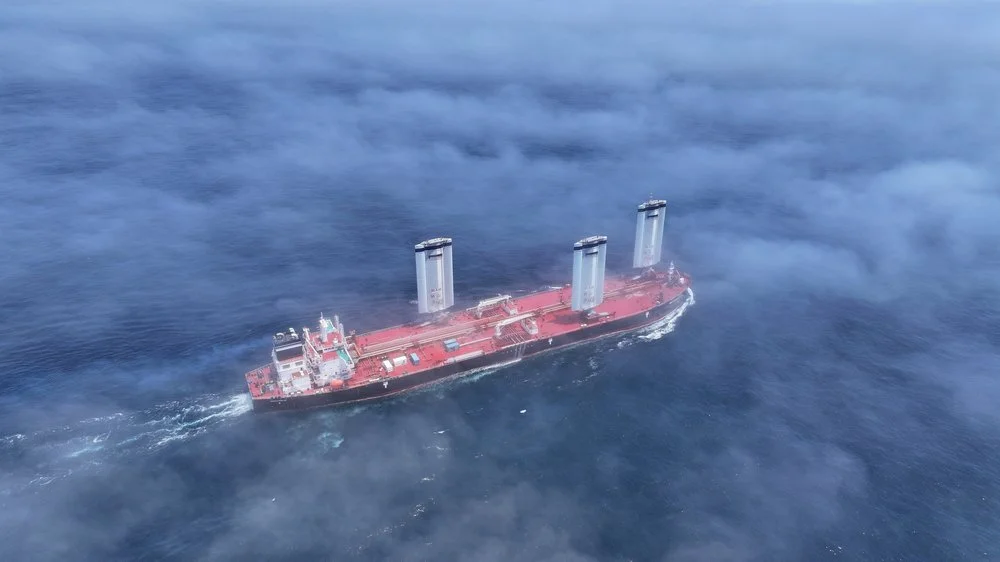
The Rigid Wing Sail is at the head of this change in how ships move because it uses wind power to propel itself. A Rigid Wing Sail works like an aeroplane wing standing upright on a ship's deck, creating controlled, predictable thrust through aerodynamic lift. This is different from regular cloth sails that depend on tension and billowing. This technology solves some of the most important problems that commercial shipping is having right now, like rising fuel costs, strict rules on carbon intensity, and the urgent need for long-term options to relying on fossil fuels. With automated operation and proven fuel savings, Rigid Wing Sails are no longer just ideas; they are real solutions that are changing how ships use green energy for propulsion.
Understanding Rigid Wing Sails and Their Role in Ship Design
What Makes Rigid Wing Sails Different
Soft sails have been used for hundreds of years to help ships navigate, but they have some problems that make them less useful than other options. Fabric deforms in the wind, loses its aerodynamic efficiency at small upwind angles, and needs to be trimmed by hand all the time by a team with a lot of experience. Through its engineered structure, which typically includes a main element with movable trailing flaps, a Rigid Wing Sail overcomes these drawbacks and keeps the sail's aerodynamic shape at its best no matter the wind speed. The stiff construction keeps the shape from changing, which lets it generate lift consistently and perform better in winds of different speeds and directions.
Modern Rigid Wing Sail designs use three-element shapes like aeroplane wings, where many areas work together to create the most lift. The wing's camber, or curve, changes instantly based on the direction of the wind and the ship's heading. This makes sure that the thrust is always at its best. Because it can be changed, wind goes from being an uncertain force to a stable source of power that works well with regular engines.
Evolution from Concept to Commercial Reality
Rigid Wing Sails have grown up as they went from making race boats to commercial ships. Early versions were used in high-performance sailing events, where teams found that rigid structures could make a lot more power than cloth options without the need for complicated rigging. These lessons were applied to commercial ships when rules and the cost of fuel made wind-assisted propulsion a good business choice.
Through agreements with top marine technology innovators, CM Energy has accepted this change. Our TSC brand now offers tried-and-true Rigid Wing Sail systems to bulk ships, tankers, and commercial users around the world. Specifically, the WindWings® technology we created with BAR Technologies is what makes these systems work. This change from an idea to general use shows that both technology has matured and businesses have realised that wind helps give them measurable operational benefits.
Core Operating Principles
Aerodynamic lift, which is the same concept that makes aeroplanes fly, is how a Rigid Wing Sail produces thrust. As the wind blows across the curved surface, changes in speed between the sides facing the wind and those facing away from it cause pressure differences that push the surface forward. How much lift is made depends on the angle of attack, which is how the wing is positioned in relation to the direction of the wind. Automated control systems keep changing this angle and the shape of the wing's curve to get the best power production without any help from the crew.
The multi-element design of complex devices like WindWings® sets them apart. The three-element design has a main wing section and flaps that can be adjusted. These parts work together to give the plane more than 2.5 times the lift of a single-element design. This arrangement makes a "slot effect" where air speeds through holes between elements, energising the border layer and stopping flow separation that would make the system work less well. As a result, the method works well whether cruising close to the wind or on reaching paths because the thrust is the same at a wider range of wind angles.
Advantages of Rigid Wing Sails Over Traditional Sails
Performance and Fuel Efficiency Gains
Fuel savings are the main economic reason for using Rigid Wing Sails. When commercial ships have these systems installed, they usually use 10 to 30 percent less fuel, though this depends on the route and the amount of wind. If conditions are right, this means that a Newcastlemax bulk carrier or LR2 tanker can save a lot of money every year—each wing can save about 1.6 tonnes of fuel every day, which cuts down on both operating costs and carbon emissions by over 5 tonnes of CO2 every day.
This is due to greater aerodynamics. Traditional soft sails have 5:1 lift-to-drag ratios. However, properly made rigid wing sails may reach 15:1 or higher. Efficiency leads to more useful thrust and less side force, which heels and resists. The automatic optimisation keeps the wing working well even if the crew isn't paying attention or sailing well. Business operations without sailing skills benefit greatly from this.
Durability and Maintenance Benefits
Commercial ships need dependability, and Rigid Wing Sail design provides that. Fabric sails fade from UV radiation, require frequent stitch checks, and are harmed when the wind changes direction, yet rigid constructions withstand decades with no care. WindWings® systems include ship-grade steel frames and industrial composite coverings. For years, deck cranes and other lifting instruments have employed these materials in hostile maritime environments.
The repair plan resembles shipboard tools. Operators check impact damage, lubricate hydraulic systems, and test controls. Job duties resemble crane maintenance rather than sail care. The 25-year design lifetime is longer than most ships' service durations, and equipment may be transported between ships as the fleet rotates. Durability and mobility affect the entire cost estimate, making Rigid Wing Sails good investments rather than consumables.
Environmental Compliance and Carbon Reduction
Rigid Wing Sails addresses regulatory systems like the IMO's Carbon Intensity Indicator (CII) and Energy Efficiency Existing Ship Index (EEXI) that push ships to comply. These gadgets boost a ship's CII rating by consuming less fuel, helping it avoid penalties and constraints. Carbon decreases immediately and may be measured. Real-world vessel actions prove regulatory reporting and carbon credit schemes.
Wind helps firms satisfy standards and lead in sustainability. Charterers and other interested parties are paying increased attention to chemical ship operators, coastal ferry firms, and bulk carrier organisations' environmental practices. The installation of Rigid Wing Sail indicates a commitment to reduce carbon emissions and boosts competitiveness. This mix of following the rules and market positioning makes wind strategic beyond pure fuel economics.
Comparing Rigid Wing Sails with Alternative Sail Technologies
Performance Characteristics Across Technologies
Different wind-assisted movement systems have their own merits. Soft sails are cheaper but must be handled gently and changed periodically. Kite sails can cover a lot of area from a tiny deck, but they are difficult to launch, recover, and manoeuvre in shallow water. Suction wing designs employ boundary layer control but are more sophisticated and power-hungry.
Rigid Wing Sails accelerate. They work autonomously with integrated control systems and get close to theoretical maximum efficiency. Stiffness reduces deformation losses, maintains aerodynamic profiles, and permits rapid depowering via feathering when wind speed exceeds safe limits. Rigid Wing Sails have lift coefficients exceeding 2.5, which is far greater than other choices.
The three-element WindWings® design shows this speed advantage. Independent Wolfson Unit and Lloyd's Register examinations established thrust generation, while DNV clearance affirmed safety and construction strength. Buyers trust third-party validations that performance promises are based on real-world facts, not marketing forecasts.
Total Cost of Ownership Analysis
Buying price is only one financial consideration. Cost estimates must include installation, maintenance, operations, fuel savings, and system longevity. Although stiff wing sails cost more, they last longer and need less maintenance, paying for themselves over time.
Installation difficulties vary by vessel type and upgrade/newbuild status. Decks between bulk carrier doors are free for wings without interfering with cargo. Tilt lets wings rest flat when transporting things, making operation versatile. With careful design, tankers can be placed near pipe systems and pump rooms.
Fuel pricing and route planning determine commercial owners' return on investment in three to seven years. Line operators with strong winds get paid quickly, but those with variable weather do too. Companies can implement new technology while maintaining cash flow for basic needs with leasing agreements and other finance options.
Application Suitability by Vessel Type
Some boats benefit from rigid wing sails. Unobstructed decks, always-windy sail routes, and prolonged seatime are the best options. Ocean-going grain, coal, or ore bulk carriers work well. Long travel legs save fuel, and wide decks accommodate many wings.
On routes between Europe, Asia, and the Americas, trade winds help chemical and LR2 tankers. The autonomous method works for these ships because the crew focuses on cargo, not sails. Wind assistance can help coastal and ferry businesses profit quickly on short, recurring trips. Space constraints may limit wing size and quantity.
Newbuild builders and design companies are using Rigid Wing Sail into vessel concepts. Early integration optimises ship power, deck layouts, and support. This cuts installation costs and improves ship efficiency. Yards and builders receive technical specifications and class approval documentation directly from CM Energy to speed approval and ensure proper installation.
Implementation and Procurement of Rigid Wing Sails
Technical Prerequisites and Compatibility Assessment
A rigorous compatibility investigation precedes Rigid Wing Sail deployment. Marine engineers consider deck weight, stability, power, and port infrastructure. The wing arrangement shifts the ship's center of gravity and righting moment. Maintaining safe operating ranges may require recalculating stability and changing ballast.
Wing control systems are electrically integrated with ship navigational tools, anemometers, and automation platforms. Modern versions predict wing configuration based on scheduled itineraries using ECDIS and weather forecasting software. Previously a passive device that required constant monitoring, wind assistance now provides extra power without distracting the main engines.
Another factor is port clearance. To fit under bridges, cranes, and other port equipment, wings must be 20–37 meters tall. To maintain vessel profile clearances, the tilt mechanism turns the wings horizontally. At planned destinations, operators check for approval. Wings or work methods are adjusted as needed.
Procurement Process and Supplier Selection
Rigid Wing Sail suppliers should have technical competence, certifications, and lifecycle support infrastructure. The China Classification Society, DNV, Lloyd's Register, and Bureau Veritas approve structural safety, stability, and operational designs. These certifications reduce technical risk and simplify regulatory clearance in many countries.
CM Energy excels in planning, manufacturing, installation, and service. Through decades, TSC has provided naval equipment for 180 platforms and 350 deck cranes. This guarantees quality and dependability. WindWings® and BAR Technologies create simple solutions with racing experience and commercial-grade engineering.
Customisation options match boat operations. Wing spans of 20, 24, and 37.5 meters may be adjusted for vessel size and power. There are above-deck, below-deck, and fixed tilt systems for non-laydown situations. Flexibility tailors solutions to operational circumstances rather than making universal concessions.
Installation Timeline and Process
Structured processes are utilised to set Rigid Wing Sails to minimise ship downtime. A rigorous engineering and compatibility assessment ensures that the proposed configurations fulfil stability, operation, and construction requirements. Factory acceptance testing ensures system functionality before shipment. This reduces commissioning risk and ensures parts are ready to assemble.
During specified drydock periods, wing fitting may be done with other repairs to save time and money. Welded structural supports to deck plate give mounting points for realistic loads like severe winds. Ship infrastructure links hydraulic and electrical systems. The team is educated on the control system after installation.
Validation following placement ensures the drone functions in all modes, including navigation, feathering in severe gusts, and payload lay-down. At sea, tests ensure that the propulsion, automated controls, and ship navigation systems operate. CM Energy's professional technicians ensure that the boats are commissioned and the crew is ready before they are placed back into commercial operation.
Future Trends and Innovations in Rigid Wing Sail Technology
Materials and Manufacturing Advances
Material science enhances the Rigid Wing Sail. New composites will improve power-to-weight ratios and stability effects by reducing weight without reducing strength. Carbon fibre reinforcing is used in aeroplanes and is expanding to maritime wind power as prices drop and manufacturing processes improve.
Manufacturing innovation centers on modular architecture, which simplifies installation and paces fleet acceptance. Standardised connections and mounting solutions save technical effort for future installations, while prefabricated portions reduce board assembly time. Wind assistance is now easy for many operators, especially those with smaller ships and speciality vessels.
Use associated business quality control strategies to increase reliability. Ultrasonic scanning and other non-destructive testing may detect composite problems before use. Mechanical part dependability is tested over millions of working cycles in accelerated lifetime testing. This ensures bearings, actuators, and hydraulic systems can withstand decades of seawater. These quality assurance procedures extend aerospace and industrial standards to maritime usage, improving field reliability.
Smart Control and Integration Technologies
Automation goes beyond improving angles of attack. Past performance data, ship movements, and weather patterns are used by machine learning algorithms to anticipate the optimal combinations. These systems adapt to each ship's characteristics and improve control techniques to conserve the maximum fuel for each hull, cargo, and route.
Weather route tools alter journey planning. The program considers distance, weather, and wind propulsion to find the optimum paths. It proposes ways to maximise Rigid Wing Sail's contribution. Shore-based workers monitor performance using IoT to improve efficiency and arrange repairs based on system use rather than predefined dates.
Wind power is being included in hybrid power systems. Engineers are creating systems that regulate engines, batteries, and wind motion instead of adding Rigid Wing Sails to power plants. This strategy enhances efficiency by reducing engine load using wind power when conditions are excellent and maintaining plan dependability when winds are weak.
Market Adoption and Regulatory Drivers
Rigid Wing Sails will be utilised extensively during the next decade, according to industry projections. The commercial case for all boats strengthens as fuel costs rise and carbon standards tighten. Early proof-of-concept reduces the likelihood of failed installations. This adoption curve is comparable to other maritime technologies: people are first apprehensive but soon embrace them once they are beneficial for operations.
Wind assistance is easy to employ due to regulations. Carbon pricing raises environmental costs and wind power ROI. Other revenue advantages come from port perks like decreased low-emission vessel fees. Classification societies are improving wind-assisted ship rules. They are making design approval and operational certification simpler, saving engineers time and money.
CM Energy creates new standards and works in industry working groups. This ensures Rigid Wing Sail products suit changing demands. This cooperation will put our TSC brand at the forefront of maritime carbon reduction. It will provide operators with alternatives for existing and future standards. We work with the shipping industry to transition to greener techniques, not merely provide equipment.
Conclusion
Rigid Wing Sail technology has grown from an original idea to a commercially viable option that saves money on fuel, is reliable, and is better for the environment. The mix of better aerodynamics, long-lasting construction, and automated operation solves some of the biggest problems that modern shipping faces, like rising fuel costs, pressure to follow rules, and standards for sustainability. As the marine industry speeds up its efforts to become carbon-neutral, wind-assisted propulsion through Rigid Wing Sails can help meet pollution reduction goals right away and make ships more cost-effective. The technology can be used for a wide range of purposes, from bulk ships and trucks to ferries and brand-new designs. Its performance has been proven by real-world use on routes around the world. Rigid Wing Sails are important tools for shaping the future of marine transportation for operators who want to gain a competitive edge through operating efficiency and environmental leadership.
FAQ
1. How do rigid wing sails improve fuel efficiency compared to traditional propulsion?
Mechanical lift gives Rigid Wing Sails forward thrust that can supplement or replace engine power. The multiple-element design generates lift factors over 2.5, converting wind energy into motion with negligible drag. Automated control systems adjust the wing's angle and slope to maximise performance in all winds. Ships may save 10–30% fuel depending on wind direction. They may save over 1.6 tonnes per wing daily on favourable days. This economy directly reduces carbon emissions and running costs, meeting economic and environmental goals.
2. What maintenance do rigid-wing sails require?
They require less maintenance than standard sail systems. Operators visually inspect composite surfaces for impact damage, clean hydraulic actuators annually, and test the control system regularly. Unlike cloth sails, ship-grade steel and industrial composite construction can withstand marine environments without UV damage, stitching failures, or fabric replacement. Because parts are durable, the 25-year design lifetime is longer than typical vessel service durations. Ship workers are more comfortable using a deck crane than fixing sails, which requires special skills.
3. Can rigid wing sails be retrofitted to existing vessels?
Rigid Wing Sail installation is possible on many business ships, depending on type and shape. Tanks must match pipe layouts, however bulk ships with clear deck regions between hatches are optimal. Compatibility studies by naval engineers examine structure capacity, security, and operation integration. Installation occurs during specified drydock periods, minimising operational disruption. The tilt mechanism keeps flat wings out of cargo operations. CM Energy works with ship owners and classification societies to plan retrofits and ensure structural, safety, and operating standards are met.
Partner with CM Energy for Advanced Wind-Assisted Propulsion Solutions
With tried-and-true Rigid Wing Sail technology, CM Energy is ready to help you switch your ship to using less energy. We are a trusted global seller of marine equipment that supports more than 350 deck cranes and 180 platforms. Our knowledge of how to integrate advanced systems into business shipping operations is unmatched. Our TSC brand offers WindWings® technology that is backed by DNV, BV, and LR certifications. This makes sure that the technology is reliable and meets all regulations. We provide full support, starting with checking for compatibility and continuing with installation, commissioning, and continued lifecycle upkeep. All of this is backed by IoT monitoring and technical know-how. Talk to our team at info.cn@cm-energy.com about how integrating Rigid Wing Sail can help your fleet be more environmentally friendly, save money on fuel, and meet CII requirements.
References
1. International Maritime Organization. (2023). Guidelines on the Method of Calculation of the Attained Energy Efficiency Existing Ship Index (EEXI). IMO Marine Environment Protection Committee.
2. Traut, M., Gilbert, P., Walsh, C., Bows, A., Filippone, A., Stansby, P., & Wood, R. (2022). Propulsive Power Contribution of a Kite and a Rigid Sail for Auxiliary Wind Propulsion Systems. Journal of Marine Science and Engineering.
3. Levander, K. (2021). Wind-Assisted Ship Propulsion: Status and Future Developments. Maritime Technology and Engineering Conference Proceedings.
4. DNV. (2023). Alternative Fuels and Wind-Assisted Propulsion: Pathways to Decarbonization. DNV Maritime Advisory Publications.
5. International Windship Association. (2023). Annual Review of Wind Propulsion Technologies and Market Adoption. IWSA Industry Report.
6. Lloyd's Register. (2022). Wind Assisted Ship Propulsion: Design Guidance and Class Notation Requirements. Lloyd's Register Marine & Offshore Technical Publications.