How Kingpost Crane Works on Offshore Platforms?
Kingpost Crane systems are the most important part of offshore lifting operations. They have a special structure in which the rotating superstructure spins around a fixed vertical shaft built into the platform. These special lifting devices are different from regular pedestal cranes because they don't use large-diameter slewing bearings. Instead, they transfer loads directly through the kingpost column into the vessel's hull structure. This makes them more stable and reliable in rough marine environments, such as on drilling rigs, FPSOs, and wind farm installations.
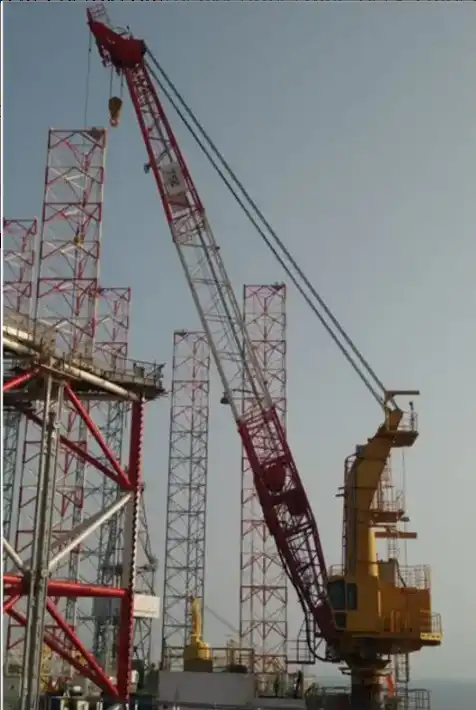
Understanding Kingpost Crane Basics and Offshore Applications
The Kingpost Crane is an important lifting option for offshore work, and its strong design makes it stand out when it comes to marine lifting problems. The main idea behind these complex machines is that the whole crane structure, which includes the gear deck and boom assembly, turns around a vertical column that stays in place. This column is called the kingpost. This shaft becomes an important part of the platform's structure, making a lifting system that works great in rough ocean conditions.
Core Components and Operational Mechanics
Offshore TSC kingpost crane systems comprise four main parts: center support column, lattice boom assembly, rope luffing mechanisms, and hydraulic winch systems. The kingpost shaft uses high-strength marine-grade steel as structural base and rotational center. Separate hydraulic lines enable simultaneous functions. Rope luffing provides precise boom placement, achieving lifts exceeding 100 metric tons.
Applications Across Offshore Platforms
Offshore sites use kingpost lifting devices for equipment maintenance, supply movement, and heavy lifts. Fixed drilling platforms move drill pipes and heavy equipment. Jack-up platforms benefit from compact size. Semi-submersibles use crane support for dynamic positioning. FPSO vessels need minimal care. Wind farm ships move turbine parts in rough seas.
Design Principles and Safety Features Tailored for Offshore Platforms
Offshore Kingpost Crane engineering puts operational safety and structural integrity first by using thorough design methods that take into account the difficulties of the marine climate. When working offshore, the harsh conditions mean that choosing materials, analyzing structures, and integrating safety systems must be done in ways that are very different from what is needed for moving tools used on land.
Marine Environment Adaptations
Manufacturers use improved coating methods and corrosion-resistant alloys in many important parts because rust resistance is an important part of design. The structure has to be able to handle dynamic loading from wave action, wind forces, and platform motion. This calls for a complex study of stress patterns and predictions of fatigue life. TSC's method uses value-engineered structures that make things more rigid while reducing weight. This is important for keeping the platform stable and running smoothly.
A lot of thought goes into the design of the kingpost column. The wall thickness and diameter are calculated to account for the highest operating loads plus large safety gaps. The upper and lower bearing systems are made of high-performance materials that can withstand the harsh sea climate and keep the crane's smooth rotational features for its entire working life. These bearing designs get rid of the huge failure risks that come with big slewing bearings, making important offshore operations more reliable.
Integrated Safety Systems
Comprehensive safety features include many levels of protection, beginning with emergency braking systems that can stop the crane from working in the worst lifting situations. Integrated load management systems keep an eye on working factors all the time to make sure unsafe conditions don't happen. Hook parking devices stop dangerous overtopping situations. The electrical control systems at TSC have advanced safety warning features and can shut down automatically when working limits are reached.
When the main system fails, emergency operating systems take over. This way, important lifting tasks can still be done even if the prime movers or hydraulic pumps aren't working. These backup systems are very important in emergency scenarios where the availability of cranes directly affects the safety of people on the platform and the stability of the platform itself. Regular inspections and the ability to do forecast maintenance help find problems before they affect the safety or availability of operations.
Comparative Analysis: Kingpost Crane vs Other Offshore Crane Types
When procurement workers look at offshore lifting options, they need to know how Kingpost Crane systems are different from other crane technologies and what their pros and cons are. This study looks at the most important performance factors, operating features, and lifecycle factors that affect the choice of tools for certain offshore uses.
Structural and Operational Differences
Lifting capacities are high for tower cranes, but they need to be structurally integrated very well and aren't flexible enough for all the different jobs that need to be done abroad. Gantry systems are great for controlling loads, but they take up a lot of deck space and are hard to put on platforms that are already there. Mobile cranes are flexible, but they have trouble working in offshore settings because of the need for steadiness and limited access for repair. Jib cranes are easy to use, but they don't have the reach or ability for large ocean lifting jobs.
Kingpost systems are special because they can hold a lot of weight, are structurally reliable, and can be used in a variety of ways. The central column form is very stable under dynamic loading and takes up very little deck room compared to other options with the same capacity. With simple bearing setups that can work effectively for the crane's design life without major component replacements, maintenance needs are still much lower than with slewing bearing systems.
Decision Factors for Optimal Selection
A cost-performance study needs to look at both the original costs of buying something and the costs that come up over its lifetime, such as repairs, inspections, and possible part replacements. Kingpost systems usually have better lifetime economics because they are easier to maintain and have simpler mechanical designs. Different types of cranes have very different levels of difficulty when it comes to installation. Kingpost systems are easier to use because they are modularly designed and have standard mounting connections.
When platform room is limited, making the best use of deck space becomes very important. This is where the small size of kingpost designs really shines. The ability to handle loads must match the needs of the work, taking into account both the highest capacity and the operational envelope. TSC's wide range of products makes it possible to precisely match crane specs to application needs, which improves performance and reduces costs for a variety of offshore projects.
Procurement Insights: Choosing, Buying, and Renting Kingpost Cranes for Offshore Projects
When buying Kingpost Crane systems strategically, you need to carefully look at the technical specs, the supplier's skills, and the assistance needs throughout the system's life. Due to the complexity of offshore crane procurement, many things need to be carefully thought through in addition to the original purchase price. These include regulatory compliance, installation knowledge, and the availability of long-term service support.
Technical Specification Alignment
When figuring out the lifting capacity, you need to look at both the main hook and auxiliary hook specs. The lifting capacity needs to include the maximum working loads plus the right amount of safety margins. When thinking about platform limitations and operating clearances, the boom's length should give it enough reach to do all the moving jobs that need to be done. Design life standards are very important for offshore uses where replacing equipment can be hard to arrange and cause major problems with operations.
The environmental standards must match the exact working conditions that the crane will be used in for its entire life. This includes the temperature ranges, wind loads, and amounts of corrosion exposure. A classification society approval from a reputable group like DNV, ABS, BV, LR, or CCS is an important third-party confirmation that the design meets industry standards. TSC keeps certificates from several classification societies, which makes sure that their products are accepted around the world and follow all regulations in a wide range of foreign markets.
Supplier Evaluation and Selection Criteria
The ability to manufacture and quality control methods have a big effect on how reliable and consistent a product is in its performance. Suppliers should be able to show that they have complete ISO quality systems, qualified welding skills, and a history of making marine cranes. When installing something abroad, where getting help can be hard because of logistics and operational issues, after-sales support becomes very important.
Installation skills and project management skills can have a big effect on rollout costs and times. When you work with experienced providers, they will help you with everything, from figuring out your needs at the beginning to coordinating shipping and overseeing installation once it arrives at your location. CM Energy has worked with more than 350 offshore deck cranes around the world, which shows that they have the proven skills and global reach that are needed for offshore crane projects to go well.
Market Trends and Financial Considerations
As of 2024, the market is showing that there is a lot of demand for offshore lifting tools. This is because of the growth of green energy and traditional oil and gas activities. As wait times for more complicated offshore crane systems get longer, supply chain issues have become more important. When deciding whether to rent or buy, you need to think about the length of the project, how often it will be used, and your long-term operating needs.
When cash preservation is important or the project is short-term, leasing may be a better option. On the other hand, direct buying is usually the better option for long-term installations. Modular design methods allow for phased rollout strategies that can adapt to changing project needs and limited budgets. For the global supply network to work, it's important to carefully look at the regional support skills and service availability for each working location.
Procurement Insights: Choosing, Buying, and Renting Kingpost Cranes for Offshore Projects
Knowing how Kingpost Crane technology will change in the future helps buying teams make smart choices that will help their businesses succeed in the long run. The offshore crane business is always changing because of new technologies, new rules, and changing market needs that affect both how products are made and how they are bought.
Technological Advancements and Smart Systems
Advanced sensor integration lets you keep an eye on structural loads, operational factors, and repair needs in real time, giving you a whole new level of information about how the crane is working and what its state is like. By constantly checking important factors, these smart systems can figure out what maintenance is needed, make operations more efficient, and raise safety. With remote operational skills, expert techs can figure out problems and offer help without having to go to another country. This cuts down on downtime and service costs.
As the field of material science continues to grow, tougher and lighter metals are being made that make systems work better while also making them lighter. New hybrid materials have a lot of potential for certain parts where losing weight is very helpful without affecting the strength of the structure. New technologies in manufacturing, like automatic welding systems and the ability to do precise drilling, make quality more consistent while cutting down on production times.
Regulatory and Environmental Influences
Environmental laws have a bigger impact on the design and operation of offshore cranes. For example, rules about emissions force companies to use better hydraulic fluids and more efficient methods for running the cranes. Sustainability concerns go beyond practical emissions and include lifecycle environmental effect studies and plans for how to get rid of things when they're no longer useful. These trends support strong, long-lasting designs like kingpost systems that last a long time with little damage to the environment.
Automation, tracking, and fail-safe systems are being required by safety rules to meet stricter standards. As regulations change in the future, they will probably require better methods for recording data and planning upkeep. To meet new standards, suppliers need to know about legal changes and be able to update their goods to meet new needs.
The movement in the industry toward modular solutions and adaptable rollout choices shows how project costs and needs are changing. The rental and leasing markets are still growing because project developers want to get the most out of their money and keep their operating freedom. When procurement professionals understand these trends, they can choose options that meet both present wants and plans for the future.
Conclusion
Kingpost Crane systems are the best option when lifting things abroad because they are very reliable, need little upkeep, and are very strong. Their design is one of a kind and provides unmatched stability and operating safety in harsh marine environments. This in-depth look at design principles, relative benefits, and purchasing factors shows why these specialized lifting systems are still the most popular choice for drilling platforms, FPSOs, and renewable energy projects abroad. As the offshore industry changes to meet stricter operating requirements and stay on the job for longer periods of time, kingpost technology provides the strong and reliable lifting powers needed for successful offshore operations.
FAQ
1. What makes a Kingpost Crane different from standard offshore cranes?
The main change is in how the structures are designed. For rotation, standard offshore cranes use large-diameter slewing bearings. Kingpost systems, on the other hand, use a vertical pole that is fixed to the platform frame and has simple upper and lower bearings. This gets rid of the chance of a catastrophic bearing failure and makes the structure more stable under the changing loads that are typical in offshore settings.
2. How long do Kingpost Crane systems typically operate without major maintenance?
With regular upkeep, well-designed kingpost systems can work effectively for decades. This is because they are built to last and have simple bearing arrangements. In slewing bearing systems, expensive bearing repairs may be needed every 5–10 years. But in kingpost systems, the simple bearing design can last the whole design life of the equipment as long as it is properly kept, which cuts down on lifecycle costs and downtime.
3. Can Kingpost Crane systems handle the dynamic loads from platform motion?
Because of how they are built and how they move energy, these systems are great at handling dynamic loads. The kingpost column moves loads straight into the hull structure of the platform, which makes it very stable when waves hit it and the platform moves. The strong design has the right amount of safety gaps and dynamic load considerations to allow safe operation in rough sea conditions where other crane types might not be able to do their job.
Partner with CM Energy for Your Offshore Kingpost Crane Requirements
CM Energy is ready to provide you with cutting-edge Kingpost Crane options that are specifically designed to meet your needs for offshore operations. Our TSC brand blends advanced engineering with proven dependability in a wide range of offshore applications. As a top manufacturer of kingpost cranes, we have more than 350 deck cranes in use around the world. Our all-around method includes unique design, top-notch manufacturing, and support services available all over the world to make sure that your lifting operations keep running at their best for as long as they are in use. Our experienced engineering team has the skills and new ideas that your projects need, whether they are heavy-lifting for FPSO operations or specialized systems for installing wind farms. Get in touch with our experts at info.cn@cm-energy.com to talk about how our kingpost crane options can improve your offshore operations while giving you great value and dependability.
References
1. American Petroleum Institute. "Specification for Offshore Cranes: API Specification 2C." 2012, API Publishing Services.
2. Det Norske Veritas. "Offshore Standard: Marine Operations and Marine Warranty." DNV-OS-H101, Classification Notes, 2011.
3. International Association of Drilling Contractors. "Offshore Crane Safety Guidelines and Best Practices." IADC Technical Publications, 2019.
4. The Society of Marine Engineers and Naval Architects. The SNAME Technical Manual from 2018 has "Principles of Naval Architecture: Offshore Structures and Equipment."
5. Register of Lloyd's. "Rules and Regulations for the Classification of Offshore Units." LR Maritime Engineering Guidelines, 2020.
6. Office of Veritas. The 2021 BV Marine Technical Standards document is called "Offshore Lifting Operations and Equipment Certification Standards."