How does a centralized lubrication system reduce crane maintenance costs?
Centralised lubrication systems change the cost of crane upkeep by automatically delivering grease to important parts like wire rope gear, and slew bearings. This precise method makes sure that complex machines like the Slew-bearing Crane-wire Rope Luffing Crane are oiled at the same time every time. This greatly reduces the amount of work that needs to be done by hand and increases the life of the components. Centralised systems cut down on unplanned downtime and replacement costs for high-stress parts that work in offshore settings, port hubs, and shipyards by getting rid of the human error and coverage gaps that come with greasing parts by hand.
Introduction
Offshore platforms, bulk carrier operations, and port facilities all have trouble keeping their cranes in good shape. Parts like slew bearings and wire rope luffing systems have to deal with heavy loads, corrosive marine conditions, and constant use, all of which speed up the wear patterns. Proper lubrication is the most important way to keep parts from breaking down too soon, but old-fashioned ways of greasing don't work as well as accuracy and regularity are needed in modern industrial settings.
Centralised lubrication systems have changed the way upkeep is done by delivering oil automatically and with surgical accuracy. These systems solve the main problems that procurement teams have: repair costs that are hard to predict, safety risks from accidents involving entry, and problems with operations that can be avoided when machines break down. When you switch from reactive manual maintenance to proactive automated lubrication, equipment availability, component longevity, and total cost of ownership all get better. These are all numbers that have a direct effect on the profitability of offshore wind farms, FPSO units, and heavy-duty bulk handling operations.
To fully grasp how centralised lubrication systems lower upkeep costs, we need to look at both the technical details and how they affect the operations of industries and marine sectors that depend on cranes.
Understanding the Role of Lubrication in Crane Components
Why Slew Bearings Demand Consistent Lubrication
Slew bearings are the rotating base of Slew-bearing Crane-wire Rope Luffing Cranes. They allow the crane to move in all directions and hold heavy loads in both directions. These big rolling element bearings work in places where friction makes heat, metal-to-metal contact speeds up surface wear, and raceway damage is possible when the grease film is too thin. Lubrication that works well creates walls that keep acidic contaminants from reaching load-bearing surfaces, lowers friction coefficients, and gets rid of heat.
Wire Rope Systems and Lubrication Dependencies
Wire rope luffing devices, Slew-bearing Crane-wire Rope Luffing Crane depend on lubrication inside and outside to keep their structure strong during repeated rounds of bending. When you use the right kind of lube, it gets between the strands and reduces the friction between them that leads to internal wear and strand breaks before they should. External lubrication blocks moisture and stops rust, which is very important in salty settings where VLCC ships, offshore support vessels, and FPSO units work. Without the right kind of grease, wire ropes wear out faster, become less flexible, and have a higher chance of breaking catastrophically, which can hurt pulling operations and put people in danger.
Common Lubrication-Related Failures
Several types of failure can be caused by inadequate greasing. Uneven wear happens in slew bearings when grease doesn't reach all of the moving elements. This makes areas with more friction, which speeds up the loss of material. Corrosion attacks surfaces that aren't protected, especially overseas, where salt spray and air can get into areas that aren't covered well enough. Bird-caging, strand splitting, and rapid strength loss can happen to wire lines when they are not oiled to protect them from corrosion and friction. These failures directly lead to urgent repairs, the need to buy new parts, and downtime that messes up project schedules and income streams.
Limitations of Traditional Lubrication Methods in Crane Maintenance
Inconsistency in Manual Application
In traditional hand lubrication, repair workers have to physically reach grease spots on different parts of the crane, which can go wrong. Technicians might forget to lubricate spots during regular checks, use too little or too much grease, or not go to hard-to-reach places that need elevated work platforms or confined space entry. This lack of regularity leads to random wear patterns where some parts get enough protection while others break down too quickly.
Labor Intensity and Safety Concerns
Greasing by hand takes a lot of time and effort, especially on big cranes that work on offshore platforms or bulk ships with dozens of lube points on the boom sections that are higher up and the pedestals that rotate. When workers go to these places, they risk falling, getting trapped, and being in bad weather during offshore activities. When you add up the time it takes to get from one lube point to another, the cost of labour goes up even more. You also need special tools and work permits in dangerous places. Because of these things, hand lubrication becomes less and less cost-effective as machine portfolios grow.
Hidden Costs of Lubrication Deficiencies
In addition to the direct costs of labour, hand lubrication has hidden costs that come from parts breaking down faster. If there isn't enough grease, contaminants can get into the raceways of slew bearings and start corrosion processes that require expensive bearing repairs. Delaying cleaning intervals lets the wire rope rust, which means it has to be replaced too soon, which costs a lot of money in materials. When equipment breaks down without warning, it leads to unplanned repair calls, extra costs for getting spare parts quickly, and production losses that are much higher than the cost of the broken part itself. When looking at repair plans, procurement teams often don't take these costs into account enough.
How Centralized Lubrication Systems Work and Their Core Benefits
System Architecture and Operational Principles
Centralised greasing systems have parts that work together to automatically apply grease to the whole crane structure. A central pump unit, which can be driven by electricity or hydraulics, raises the pressure of the lubricant and sends it to different lubrication places through networks of steel tubing and distribution blocks. Programmable computers control the discharge processes that make sure that the right amount of grease reaches every bearing, pinion gear, and wire rope contact point at the right time. By standardising application frequency and amount, this design gets rid of the differences that come with manual methods.
Direct Benefits for Slew-Bearing Crane-wire Rope Luffing Crane Applications
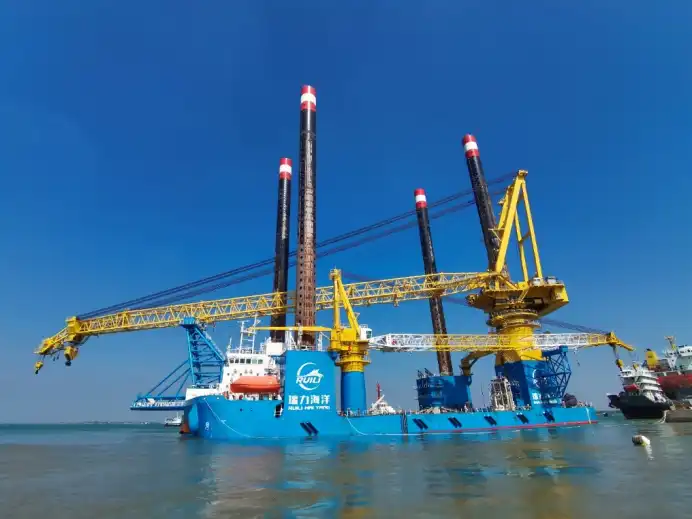
Slew-bearing Crane-wire Rope Luffing Crane systems gain most from centralised lubrication. To keep the multi-layer reeving systems that make these machines unique, the wire rope luffing mechanism needs to be oiled all the way through the sheave units and the rope contact surfaces. Centralised systems send grease straight to wear spots, so technicians don't have to go to the boom tip sheaves or the higher connection points for the luffing cylinder. This feature is very useful on offshore sites where repair access is limited by weather windows, and safety rules don't allow working at heights.
Here are the main benefits that centralised greasing gives crane operators:
- Extended Component Lifespan: Automatically delivering grease keeps the right film thickness on slew bearing raceways and wire rope strands, which lowers wear rates and increases service intervals by large amounts compared to human methods.
- Reduced Labor Requirements: Not having to do hand greasing rounds saves hours of maintenance work and lets techs do more useful tasks like condition tracking and predictive maintenance.
- Enhanced Safety Profile: Since techs don't have to go to high lubrication points, there are no more fall dangers or confined space risks. This makes safety numbers better and lowers insurance costs.
- Operational Continuity: The crane keeps running while automated cleaning keeps going. This keeps production going without having to stop for repair workers to get to the equipment and turn it off.
These benefits directly lead to more tools being available and a lower total cost of ownership. Getting rid of lubrication-related failures stops the costs that come with emergency fixes and lost work time. This gives a return on investment (ROI) that usually supports system investment within operating cycles measured in months instead of years.
Real-World Impact: Case Studies and Data on Cost Reduction
Quantifiable Improvements in Bearing Longevity
Industry data shows that centralised greasing makes slew bearings last a lot longer than copies that are oiled by hand. Offshore platform owners say that bearings can last much longer than the usual time between replacements when centralised systems keep grease films constant. By getting rid of dry runs and contamination, surface cracking and spalling are stopped, which usually means that bearings need to be replaced too soon. Because these bearings last longer, they don't need to be replaced as often, which saves money and avoids the practical problems and crane downtime that come with changing bearings.
Wire Rope Performance Enhancement
For bulk handling cranes and marine lifting equipment, replacing the wire rope is a big part of the upkeep cost. When compared to manually greased peers, centralised lubrication systems that send exact amounts of lube to rope contact areas show measurable gains in rope service life. Consistent lubrication stops internal rust and pressure between strands, which can break the strands too soon. Inspection records for ropes show lower discard rates because of factors linked to corrosion. This lets operations get the most use out of the ropes before they hit the ISO 4309 replacement thresholds.
Maintenance Hour Reduction
Facilities that switch from manual to centralised cleaning report huge drops in the amount of upkeep work that needs to be done. By getting rid of planned greasing runs, sites that use more than one crane unit can save hundreds of hours each year. By moving workers around, maintenance teams can focus on things like condition tracking, vibration analysis, and predictive maintenance that stops big problems before they happen, instead of doing normal maintenance tasks. When centralised systems take care of regular cleaning, it's possible to switch from time-based to condition-based maintenance plans.
Downtime and Lost Production Prevention
Unexpected crane breakdowns during important lifting operations cost more than the cost of fixing the equipment. Offshore drilling campaigns, wind turbine installation campaigns, and bulk port operations all lose a lot of money when their cranes break down. Centralised lubrication keeps operations running smoothly, which is valuable because it stops problems that are caused by lubricant. If you don't have even one big gear failure or wire rope replacement, the investment in a centralised system is often worth it because you won't have to pay for resources to be sent to an emergency repair site.
Best Practices and Key Considerations for Implementing Centralized Lubrication in Cranes
System Selection Criteria for Marine Environments
Several technical factors must be taken into account when choosing the right centralised lube systems for crane use. The pump's capacity must match the number of lube points and the amount of fluid that needs to be pumped across the crane's structure. Different types of parts may need different lubrication times; for example, slew bearings may need different rates than wire rope contact points. In harsh offshore settings where corrosion is common, material compatibility is important. Stainless steel tubes and marine-grade parts don't break down when exposed to saltwater. Teams in charge of buying things should make sure that the systems being considered meet the standards set by classification societies for offshore sites. These societies include DNV, ABS, and BV, depending on where they operate.
Integration with Existing Equipment
The difficulties of adding centralised lubrication to current cranes are different from those of adding systems to brand-new machines. The route of the tubing must work with the current structural parts and not get in the way of operations or maintenance. For distribution block mounting, you need solid connection points that don't hurt the crane's strength or ability to work. To make retrofits work, engineers have to do a lot of work to map out where the lubrication points are, figure out how long the tubes need to be, and plan routes that keep distribution networks from getting damaged when the crane is working. Working with crane makers who know how to integrate centralised lubrication, like TSC's engineering teams, makes sure that the system works with specific crane designs and meets working needs.
Maintenance and Monitoring Protocols
Centralised lubrication systems cut down on the need for hand greasing, but they have their own upkeep schedules that must be followed to keep them working well. Regular checks should make sure the pump works, look for damaged or leaking tubes, and make sure grease flows out of each greasing spot. Many new systems have tracking features that keep an eye on discharge pressures, cycle counts, and system faults. This lets repair teams know about possible problems before they cause damage to parts. Setting up routines for refilling the grease tank, replacing the filters, and checking the system on a regular basis will make sure that centralised lubrication keeps working as it should for the entire life of the crane.
Operator Training and Change Management
When switching from human to automatic lubrication, the maintenance team has to change how they work and what they are responsible for. Training programs should teach employees how to use the system, how to watch it, and how to fix problems. Maintenance plans need to be changed to include new inspection methods for centralised system components and new automatic lubrication times. Change management helps maintenance teams understand how their job is changing from regular greasing to strategic condition tracking and planned maintenance tasks made possible by the dependability of automatic lubrication.
TSC Slew-bearing Crane-wire Rope Luffing Crane Solutions
CM Energy, which does business under the TSC name, has decades of experience as an engineer making cranes and putting together lubricating systems. Our Slew-bearing Crane-wire Rope Luffing Crane designs come with both manual and electric centralised lubrication choices, so they can be used in offshore platforms, FPSO units, and bulk handling facilities, depending on their individual needs.
TSC makes wire rope luffing cranes with slew-bearing pedestals, multi-layer reeving systems, and lattice boom construction that are specifically designed for harsh sea conditions. Each crane is designed with its unique job in mind, taking into account the loads it needs to carry, the climate, and the task cycles of fixed platforms, jack-up rigs, semi-submersibles, drilling vessels, and floating production facilities.
Our centralised lube solutions show that we have a deep knowledge of how wire rope luffing cranes are built. Important lubrication points are reached by distribution networks. These include slew bearing raceways, boom foot pin links, luffing sheave systems, and wire rope contact surfaces. Electric systems have adjustable discharge times that are best for each component. On the other hand, manual systems are easier to use in situations where electrical integration is difficult.
In addition to incorporating lubrication, TSC cranes offer operational benefits through value-engineered structures that offer high rigidity at low weight, dedicated hydraulic circuits that allow safe multi-function operation at the same time, and modular designs that use standard components for shorter delivery cycles. Classification society certificates from DNV, ABS, BV, LR, and CCS prove that the design is correct and that the product was made well, which gives buyers trust when buying for important lifting tasks.
Through its global service network, TSC helps with crane installations at all stages of their working lifecycle, from analysing the customer's needs at the beginning to factory assembly, acceptance testing, shipping, and installation on board. This all-around method makes sure that centralised lubrication systems work well with the general design of the crane and are properly set up so they can start working right away.
Conclusion
Centralised lubrication systems cut down on upkeep costs by a large amount because they are more accurate than human methods. Eliminating uneven greasing, cutting down on labour hours, extending the life of parts, and stopping failures caused by grease all add up to big profits. These benefits are especially useful for complicated machines like Slew-bearing Crane-wire Rope Luffing Cranes that work in tough marine and industrial settings where access to upkeep is limited, and safety is a concern. This makes automated solutions even more valuable. When purchasing cranes, procurement teams should put centralised lubrication at the top of their list of priorities. This is because it is a smart investment that lowers the total cost of ownership while also increasing operating efficiency and safety performance over the lifespan of the equipment.
FAQ
1. What maintenance intervals do centralized lubrication systems require?
Compared to the hand greasing they replace, centralised lube systems don't need as much upkeep. Typical upkeep includes checking the tube and connections visually once a month, filling up the grease reservoir every three months or so based on how much is used, and servicing the pump once a year, which includes checking the seals and replacing the filters. The automated discharge processes keep sending lubricant to the crane's parts without stopping. This keeps them safe during times when greasing them by hand would be dangerous or unworkable.
2. Can we retrofit centralized lubrication onto our existing cranes?
Implementing centralised lube on current crane systems is possible and a cost-effective way to make them better. For this process to work, engineers have to figure out where the lubrication points should be, plan a route for the tubes that won't interfere with operations, and make sure that the installations happen during times that are set aside for maintenance. Many managers add centralised systems during big overhauls or projects to replace bearings. This way, they can take advantage of synergies between upgrade tasks that can be done while the equipment is down for maintenance.
3. What cost savings can we realistically expect?
Cost savings depend on the size of the crane, how often it is used, and how it is maintained now. However, owners usually record labour savings of hundreds of expert hours per crane per year. Extending the life of a component saves money by avoiding unexpected failures that cost a lot to fix and cause problems with operations. To get the full financial picture of centralised lubrication, you should include savings on labour, longer-lasting parts, fewer safety incidents, and lower costs for downtime in your ROI figures.
Partner with a Trusted Slew-bearing Crane-wire Rope Luffing Crane Manufacturer
Offshore companies, shipyards, and bulk handling ports are invited by CM Energy to look into how integrated centralised lubrication can improve crane performance and lower costs over the lifecycle. As a well-known company that makes Slew-bearing Crane-wire Rope Luffing Cranes, TSC offers custom-engineered solutions that meet the needs of a wide range of naval and industrial uses. Our engineering teams offer expert advice on a range of lubrication system options, crane specs, and coupling methods that are best suited to your unique working environment. Please email our experts at info.cn@cm-energy.com to talk about how automatic lubrication can change the way you maintain your cranes, save you money, and make all of your moving equipment safer and more reliable.
References
1. Industrial Lubrication and Tribology Journal, "Automated Lubrication Systems in Heavy Machinery: Cost-Benefit Analysis and Implementation Strategies," Vol. 68, No. 4, 2022.
2. Marine Equipment Technology Association, "Best Practices for Offshore Crane Maintenance and Lubrication Management," Technical Publication Series, 2021.
3. American Petroleum Institute, "API Specification 2C: Offshore Cranes, Seventh Edition," Section 5.8 Lubrication System Requirements, 2012.
4. International Organization for Standardization, "ISO 4309: Cranes - Wire Ropes - Care and Maintenance, Inspection and Discard," Technical Standards Document, 2017.
5. Society of Tribologists and Lubrication Engineers, "Centralized Lubrication System Design for Mobile and Industrial Equipment," STLE Educational Publication, 2020.
6. Offshore Technology Conference Proceedings, "Predictive Maintenance Strategies for Offshore Lifting Equipment: Integrating Automated Lubrication and Condition Monitoring," Paper OTC-29847, Houston, 2019.