How do Jacking Control Systems manage uneven load distribution?
Uneven load distribution is one of the most serious operational risks on any self-elevating offshore platform. When jacking forces across multiple legs fall out of balance—due to irregular seabed conditions, wave-induced motion, or sequencing errors—the results can range from gearbox fatigue to structural failure. A well-engineered offshore platform jacking control system addresses this directly by monitoring leg loads in real time, adjusting drive output across all jacking units simultaneously, and triggering safety interlocks before damage occurs. TSC's jacking control system is built precisely around this need, combining electrical and hydraulic drive options with intelligent PLC logic and load-monitoring capabilities that keep platforms stable throughout every phase of operation.
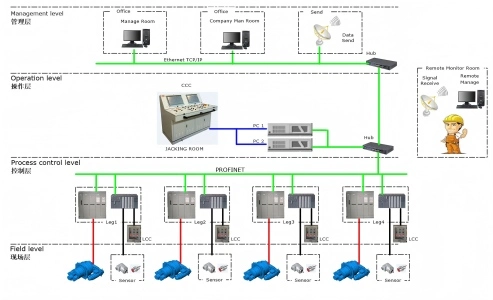
Understanding the Challenge: Uneven Load Distribution in Offshore Platform Jacking Systems
Uneven load spread doesn't just happen by chance. If the right lift control system is in place, experts who are well-trained can predict and stop it from happening.
Why Load Imbalance Occurs
Different spud cans settle at different rates because the bottom is soft or stacked. If one leg sinks faster than the others, the jacking system has to fix it right away or the ship will tilt. If that leg isn't automatically fixed, the load on it goes up.
Environmental Factors That Worsen the Problem
During jacking, wave action, tide currents, and wind loads all put forces on the legs of the platform, both horizontally and vertically. Because these forces are always changing, a load distribution that was even ten seconds ago might be very uneven now. The speed needed can't be reached with manual control.
Operational Errors That Compound Risk
A common cause of load imbalance is running one jacking unit faster than the others without any timing logic. This can't happen because the offshore platform jacking control system makes sure that all drive units have coordinated speed and torque control. This stops human sequencing mistakes before they happen.
Core Components and Mechanisms of Offshore Platform Jacking Control Systems
Knowing what's inside a jacking control system helps procurement engineers figure out if a solution can handle load problems that come up in real life.
The PLC System and Real-Time Feedback
Every jacking control system is built around the PLC. It reads load data from leg sensors all the time, compares actual values to thresholds that have been set, and sends corrective commands to drive units within milliseconds. As normal parts of TSC's systems, a device for measuring leg height and tracking RPD (Rack Phase Differential) are included.
Load Sensors and Hull Inclination Monitoring
Electronic inclinometers and strain gages send data to the control system all the time. The HMI shows the highest and minimum loads on each leg, as well as the total leg load and the average leg load. When a number goes out of the allowed range, the system either sounds a warning or stops jacking on its own, protecting the structure before the damage spreads.
Drive Architecture: Electric and Hydraulic Options
TSC has many different drive configurations to choose from based on the type of platform and how it will be used. Electric drives come in two types: DOL (Direct On Line) and VFD (Variable Frequency Drive). VFD can be combined with drilling, propulsion, or pumping pump systems to share drive infrastructure, or it can be used on its own. There are different kinds of hydraulic drives, such as hydraulic motors and hydraulic cylinders. Because it has so many choices, the offshore platform jacking control system can be perfectly fitted to the model of the platform, which saves money on expensive upgrades.
These parts work together to make a closed-loop system that doesn't need the operator to be paying attention to keep the load balanced. Modern jacking control systems are different from past human methods because they keep an eye on things automatically.
Technical Principles Behind Load Distribution Management
Load management in a jacking control system is based on strict technical theory. The method keeps forces in balance by following three rules.
Load Sharing and Synchronization Logic
A part of the leg is driven by each jacking unit. The control system makes sure that all units share the torque by constantly checking the motor current values and changing the VFD output to make the loads equal. The method changes the power distribution right away, instead of waiting for an alarm to go off if one motor has more load than its peers.
RPD Monitoring and Anti-Skew Control
Rack Phase Differential tracking keeps track of how the positions of each leg's individual notes relate to each other. The structure of the chords starts to twist when one chord moves faster than the others. The offshore platform jacking control system notices this early and slows down the main drive to fix the balance before the structural load gets too high.
Safety Interlocks and Emergency Protocols
TSC's jacking control system has almost a thousand separate warning protections and hundreds of safety interlocks that work together to keep the platform state, braking systems, and drive systems in sync. The system also has fail-safe logic that has been tested by FMEA: if the power goes out, the mechanical brakes that are applied by springs stop the hull right away, without any software order being needed.
The engineering foundation of reliable load distribution management is made up of these technical layers: synchronization, RPD control, and hardwired safety logic.
Comparative Insights: Modern Jacking Control Systems vs. Traditional Approaches
Modern jacking systems are different from older ones not only in terms of features, but also in how well they can distribute load in real offshore conditions.
Limitations of Manual and Semi-Automated Systems
In older methods, it was up to the operator to figure out what was wrong and fix it. An operator who has to keep an eye on three gages during a jacking operation in bad weather just can't keep up with the speed of an automatic PLC. It's already too late to fix something by hand; the structural overload has already happened.
What Automation Changes
A modern offshore platform jacking control system sends corrective commands right away, without waiting for a person to input them. VFD-based drive systems can change the torque continuously from 0 to full speed, so gearboxes don't have to deal with the mechanical shock that DOL starts do. This means that mechanical parts wear out less quickly and there are fewer unexpected repair stops.
TSC's Position in the Market
Over 36 jacking control system installations have been made by CM Energy's TSC brand on self-elevating drilling platforms, wind power installation vessels, and liftboats around the world. With certifications from ABS, CCS, DNV, and BV and more than 20 years of experience in design, production, and testing, TSC's systems meet the standards of classification societies that procurement teams see as must-haves for entry.
Practical Considerations for Procurement and Operation
To choose the best jacking control system, you need to do more than just compare specification sheets. You need to follow an organized review process.
Evaluating Drive Type Compatibility
The first thing that needs to be done is to make sure that the drive architecture matches the platform's mechanical design and power distribution. TSC's full series includes all the main types, including VFD integrated, VFD independent, hydraulic motor, and hydraulic cylinder, so procurement teams can choose based on engineering needs instead of supply availability.
Commissioning and Ongoing Support
The level of commissioning and the time it takes to deliver a platform directly affect how quickly it can go into business. CM Energy offers normal services like on-site installation help, system setup, and jacking trials. For systems that work all over the world, the cost of technical support and shipping spare parts is a real factor in the total lifetime cost. This is something that procurement managers should make sure to talk about when they are negotiating contracts.
Maintenance Best Practices
The offshore platform jacking control system has a built-in operation diagnostic function that keeps an eye on system trends, stores operational data, and runs network diagnostics to help with predictive maintenance. Motor current readings should be compared to sensors on a regular basis, and the system's skip function lets a single broken jacking unit be taken offline without stopping the whole process.
Conclusion
Uneven load spread is not something that systems can handle in a reactive way. Every second of imbalance puts stress on structure and motor parts that builds up over time. If you choose the right offshore platform jacking control system, it will turn that reactive risk into a controlled, automatic process. It should have real-time load tracking, synchronized drive control, RPD protection, and hardwired safety logic. CM Energy has 20 years of experience in marine engineering and multi-society classification certification, which backs up TSC's product line. This gives procurement teams a tried-and-true option they can confidently choose for drilling, wind installation, and liftboat uses.
FAQ
1. How often should load distribution sensors be calibrated?
Industry practice calls for sensor calibration at least once per year, or immediately after any significant shock load event. TSC's system includes built-in logic that cross-checks sensor readings against motor current values; any deviation triggers a sensor check alarm without interrupting the jacking operation.
2. Can an existing platform be retrofitted with a modern jacking control system?
Yes. Retrofitting an older platform with a current-generation offshore platform jacking control system is a standard life-extension project. The process typically involves replacing the drive lineup, updating the control consoles, and recalibrating the leg height measurement devices. CM Energy's engineering team can assess existing infrastructure and develop a project-specific retrofit plan.
3. What are the main cost drivers for a jacking control system project?
Drive type selection, the number of jacking units, classification society certification scope, and commissioning requirements are the primary cost factors. Integrated VFD configurations that share drive infrastructure with other shipboard systems can reduce total system cost compared to independent drive setups.
Contact CM Energy for Your Offshore Platform Jacking Control System Needs
Offshore Platform Jacking Control Systems from CM Energy's TSC brand are made to meet the standards for ABS, CCS, DNV, and BV approval, and they come with a range of drive types, such as DOL, VFD, and hydraulic. We are ready to help you with your next platform project because we are a qualified offshore platform jacking control system supplier with over 36 installations around the world and a full commissioning service package. You can talk to our tech team about your project needs by emailing info.cn@cm-energy.com or going to cm-energy.com.
References
1. American Bureau of Shipping (ABS). Rules for Building and Classing Mobile Offshore Drilling Units. ABS, 2022.
2. Det Norske Veritas (DNV). Offshore Standard DNV-OS-D202: Automation, Safety and Telecommunication Systems. DNV, 2021.
3. Bureau Veritas (BV). Rules for the Classification of Offshore Units. Bureau Veritas, 2023.
4. Society of Petroleum Engineers. Jack-Up Risk and Reliability Assessment: Structural and Geotechnical Considerations. SPE, 2020.
5. International Association of Drilling Contractors (IADC). Jackup Issues Subcommittee Technical Report on Leg Load Monitoring Practices. IADC, 2019.
6. Oil & Gas Journal. Advances in Automated Jacking Control for Self-Elevating Platforms. PennWell Publishing, 2021.
