Can WindWings® Reduce CO2 Emissions for Cargo Ships?
Yes, WindWings® can make a big difference in how much CO2 cargo ships put into the air. This three-element rigid sail device is trademarked and uses wind energy to make thrust. On optimised routes, it can cut fuel use by up to 30%. Every day, each wing can save about 1.6 tonnes of fuel, which equals 5.12 tonnes less CO2 per day for each wing. This wind-assisted propulsion technology has been tried on working ships and approved by DNV. It helps the environment and makes it cheaper for bulk carriers, tankers, and other business ships to travel the world's trade routes.
Introduction
The shipping business is at a turning point. Almost 3% of the world's CO2 emissions come from shipping, and authorities aren't sitting around. The International Maritime Organization has set big goals for decarbonisation, like lowering carbon intensity by 40% by 2030 and achieving net-zero emissions by 2050. These goals are no longer just ideas for people who work in procurement, engineering, and marine management of chemical tankers, Newcastlemax bulk ships, LR2 tankers, and commercial fleets. They are practical realities that need real answers.
We've seen shipowners struggle with tough decisions like how to deal with costly alternative fuels, problems that stop operations, and technologies that say they will do a lot but don't offer much. In this case, wind-assisted movement comes into play. This blog post talks about how this new sail technology meets the urgent need to cut down on pollution while still being able to make money. We'll talk about the technology's features, how it can help the environment, and how to buy it. This will give you the information you need to make smart choices about how to make shipping processes better.
Understanding the Impact of CO2 Emissions in Maritime Shipping
The Regulatory Pressure Is Real
90% of the world's trade is moved by sea, but that size comes with a duty for the earth. The IMO's rules, especially the Carbon Intensity Indicator (CII) grades and the Energy Efficiency Existing Ship Index (EEXI), have a direct effect on how much ships are worth and how much they cost to hire. Ships with low CII scores are fined by the industry, so lowering emissions is not only good for the environment but also for business.
Traditional Solutions Fall Short
At first, many shipowners used methods they were already familiar with. LNG fuel changes offered cleaner burning, but they needed a lot of money and caused worries about methane slip. Sulphur fumes were taken care of by exhaust gas scrubbers, but CO2 was not. Slow-moving used less fuel, but it took longer to get places, which messed up supply lines and made the ship less productive.
Not finding an answer is the hard part; it's getting the right one. Ferry companies need a quick return on investment (ROI) in less than five years. New builders want plans that will work in the future and meet the environmental needs of charterers. The people who run commercial ships like tankers and bulk carriers need to make sure they follow CII rules without any problems. Because of these different needs, wind-assisted propulsion has gotten a lot of attention as a successful option that can be scaled up.
What Is WindWings® and How Does It Work?
The Technology Behind the Innovation
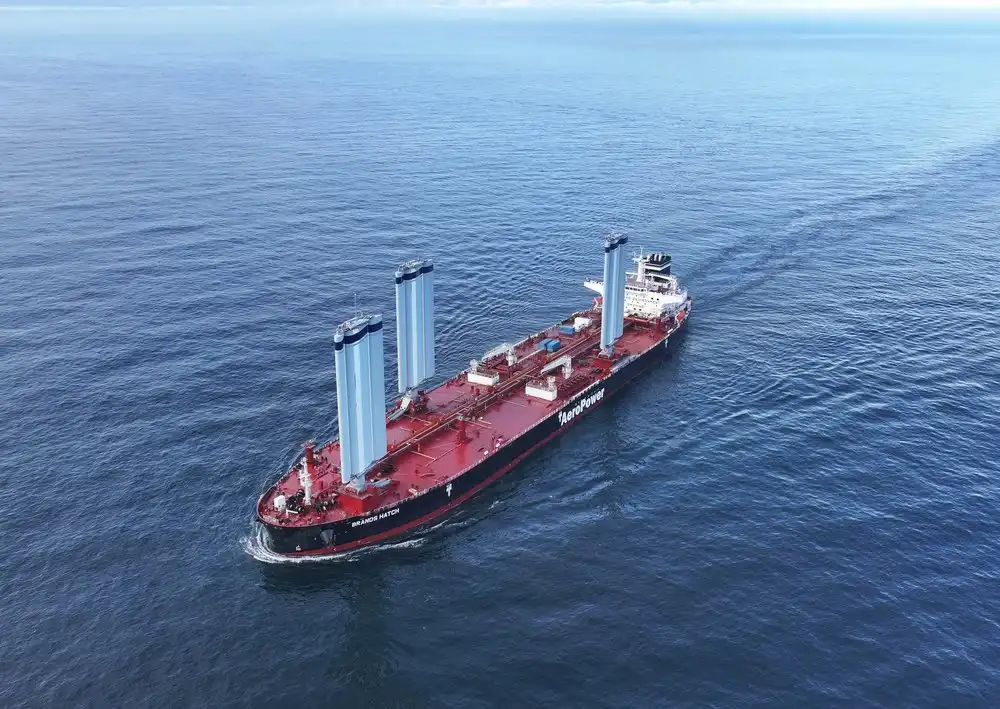
WindWings® is an advanced step forward in sail technology for ships. These rigid wing sails were made in collaboration with BAR Technologies, the engineering team behind the America's Cup. They bring advanced aerodynamics to business ships. In contrast to regular canvas sails, the three-element stiff wing design produces more than 2.5 times as much lift as regular single-wing designs.
These wings are made of ship-grade steel and industrial E-glass alloys. Depending on the type, they can be up to 37.5 meters tall. The building makes sure that it will last in harsh saltwater settings and keep the structural stability needed for a 25-year useful life. The Wolfson Unit and Lloyd's Register both confirmed the system's performance, and DNV approval shows that it meets strict marine safety standards.
Automated Intelligence in Action
The fact that this method is automated makes it very useful. Software constantly checks the speed, direction, and state of the wind and sea, and then changes the wing's angle of attack and camber shape to make the most power. The control system works a lot like managing a deck crane, which crews already know how to do, so they don't need much extra training.
The wings report thrust performance in real time, so masters and teams on land can see how much fuel is being saved and how many emissions are being cut, journey by journey. Weather routing software made just for wind-assisted ships helps navigators plan routes that make the most of the wind's benefits. This turns the weather from a problem into an advantage.
Installation and Maintenance Simplicity
Installation takes place above the deck, between the cargo holds of bulk ships, so that the full hatch cover can still work. The design makes room for tools used to move goods, so loading can continue without any problems. When approaching places with height limits or in bad weather, the wings fold down into a compact position that leaves just over half a metre of deck space.
The needs for maintenance are the same as those for current deck equipment. Hydraulics made for marine use and long-lasting control parts are built to last. Service kits and lifespan support make sure that ships with this technology keep working at their best for as long as they are in use. The system can even be moved from one ship to another, protecting your investment for longer than the service life of a single ship.
Evaluating WindWings® Against Alternative Emission Reduction Solutions
Superior Performance Metrics
The numbers tell a powerful story when buying managers compare technologies that cut down on emissions. Traditional soft rig sails need to be adjusted by hand all the time and don't always work right. Flettner rotors need constant electrical power to keep turning. This technology for rigid wings makes a lot of movement without using electricity to move; the electricity only powers the gears that place and fold the wings.
How much fuel is saved depends on the route, but ships that travel on good trade paths say they save around 30%. Even the most optimistic predictions show that a wide range of operating patterns will experience 15-20% reductions. Every day, each wing saves about 1.6 tonnes of fuel, which directly equals 5.12 tonnes less CO2 per wing every day. On the road between Brazil and China for iron ore, a ship with multiple wings can cut emissions by thousands of tonnes per year.
Financial Returns That Make Sense
ROI estimates are important for everyone who makes decisions. The prices of installation are high but consistent. Payback times are usually between three and five years, but they can be longer or shorter based on fuel prices, the carbon tax, and how well the route is optimised. These payback times are getting shorter as the costs of the European Union Emissions Trading Scheme go up and the price of bunker fuel changes.
Savings on operational costs go beyond just fuel. Better CII scores keep rental rates and vessel values the same. Tougher environmental rules must be followed to avoid fines and keep port access open. The technology has a 25-year design life without replacing any major parts, WindWings®. This means that it will be valuable for a long time after the initial investment is made.
Addressing Implementation Considerations
When judging any tool, transparency is important. To install something, the structure needs to be strengthened, and the electrical and hydraulic systems need to be connected. To make sure the wings fit the ship's tactical profile, compatibility research is needed. The folding device needs to be able to fit on the deck. These are not problems; they are planning issues that factories and engineering businesses with a lot of experience deal with all the time.
Installation times are measured in weeks, while fuel change projects take months to work on in a dry dock. Alternative fuel infrastructure isn't present in many places yet, but wind works everywhere. The fact that the technology has been used on working ships takes away a lot of the doubt that comes with new marine technologies.
Real-World Applications and Case Studies of WindWings® on Cargo Ships
Proven Performance on Operating Vessels
Bulk ships with this wind-assisted propulsion system have made trips to more than 20 major ports around the world without any problems. These aren't just guesses; they're based on real data from ships that have carried iron ore, coal, and grain across rough ocean paths. DNV confirmation shows that the fuel-saving claims made by makers are in line with what the vehicles actually do in the real world.
When it comes to applications, Newcastlemax bulk containers are the best choice. Large displacement boats use a lot of fuel, so lowering their emissions is important for the environment and good for business. When travelling on routes with steady trade winds, like crossing the Atlantic or Pacific Oceans, the wings reduce the load on the main engine by a large amount, which results in daily fuel savings that can be seen.
Which Vessels Benefit Most?
LR2 tanks and chemical tankers can also get a lot out of this technology. The system's hydraulic safety features and parts that don't spark make sure it can work safely in dangerous cargo areas, meeting the specific safety needs of transporting petrochemicals. When it comes to very large crude carriers, big wings help them generate a lot of lift, which has a big effect on ships, where every percentage point of fuel savings means big money saved.
Different benefits are available to people who run ferries and shore vessels. Shorter routes that use less fuel and emissions-free port manoeuvring are in line with rules in coastal areas that are sensitive to the environment. The quick return on investment (ROI)—often less than five years for boats that are used a lot—meets the financial needs of these owners.
Ro-Ro ships, container ships, and general cargo carriers can all be useful in certain situations. The modular design and scalable setup choices of the technology make it useful for a wide range of vessel types. Shipyards and design companies now include wind-assisted propulsion in the specifications for new ships. This gives charterers green options that are ready to go and protect vessel designs against changing environmental laws.
How to Procure WindWings® for Your Fleet
Working with Experienced Partners
CM Energy, a tech-focused company that is traded on the Hong Kong Stock Exchange, has become a star in environmentally friendly marine solutions. CM Energy has experience with wind-assisted power integration because it covers more than 25% of the world's drilling tools and more than 350 deck cranes in use. As a WindWings® provider, CM Energy offers full support, from the original compatibility study to installation, commissioning, and management over the long term.
Procurement begins with a vessel. To find the best wing configurations, engineering teams look at the structural needs, the amount of deck room available, and the operating profiles. The 20-meter, 24-meter, and 37.5-meter types give you options to fit the size of your vessel and your performance goals. Before systems are delivered and set up on board, they are tested in the factory to make sure they meet the requirements.
Global Support Infrastructure
Support after the sale is just as important as the quality of the work itself. CM Energy's service network helps with upkeep, monitors IoT, and improves performance for as long as the system is in use. Raw materials from sources that are ISO-certified and classification society approval from DNV, Lloyd's Register, BV, and CCS make sure that quality standards are met, which meet the needs of insurers and charterers.
Having a warranty saves your investment. Long-term care deals make repairs less uncertain. With the help of CM Energy's building skills, the TSC brand offers customised integration choices for both new builds and retrofits. With this full lifecycle support approach, you don't buy equipment; instead, you work with a technology company that cares about the long-term health of your fleet.
Making the Business Case
Large buyers and OEMs can work together with the help of special deals and relationship programs. Shipyards that add wind-assisted power to new designs get help with technical teamwork and getting approval from the class. Fleet owners planning retrofits for more than one vessel can get big discounts and set up times for installations that work with their plans.
The business case is more than just saving money on fuel right away. Shipping in Europe now has to pay carbon taxes, and the costs go up every year. CII compliance has a direct effect on how many jobs a vessel can have. Environmental qualifications affect charter rates, especially for ship owners who are committed to being environmentally friendly. Because of these things, technology that lowers emissions goes from being a cost center to a competitive edge.
Conclusion
Wind-assisted movement has gone from being an idea to a working system, and WindWings® are at the heart of that transition. There is strong proof that stiff wing sails reduce CO2 emissions by up to 5.12 tonnes per wing every day. They also make good financial sense because they save money on fuel and make sure that rules are followed. Independent approval and real-world performance data show that ships with this technology are reliable on a wide range of routes and working situations.
The maritime business needs real-world answers that work right now, not just ideas for technologies that might come up tomorrow. This tried-and-true method gives business shipowners, ferry owners, and shipyards a way to reach their sustainable goals without lowering the quality of their operations or their bottom line.
FAQ
1. How much crew training does wind-assisted propulsion require?
The automatic control method cuts down on the time needed for training. The operation is like managing a deck crane, and workers can use skills they already have. Specialised training includes how to do routine repairs, what to do in an emergency, and how to check a hydraulic system. This training is usually over in a few days, not weeks.
2. Can existing vessels retrofit this technology?
The chance to retrofit is a key market opportunity. For installation, the deck needs to be strengthened structurally, and electrical and hydraulic systems need to be connected. Compatibility research tells us which vessels are best, but the technology can be used on both new and old ships. Shipyards that have done retrofits on naval equipment before can do setups quickly and well.
3. What happens during extreme weather conditions?
Advanced camera systems constantly check the wind conditions. When the system detects speeds that are too high, the wings are instantly feathered to reduce drag or folded fully flat on the deck. These safety systems keep the ship stable and protect its structure during storms without the crew having to do anything.
Partner with CM Energy for Sustainable Shipping Solutions
CM Energy wants marine leaders to learn more about how wind-assisted propulsion can improve the environmental and economic performance of your ship. We offer custom integration for bulk ships, tankers, ferries, and newbuild projects because we are a well-known WindWings® maker with experience in marine energy solutions around the world. Our TSC name provides the high-quality engineering and all-around help that complicated maritime projects need.
Email our team at info.cn@cm-energy.com to talk about your particular needs. We'll look at the layout of your vessels, how they'll be used, and your green goals to come up with the best options. Making smart choices about switching to greener shipping starts with knowledge. Let us give you the knowledge you need to make your choices with confidence.
References
1. International Maritime Organization. (2023). "2023 IMO Strategy on Reduction of GHG Emissions from Ships." Marine Environment Protection Committee, London.
2. Smith, T.W.P., et al. (2021). "Third IMO GHG Study 2014: Executive Summary and Final Report." International Maritime Organization, London.
3. Nelissen, D., et al. (2022). "Study on the Application of Wind Assist Technologies on Large Commercial Vessels." CE Delft, Netherlands.
4. Lloyd's Register and UMAS. (2022). "Techno-Economic Assessment of Zero-Carbon Fuels and Wind-Assist Propulsion." Maritime Decarbonization Hub, London.
5. Traut, M., et al. (2023). "Wind Assist Propulsion Systems: Validation of Operational Performance on Commercial Vessels." Journal of Marine Engineering & Technology, Volume 22, Issue 3.
6. DNV. (2023). "Maritime Forecast to 2050: Energy Transition Outlook." Det Norske Veritas Group, Norway.