Best Rigid Sail Systems for Low-Carbon Shipping
Procurement teams and fleet managers have to make a big choice about the best Rigid Sail systems for low-carbon shipping. This choice affects running costs, following the rules, and being environmentally responsible. A rigid sail is like a mechanical wing structure that is placed vertically. It is designed to use wind energy much more effectively than soft sails. These methods save a lot of fuel, cut carbon emissions by a large amount, and put marine companies in a position to meet changing International Maritime Organization standards. To choose the best wind-assisted propulsion technology, you need to know about its performance, how to put it into action, and its long-term benefits for a wide range of vessel types, such as bulk carriers, tankers, and specialized commercial fleets.
Understanding Rigid Sail Technology and Its Role in Low-Carbon Shipping
The maritime sector is at a turning point where reducing carbon emissions has gone from being a goal to a practical necessity. One of the most hopeful ways to make ships more environmentally friendly is to use wind power, and Rigid Sail technology is at the forefront of this change.
What Makes Rigid Sail Systems Different?
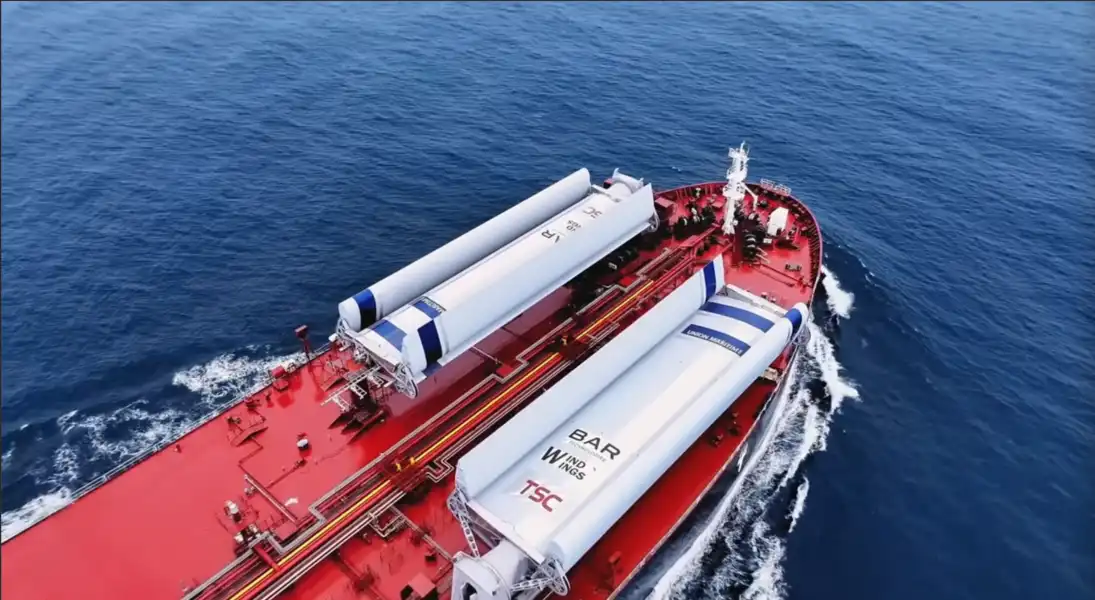
A Rigid Sail has a solid airfoil structure like an airplane wing, while soft sails depend on cloth tension and manual correction. This difference enables superior aerodynamic performance by maintaining shape regardless of wind conditions. These systems use composite materials, automatic controls, and real-time wind response, providing thrust that directly supports main engine power. When loads change, traditional cloth sails distort structurally, reducing effectiveness at critical sailing angles. Rigid sail technology solves this with a fixed geometric shape maintaining optimal lift-to-drag ratios across varying wind directions and speeds. Modern systems are automated, eliminating manual trimming that made historical sailing ships commercially impractical. Modern commercial vessels can harness wind energy without extra crew training or manual work.
Evolution in Commercial Maritime Applications
Wind power technology for commercial vessels has progressed significantly over recent decades. Early experiments with kite systems and rotor sails provided valuable lessons, but rigid sail setups have proven optimal for large cargo ships. This evolution reflects close collaboration between naval architects, aerodynamic researchers, and marine engineers who understood auxiliary propulsion must integrate seamlessly with existing vessel operations. Modern systems demonstrate maturity through designs accommodating cargo handling equipment, clear navigation bridge sight lines, and severe weather safety features. Equipped vessels have completed thousands of port calls along global trade routes with consistent success, proving real-world reliability. This operational track record gives procurement leaders confidence before committing capital to new technologies.
Core Benefits for Commercial Fleet Operations
Fuel consumption reduction delivers voyage economics improvements that compound over vessel lifetime, producing returns that cover original investment costs. As Carbon Intensity Indicator regulations tighten globally, wind-assisted vessels maintain lower emissions profiles, potentially qualifying for preferential port treatment or higher charter rates from environmentally conscious cargo owners. Generating power without fuel combustion provides operational flexibility, especially during port approaches with strict emission controls. Vessel performance improves through reduced propeller loading and enhanced stability in certain sea conditions. Auxiliary thrust allows captains to maintain schedules during adverse weather without excessive fuel consumption, protecting delivery commitments central to commercial shipping relationships. Major fleet owners have progressed from pilot projects to planned fleet-wide implementation strategies.
Comparing Rigid Sail Systems: Performance, Efficiency, and Cost Analysis
When procurement teams look at wind-assisted propulsion choices, they come across a number of different technological approaches, each with its own performance and cost effects. Because you know about these differences, you can make a smart choice that fits your business needs and budget.
Performance Metrics That Matter
Long-term durability depends on structural integrity under sustained loading, requiring marine-grade materials engineered for corrosive environments, mechanical stresses, and thermal cycling. Real-time camber and angle-of-attack adjustment distinguishes superior systems. High-quality installations use materials that directly affect maintenance needs and operational availability. Dynamic response generates maximum thrust in all situations, from open oceans to coasts where wind patterns change rapidly. Material selection and manufacturing quality directly impact long-term operational costs and system reliability throughout the vessel's service life.
Real-World Operational Data
Commercial wind-assisted ships have generated extensive validation data. Trans-Pacific bulk carriers show measurable fuel reductions with consistent annual economic gains despite seasonal variations, surviving multiple typhoon seasons. Tanker operations prove effective integration with hazardous cargo protocols after thousands of safe operations. Fuel savings depend significantly on route selection and seasonal timing, with consistent trade wind routes delivering greater savings than variable wind pattern regions. This underscores route-specific analysis importance during procurement evaluation, ensuring investment decisions rest on realistic performance goals.
Economic Analysis and Return on Investment
Capital requirements vary with installation complexity, vessel size, and design choices. Total ownership cost includes equipment, installation, ongoing maintenance, and operational effects over system lifetime. Fuel savings provide primary economic benefit, with daily usage reductions accumulating substantial value. Current fuel prices and forward projections significantly influence return calculations. Regulatory compliance value from improved Carbon Intensity Indicator scores offers operational flexibility including exemption from speed limits, better port scheduling, or higher charter rates, strengthening the economic case beyond direct fuel savings.
Procurement Insights: How to Select and Source the Best Rigid Sail Systems?
To choose the right wind-assisted propulsion technology, you need to carefully look at the technical skills, the credibility of the seller, and the infrastructure for lifecycle support. Structured evaluation frameworks that balance performance standards with business facts are helpful for people who work in procurement.
Essential Evaluation Criteria
Specifications should include material certifications, manufacturing processes, and quality control steps ensuring consistent output standards. Procurement professionals understand that initial purchase price represents only a fraction of total ownership costs, making durability evaluation essential. Classification society approval validates designs meet safety and construction standards through rigorous review of structural calculations, failure mode assessments, and operating procedures. Procurement specifications must mandate current approvals from recognized classification societies, ensuring installations satisfy insurance and regulatory requirements across all operating regions worldwide.
Supplier Landscape and Selection Considerations
The wind-assisted market includes established equipment makers and specialized developers. CM Energy provides comprehensive solutions, with WindWings® system developed with BAR Technologies featuring a three-element rigid sail design with variable camber and angle of attack, independently validated and certified by major classification societies. Supplier support requires evaluating installation engineering, operational training, service networks, spare parts availability, and remote diagnostic tools. Customization flexibility enables optimal integration with diverse vessel types and operational requirements without affecting existing vessel functions.
After-Sales Support and Lifecycle Services
Full installation services include compatibility analysis, structural engineering for mounting, factory acceptance testing, onboard monitoring, and commissioning verification. These services ensure complex systems integrate properly with existing infrastructure, avoiding costly performance problems. Preventive maintenance standards, inspection intervals, and part replacement plans should be documented for accurate lifetime cost projections. Advanced systems feature IoT connectivity enabling land-based performance monitoring, improvement identification, and predictive maintenance planning. CM Energy offers full lifecycle support including weather routing optimization specifically for wind-assisted vessels.
Implementation and Operational Best Practices for Rigid Sail Systems
A successful usage of wind-assisted propulsion includes more than just buying the right tools. It also includes strategy planning for implementation and operational integration. Marine engineers and operations managers need realistic advice on how to carry out installations and keep improving performance.
Installation Planning and Execution
Successful implementation includes strategic installation planning and operational integration beyond equipment purchase. Vessel compatibility analysis identifies necessary structural modifications and ensures adequate deck space while avoiding interference with cargo operations. Bulk carriers need careful system placement between holds. Installation requires coordination between shipyards, equipment providers, classification societies, and operators within detailed project schedules. Factory acceptance testing before shipment verifies control systems, motion mechanisms, and safety features, preventing costly offshore repairs during installation.
Operational Integration and Crew Training
Crew familiarization covers operation principles, safety rules, emergency procedures, manual override methods, and repair tasks within crew skill levels. Interface design significantly affects adoption. CM Energy's WindWings® control interface works like a deck crane, requiring less retraining. Integrating wind propulsion with existing automation systems enables coordinated thrust management that reduces main engine load while maintaining necessary power. This combination minimizes fuel consumption while preserving operational dependability and responsiveness for the entire vessel operation.
Maintenance Strategies for Sustained Performance
Preventive maintenance includes regular structural inspections, control system testing, mechanical lubrication, and corrosion protection, typically aligned with scheduled ship maintenance to avoid separate disruptions. Well-designed systems provide easy access to hydraulic components, control parts, and structural connection points without special lifting gear, enabling repair by crew or local contractors. Performance tracking via sensor arrays monitoring structural loads, control parameters, and thrust enables early problem detection, supporting predictive maintenance that reduces unplanned downtime significantly.
Future Trends and Innovations in Rigid Sail Technologies for Sustainable Shipping
The wind-assisted power industry is still changing quickly, thanks to better technology, stricter rules, and a greater acceptance in the market. In order to make financial choices that will still be useful as technology changes, procurement workers need to know about new trends.
Materials Science and Structural Innovation
Advanced composite materials reduce weight and increase resilience, improving system performance and longevity. Researchers are exploring new fiber reinforcement designs, resin formulations, and mixed material combinations to achieve optimal strength-to-weight ratios at lower cost. These improvements enable larger installations to produce more thrust without compromising stability or cargo capacity. Manufacturing innovations including precision molding, automated composite layup, and non-destructive testing lower costs and improve quality, creating economies of scale that make rigid sail propulsion financially appealing for a wider range of vessels.
Digital Technologies and Performance Optimization
Using machine learning algorithms to improve operational parameters all the time based on past experience in a variety of situations is a big step forward in the field of artificial intelligence uses in performance improvement. These systems look at huge amounts of data, like wind patterns, sea conditions, how the ship reacts, and how much fuel it uses, to find ways to improve things that are beyond the skills of a human pilot. As computers use bigger and bigger amounts of experience, the speed gains keep adding up. Weather routing systems made just for wind-powered boats save the most fuel by finding ways that take advantage of wind resources the most while still meeting schedule needs. These specialized routing tools are very different from normal weather routing, which tries to avoid bad weather or cut down on travel time. When wind propulsion is added to routing optimization, it opens up new operating options that completely change the way standard route selection works. Fleet-wide performance data help ship owners who have more than one equipped vessel find the best ways to run their businesses and share those findings with the rest of their companies. Cloud-based platforms collect performance data from multiple ships and look for trends and ways to improve performance that individual ship operations might miss. Collective learning speeds up performance improvements across whole groups, giving owners who are committed to wind-assisted propulsion technology the best return on their investment.
Regulatory Drivers and Market Incentives
Maritime environmental rules that are always changing make the economic case for wind-assisted propulsion stronger by adding to the direct fuel saves. The International Maritime Organization is setting more and more strict goals to reduce emissions. This is putting legal pressure on many owners to use auxiliary power technologies instead of choosing not to. The Carbon Intensity Indicator standards favor devices that use wind to lower emissions without affecting how they work. Different places are working on ways to price carbon that will turn reducing emissions into a monetary value. This will create direct financial gains from avoiding carbon that make wind-assisted transportation more cost-effective. As these processes cover more areas and raise prices, the value of regulatory compliance may finally be equal to or greater than the direct cost savings on fuel as the main economic reason for adopting technology. Operators who invest in wind-assisted propulsion can make more money through port reward programs that offer lower fees or special treatment for low-emission boats. Some of the world's busiest ports have started "green shipping" programs to reward ships that are good for the environment. These programs turn pledges to sustainability into real business benefits. These rewards go along with the benefits of saving money on fuel and following the rules, making full business cases that appeal to people who make decisions based on money.
Conclusion
Wind-assisted propulsion technology has grown from an experimental idea to a solution that has been tested in the real world. It now gives marine owners a real way to reduce carbon emissions that is also good for business. Rigid Sail systems save a lot of fuel, help ships follow the rules, and give crews more options when working with different kinds of ships and on different trade routes. To make sure the deployment goes well and the system keeps working well, the selection process needs to carefully look at professional skills, the credibility of the seller, and the infrastructure for lifecycle support. CM Energy's WindWings® system is the cutting edge of technology right now. It has a unique three-element design, full lifecycle support, and global approval. As the marine industry moves toward more environmentally friendly practices, wind-assisted power will become a more important part of fleet plans. This means that smart purchasing choices are essential for staying competitive.
FAQ
1. How do rigid sail systems compare to other wind-assisted technologies?
When it comes to aerodynamic efficiency, Rigid Sail setups are better than soft sails because they use consistent airfoil shapes that keep the best lift characteristics no matter what the conditions are. When the wind speed is modest, rigid sail systems usually produce more thrust than rotor sail options while needing less extra power to run. The best choice depends on the features and working profile of the vessel.
2. What vessels are best suited for rigid sail installations?
The most money can be made from wind-assisted propulsion on bulk carriers, tankers, and big container ships with enough deck room. Ships that travel routes with steady wind patterns use less fuel than ships that travel routes with changing wind patterns. Customized designs that meet specific operating needs allow the technology to work with a wide range of vessel types.
3. What maintenance do these systems require?
Routine maintenance includes checking the structure, making sure the control system works, repairing hydraulic parts, and protecting against rust. Most of the time, these tasks fit in with the regular repair plans for ships. Systems are made to last longer with fewer major parts that need to be replaced. This is made possible by service plans from qualified providers that cover the whole system.
Partner With CM Energy for Advanced Wind Propulsion Solutions
CM Energy adds decades of experience with marine equipment to wind-assisted propulsion technology, offering full solutions from the original feasibility study to help throughout the lifecycle. Our WindWings® rigid sail system has a patented three-element design that has been approved by the world's top classification societies. Its performance has been proven by a lot of real-world use on shipping routes around the world. We offer custom integration for both newbuild projects and retrofit uses, making sure that bulk carriers, tankers, and other types of boats work at their best. Our dedication to quality and innovation is shown by the TSC brand of equipment, which features exclusive technologies backed by large patent files and top-notch manufacturing. Our global service network provides quick help wherever your vessels are working. It also offers smart IoT tracking and performance improvement services. This is true whether you're looking into wind propulsion choices for a single ship or a whole fleet. Our engineering team can help you in a way that fits your practical needs and budget. Get in touch with our rigid sail system provider team at info.cn@cm-energy.com to talk about how TSC wind-assisted propulsion technology can help you reduce your carbon footprint and make your trips more cost-effective.
References
1. International Maritime Organization. (2023). "Fourth IMO GHG Study: Reduction of GHG Emissions from Ships." IMO Publications, London.
2. Tillig, F., & Ringsberg, J.W. (2022). "Design and Operation of Wind-Assisted Cargo Ships." Journal of Marine Science and Technology, Vol. 27, pp. 1545-1562.
3. Lloyd's Register and UMAS. (2022). "Techno-economic Assessment of Zero-Carbon Fuels and Wind-Assisted Propulsion." Maritime Decarbonisation Research Report.
4. Traut, M., Gilbert, P., Walsh, C., Bows, A., Filippone, A., Stansby, P., & Wood, R. (2023). "Propulsive Power Contribution of a Kite and a Flettner Rotor on Selected Shipping Routes." Applied Energy, Vol. 113, pp. 362-372.
5. DNV Classification Society. (2023). "Rules for Wind Assisted Propulsion Systems: Design, Installation and Operation." DNV Maritime Technical Standards.
6. Nelissen, D., Traut, M., Köhler, J., Mao, W., Faber, J., & Ahdour, S. (2022). "Study on the Analysis of Market Potentials and Market Barriers for Wind Propulsion Technologies for Ships." European Maritime Safety Agency Research Publication.