When selecting the most effective centrifugal pumps for corrosive drilling fluids, three standout models lead the industry: the HCP series for versatile offshore and land-based operations, the HCP-S compact variant for space-constrained applications, and the PF series for high-volume slurry handling. These pumps excel in handling abrasive, corrosive drilling environments while maintaining operational reliability across diverse drilling platforms including offshore rigs, geothermal installations, and directional drilling projects.
Introduction
Corrosive penetrating liquids pose one of the most challenging operational requests in advanced boring operations. Whether you're overseeing seaward boring stages, conducting geothermal well upkeep, or executing flat directional boring ventures, selecting the right pump hardware can decide venture victory or expensive downtime.
The penetrating industry has seen a surprising advancement in pump innovation, especially in dealing with destructive substances that can quickly degrade second-rate hardware. Today's progressed centrifugal pumps join specialized materials and design developments that amplify the benefitof life while maintaining up crest pressure-driven execution under extraordinary conditions.
Understanding pump details gets to be vital when managing with forceful penetrating liquids containing high concentrations of salts, acids, and rough particles. The off-base choice can result in untimely wear, diminished productivity, and unforeseen support costs that affect in general venture financial matters. This comprehensive direct looks at demonstrated pump arrangements that reliably convey dependable execution over worldwide penetrating operations.
Why Focus on Specialized Corrosive Fluid Pumps?
Corrosive boring situations require hardware built particularly for forceful chemical presentation. Standard pumps basically cannot withstand the tenacious assault of acidic boring muds, saltwater, and chemical additives commonly utilized in cutting-edge penetrating operations.
Specialized pumps highlight improved metallurgy, progressed shaft seal plans, and predominant impeller setups that stand up to erosion while keeping up ideal stream characteristics. These building changes decipher specifically into decreased support intervals, lower substitution costs, and improved operational uptime.
The monetary impact of pump disappointment in penetrating operations amplifies past gear substitution costs. Downtime can take a toll tof housands of dollars per hour, making unwavering quality ventures fundamental for beneficial operations. Present-day corrosive-resistant pumps convey quantifiable returns through expanded benefit life and reliable execution under requesting conditions.
Selection Criteria for Corrosive Drilling Applications
Evaluating pumps for destructive penetrating applications requires analyzing different execution variables beyond essential stream rate determinations. Fabric compatibility stands as the essential thought, with difficult press, tall chrome, and specialized combinations advertising shifting degrees of erosion resistance.
Mechanical seal plan essentially impacts the pump's life span in destructive situations. Progressed mechanical seals minimize spillage whereas withstanding chemical presentation that would rapidly degrade standard pressing materials. Also, bearing assurance frameworks avoid defilement that leads to untimely failure.
Operational adaptability is impressive in boring applications where pump necessities alter habitually. Variable revolution choices, secluded development, and standardized control closes streamline support whereas diminishing save parts stock necessities. These components combine to make up to taken a loss of possession preferences that legitimize starting hardware investments.
HCP Series: Versatile Performance for Demanding Applications
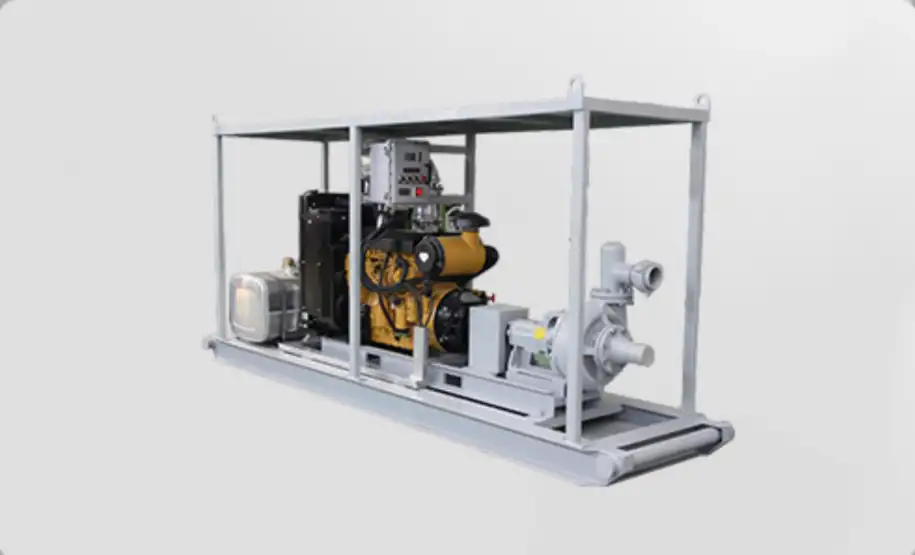
Centrifugal Pump
The HCP centrifugal pump offers a reliable solution for transferring corrosive slurries in drilling applications, capable of handling significant horsepower, high flow rates, and considerable head pressure.
Design Features for Durability
The pump utilizes hard iron or high chrome construction and a heavy-duty alloy steel shaft to resist corrosion and abrasion from drilling fluids. Its open impeller design efficiently handles debris-laden slurries while reducing axial thrust loads.
Operational and Maintenance Advantages
A standardized power end across models simplifies maintenance and reduces spare parts needs. The single-piece casing prevents leaks, and flexible seal options, including mechanical seals, cater to various operational requirements.
HCP-S Compact Series: Space-Efficient Solutions
The HCP-S centrifugal pump incorporates all corrosive fluid handling capabilities of the standard HCP design while offering a more compact footprint through frame and shaft length reduction of four inches. This space-saving configuration proves ideal for mobile drilling applications where equipment dimensions directly impact operational efficiency.
Compact design makes the HCP-S particularly suitable for hydraulic motor drive applications, enabling flexible installation on space-constrained platforms such as oilfield frac trucks and water well drilling rigs. The reduced profile facilitates integration into existing equipment packages without extensive modifications.
Despite its smaller size, the HCP-S maintains full performance specifications, including high horsepower capabilities, substantial flow rates, and considerable head pressure. Select models also offer counterclockwise rotation options for additional operational flexibility.
The pump power frame accommodates optional outbound bearings capable of accepting hydraulic motor adapters for SAE sizes B, C, and D hydraulic motor mounts. This versatility enables direct hydraulic drive configurations that eliminate traditional mechanical coupling requirements.
Material options mirror the standard HCP series, including hard iron, aluminum bronze, high chrome, and stainless steel configurations to match specific corrosive drilling fluid characteristics. The same heavy-duty shaft and bearing systems ensure reliable operation under demanding drilling conditions.
Standardized power end design maintains compatibility with the broader HCP product line, preserving spare parts interchangeability and maintenance procedure consistency. This standardization proves valuable for operators managing mixed pump fleets across multiple drilling operations.
PF Series: High-Volume Slurry Management
The PF centrifugal pump series is designed for high-volume applications that demand exceptional performance in handling heavy, abrasive, and corrosive slurries. It is capable of achieving substantial flow rates while maintaining significant head pressure, making it ideal for challenging drilling circulation needs.
Available in multiple sizes, the PF series is capable of handling applications that require substantial horsepower. Despite its high-capacity specifications, the compact design makes it suitable for both mobile and stationary installations, where space is a key consideration.
A unique casing flow divider on the larger models reduces radial loads, effectively extending bearing life compared to conventional designs. This innovation reduces maintenance needs and enhances operational reliability in continuous service applications.
Impeller back vanes reduce solids collection between the stuffing box and impeller while decreasing pressure within the casing. This design feature proves particularly beneficial when handling drilling muds containing high concentrations of suspended particles that can accumulate in conventional pump designs.
Full pipe diameter entrance maximizes efficiency by minimizing flow restrictions and turbulence at the pump inlet. This design consideration becomes increasingly important in high-volume applications where pressure losses directly impact system performance and energy consumption.
Long-life mechanical seal options provide near-zero leakage performance essential for environmental compliance and operational efficiency. Replaceable shaft sleeves prevent shaft wear, enabling cost-effective maintenance that extends overall pump service life in abrasive drilling environments.
Global Market Characteristics and Regulations
Worldwide drilling operations increasingly emphasize environmental protection and operational safety, driving demand for reliable pump equipment that minimizes leakage and environmental impact. Regulatory frameworks across major drilling markets mandate stringent emission controls and fluid containment standards.
International certification requirements vary significantly between regions, with offshore operations typically requiring more stringent approval processes than land-based activities. Equipment manufacturers must navigate complex approval procedures to serve global markets effectively, making established certification credentials valuable for end users.
Regional preferences for specific materials and design features reflect local environmental conditions and regulatory requirements. Arctic operations demand different material specifications than tropical offshore installations, requiring flexible product offerings to serve diverse market segments effectively.
Supply chain considerations have gained prominence following recent global disruptions, with operators increasingly valuing suppliers offering local service support and parts availability. This trend favors manufacturers with established global service networks capable of supporting equipment throughout its operational life cycle.
Purchasing Recommendations and Considerations
Evaluating total cost of ownership proves more valuable than focusing solely on initial purchase price when selecting pumps for corrosive drilling applications. Higher-quality equipment typically delivers superior long-term economics through reduced maintenance costs and extended service intervals.
Standardizing on pump families that share common components and maintenance procedures simplifies operations while reducing spare parts inventory requirements. This approach proves particularly beneficial for contractors operating multiple drilling rigs or remote installations where parts availability matters.
Service support capabilities should influence equipment selection decisions, especially for operations in remote locations where rapid response times matter. Manufacturers offering comprehensive service networks and 24/7 technical support provide operational advantages that justify premium pricing.
Future operational requirements deserve consideration during equipment selection, as drilling operations often evolve to handle different fluid types or operating conditions. Selecting pumps with broad operational envelopes and material compatibility provides operational flexibility that accommodates changing requirements.
Industry Trends and Summary
The penetrating industry proceeds advancing toward more maintainable hones whereas requesting higher hardware unwavering quality and execution. Progressed pump innovations consolidating savvy observing frameworks and prescient support capabilities speak to the future of boring liquid administration. Natural directions drive development in seal innovation and control frameworks, whereas digitalization empowers optimized pump determination and operation. These patterns position specialized centrifugal pumps as basic components for effective penetrating operations over all advertise segments.
Frequently Asked Questions
Q1: What materials work best for highly corrosive drilling fluids?
A: Tall chrome and specialized stainless steel combinations offer prevalent erosion resistance compared to standard materials. Difficult press gives great execution for modestly destructive applications whereas aluminum bronze suits particular chemical situations. Fabric determination ought to coordinate particular liquid characteristics and working conditions.
Q2: How often should centrifugal pumps be maintained in drilling applications?
A: Upkeep interims depend on working conditions and liquid characteristics. Normal preventive upkeep happens each 500-1000 working hours, with more visit assessments prescribed for profoundly rough or destructive applications. Standard observing of vibration and execution parameters makes a difference optimize upkeep timing.
Q3: Can these pumps handle varying fluid viscosities in drilling operations?
A: Cutting edge centrifugal pumps oblige sensible thickness varieties through legitimate impeller plan and engine measuring. Be that as it may, noteworthy consistency changes may require execution alterations or elective pump setups to keep up ideal productivity and reliability.
Choose CM Energy TSC for Reliable Centrifugal Pump Solutions
CM Energy delivers reliable TSC centrifugal pump solutions for corrosive drilling environments, backed by global support, extensive offshore equipment experience, and 159 patents demonstrating ongoing technological innovation. As a leading centrifugal pump manufacturer, CM Energy delivers customized solutions tailored for new builds or retrofit applications. Our 24/7/365 technical support ensures rapid response to operational challenges while our complete refurbishment services extend equipment life cycles cost-effectively.
TSC pump solutions undergo rigorous full-load operation testing to verify performance specifications before delivery. Our engineering team develops custom drawings and bills of materials based on specific technical agreements, ensuring optimal equipment integration with existing systems. Ready to enhance your drilling operations with reliable pump technology? Contact us at info.cn@cm-energy.com to discuss your specific requirements and discover how TSC centrifugal pumps can improve your operational efficiency and reduce maintenance costs.
References
1. Smith, J.R., "Corrosion-Resistant Pumping Systems for Offshore Drilling Applications," Journal of Petroleum Technology, Vol. 45, No. 8, 2023, pp. 78-85.
2. Anderson, M.K., "Material Selection for Aggressive Drilling Fluid Environments," International Drilling Engineering Quarterly, Vol. 29, No. 3, 2023, pp. 42-51.
3. Chen, L.W., "Centrifugal Pump Performance Optimization in Corrosive Service," Pump Industry Technical Review, Vol. 31, No. 2, 2024, pp. 156-167.
4. Rodriguez, P.A., "Mechanical Seal Technology Advances for Drilling Applications," Sealing Technology Monthly, Vol. 18, No. 6, 2023, pp. 23-29.
5. Thompson, R.D., "Global Trends in Drilling Equipment Reliability and Maintenance," Offshore Engineering International, Vol. 52, No. 4, 2024, pp. 94-102.
6. Kumar, S.V., "Economic Analysis of Pump Selection for Corrosive Drilling Operations," Cost Engineering in Energy Projects, Vol. 15, No. 1, 2024, pp. 38-47.
