WindWings® Performance in Rough Seas: What to Expect
When shipowners ask about WindWings® performance in rough seas, the answer is backed by real operational data, not just engineering promises. WindWings® is a three-element rigid sail system developed with patented technology from BAR Technologies in the UK. It has completed calls at more than 20 major global ports without a single incident, and its fuel-saving performance has been independently verified by DNV. This article walks through how WindWings® behaves in challenging sea conditions, what technical protections keep it stable, and why fleet operators are choosing it as a long-term decarbonization investment.
How WindWings® Is Built to Handle Harsh Sea Conditions
A Rigid Wing Architecture Designed for Real Weather
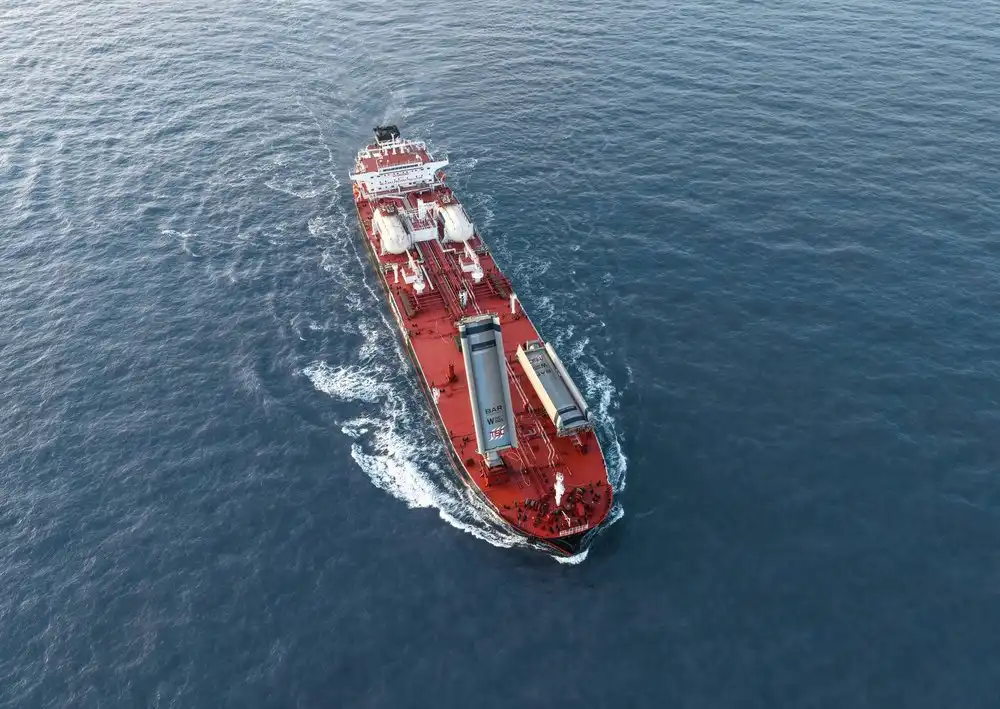
WindWings® doesn't use a soft sail, but instead a three-element rigid wing configuration. When the waves are rough, this choice of structure is very important. The main structure is made of ship-grade steel and industrial E-glass composites. This gives WindWings® the strength to withstand constant wind loads, wave-induced vessel motion, and salt spray exposure without losing its structural integrity.
Aerodynamic Control That Responds in Real Time
WindWings® can have their camber (shape) and angle of attack changed in any way you want. Automated control software constantly checks the wind speed and direction and then moves the wing to keep it in the most aerodynamic position. When the wind changes quickly, this real-time adjustment keeps the system from creating too much drag or unevenly loading the ship.
The Feathering and Fold-Down Safety Protocol
When wind speeds get too high, WindWings® automatically feathers, which means they rotate to face the direction of the wind to cancel out the force of the airflow. The wing can be folded down to deck level if things get worse. This fold-down feature also lets the ship move past port infrastructure and cargo handling equipment without the crew having to do it by hand. This keeps the ship and the system safe.
Key Factors That Determine Performance at Sea
Material Selection for the Marine Environment
All of the materials used in WindWings® come from sources that are ISO-certified. At the material specification stage, resistance to salt spray is taken into account. Marine-grade hydraulics and corrosion-resistant parts are used throughout. This method cuts down on the number of repair visits and increases the service life, which is very important for ships that travel long distances, like those going from Brazil to China or through the North Atlantic, where dry docks are hard to reach.
Structural Fatigue and Cyclic Load Testing
The composite parts in WindWings® are put through cyclic loading tests that are meant to mimic the stress of decades of being at sea. Tests are done according to ASTM B117 guidelines for salt spray exposure and include FMEA (Failure Mode and Effects Analysis) for all devices that fold and rotate. There are two hydraulic power units, and if the power goes out, failsafe protocols will automatically start working.
Energy Output Consistency Across Weather Conditions
WindWings® doesn't just work in trade winds that are calm. When flying at high latitudes in the North Atlantic and North Pacific, where the weather changes a lot, the active control system constantly changes the shape of the wings. This means that the wind helps with movement all the time, even when the sea state changes. This is different from less flexible wind-assist systems, which only help sometimes.
Many wind-assist ideas don't work well when the seas are rough. This is directly dealt with by WindWings® through engineering redundancy, not just theoretical modeling.
Installation, Operation, and Maintenance
Compatibility Analysis and Onboard Integration
Before installing, CM Energy and the TSC team make sure that all of the vessels are compatible with each other. This includes the needs for deck structural strengthening, places where electrical and hydraulic systems can be connected, and where they should be placed in relation to the hatch covers on the cargo hold. The placement of WindWings® between holds makes it possible for hatch cover operations and cargo handling tools to work without any problems.
Crew Operation: Minimal Training Required
Handling WindWings® is a lot like operating a deck crane. When needed, crew members use a manual interface to control the system, but for the most part, it runs itself. TSC gives structured training on how to do regular repair, what to do in an emergency, and how to check the hydraulic system. For daily operation, you don't need to know a lot about aeronautics.
Long-Term Maintenance and IoT Monitoring
WindWings® comes with a full range of support services. IoT-based remote tracking checks the health of a system in real time and lets you know about problems before they become expensive fails. CM Energy has long-term service packages that include regular maintenance and inspection schedules that are tailored to the needs of each route. The system is made to last 25 years and can be moved from one ship to another, which protects the initial investment over time.
Real-World Validation and Certification
DNV-Verified Fuel Savings and Independent Testing
DNV has confirmed that WindWings® can save fuel by running real ships with them. Wolfson Unit and Lloyd's both looked at the fluid dynamics results on their own. These are not claims made by the company itself; they are findings from outside experts in the field. WindWings® has AIP certification and design type approval from DNV and BV. LR and CCS have also given their class approval.
Operational Track Record on Bulk Carriers and Tankers
WindWings® have been used on Kamsarmax and Newcastlemax bulk ships, as well as on tankers that need parts that don't spark and follow strict safety rules for hydraulics. Ships with WindWings® have been able to make port calls in more than 20 places around the world for long amounts of time without any problems. This history is important for shipowners who are weighing danger and gain.
Supporting IMO and EU Compliance Objectives
WindWings® directly helps ships meet the standards of IMO CII and EEXI grades, the EU ETS carbon cost reduction, and FuelEU maritime. WindWings® lowers carbon intensity metrics by lowering the amount of fuel used every day. This helps shipowners meet charter requirements and improves their ESG positioning for green financing applications.
WindWings® has a high credibility profile thanks to third-party certification, real-vessel data, and regulatory alignment. Procurement teams can confidently show this profile to classification society engineers and charterers.
Conclusion
WindWings® works well in rough seas because that's how it was made. The three-element stiff wing structure, controlled feathering and fold-down response, and marine-grade materials make for a system that works even when conditions get worse. Shipowners who have to deal with both IMO carbon rules and rising fuel prices can use WindWings® to reduce their fuel use in a useful way. Through its TSC brand, CM Energy offers the full integration and support structure that turns engineering skills into operational results at the fleet level.
FAQ
1. How does WindWings® respond to sudden storm conditions?
When wind speeds exceed operating thresholds, WindWings® automatically feathers to align with the wind, removing aerodynamic load. If conditions require, the wing folds flat to the deck. Both responses are automatic and do not require crew action during the event.
2. Does WindWings® interfere with cargo loading and unloading at port?
No. WindWings® is positioned between cargo hold hatch covers and folds to deck level during port operations. This design ensures cranes, grabs, and loading equipment operate normally without modification to standard port procedures.
3. Can WindWings® be retrofitted to vessels already in service?
Yes. Retrofit is a primary application. The process involves structural reinforcement of the deck and integration with the vessel's electrical and hydraulic systems. CM Energy conducts a compatibility assessment before any installation commitment.
4. What maintenance schedule does WindWings® require?
Maintenance follows a structured inspection schedule supported by IoT remote monitoring. The system's design targets a 25-year operational life with no major component replacements, reducing lifecycle maintenance cost compared to more mechanically complex propulsion assist technologies.
5. How does WindWings® affect CII ratings?
By reducing daily fuel consumption, WindWings® lowers the carbon intensity of each voyage. This directly improves the vessel's annual CII score, supporting compliance and potentially improving charter marketability.
Partner with CM Energy for WindWings® Solutions
Through its TSC name, CM Energy works with WindWings® as both a producer of WindWings® and a full-program integration partner. Every project that TSC works on gets technical help, class-approved product paperwork, and support from the beginning to the end of the product's lifecycle. Our team can give you a route-specific fuel savings study to help your investment case, whether you are looking at a first fix or adding WindWings® to a new build. To start a conversation, email us at info.cn@cm-energy.com or go to cm-energy.com.
References
1. DNV GL. Verification of Wind-Assisted Propulsion Systems: Methodologies and Field Data. DNV Technical Report, 2022.
2. Wolfson Unit for Marine Technology and Industrial Aerodynamics. Aerodynamic Performance Assessment of Rigid Wing Sail Systems. University of Southampton, 2021.
3. International Maritime Organization. 2023 IMO Strategy on Reduction of GHG Emissions from Ships. IMO MEPC 80, 2023.
4. Lloyd's Register. Wind-Assisted Ship Propulsion: Technical Review and Classification Framework. Lloyd's Register Marine Technical Report, 2022.
5. Smith, T. W. P., et al. Energy Efficiency in Shipping: Trends, Technologies and Policy. UCL Energy Institute, 2020.
6. European Commission. FuelEU Maritime Regulation: Impact Assessment and Implementation Guidance. Official Journal of the European Union, 2023.
