The maritime industry stands at a crossroads between traditional marine fuel systems and innovative Wind Assisted Propulsion System technologies. Modern shipping operators face mounting pressure to reduce operational costs while meeting stringent emission regulations. It solutions like CM Energy's WindWings® offer compelling alternatives that deliver measurable fuel savings and environmental benefits. This comprehensive cost analysis reveals how wind propulsion technology transforms shipping economics through reduced fuel consumption, lower carbon emissions, and enhanced operational efficiency across chemical tankers, bulk carriers, and LR2 vessels.
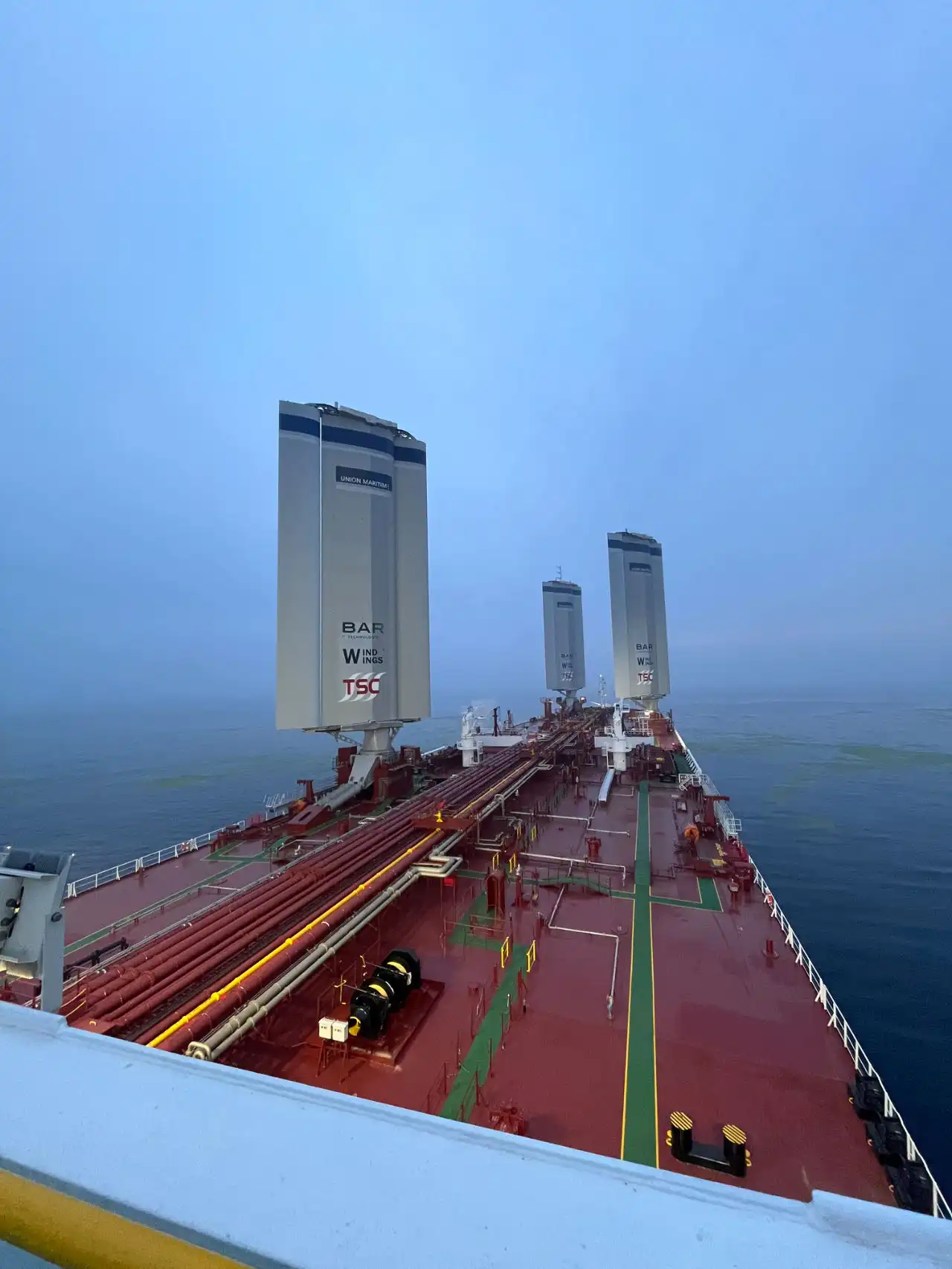
Understanding Wind Propulsion Technology in Modern Maritime Operations
Wind propulsion uses renewable energy through advanced aerodynamic sails equipped with smart sensors and autonomous control, offering a modern, efficient approach to sustainable shipping.
WindWings® uses a three-element rigid sail that automatically adjusts to weather, delivering 2.5 times the lift of conventional single-wing designs, as verified by independent tests.
Key technological advantages include:
- Automated alignment systems that optimize vessel performance
- Weather forecasting integration for maximum wind advantage
- Robust construction using ship-grade steel and E-glass composites
- Tilt mechanisms for safe port operations and cargo handling
Wind-assisted energy harvesting complements existing propulsion, creating a flexible hybrid system that reduces reliance on conventional marine fuels.
If you need consistent performance across diverse route conditions, then wind propulsion technology offers superior adaptability compared to conventional fuel-only systems.
Traditional Fuel Systems: Current Costs and Market Challenges
Marine fuel often accounts for 50–60% of voyage costs, and volatile global markets push operators to seek more stable, sustainable alternatives.
Fuel use varies by vessel, but a Newcastlemax typically consumes a moderate amount of fuel daily. Chemical tankers and LR2 vessels show similar consumption levels, often incurring daily costs in the range of tens of thousands of dollars at current prices.
Environmental regulations add substantial compliance costs:
- IMO 2020 sulfur regulations require low-sulfur fuels or scrubber installations
- Carbon Intensity Indicator (CII) ratings affect charter rates and market access
- Regional emission control areas impose additional restrictions
- Future carbon pricing mechanisms will increase operational expenses
Ferry and coastal vessel owners face unique challenges with short-route efficiency requirements. Port maneuvering in urban areas demands emission-free operations, driving interest in green technology solutions.
Tightening climate rules and IMO’s 2050 target of a 50% emissions cut are driving the shift away from traditional fuels toward new propulsion technologies.
If you need predictable fuel costs and regulatory compliance, then hybrid systems combining traditional engines with wind propulsion offer better long-term stability than fuel-only solutions.
Direct Cost Comparison: Fuel Savings Through Wind Propulsion
Wind-assisted vessels show strong savings: each WindWings® unit cuts about 1.6 tons of fuel daily, reducing operating costs by roughly $960–1,040 at current bunker prices.
Route-specific savings vary considerably based on wind conditions and vessel characteristics:
- Atlantic crossings: 15-25% fuel reduction with favorable trade winds
- Pacific routes: 10-20% savings depending on seasonal patterns
- Coastal operations: 20-30% reduction during suitable weather windows
- Mediterranean trades: 12-18% average savings across seasonal variations
Newcastlemax vessels save a significant amount of fuel daily with the installation of four WindWings®, resulting in cost reductions of approximately several thousand dollars.
LR2 tankers experience similar benefits with proportional savings based on Wind Assisted Propulsion System sizing. Chemical tankers benefit from enhanced route flexibility and reduced emission penalties in regulated areas.
Energy storage systems complement wind propulsion by capturing excess power during optimal conditions. This stored energy powers auxiliary systems and reduces generator runtime in ports.
If you need immediate cost reductions with proven technology, then wind propulsion delivers measurable returns within the critical 5-year payback period required by vessel operators.
Installation and Maintenance Cost Analysis
Initial investment considerations encompass both newbuild integration and retrofit applications.
- Newbuild installations offer lower complexity and optimal positioning for aerodynamic efficiency. Shipyards benefit from integrated design approaches that incorporate wind systems during construction phases.
- Retrofits require structural checks and vessel assessments to determine optimal layouts, with installation costs varying by vessel size and complexity.
- Maintenance needs are low thanks to durable construction. With a 25-year lifespan, systems can be transferred between vessels, and factory testing ensures reliability.
- On-site assembly shortens shipyard time, class approvals ease certification, and IoT monitoring supports predictive maintenance and remote diagnostics.
- Operational similarities to deck crane systems simplify crew training requirements. No specialized draw gear or complex rigging procedures are needed. Manual operation interfaces provide backup capability during automated system maintenance.
- If you need low-maintenance solutions with extended lifespans, then wind propulsion systems offer superior reliability compared to complex fuel processing equipment required for alternative fuels.
Regulatory Compliance and Environmental Benefits
Each WindWings® unit cuts CO₂ per day, helping vessels improve CII ratings and meet tightening environmental regulations.
Current and upcoming regulations favor wind-assisted propulsion:
- EU Emissions Trading System inclusion of shipping from 2024
- IMO greenhouse gas strategy targeting 70% emission reduction by 2050
- Port state control emphasis on environmental performance
- Charter party preferences for low-emission vessels
Green technologies boost market appeal and charter value, as environmental performance becomes a key competitive factor in vessel selection and contracts.
Approvals from DNV, BV, and CCS ensure global acceptance, while type approval speeds compliance. Over 20 major ports already support wind-assisted vessels.
Emission control zones restrict NOx and sulfur, and wind propulsion lowers engine load, enabling cleaner coastal operations and emission-free maneuvering.
Weather routing optimization maximizes renewable energy utilization while maintaining schedule reliability. Advanced algorithms account for wind patterns, sea conditions, and commercial considerations to optimize vessel performance.
If you need future-proof compliance with evolving environmental regulations, then wind propulsion technology positions vessels ahead of mandatory emission reduction requirements.
CM Energy WindWings® System: Leading Wind Assisted Propulsion Solution
CM Energy leads sustainable shipping, offering advanced energy solutions and lifecycle services, with its Wind Assisted Propulsion System showcasing top-tier wind-propulsion engineering built on patented BART technology.
Key advantages of CM Energy's wind propulsion solution include:
- Proven Performance Track Record: Real-world validation through DNV verification demonstrates consistent fuel savings across diverse operating conditions. Bulk carriers equipped with WindWings® have successfully operated for extended periods without incidents across major global shipping routes.
- Comprehensive Certification Portfolio: Full approval from leading classification societies including DNV, Bureau Veritas, Lloyd's Register, and China Classification Society ensures global regulatory acceptance and simplified flag state approvals.
- Advanced Control Systems Integration: Sophisticated software determines optimal wing orientation automatically while providing real-time thrust performance reporting. Manual operation interfaces ensure crew control during maintenance or emergency situations.
- Robust Engineering Standards: Ship-grade steel construction combined with industrial E-glass composites ensures 25-year operational lifespan. Marine-grade hydraulics and control components withstand harsh maritime environments reliably.
- Flexible Installation Options: Both above-deck and below-deck configurations accommodate diverse vessel designs. Tilt mechanisms enable safe cargo operations and port clearance requirements across global terminals.
- Weather Routing Optimization: Specialized routing systems maximize wind advantage through advanced meteorological integration. Web-based interfaces provide shore and shipboard teams with coordinated voyage optimization tools.
- Minimal Operational Complexity: Crane-like operation simplifies crew training requirements while eliminating complex rigging procedures. No draw gear requirements reduce operational complexity and maintenance burden.
- Scalable System Architecture: Multiple wing configurations accommodate vessel sizes from coastal ferries to large bulk carriers. Modular design enables future expansion or system transfer between vessels.
- Predictive Maintenance Capabilities: IoT monitoring systems enable remote diagnostics and condition-based maintenance scheduling. Comprehensive service packages ensure optimal performance throughout system lifecycle.
- Integration with Existing Systems: Seamless compatibility with conventional propulsion systems maintains operational flexibility while adding renewable energy capabilities. Hybrid propulsion approach reduces risk during technology transition.
The company’s track record—350+ deck cranes and 180 self-elevating platforms—shows strong engineering capability, ensuring reliable wind-propulsion delivery and long-term support.
CM Energy extends its marine expertise into wind propulsion, helping customers adopt cleaner, optimized vessels and stay ahead of the industry’s shift toward decarbonization.
If you need cutting-edge wind propulsion technology backed by comprehensive engineering support, then CM Energy's WindWings® system delivers proven results with industry-leading performance guarantees.
Return on Investment Analysis for Different Vessel Types
Returns differ by vessel and route, but modeling shows strong economics for most operators under current fuel prices and tightening regulations.
Bulk carriers see strong returns: Newcastlemax vessels reach payback in 3.5–4.5 years, with Cape-size and Panamax ships achieving similar proportional gains over long system lifespans.
Chemical tankers gain flexibility and lower emissions, reducing fuel use while maintaining schedules—an advantage as ports increasingly favor cleaner vessels for hazardous cargo.
LR2 tankers gain strong savings on long routes, using steady winds to cut fuel and improve CII compliance, boosting returns.
Ferries and coastal vessels benefit from quick ROI and lower emissions, with wind propulsion supporting cleaner port operations amid tightening urban restrictions.
Risk mitigation factors enhance investment attractiveness:
- Fuel price volatility protection through reduced consumption
- Regulatory compliance insurance against future restrictions
- Charter premium potential from environmental performance
- System transferability between vessels
Financing options range from vessel mortgages and green loans to performance-linked facilities, with some regions providing tax incentives or grants for sustainable upgrades.
If you need predictable returns with environmental benefits, then wind propulsion delivers superior investment characteristics compared to alternative fuel infrastructure requirements.
Conclusion
Wind propulsion technology represents a transformative solution for maritime operators seeking sustainable cost reduction and regulatory compliance. CM Energy's Wind Assisted Propulsion System delivers proven fuel savings of up to 30% while significantly reducing carbon emissions and operational expenses. The comprehensive cost analysis demonstrates compelling investment returns across vessel types, with payback periods of 3.5–5 years and continued benefits throughout 25-year system lifespans. As environmental regulations intensify and fuel costs remain volatile, wind-assisted propulsion positions forward-thinking operators ahead of industry transformation toward decarbonized shipping operations.
Partner with CM Energy for Advanced Wind Assisted Propulsion System Solutions
Global operators choose CM Energy as their trusted Wind Assisted Propulsion System supplier, with WindWings® delivering verified fuel and emission cuts that improve compliance and overall vessel economics. The company drives fleet-wide sustainability, partnering with charterers, operators, and financiers to accelerate large-scale adoption of wind propulsion across global shipping networks. Enhance your vessel's efficiency and environmental performance with WindWings®. Contact CM Energy's specialists to explore how wind propulsion can strengthen your fleet's competitiveness.
Ready to reduce fuel costs while meeting environmental regulations? Contact us at info.cn@cm-energy.com to schedule a comprehensive vessel assessment and explore customized it solutions that deliver measurable results for your operations.
References
- International Maritime Organization. (2023). "Fourth IMO Greenhouse Gas Study: Comprehensive Assessment of Maritime Emissions and Reduction Strategies." IMO Publications, London.
- Lloyd's Register. (2024). "Wind Assisted Propulsion Systems: Technical Guidelines and Performance Validation Methodologies." Lloyd's Register Maritime Technology, Southampton.
- DNV GL. (2023). "Alternative Fuels and Wind Propulsion in Shipping: Comparative Lifecycle Cost Analysis." DNV GL Maritime Advisory, Oslo.
- Wolfson Unit MTIA. (2024). "Aerodynamic Performance Analysis of Modern Rigid Sail Systems for Commercial Vessels." University of Southampton, Marine Technology Research Institute.
- BART Technologies Ltd. (2023). "WindWings Performance Validation: Real-World Operational Data from Commercial Installations." British Applied Research & Technology, Portsmouth.
- Maritime and Port Authority of Singapore. (2024). "Green Shipping Incentives and Wind Propulsion Technology Assessment Report." MPA Regulatory Framework Division, Singapore.