Why Is Methanol Fuel Supply System Corrosion Resistance Critical for Performance?
Corrosion resistance sits at the heart of any reliable methanol fuel supply system. Unlike conventional marine fuels, methanol is hygroscopic and chemically aggressive — it absorbs moisture, attacks standard metals, and degrades incompatible elastomers faster than most engineers anticipate. When a methanol fuel supply system lacks proper corrosion-resistant architecture, the consequences cascade quickly: contaminated fuel quality, unstable pressure delivery, accelerated component wear, and — most critically — safety hazards aboard vessels carrying toxic, low-flashpoint fuel. Getting corrosion resistance right is not optional; it is foundational to system longevity, crew safety, and regulatory compliance.
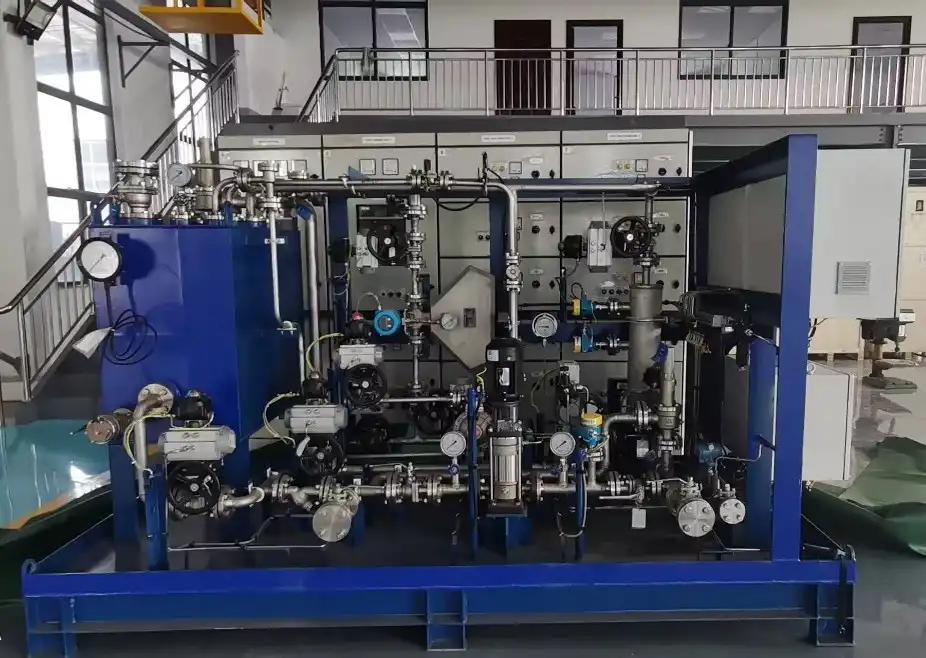
Understanding Corrosion in Methanol Fuel Supply Systems
Why Methanol Is More Corrosive Than Conventional Fuels
The corrosive nature of methanol comes from the way its molecules are made. It is a polar liquid that easily takes in water from the air. Even small amounts of water in a Methanol Fuel Supply System can speed up the electrolytic corrosion of aluminum and carbon steel parts. Unlike naval gas oil, methanol also has almost no lubricity. This means that metal surfaces in pumps and valves wear down faster because of friction. Standard seals made of nitrile rubber (NBR) or neoprene swell and stop closing properly after being exposed to methanol for a few weeks.
Vulnerable Components and Real Failure Modes
Transfer pipes, pump housings, seal assemblies, flow control valves, and storage tank linings are the parts of a Methanol Fuel Supply System that are most likely to be corroded. Early field deployments showed accelerated pitting in mild steel piping after only a few months of use. This is a type of failure that doesn't happen very often with diesel systems. The pressure readings were all over the place because the seal swelled, which set off false alarms in the control and safety system. These are not made-up threats; they are real practical problems that cause voyages to be delayed and upkeep costs to go up.
Corrosion Resistance: Design Principles and Technologies
Material Selection as the First Line of Defense
A strong Methanol Fuel Supply System takes rust into account during the planning phase, before any welds are made. Austenitic stainless steel (316L grade) is usually used for wet parts because it can handle both the solvent action of methanol and the chloride-filled marine environment. As the temperature range changes, seals and gaskets change to PTFE, EPDM, or perfluoroelastomers (FFKM/Kalrez), which stay stable in size and don't react chemically. According to class society rules, reactive metals like zinc and uncoated aluminum are not allowed in areas that will be wet.
Surface finishes are important in addition to base elements. When you passivate stainless steel surfaces, you get rid of any free iron that could cause pitting. External surfaces with protective coats keep salt spray from getting in from the sea.
Here are the core corrosion-mitigation design practices embedded in a well-engineered Methanol Fuel Supply System:
- Double-barrier piping architecture: All methanol-carrying lines that go through sealed machinery areas in the Methanol Fuel Supply System are made with two walls and an annular space monitor. The IGF Code for low-flashpoint fuels says that any main leak must be contained and found before it can reach sources of ignition or people.
- Nitrogen purging subsystem: During rest or maintenance periods, an inert gas blanket built into the supply and drain circuit keeps methanol mist from mixing with oxygen in the air in a way that could be dangerous or destructive.
- Smart leak detection sensors: Hydrocarbon sniffers and pressure-differential monitoring within the circular space keep an eye on corrosion events continuously and automatically, so the control system can shut down a small leak before it turns into a big problem.
These design layers work together, not independently. The combined architecture makes sure that a Methanol Fuel Supply System stays structurally sound for the whole time that a dual-fuel vessel is in use.
Benefits of Corrosion Resistance on Methanol Fuel Supply System Performance
Extended Operational Uptime and Lower TCO
A Methanol Fuel Supply System that doesn't rust directly leads to real cost savings. When wetted parts keep their shape and chemical integrity, the time between unexpected repair visits gets a lot shorter. Pump repair times get longer. Seal replacements happen less often. The ship keeps its schedule and doesn't stop at a repair yard. Every unexpected drydock day means a lot of missed income for shipowners whose journey economics are tight. These numbers add up quickly across a fleet.
Total cost of ownership (TCO) analysis regularly shows that buying high-quality materials that don't rust is much cheaper than paying for repairs and upkeep over the life of a vessel, which is 20 years. The IMO's Fourth Greenhouse Gas Study (2020) makes it clear that decarbonization goals cannot be separated from operating efficiency gains, which depend directly on system reliability. When the Methanol Fuel Supply System rusts too quickly, it hurts both economic and environmental goals at the same time.
Safety Compliance and Environmental Protection
Under SOLAS and the IBC Code, methanol is a dangerous chemical and a low-flashpoint fuel. When the Methanol Fuel Supply System is used with corroded seals or pipelines that aren't strong enough, it puts too much at risk, not just for the machinery but also for the health of the crew and marine ecosystems. Leaks of even small amounts of methanol caused by corrosion in engine rooms that are closed off can quickly build up to dangerous levels of vapor. Regulatory groups like DNV, ABS, and CCS need to see proof of containment success before they will certify a class. When these certifications are met, operators can be sure that the systems' corrosion resistance meets the standards they need.
Corrosion Resistance Maintenance and Troubleshooting
Routine Inspection Protocols That Prevent Costly Surprises
Rather than making fixes when something goes wrong, a structured check schedule is needed to keep a Methanol Fuel Supply System's corrosion resistance over its working life. Chief engineers should regularly plan visual and borescope checks of pipeline sections that can be reached. They should pay special attention to weld joints and flange faces, which are where crevice corrosion starts. Tracking changes in the pressure differential instead of waiting for leaks to be obvious is a way to keep an eye on seal state and catch damage early. Dosing chemical inhibitors in certain circuit segments adds an extra layer of protection in places where the humidity or temperature changes a lot.
Successful methanol dual-fuel vessels in service have shown that a disciplined preventive maintenance program can keep corrosion-resistant performance over long periods of time without requiring major unplanned repairs. The lesson that can be learned from all of these deployments is that early detection protocols are much better at both cost and keeping operations running than reactive repair strategies.
Comparing Methanol Fuel Supply Systems: Corrosion Resistance vs. Other Fuel Systems
Material Compatibility and Certification Imperatives
Some problems with corrosion are similar between methanol and ethanol and gasoline fuel systems. However, methanol's hygroscopicity, low lubricity, and toxicity make it a very difficult environment for materials to work in. In lower-concentration situations, ethanol-blended fuel systems can usually handle mild steel. But for a Methanol Fuel Supply System that works with pure methanol, all wet surfaces must be made of stainless steel. Gasoline systems have to deal with hydrocarbons getting through elastomers, but they can work with a lot more materials than methanol systems can. To make the compatibility window smaller, procurement teams looking at a Methanol Fuel Supply System should make sure that all suppliers provide material certification documentation. Class society approvals, like DNV AIP and product certificates, are an objective way to tell the difference between systems that are legal and others that aren't.
Conclusion
Corrosion resistance is an important feature of a Methanol Fuel Supply System; it determines whether the system works efficiently, safely, and cost-effectively for decades of naval use. Every design choice, from 316L stainless steel wetted parts and PTFE seals to double-wall pipes and nitrogen purging, either raises the risk of rust or lowers it. If shipowners and technical procurement teams use corrosion resistance as the main evaluation factor, they will save money over the life of the ship, have less downtime, and keep crews safe from avoidable exposure hazards. The methanol way to decarbonize is possible, but only if systems are built to handle the real chemistry needs of methanol.
FAQ
1. What materials does a methanol fuel supply system require for corrosion resistance?
All wet parts must be made of stainless steel 316L, which is the standard in the business. Compounds like PTFE, EPDM, or FFKM are needed for seals and gaskets. Metals like zinc, aluminum, and standard NBR rubber should not come into contact with methanol.
2. Why does moisture matter so much in a methanol fuel supply system?
Methanol is very good at taking in water from the air. Electrochemical rust in metal parts is sped up by even small amounts of liquid water, and seal materials break down faster than dry methanol alone.
3. How does double-walled piping protect against corrosion failures?
Any main pipe leak in double-walled pipes is contained in a circular space that is constantly checked. This keeps methanol from getting into the engine room and gives early warning before damage to the structure gets worse.
Partner with CM Energy for a Proven Methanol Fuel Supply System
Under the TSC name, CM Energy offers certified Methanol Fuel Supply System options that are backed by DNV AIP and product certification. These systems have been used on real vessels, such as Stena RoRo projects, and they come with full lifecycle support from design to commissioning. The engineers at TSC can help you with your project with their knowledge of dual-fuel vessels and chemical tankers. You can email CM Energy at info.cn@cm-energy.com or go to cm-energy.com to talk about your needs for a Methanol Fuel Supply System provider.
References
1. International Maritime Organization. Fourth IMO GHG Study 2020. IMO, 2020.
2. DNV GL. Rules for Classification: Ships — Low Flashpoint Fuel Systems. DNV, 2023.
3. MAN Energy Solutions. ME-LGIM Engine — Methanol Fuel System Interface Requirements. MAN Energy Solutions, 2022.
4. NACE International. Corrosion Control in the Chemical Processing Industry. NACE International, 2018.
5. American Bureau of Shipping. Guide for Methanol and Ethanol Fueled Vessels. ABS, 2022.
6. ASTM International. ASTM G31: Standard Guide for Laboratory Immersion Corrosion Testing of Metals. ASTM International, 2021.