Why API Certified Mud Pump Expendables Are Worth the Investment?
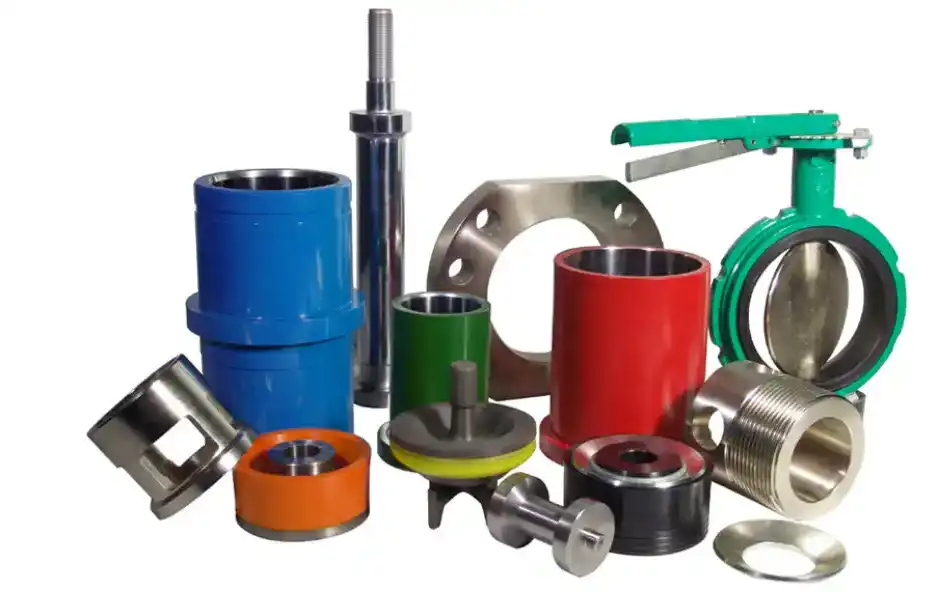
When procurement managers pose the question, “Are API certified mud pump expendables worth the cost?” the answer boils down to one thing: overall operational value. The loss of a single pump on an offshore installation may cost tens of thousands of dollars per day in non-productive time. Certified mud pump expendables such as liners, pistons, valves, valve seats, piston rods and discharge dampeners are built to API Spec 7K specifications, meaning each item has validated pressure ratings, material hardness specs and dimensional tolerance criteria. That certification is not a badge. It’s documented assurance that the parts will work when it counts the most.
Understanding API Certified Mud Pump Expendables
Before looking at providers, it's helpful to know what makes a part API approved and why that difference is important for daily drilling operations.
What Are Mud Pump Expendables?
In the flowing end of triplex and duplex pumps, Mud Pump Expendables are the parts that wear out quickly. Liner, pistons, valve and valve seat systems, piston rods, extension rods, and discharge dampeners are some of them. Because these parts are constantly in touch with rough drilling fluids and are under a lot of pressure, they wear out over time and need to be replaced on a regular basis. Since they are in the middle of the pumping system, their state has a direct effect on how well the pump works and how stable the wellbore pressure is.
What Does API Certification Actually Mean?
API certification under Spec 7K signifies that a manufacturer’s design, material and manufacturing procedures have been verified by a third party to fulfill industry norms. This comprises the sorts of materials used in mud pump expendables, variances in hardness, pressure ratings and the capacity to change out pieces of various sizes. In oil and gas environments with rigorous regulations, certified parts that can be fully traced help ease the rules for purchasing items and identifying authorized vendors.
Why Certification Matters for B2B Procurement
Certified parts may considerably reduce qualification risk for procurement managers responsible for framework transactions for numerous rigs. With an ISO 9001, API Q1 and API 7K certified supplier, and API Q1, the quality management system behind every batch can be verified. Because it can be verified, the procurement team is protected against fraudulent parts, variable quality, and liability if a part fails and destroys equipment or creates a safety hazard.
Key Advantages of Choosing API Certified Mud Pump Expendables
Once the approval standard is clear, it's easier to compare the performance benefits in terms of the total cost of ownership rather than just the unit price.
Here are the main reasons why certified mud pump expendables are better than non-certified ones:
- Longer service intervals: High-chrome iron liners and zirconia ceramic liners made to API specifications have much greater wear life than uncertified liners. Specifically, ceramic liners have the ability to last for several times the operating hours of ordinary chrome liners, lowering the frequency of replacements throughout a rig fleet.
- Material integrity under pressure Certified piston rods and extension rods are constructed of superior heat-treated alloy steel that resists fatigue, corrosion and strong cyclic stresses. The metallurgical controls necessary for certification reduce the irregularity that shortens the life of uncertified components.
- Interchangeability between pump manufacturers: API-certified mud pump expendables are manufactured to precise OEM standards, so they may be used interchangeably with pumps from EMSCO, Gardner Denver, NOV and other major manufacturers without modification.
Because of these benefits, repair staff costs go down, emergency part orders go down, and replacement schedules become more predictable. That reliability is worth more to a fleet operator who is in charge of dozens of rigs than any small price savings per unit.
How to Select the Right API Certified Mud Pump Expendables for Your Needs?
Instead of looking through a catalog, the first step in choosing the right parts is to do a structured assessment of how they will be used.
Evaluate Operational Conditions First
Which materials work best depend on the type of mud, the working pressure, the temperature range, and the type of pump used. For oil-based muds, you need pistons made of urethane materials that are rated HNBR or OBM. Drilling fluids with a lot of solids speed up liner wear, so ceramic liners are a better long-term choice in those conditions. Material mismatch can cause this to fail early if this match isn't done right from the start.
Verify Supplier Credentials and Documentation
A reliable mud pump expendables supplier gives full certification paperwork, records of where materials came from, and test reports for every batch of products they sell. If you want to know more about a new provider, ask to see copies of their API Q1 certificate, API 7K product certification, and any third-party approvals from ABS, DNV GL, or CCS. It's just as important for complex multi-rig procurement programs to have technical support, like being able to make drawings and bills of materials based on your technical agreement.
Plan Procurement Around Lead Times and Inventory
Lead time management is just as important as part quality when buying a lot of different types of pumps. Work with sellers who keep stock in your area or who can help you set up contract stocking arrangements. There is less chance of supply gaps at remote drilling sites when there are bulk order agreements with set delivery windows. Set up FIFO (First-In, First-Out) rotation rules for rubber parts, since pistons and valve inserts lose their usefulness when they are exposed to UV or ozone sources.
Maintenance and Safety Tips for API Certified Mud Pump Expendables
When put or kept incorrectly, even the highest-grade certified parts break down early. Both the parts and the pump are protected by a regular repair plan.
Conduct Regular Wear Inspections
When to check on the mud pump Schedules for expenses should be based on business hours, not the calendar. Small erosions on the covering surface of valve seats show early wear. Liners get out-of-round wear patterns that can be seen when they are taken apart regularly. If you notice these signs early, you can stop washouts, which happen quickly when high-pressure fluid finds a way to leak through a worn seal.
Follow Correct Installation Procedures
The major reason they fail early is because the pistons are installed incorrectly. Grease and seat the pistons carefully - don't cross-thread them. Frictional heat is a major source of elastomer deterioration, thus liner cooling systems must be examined to ensure they are functioning properly before operations may resume. Check the surface quality on the extension rods. Even little surface damage might make the gear-end seal less dependable.
Maintain High-Pressure Safety Standards
When maintaining mud pumps that are running at or near their rated pressure limits, it is very important to follow the safety lockout and pressure release steps very carefully. When working on discharge dampeners, especially one-piece cast steel spherical dampeners that are designed for high working pressures, teams must follow pressure bleed-down procedures before taking them apart. The training that the engineering and mechanical crews get on these procedures should be written down and looked over regularly.
Future Trends in Mud Pump Expendable Technology
The market for mud pumps that need to be replaced is moving toward parts that are smarter, last longer, and can be tracked more easily.
Advanced Materials for Longer Run Life
Zirconia ceramics and synthetic polymer materials are increasingly resistant to wear and chemical degradation. Such adjustments immediately improve the time between replacements. This is particularly critical on distant or offshore locations where the expense of materials makes each repair event more significant.
Predictive Monitoring Integration
Fluid end systems with sensors are starting to show up on newer rigs. Pressure and sound data from the fluid end allows condition-based replacement instead of fixed-interval replacement. This cuts down on both unnecessary maintenance and problems that come up out of the blue. Teams in charge of buying things should start building ties with manufacturers that can help with this shift.
Sustainability and Supply Chain Transparency
In controlled markets, buyers want environmental management documents along with product certifications more and more. Suppliers with ISO 14001 and ISO 45001 certifications have systems in place to handle safety at work and the environment that are in line with procurement rules in the US, EU, and other major foreign markets.
Conclusion
Mud Pump Expendables that are API certified provide measurable value at all stages of a part's lifecycle, from installation to replacement. The standard for certification makes sure of the quality of the materials, the accuracy of the measurements, and the power performance that parts that aren't certified can't always match. Certified parts are the safer and less expensive option for procurement managers who are in charge of maintaining the whole fleet. This is because they last longer, are more reliable in the supply chain, and come with full paperwork support. The most important thing for a drilling operation to do when buying fluid end repair is to find a certified source that has worked with all the major pump brands in the past.
FAQ
1. What is the difference between API 7K certified and non-certified mud pump expendables?
API 7K certified parts satisfy established material, dimensional and pressure specifications validated by third-party audit. “Non-certified parts might look the same, but they don’t have the quality management controls to ensure consistency from batch to batch. In demanding drilling applications, the irregularity manifests in early washouts, premature elastomer degradation, and unexpected pump downtime.
2. How often should mud pump expendables be replaced?
Replacement periods vary depending on mud type, operating pressure, liner material and pump hours. Zirconia liners usually last many times longer than chrome liners. High-solids mud situations need more regular examination of valve seats and pistons. The most accurate replacement schedule is via frequent teardown inspections and following the manufacturer's suggested service intervals.
3. Can API certified parts fit pumps from multiple manufacturers?
Yes.API Certified mud pump expendables are machined to dimensional requirements that enable interchangeability with pumps from EMSCO, Gardner Denver, NOV and other major manufacturers. The cross-compatibility makes life easier when managing stock for fleets that operate various pump brands across several locations.
4. What storage conditions are required for elastomeric components?
Keep pistons, valve inserts and gaskets in a cool, dry location away from direct sunlight and ozone sources. UV rays and ozone cause rubber to harden and shatter more quickly. FIFO inventory rotation helps to ensure that older product doesn’t hang around longer than it should.
Partner with CM Energy for Certified Mud Pump Expendable Supply
Drilling companies in North America, the Middle East, Southeast Asia, and beyond purchase API Q1 and API 7K approved mud pump expendables from CM Energy's TSC brand. For almost all important pump types, TSC sells fluid end assemblies, liners, pistons, valves, piston rods, and discharge dampeners. Before it is shipped, every product goes through a full-load operation test, and our team creates plans and bill of materials based on your technical agreement. We offer 24x7x365 help because we are a reliable mud pump expendables maker. You can visit cm-energy.com or email us at info.cn@cm-energy.com to ask for a sample review or talk about a framework supply deal.
References
1. American Petroleum Institute. API Specification 7K: Drilling and Well Servicing Equipment. API Publishing Services, 2015.
2. Bourgoyne, A.T., et al. Applied Drilling Engineering. Society of Petroleum Engineers, 1991.
3. Rabia, H. Well Engineering and Construction. Entrac Consulting, 2002.
4. International Association of Drilling Contractors. IADC Drilling Manual. 12th ed., IADC, 2015.
5. Mitchell, R.F., and Miska, S.Z. Fundamentals of Drilling Engineering. Society of Petroleum Engineers, 2011.
6. World Oil. Drilling Technology: Fluid Circulation Systems and Pump Maintenance Practices. Gulf Publishing Company, 2019.
