The Best Compact Cranes for Tight Spaces on Rigs
The knuckle boom crane is the best small crane for working in tight areas on rigs. It is also the best choice for harsh marine and offshore settings. These knuckle boom cranes are the easiest to move around in tight spaces, which is why they are needed for offshore wind projects, FPSO units, and many other ship activities. Their small size and high level of flexibility let them precisely handle loads while leaving the smallest possible mark on busy rig decks.
Understanding Knuckle Boom Cranes and Their Advantages in Rig Operations
The Engineering Excellence Behind knuckle boom crane Design
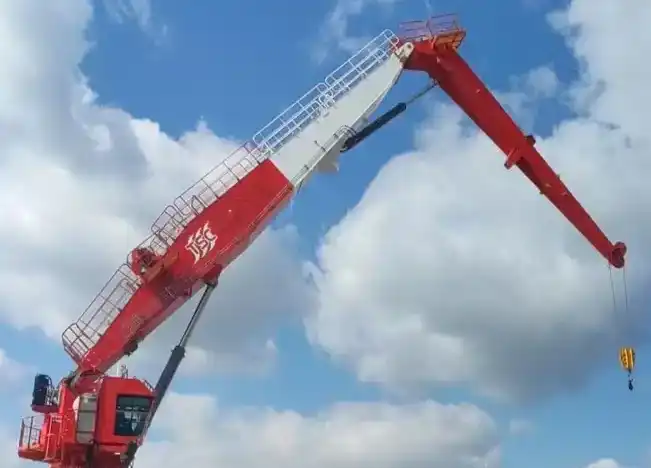
Knuckle boom cranes are a breakthrough compact lifting solution for harsh rig settings. These devices include an articulating boom that folds and bends at many joints, minimizing operational area while retaining amazing lifting capabilities. These cranes' innovative design lets operators traverse obstacles and reach previously unreachable rig regions. This versatility is important on offshore wind turbine installation platforms and FPSO units, where every square meter of deck area counts. The articulating mechanism lets the boom perform effectively within a smaller radius than traditional lifting equipment.
Optimizing Confined Space Operations
These knuckle boom cranes benefit rig operators with limited room due to their small size. When not in use, its collapsible shape saves deck space for other important activities. Bulk carriers and offshore support vessels benefit from deck space optimization, which boosts productivity. These cranes excel in accurate load handling due to their flexibility. Even in difficult deep-sea circumstances, operators can accurately place cargoes. The knuckle boom crane reduces damage risk and enhances safety by allowing material transportation around existing buildings and equipment.
Environmental Compliance and Power Options
Modern knuckle boom cranes have different power options for operational and environmental needs. Electric types are quiet and clean for delicate maritime situations, while hydraulic models operate well offshore. Operators may choose the best power system for their rig applications and environmental compliance demands due to its adaptability. These devices optimise load capacity for rig-specific lifting without sacrificing performance. Engineers build these cranes to carry heavy weights while preserving a small profile for restricted spaces. Their power-to-size ratio makes them essential for current rig operations.
Comparing Compact Crane Options for Rig Applications
Knuckle Boom Versus Traditional Crane Systems
When looking at small crane choices for rig use, comparing knuckle boom cranes to standard systems shows that flexible designs have a lot of benefits. Telescopic cranes have a long reach, but they can't be moved around easily in tight rig settings. Their straight growth system can't get around things well, which makes them less useful in small areas.
Because they are hard to move, crawler cranes are not useful for most rig uses. Their high ground pressure needs and complicated setup steps don't work with how rig operations are usually done, which is constantly changing. Knuckle boom systems, on the other hand, attach directly to rig structures, so there is no need to prepare the ground and they are ready to use right away.
Truck-mounted cranes are more mobile, but they lack the steadiness and accuracy needed for delicate rig tasks. The knuckle boom form gives you more steadiness and control, which are very important when working with fragile materials or equipment in rough ocean circumstances.
Operational Cost Analysis and Efficiency
The fuel efficiency characteristics of knuckle boom cranes deliver compelling economic advantages for both short-term projects and extended rig operations. Their optimized hydraulic systems consume significantly less fuel compared to larger traditional cranes, reducing operational costs while maintaining performance standards. This efficiency translates to substantial savings over the equipment's operational lifetime.
Operating cost comparisons consistently favor knuckle boom systems due to their simplified maintenance requirements and reduced infrastructure needs. The absence of complex ground preparation or extensive setup procedures eliminates associated labor costs and project delays. These factors contribute to improved project economics and enhanced operational flexibility.
Environmental and Operational Considerations
The selection criteria for rig crane systems must account for environmental factors specific to offshore versus onshore operations. Offshore applications demand enhanced corrosion resistance and weather protection capabilities, while onshore operations may prioritize different performance characteristics. knuckle boom cranes excel in both environments due to their robust construction and adaptable design features.
Aligning crane capabilities with specific rig demands ensures optimal operational effectiveness and safety compliance. The lifting capacity, reach requirements, and operational frequency all influence the selection process. Knuckle boom systems offer exceptional versatility in meeting these varied demands through their customizable configurations and adaptable operating parameters.
Procurement Considerations for Knuckle Boom Cranes in Rig Operations
Strategic Market Analysis and Cost Planning
Modern crane procurement markets need compact, efficient lifting solutions. Industry watchers say oilfield operators prefer knuckle boom cranes to maximize deck area and lift. This tendency affects marine procurement and equipment choices. Initial purchase, operating, maintenance, and residual value must be included in total cost of ownership assessments. Knuckle boom cranes have good lifespan economics owing to their low maintenance and sturdy design. These aspects reduce overall ownership costs compared to sophisticated crane systems.Lease options and rental programs provide project-based rig operators attractive financing choices. These solutions let operators align equipment expenses with project earnings without making large capital investments in specialist equipment with intermittent use.
Customization and Supplier Choice
Adapting knuckle boom cranes to rig operating needs requires customization. Leading manufacturers provide several modifications to meet space, lifting, and operating needs. This versatility optimizes equipment performance in various rig applications. Quality suppliers should have rig application experience and marine operating knowledge. During specification and customisation, experienced manufacturers with rig expertise may advise on equipment selection and setup. After-sales assistance is crucial in oilfield operations, since equipment downtime affects project profitability. Suppliers with extensive service networks, easily accessible replacement parts, and fast technical assistance give operational benefits. These support capabilities maintain equipment performance and reduce operational interruptions.
Ensuring Safety and Performance: Maintenance and Best Practices for Knuckle Boom Cranes on Rigs
Comprehensive Safety Protocol Implementation
Safely operating knuckle boom cranes in restricted rig areas needs special safety practices. Risk assessments must include restricted maneuvering area, equipment interference, and rig dynamics. Safe operating processes and emergency response planning start with these evaluations. Operator certification programs for knuckle boom cranes guarantee operators have the necessary skills for safe operation. These seminars cover load handling and safety system use for knuckle boom cranes. Certified crane operators handle tight-space crane operations well. Environment-specific safety protocols address rig type and operating difficulty. Onshore operations may concentrate on distinct environmental issues, whereas offshore operations need improved weather monitoring and sea condition considerations. Safety measures are tailored to varied operating contexts to mitigate risk.
Performance Optimization and Preventive Maintenance
Maintenance plans for severe rig knuckle boom cranes must focus on important wear areas and environmental protection systems. Regular inspections must account for increased wear in harsh offshore settings. Preventive maintenance extends equipment life and maintains performance. Service intervals should match operating needs and environmental exposure. Intensive offshore activities may need more regular maintenance than sporadic onshore use. Well-planned maintenance schedules avoid unexpected breakdowns and optimize equipment performance throughout its lifespan. Support from authorized repair facilities using OEM components is crucial for equipment dependability and performance. These service providers know and use the right tools for difficult maintenance. Maintaining equipment warranties and meeting manufacturer specs is their specialty.
Conclusion
The selection of optimal crane systems for tight-space rig operations requires careful consideration of operational demands, space constraints, and performance requirements. Knuckle boom cranes emerge as the superior solution for these challenging applications, offering unmatched flexibility, compact design, and robust performance capabilities. Their knuckle boom design enables precise load handling within confined spaces while maintaining the safety standards essential for rig operations.
CM Energy's TSC brand represents industry leadership in developing innovative crane solutions tailored to demanding rig environments. Our comprehensive approach encompasses customized design, rigorous quality control, and extensive after-sales support to ensure optimal equipment performance throughout the operational lifecycle. The combination of proven technology, industry expertise, and commitment to customer success positions us as the preferred partner for rig crane requirements.
Frequently Asked Questions
1. What factors determine the appropriate crane capacity for specific rig applications?
Determining optimal crane capacity involves analyzing maximum load weights, lifting frequencies, operational environment conditions, and safety margin requirements. Rig operators must consider both routine lifting operations and emergency response scenarios when specifying capacity requirements. Environmental factors including wind loads and vessel motion also influence capacity selection criteria.
2. How do electric and hydraulic knuckle boom cranes compare in terms of maintenance and operating costs?
Electric systems typically demonstrate lower operating costs due to reduced fuel consumption and simplified maintenance requirements. However, hydraulic systems may prove more suitable for demanding offshore environments requiring robust power delivery. Maintenance cost differences depend on operational intensity, environmental exposure, and available service infrastructure.
3. What are typical lead times for customized manufacturing and delivery?
Lead times vary based on customization complexity and current production schedules. Standard configurations typically require shorter delivery periods compared to extensively customized systems. Early engagement with manufacturers during project planning phases helps ensure optimal delivery timing and reduces potential project delays.
Partner with CM Energy for Superior Knuckle Boom Crane Solutions
CM Energy's TSC brand pioneers maritime lifting solutions using technology. We are trusted by operators worldwide for our offshore drilling equipment expertise. The electric and hydraulic knuckle boom cranes in the range operate well in many rig applications. To satisfy offshore requirements, each system is tested and quality checked. Major classification organizations approve TSC knuckle boom cranes which fulfill strict international certification criteria. Our factories have ISO quality systems and DNV and BV certifications to ensure product quality and dependability. Operators trust these certificates for equipment performance and regulatory compliance.
CM Energy invites rig operators to explore our comprehensive range of compact crane solutions designed specifically for tight-space applications. As a leading knuckle boom crane manufacturer, we combine decades of marine engineering expertise with cutting-edge technology to deliver superior lifting solutions. Our global presence ensures responsive support and service availability wherever your operations take you.
Our experienced engineering team stands ready to provide customized consultations addressing your specific operational requirements and space constraints. Contact us at info.cn@cm-energy.com to discuss how our TSC knuckle boom crane systems can enhance your rig operations while optimizing space utilization and operational efficiency.
References
- Maritime Engineering Journal, "Compact Crane Systems for Offshore Applications: Design Considerations and Performance Analysis," Volume 45, Issue 3, 2024.
- Offshore Technology Institute, "Space Optimization Strategies for Modern Drilling Platforms: Equipment Selection and Layout Planning," Technical Report Series, 2023.
- International Association of Drilling Contractors, "Best Practices for Crane Operations in Confined Rig Environments," Safety Guidelines Publication, 2024.
- Marine Equipment Manufacturers Association, "Articulating Boom Crane Technology: Evolution and Applications in Offshore Operations," Industry White Paper, 2023.
- Petroleum Equipment Institute, "Cost-Benefit Analysis of Compact Lifting Systems for Rig Operations," Economic Research Publication, 2024.
- Offshore Safety Council, "Risk Assessment and Mitigation Strategies for Tight-Space Crane Operations," Safety Management Guidelines, 2023.