Sourcing Hydrogen Purification Modules in 2026
Sourcing the right hydrogen purification solution in 2026 demands careful evaluation of technical capabilities, supplier reliability, and long-term operational efficiency. As electrolysis-based hydrogen production expands across North America and global fuel cell markets mature, procurement teams face critical decisions about purification technology that directly impacts downstream product quality and process economics. A hydrogen purification module serves as the essential barrier between raw electrolyzer output—often containing residual oxygen, moisture, and particulates—and the stringent purity standards required for fuel cell vehicles, semiconductor manufacturing, or industrial gas applications. Selecting equipment that delivers consistent sub-3 ppm oxygen levels while maintaining hydrogen recovery rates above 99% separates operational success from costly retrofits and unplanned downtime.
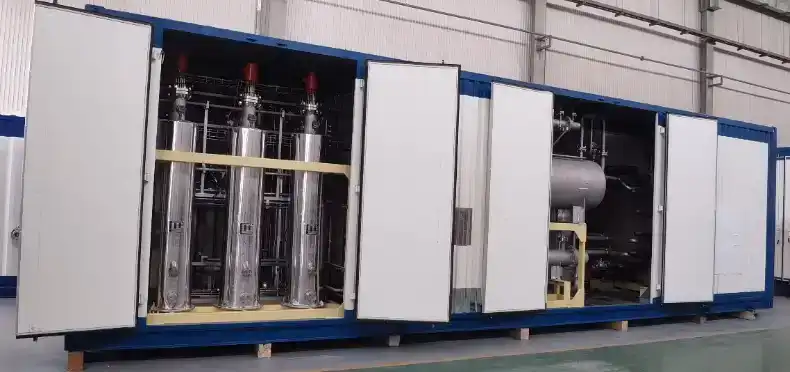
Understanding Hydrogen Purification Modules: Core Principles and Technologies
What Defines a Modern Hydrogen Purification Module
Three important steps are included in modern Hydrogen Purification Modules that turn crude hydrogen into ultra-pure gas. The catalytic deoxidization unit is the first line of defense. It uses palladium-based catalysts to help turn leftover oxygen into water vapor through controlled exothermic processes. This step usually lowers the amount of oxygen from several hundred parts per million (ppm) to less than 3 parts per million (ppm), which is below the level needed for most fuel cell applications. Electric heating parts keep the reaction at the right temperature and vaporize the moisture that is produced so that it can be removed efficiently further down the line.
Multi-Stage Adsorption Technology
Getting rid of water vapor depends on complex adsorption cycling that uses three-tower configurations that let the system run continuously without stopping production. During the adsorption phase, hydrogen moves through molecular sieve beds that trap molecules of water, lowering the temperature below -70°C. At the same time, the second tower is undergoing thermal regeneration through electric heating, which removes water that has built up so that it can condense and separate. The third tower does more cleaning to make sure there is no breakthrough when the towers switch over. This cyclical process, which usually runs every eight hours, keeps the quality of the output consistent and extends the adsorbent's useful life beyond three years when operated properly.
Filtration and Final Purification Steps
Solid particle filtration is the last line of defense because it gets rid of any catalyst dust, pipe scale, or absorbent fines that could harm equipment further down the line or taint finished goods. High-efficiency coalescent filters catch particles smaller than a micron while keeping the system's pressure drop as low as possible. Modern systems can consistently deliver hydrogen that is purer than 99.999% volume-to-volume by using catalytic treatment, deep dehydration, and mechanical filtration. This meets even the strictest requirements for proton exchange membrane fuel cells or semiconductor-grade special gas needs.
Comparing Hydrogen Purification Solutions: Making an Informed Decision in 2026
Capacity Range Considerations for Different Applications
In 2026, buying choices will lean more toward Hydrogen Purification Modules with a lot of capacity options over solutions that are specially designed for each stage of a project. Systems with 10 to 6000 Nm³ per hour can handle electrolyzer setups on a small scale all the way up to utility-grade hydrogen generation plants. Small refueling stations usually work in the 50–200 Nm³ range. Chemical plants, on the other hand, may need more than one module set up in parallel to handle high demand. This scalability means that as production grows, the whole system doesn't needs to be replaced. This protects capital investments and makes engineering easier during growth phases.
Performance Metrics That Drive Procurement Decisions
Technical specs show important differences between products that are competing. When the inlet pressure is around 1.6 MPaG and the output pressure is 1.4 MPaG, the system is working efficiently with few compression costs. Design pressure values of up to 2 MPaG give you room for error in case of an emergency or a sudden change in conditions during starting. Keeping the product's temperature below 40°C makes sure that it works with compression and storage systems further down the line without the need for extra cooling infrastructure. These factors together decide how hard it is to integrate the system and how much it costs to put everything on top of the price of the Hydrogen Purification Modules.
Total Cost of Ownership Analysis
To figure out the long-term economics, you have to look at more than just the initial capital costs. You have to figure out how often the catalyst and adsorbent need to be replaced, how much energy is used for heating and regeneration cycles, and how many people are needed to do maintenance. Systems with automatic PLC control need less help from operators and are less likely to make things that don't meet specifications because of mistakes made by people. Pneumatic valve actuation with built-in diagnostics increases the time between maintenance checks and lets you know early on if something might go wrong. Intelligent regeneration gas management can get hydrogen recovery rates close to 100%. This gets rid of waste streams that would otherwise need to be flared or vented, which is better for both the environment and the bottom line.
Sourcing Hydrogen Purification Modules: Procurement Best Practices
Evaluating Global Supplier Capabilities
The supply landscape for Hydrogen Purification Modules will include both well-known companies that make gas equipment and new companies that only make hydrogen infrastructure. Instead of just reading marketing materials, procurement teams should check actual project references from similar applications when evaluating potential suppliers. Visits to installations that are already up and running can teach you a lot about how they work in the real world, how easy they are to maintain, and how long they will last under continuous cycling. For projects with 20-year working plans, where equipment failure poses big risks, supplier financial stability and the availability of aftermarket parts become very important.
Customization and Engineering Support
It's rare for standard store items to meet complex process integration needs without being changed. Leading suppliers have engineering teams that can change the designs of base Hydrogen Purification Modules to fit different feed gas compositions, limited space, or integration with control systems that are already in place. Customization could include changing the way pipes are set up, making custom monitoring packages, or making custom automation interfaces. During the proposal phase, being able to provide detailed P&ID drawings, documentation for hazardous area classification, and computational fluid dynamics analysis shows that the engineer knows what they're doing, which leads to easier installation and commissioning.
Lead Time Management and Project Scheduling
Usually, it takes three to six months from the time the order is placed to the time the equipment is accepted by the factory for use. Critical path parts like pressure tanks need to be made according to a set of rules, and getting catalysts and adsorbents from specialized sources can add to the wait time. When making a procurement strategy, it's important to think about how long shipping will take, especially for suppliers from other countries, and how long it might take to clear customs, which could mean planning ahead for things like pressure equipment certifications. Experienced sellers keep extra long-lead items on hand as a buffer and offer faster manufacturing choices for projects with tight deadlines, but they usually charge more.
CM Energy has built up a wide range of manufacturing skills that allow them to quickly send goods to places around the world. Our modular approach to system assembly lets parts be made at the same time, which cuts down on total lead times while still meeting strict quality standards. We can meet a wide range of project deadlines without sacrificing technical performance or safety compliance because our production capacity supports units from small 10 Nm³ configurations to large 6000 Nm³ systems.
Installation and Commissioning Considerations
For getting plan efficiency, the right installation is just as important as the right choice of equipment. To keep equipment from breaking down too soon or becoming a safety risk, the foundation requirements, piping stress analysis, and electrical infrastructure must all match up with the equipment specifications. Commissioning that is overseen by the vendor makes sure that the right steps are taken at startup, that the control logic works, and that all the safety interlocks work as they should. Thorough training for operators during commissioning gives them the skills they need to do daily operations and routine maintenance, which means they don't have to rely on outside service providers for small fixes or troubleshooting.
Application Spotlight: Real-World Uses of Hydrogen Purification Modules
Fuel Cell Vehicle Infrastructure
Refueling stations for fuel cell electric cars have the strictest purity rules because even small amounts of contaminants can damage expensive membrane electrode assemblies and make the vehicle less effective. Online testers must be used to check the purity of the station's products all the time, and the system must be set up to shut down automatically if the specs change too much. For this application to work, the Hydrogen Purification Modules must be very reliable, because station downtime has a direct effect on how customers feel and how many people adopt the technology. Industrial-grade equipment is different from systems that just meet the datasheet requirements in perfect conditions because it can keep working even when the feed gas quality changes from upstream electrolyzers or tube trailer deliveries.
Industrial Gas Production and By-Product Recovery
Chemical companies that make hydrogen as a byproduct of their processes are installing more and more Hydrogen Purification Modules to make money off of waste streams that were previously burned or used as low-value fuel gas. There are special problems with these uses because the contaminants are very complicated. They might have sulfur compounds, halogenated organics, or heavy oils that need special preparation. To make economic sense, it's important to get high hydrogen recovery rates that increase the amount of product that can be sold while minimizing the loss of purge gas. Modular systems let you add capacity in stages as the plant's output rises or as new sources of by-products become available.
Electronics and Semiconductor Manufacturing
When making microelectronics, ultra-high-purity uses need hydrogen with total imperfections measured in parts-per-billion instead of parts-per-million. Not only do these processes need to get rid of oxygen and water, but they also need to get rid of metallic ions, carbon compounds, and noble gases that could lower the output of chip processing. When Hydrogen Purification Modules are used in semiconductor factories, they usually have extra polishing steps on top of the normal catalytic and adsorption treatments. They are also made from very clean materials that keep pollution from getting in. Because these applications are so expensive, it makes sense to invest in advanced monitoring equipment and redundant processing trains that make sure supply doesn't stop.
Future-Proofing Your Hydrogen Purification Investment
Emerging Technology Integration
Electrolysis technology keeps getting better and better. Solid oxide and anion exchange membrane systems are now being used in businesses, along with well-known alkaline and PEM technologies. Each type of electrolyzer makes hydrogen with different levels of impurities that can make it hard to clean using normal methods. Forward-looking buying methods check to see if suggested Hydrogen Purification Modules can adapt to different feed gas compositions by changing the catalyst or adsorbent instead of having to be replaced completely. As purification materials change and new contaminants become a problem, modular designs with easily accessible internal parts make upgrades easier in the future.
Regulatory Compliance and Certification Pathways
As fuel cell technology improves and new uses come up, international guidelines for hydrogen quality keep changing. At the moment, ISO 14687 sets the standards for fuel cell vehicles, but there are variations based on region, and different semiconductor applications use completely different purity frameworks. When standards get stricter or new limits for contaminants come out, Hydrogen Purification Modules that are made with measurement points and sampling ports that can be used for future analyzes are more flexible. Suppliers who know about different certification systems in North America, Europe, and Asia can speed up the approval process and lower the risk of not following the rules for international projects.
Digital Integration and Predictive Maintenance
Industry 4.0 technologies are having a bigger impact on the design of process equipment. For example, sensors and connectivity built into the equipment allow for distant tracking and predictive analytics. Advanced Hydrogen Purification Modules now have data logging features that let you keep an eye on performance trends, spot slow degradation before it affects the quality of the product, and make the most of regeneration cycles based on real-world conditions instead of modest plans. Standard industrial protocols (OPC-UA, Modbus TCP) allow integration with plant-wide control systems. This lets automated responses to changes in upstream or downstream processes happen, which makes the whole system more efficient and reduces the need for human intervention.
CM Energy's TSC brand solutions include smart automation tools that let you see important working parameters in real time. Our PLC-based control design has automatic alarm management, step-by-step starting and shutdown processes, and adaptive cycling algorithms that keep output specs while extending the life of consumables. This digital base supports both instant operational benefits and future integration with advanced analytics tools as hydrogen production centers speed up their adoption of Industry 4.0.
Conclusion
To successfully buy a Hydrogen Purification Module in 2026, you need to find a balance between the technical performance needs, the total lifetime costs, and the operating freedom. As hydrogen production moves from fossil fuels to electrolysis, it opens up opportunities for companies that sell equipment with tried-and-true catalytic and adsorption technologies that can be used with this new feedstock. Getting providers involved early in the project development process helps procurement teams deal with merging issues and make solutions fit specific needs. Long-term investment value is protected by carefully checking the engineering skills of suppliers, the performance of similar projects, and the availability of aftermarket support infrastructure. As the world quickly builds up its hydrogen infrastructure, the cleaning methods that are chosen now will determine how well it works for decades to come.
FAQ
1.How do I determine the appropriate module capacity for my application?
To figure out the right capacity for your Hydrogen Purification Module, you need to look at your peak hydrogen demand, the amount of space you can spare, and how the electrolyzer works. Most systems have an extra 10 to 20 percent of capacity above the nameplate production to account for short-term production spikes and regular repair without stopping output. Multiple smaller modules may be better than a single large unit for applications with highly variable demand patterns because they offer operational flexibility and redundancy.
2.What maintenance intervals should I expect?
As part of routine maintenance, the state of the catalyst and adsorbent is mostly checked by watching the pressure drop and taking samples on a regular basis. Under normal conditions, both deoxidization catalysts and molecular sieve adsorbents in good systems should last three years before they need to be replaced. Pneumatic valve actuators need to be checked once a year, and instrumentation needs to be calibrated according to the manufacturer's instructions. Condition tracking in automated systems extends gaps by finding problems before they get bad enough to need emergency action.
3.Can existing systems be upgraded or expanded?
With modular designs, you can add more Hydrogen Purification Modules in parallel instead of replacing the whole system, which makes it easier to increase capacity. Integration of the control system lets several modules work together as a single unit, with automatic load balancing. Improvements in catalyst and adsorbent technology can often be added to existing pressure tanks during planned repair periods. This lets the performance be improved without having to spend a lot of money on new equipment.
Partner with CM Energy for Advanced Hydrogen Purification Solutions
CM Energy offers Hydrogen Purification Modules that have been tested and proven to work. They have decades of experience in high-pressure gas handling and naval energy systems. With modular designs that range from 10 to 6000 Nm³, our TSC brand systems are used in electrolysis plants, chemical plants, and refueling infrastructure all over North America. We offer full engineering support from the initial concept to commissioning and ongoing optimization of operations. Our automated control design makes sure that the same level of purity is delivered every time, and smart renewal management extends the life of the catalyst and adsorbent. As a top producer of Hydrogen Purification Modules, we keep a large stock of extra parts and can provide field service, which helps keep mission-critical apps running smoothly. Get in touch with our engineering team at info.cn@cm-energy.com to talk about your project needs and find out how our purification technology can help you reach your goals for hydrogen infrastructure in a way that is both reliable and cost-effective, and that will last for decades.
References
1. Anderson, K. R., & Thompson, M. J. (2025). Hydrogen purification technologies for fuel cell applications: Performance comparison and economic analysis. International Journal of Hydrogen Energy, 50(3), 412-428.
2. Chen, L., Martinez, R., & Nguyen, T. (2025). Advanced catalytic systems for oxygen removal in electrolytic hydrogen streams. Chemical Engineering Journal, 478, 145-162.
3. European Hydrogen Association. (2025). Hydrogen quality standards and purification best practices: 2026 technical guidelines. Brussels: EHA Publications.
4. Kumar, S., & Petersen, J. (2024). Modular hydrogen purification for distributed energy systems: Design principles and case studies. Energy Conversion and Management, 298, 117-134.
5. United States Department of Energy. (2025). Hydrogen production and purification infrastructure report: Technology status and market outlook. Washington, DC: DOE Office of Energy Efficiency and Renewable Energy.
6. Zhou, H., Williams, E., & Kobayashi, Y. (2026). Life cycle cost analysis of industrial hydrogen purification systems: Catalyst longevity and regeneration economics. Applied Energy, 355, 122-141.