Rail Mounted Gantry Cranes: Essential for Container Terminals
When we talk about modern container terminal operations, one piece of equipment consistently stands out as indispensable: the rail mounted gantry crane. These powerful machines have revolutionized how cargo moves through ports and specialized vessels, providing efficiency, precision, and reliability that traditional handling methods simply cannot match. At CM Energy, we've witnessed how the right crane system transforms operational capabilities, particularly for offshore wind installation vessels and heavy-lift projects where every movement counts.
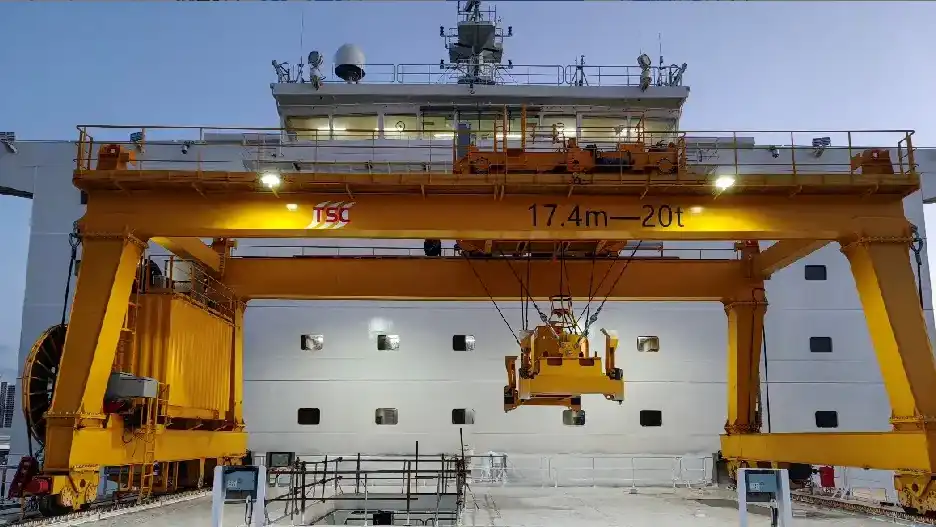
Understanding Rail Mounted Gantry Cranes – Core Knowledge for Buyers
Rail Mounted Gantry Cranes are a big change in the way that huge things are moved along set paths. Instead of moving around freely like other equipment, these cranes are fixed to dedicated rail systems that keep them stable and accurate every time. Because of this, they are especially useful in situations where accuracy is just as important as lifting power.
Working Principles and Key Components
A rigid structural frame that runs across tracks placed on either side of a marked area is what makes these systems work. The gantry moves along these tracks, and a trolley moves across the span at right angles to it. This makes a two-dimensional coverage area. This set-up lets operators place loads with millimeter-level accuracy, which is very important when working with wind turbine parts on ship decks or stacking containers in terminal yards.
Most of the time, power is sent thru cable reels or conductor bars that run along the rails. This constant source of electricity gets rid of the problems with fuel logistics and pollution that come with diesel options. Whether it's set up for ISO crates or specific heavy goods, the spreader attachment links thru a complex reeving system that allows for smooth vertical movement even when things are moving quickly, like when a ship is moving.
Main Types and Their Applications
Gantry configurations need to be different for each operational environment. Double-girder versions are the most rigid and can lift the most weight, so they are good for heavy-duty marine uses. Single-girder versions are a cheap way to support lighter loads and shorter spans. When one side needs to get around current infrastructure or when coverage needs to be uneven, semi-gantry designs work well.
Rail Mounted Gantry Cranes were made by TSC to be installed on the decks of wind turbine installation ships, cargo ships, and special technical platforms. Early on, our team realized that offshore settings need extra features that aren't included in standard terminals. These extra features include better corrosion protection, dynamic stability systems, and modular designs that make it easier for repair workers to get to remote areas.
Comparison with Rubber-Tyred Alternatives
When procurement workers have to choose between rail-guided and wheeled tools, they have to carefully weigh the pros and cons of each. Rail Mounted Gantry Cranes work best when there are consistent paths, a lot of stacking, and automated operations. Their fixed infrastructure makes it possible for automation systems to repeatably place things precisely. The electric power link ensures steady performance without stopping for refueling, which makes operations simpler.
Rubber-tyred systems make it easy to change the layout of a yard and adapt to new traffic patterns. That being said, this movement comes with higher energy costs, more frequent repair visits because tires wear out faster, and less advanced automation. The choice comes down to whether your business values precise positioning and low long-term costs more than layout flexibility.
Advantages of Rail Mounted Gantry Cranes for Container Terminals
When investing in capital tools, it's important to have a clear reason based on rewards that can be measured. Rail Mounted Gantry Cranes provide value in a number of ways that directly affect terminal profitability and competitiveness.
Operational Efficiency and Throughput Improvements
When compared to other ways of moving containers, terminals that have these systems always move more containers per hour. Throughput goes up directly when precise positioning, optimized travel speeds, and shorter cycle times are all used together. Automated versions can work nonstop with little control, keeping productivity high during nite shifts and bad weather, when human workers have trouble.
The rail guidance system gets rid of the positioning problems that come with free-ranging tools. It takes operators less time to make small changes and more time to make moves that get things done. When these cranes are connected to terminal operating systems, they use the best moving patterns to keep empty space to a minimum and utilization to a maximum.
Environmental and Economic Benefits
Getting electricity from renewable sources is one of the best things for companies that care about the environment. Rail Mounted Gantry Cranes don't give off any direct emissions when they're working, which helps terminals meet stricter environmental rules and help companies meet their carbon reduction goals. The cost of electricity to move a container is usually much lower than diesel options, and prices stay fixed even when the oil market changes.
Because of these continued operational saves, CM Energy has seen terminals get their money back on their crane investments in the time they were supposed to. The lower maintenance needs—fewer consumables, longer component life, and simpler systems—make the total cost of ownership even better. Certification from DNV, ABS, BV, LR, and CCS, among others, shows that these improvements in efficiency don't lower safety or reliable standards.
Safety Features and Lifecycle Extension
Modern Rail Mounted Gantry Cranes have safety features that take into account the risks that come with moving a lot of cargo. Anti-collision systems keep nearby cranes from running into each other or objects. Load monitoring tools let workers know when a structure is overloaded before it gets too heavy. Storm grounding systems keep things safe during severe weather, which protects both property and people.
Accessibility for maintenance has a direct effect on the availability and lifecycle prices of machinery. TSC designs include service platforms, inspection entry points, and modular component arrangements that techs can get to without having to take the whole thing apart. This way of thinking acknowledges that regular maintenance done on time keeps expensive fixes from having to be made in an emergency and makes technology last much longer than was originally thought.
Comparison and Decision Guide: Selecting the Right Crane for Your Terminal
When buying material handling equipment, procurement professionals have to deal with a lot of different factors. There are different types of cranes that can technically meet basic needs, but the best Rail Mounted Gantry Crane relies on specific operating factors and long-term strategic considerations.
Evaluating Different Crane Configurations
In some situations, Rail Mounted Gantry Cranes are up against high bridge cranes and ship-to-shore container cranes. Bridge cranes are great for covering large areas, but they need a lot of building infrastructure. Ship-to-shore cranes have the longest reach on the water, but they aren't very useful for working in yards inside of cities. The Rail Mounted Gantry Crane is in the middle because it can be used outside, is powered by electricity, and can be used for both dock-side and yard stacking.
The building standards are very different. For bridge cranes to work, they need building columns that can hold up runway beams at a high level. Ship-to-shore cranes need special supports and wharves that are strengthened. Rail Mounted Gantry Cranes need rail supports that are properly prepared. Usually, this is a smaller investment in infrastructure than in building changes.
Site-Specific Considerations
Conditions of the climate affect the choice of tools in ways that specs alone can't show. Coastal areas with salt air need better corrosion protection, like special coatings, sealed electrical enclosures, and materials that don't rust. Places where there are a lot of winds need strong anchoring systems and rules for how to work that put safety first in bad weather.
How the yard is laid out determines the best span lengths, cantilever needs, and stacking strategies. Rail Mounted Gantry Cranes work best when their terminals have regular geometry. Even tho they cost more to run, mobile tools may be better for plans that aren't always the same. Before making a decision, a thorough study of container flow patterns, peak volume times, and expansion plans that might impact how equipment is used in the future is needed.
Customization and Procurement Considerations
Standard store equipment doesn't always work perfectly for unique tasks. CM Energy specializes in custom solutions that meet the needs of each business. Our engineering team looks at what the customer wants—deck sizes, load patterns, environmental conditions, and interface needs—to set up systems that work best without being too complicated or expensive.
Getting customized Rail Mounted Gantry Cranes usually takes longer than getting standard goods. The supplier engineering team, classification societies, and customer technical staff all need to work together closely during the design phase alone. Major structure parts are made according to accepted plans, and quality checks are done at key points along the way. Factory acceptance testing makes sure the system works well before it is shipped, and installation on-site needs to be coordinated with the plans for building the ship or the terminal's operating hours.
Financial arrangements vary based on project scale and customer circumstances. Outright purchases, lease-to-own programs, and performance-based contracts each offer distinct advantages. Suppliers with a lot of experience can help you set up deals so that payment plans work with project cash flows and business revenue realization.
How to Optimize Operation and Safety of Rail Mounted Gantry Cranes
Getting equipment that can do the job is just the beginning. To get the full value from your Rail Mounted Gantry Cranes, you need organizational excellence, proactive upkeep, and practices for constant growth. These are things that many organizations forget about during the procurement process.
Operator Training and System Integration
Even automated systems need trained workers to oversee them, fix problems, and fix things by hand when they go wrong. In-depth training programs should not only teach people how to use controls, but also how to understand how systems work, what to do in an emergency, and how to do routine repair. When operators know why systems work the way they do, they can make better decisions in real time and give useful feedback for making operations better.
Integration with terminal management software increases the efficiency of the crane by making the best use of move patterns and cutting down on travel that isn't needed. These systems use information about the type of container, where it's going, what equipment is available, and priority rules to make work instructions that are useful. The Rail Mounted Gantry Crane stops being a stand-alone asset and starts working as part of a coordinated system. This makes the whole terminal more efficient.
Advanced Safety Technologies
Collision avoidance systems are an important safety measure for terminals that use multiple cranes close together. Awareness zones are made around moving equipment using laser tracking, ultrasonic sensing, or radio-frequency placement. When possible conflicts are found, systems automatically slow down or stop movement to avoid touch that could harm people or damage equipment.
Load tracking tells workers in real time when the lifting forces they are using are getting close to their limits, so damage doesn't happen to the structure. These systems take into account things like acceleration forces, load swing, and environmental factors that aren't taken into account by static calculations. Over time, load data shows trends of use that help plan repair and when to replace parts.
TSC has remote troubleshooting features that let technical help happen without having to go to the spot in person. Diagnostic data is sent to support centers, where experts look at performance trends, spot new problems, and walk local teams thru the steps needed to fix them. This feature is especially useful for offshore sites and faraway ports that wouldn't be able to get expert help right away otherwise.
Proactive Maintenance Strategies
It is only when maintenance is done properly that Rail Mounted Gantry Cranes can reach their impressive service life potential. Scheduled lubrication of wire ropes, sheaves, and rail wheels keeps them from wearing out too quickly. Inspections done on a regular basis find stress cracks and rust before they damage the structure. When you check an electrical system, you can find worn contacts and loose links that could break down during busy times.
Predictive methods are possible with documentation systems that keep track of past maintenance, part replacements, and operational hours. Instead of waiting for problems to happen, maintenance teams plan for when parts will reach the end of their useful lives and replace them during planned breaks. This strategy cuts down on unplanned outages that stop the terminal from working and cost a lot more to fix quickly.
Sourcing and Procurement Insights for Global Buyers
Picking the right source partner is just as important as picking the right Rail Mounted Gantry Crane. The connection goes far beyond the purchase. It includes years of operational support, parts availability, and expert help that show how much the equipment is really worth.
Evaluating Manufacturers and Suppliers
The best signs of confidence are track records that have been used in similar situations. Suppliers who have done a lot of installations in similar settings show that they understand the challenges and needs of each situation. Certifications from classification societies show that designs meet strict safety and performance standards that are known all over the world. Manufacturing capabilities, such as welding licenses, quality systems, and testing facilities, show if providers can regularly deliver equipment that meets requirements.
Rail Mounted Gantry Cranes from CM Energy are used on ships all over the world, and the company has decades of experience working in the marine business. Our commitment to world standards is shown by the fact that we have certifications from several classification groups. Experts on the engineering team know how to handle the special needs of heavy-lift operations, installing offshore wind farms, and other situations that are different from normal terminal operations.
Quality Assessment and Delivery Capabilities
Buyers should check that providers have good quality control methods by inspecting their facilities and calling past customers for references. ISO quality systems give guidelines, but the results depend on how they are used. Welding plant certifications from groups like DNV and BV show that the plant can make structural parts that meet important standards. Protocols for factory acceptance testing show that the company wants to give fully working equipment and not put off quality issues until the installation phase.
Delivery dates must match up with project plans, especially when installing vessels that are linked to building goals. Reliable suppliers keep an inventory of parts, manage relationships with subcontractors, and use project management techniques that keep dates. Buyers are protected by penalty agreements in case of schedule failures, but those situations can be avoided by choosing providers who have a history of meeting deadlines.
After-Sales Service and Support
Technical help that responds quickly, parts that are easy to find, and service skills are all very important for long-term worth. When problems happen, suppliers with global service networks can quickly send out experts. How long downtime lasts during failures is determined by spare parts operations, such as stocking methods, shipping speed, and the ability of parts to be swapped out. Access to technical support, such as remote diagnostics and troubleshooting help, keeps equipment working.
CM Energy's method is based on lifetime partnerships instead of transactional ties. We keep an inventory of parts for machines we've sold, train customer repair teams on a regular basis, and offer performance optimization services that help businesses get the most out of their investments. This dedication shows that you know that happy customers are the best way to get more business and leads than any marketing campaign.
Conclusion
In conclusion, based on their proven performance benefits, Rail Mounted Gantry Cranes have become an important part of container ports and specialty vessel operations. Their accuracy, speed, low impact on the environment, and ability to work with automation solve the main problems that modern cargo handling operations face. Before deciding to buy these systems, companies need to carefully look at their operational needs, the conditions of the site, and the capabilities of the supplier. Companies that do this always end up with big benefits, like higher productivity, lower operating costs, and longer equipment lifecycles. As offshore wind development speeds up and supply chain efficiency becomes more important, Rail Mounted Gantry Cranes that are properly designed and kept will become even more important from a strategic point of view.
FAQ
1.What distinguishes rail mounted gantry cranes from mobile alternatives?
Rail Mounted Gantry Cranes work on fixed tracks, which makes positioning more accurate and allows for full automation. They use electric power that is constantly sent to them by rail-side devices. This gets rid of the need for fuel storage and pollution. Mobile options give you more layout options, but they usually use more energy and need more upkeep.
2.How long does procurement and installation typically require?
Custom Rail Mounted Gantry Crane projects usually take a long time. The design and engineering stages alone can take several months, and then the manufacturing and installation stages take even longer. Coordinating with schedules for building ships or operating windows at terminals makes things more complicated and needs early planning and dedicated project management.
3.What maintenance do these systems require?
Lubricating wire ropes, wheels, and mechanical systems on a regular basis keeps them from wearing out too quickly. Inspections of structures on a regular basis find problems with rust or stress early on. Connections and parts of electrical systems need to be checked regularly. Rail Mounted Gantry Cranes that are well taken care of will last for decades, and proactive maintenance will help keep unplanned downtime to a minimum.
Partner with CM Energy for Your Rail Mounted Gantry Crane Solution
CM Energy, which does business under the TSC name, is ready to help you with your unique lifting needs by providing custom Rail Mounted Gantry Crane options. Our engineering team has brought equipment to wind installation ships, heavy-lift ships, and specialized platforms around the world, so they know how to work in offshore environments. We make equipment that meets the strictest international standards. Our products have been approved by classification societies like DNV, ABS, BV, LR, and CCS. Our Rail Mounted Gantry Crane designs include high-tech features like anti-collision systems, remote diagnostics, and modular construction that make them safer and easier to maintain. Get in touch with us at info.cn@cm-energy.com to talk about your needs with a dependable Rail Mounted Gantry Crane manufacturer that is dedicated to providing custom solutions, quick support, and long-term value for your important material handling tasks.
References
1. International Organization for Standardization, "Cranes — Design Principles for Loads and Load Combinations — Part 1: General," ISO 8686-1, 2012.
2. Fédération Européenne de la Manutention, "Rules for the Design of Hoisting Appliances," FEM 1.001, Third Edition, 1998.
3. Maritime and Port Authority Technical Standards, "Guidelines for Container Terminal Equipment Specifications," 2019.
4. Classification Society Joint Panel, "Certification Requirements for Offshore Crane Systems," DNV-ABS-BV Joint Publication, 2020.
5. International Association of Ports and Harbors, "Best Practices in Terminal Equipment Procurement and Management," IAPH Technical Report Series, 2021.
6. Offshore Wind Installation Equipment Working Group, "Specialized Lifting Systems for Offshore Wind Turbine Installation Vessels," Industry White Paper, 2023.