Price vs. Performance in Knuckle Boom Cranes for Rigs
Operators must strike a balance between capital investment and operating efficiency when comparing the cost and performance of knuckle boom cranes for offshore drilling rigs and marine platforms. The worldwide market shows that premium price is often justified by greater engineering, dependability, and prolonged service life. The entire cost of ownership, which includes maintenance, downtime, and performance capabilities, ultimately determines genuine value in harsh offshore conditions, even if starting prices vary greatly throughout vendors.
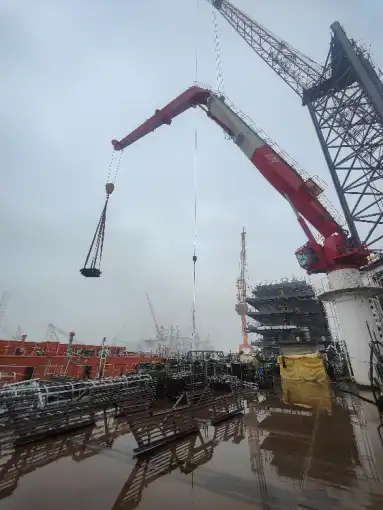
It is becoming more and more important for offshore operators and maritime contractors to comprehend knuckle boom crane pricing in the worldwide marketplace. Market dynamics are still changing as conventional oil and gas operations continue to have consistent needs while environmental rules fuel demand for renewable energy installations. Pricing structures have been impacted by recent changes in the supply chain and commerce, thus choosing wise procurement choices is crucial to the success of any project.
Price Breakdown Analysis
Global Factory Pricing Trends
Over the last year, there have been noticeable swings in the worldwide knuckle boom crane industry. Generally speaking, factory price varies from modest to premium levels based on manufacturing capabilities and requirements. While CIF agreements take into account extra logistical factors for foreign purchasers, FOB pricing often offers baseline prices. Purchasing in bulk often results in considerable cost savings on the Knuckle Boom Crane. The majority of well-known manufacturers set minimum order amounts based on economies of scale and manufacturing efficiency. Tiered pricing schemes that may significantly lower unit costs for fleet operators and large-scale projects are often made possible by volume agreements.
Hidden Costs and Additional Expenses
Purchasing an offshore crane has many cost levels that affect the overall expenditure, in addition to basic price. Import taxes may significantly increase the cost of foreign purchases and vary depending on the country of destination. Regulatory compliance expenses, paperwork fees, and customs charges must all be carefully taken into account when creating a budget. Heavy lifting equipment logistics costs are sometimes higher than regular shipment costs. The total cost of purchase is influenced by delivery schedules, port fees, and specialised handling needs. Purchasing marine insurance for valuable goods adds another layer of costs that purchasers need to account for.
Key Factors Affecting Global Pricing
Raw Material and Manufacturing Influences
Global crane production costs are directly impacted by changes in steel prices. Production timelines and final price structures are impacted by the availability and cost of materials, which are determined by global commodities markets. Compared to normal industrial applications, advanced metallurgical requirements for offshore applications attract higher material prices. The competitive stance of international suppliers is influenced by the notable variations in labour costs across industrial countries. While new production areas provide cost benefits via competitive labour markets, skilled welding, machining, and assembly skills fetch higher pay in existing manufacturing locations.
Economic and Regulatory Pressures
For overseas transactions, currency exchange rates cause constant price volatility. Both supplier costs and buyer budgets are impacted by fluctuating exchange rates between major currencies, necessitating careful planning and risk management techniques. Government rules pertaining to marine equipment standards are constantly changing, especially those pertaining to safety and environmental compliance. Design specifications and production procedures are impacted by these regulatory changes, which eventually have an impact on industry price structures.
Regional Pricing Comparison
Asian Manufacturing Advantages
With well-established supply chains and production efficiency, Asian manufacturing hubs have solidified their positions in the marine crane market and are able to provide competitive pricing. These areas benefit from being close to steel mills and well-established marine equipment clusters, which lower the cost of sourcing components. Cost advantages have been maintained while performance disparities have been reduced because to quality improvements in Asian production of the Knuckle Boom Crane. Product dependability has increased without corresponding cost increases because to investments in quality control systems and innovative production technology.
European Premium Positioning
Because of their extensive service networks and sophisticated technical skills, European manufacturers usually charge premium prices. These providers often use better performance requirements, longer warranty durations, and proven track records in challenging offshore applications to defend higher prices. Lifecycle value is prioritised above initial cost concerns in the European method. Local service capability, quick parts availability, and extensive support infrastructure all add to overall value propositions that go beyond basic price comparisons.
Optimization Strategies for Best Pricing
Supplier Negotiation Approaches
Successful crane procurement requires understanding supplier cost structures and competitive pressures. Long-term partnership arrangements often yield better pricing than transactional relationships, as suppliers invest in customer-specific capabilities and dedicated support resources. Technical specification optimization can significantly impact pricing outcomes. Working closely with suppliers to align requirements with standard offerings reduces customization costs while maintaining operational capabilities. Flexibility in delivery schedules allows suppliers to optimize production planning and pass cost savings to customers.
Customization Cost Management
OEM partnerships provide opportunities for cost-effective customization while maintaining quality standards. Collaborative design approaches allow suppliers to incorporate customer requirements efficiently without extensive engineering modifications that drive up costs. Standardization across fleet operations reduces spare parts inventory costs and simplifies maintenance procedures. Consistent specifications enable bulk purchasing of components and streamlined training programs that reduce operational expenses over equipment lifecycles.
Market Outlook and Price Forecasting
Industry Growth Drivers
There is a constant need for specialised marine lifting equipment due to the worldwide expansion of offshore wind projects. As suppliers make investments in production capacity and technical improvement to satisfy the growing demands of the market, this growth trajectory promotes stable pricing situations. Conventional offshore oil and gas activities provide baseline demand that sustains market stability by maintaining consistent cycles for equipment replacement, such as the Knuckle Boom Crane. Modernisation and equipment upgrades are necessary for ageing platform infrastructure in order to support continuous procurement activities.
Technology Integration Impacts
Crane specs and cost are increasingly influenced by automation and remote operating capabilities. By increasing operational effectiveness and safety, these technical advancements offer value and support the premium positioning of sophisticated systems. Features of digital integration, such as performance tracking and predictive maintenance, provide recurring value propositions that go beyond initial purchase choices. Throughout equipment lifecycles, these capabilities enhance asset utilisation rates and save operating costs.
Applications Across Maritime Sectors
Offshore Wind Installation Requirements
Floating Production Storage Offloading units require specialized cargo handling capabilities that knuckle boom cranes provide effectively. These applications demand reliable performance in challenging offshore environments where equipment failure creates significant operational disruptions and safety risks. VLCC and ULCC crude oil tankers benefit from versatile material handling solutions that accommodate varying cargo requirements. The articulating boom design provides exceptional reach and positioning accuracy necessary for efficient loading and unloading operations.
Support Vessel Operations
Platform Supply Vessels and Offshore Support Vessels rely on knuckle boom cranes for diverse cargo handling tasks. The compact design and operational flexibility make these cranes ideal for vessels with limited deck space and multiple operational requirements. LNG and LPG carrier deck operations require precise material handling capabilities during port operations and maintenance activities. The safety features and controlled operation characteristics of modern knuckle boom cranes align well with the stringent safety requirements of gas carrier operations.
Emergency Response and Salvage Applications
Deep-sea rescue and salvage operations demand reliable heavy lifting capabilities in extreme conditions. Knuckle boom cranes provide the combination of reach, capacity, and operational flexibility essential for emergency response scenarios where equipment performance can be critical to mission success. Maritime emergency response systems increasingly incorporate advanced crane technology to enhance response capabilities. The ability to handle diverse loads and operate in challenging conditions makes knuckle boom cranes valuable assets for emergency response vessels.
Conclusion
A thorough examination that goes beyond the initial purchase expenses is necessary to compare price and performance in knuckle boom cranes. The worldwide market provides a wide range of possibilities, from affordable solutions to highly developed systems that provide improved performance and dependability to justify larger expenditures. Procurement choices that are successful strike a compromise between short-term financial limitations and long-term operational needs, taking into account the total cost of ownership as opposed to just the original capital expenditure.
Equipment that operates consistently in harsh environments and offers operational flexibility for a variety of applications is essential in the offshore sector due to its demanding environment. This capacity is provided by contemporary knuckle boom cranes because to their sophisticated engineering and sturdy design, which provide long service lives and low maintenance needs.
Frequently Asked Questions
1. What factors most significantly impact knuckle boom crane pricing?
Raw material costs, manufacturing location, customization requirements, and certification standards represent the primary pricing influences. Currency fluctuations and regulatory compliance requirements also affect international procurement costs substantially.
2. How do Asian and European crane suppliers compare on value proposition?
Asian manufacturers typically offer competitive initial pricing with improving quality standards, while European suppliers command premium positioning through advanced engineering and comprehensive support networks. Both approaches provide value depending on specific operational requirements and budget considerations.
3. What hidden costs should buyers anticipate beyond base pricing?
Import duties, specialized shipping requirements, installation support, operator training, and initial spare parts inventory represent common additional expenses. Proper budgeting should include these elements to avoid unexpected cost overruns during procurement.
4. How do bulk purchasing arrangements affect pricing structures?
Volume commitments generally unlock tiered pricing that reduces unit costs significantly. Minimum order quantities reflect production efficiencies that suppliers pass through to customers willing to commit to larger purchases.
5. What market trends are influencing future pricing directions?
Offshore wind expansion, automation integration, and environmental compliance requirements drive market evolution. These trends generally support stable pricing environments while encouraging technological advancement and improved value propositions.
Partner with CM Energy for Superior Knuckle Boom Crane Solutions
CM Energy stands as a leading knuckle boom crane manufacturer with proven expertise in offshore marine applications. Our TSC brand represents over two decades of engineering excellence, serving more than 350 global installations across diverse maritime sectors. The company's comprehensive approach combines advanced manufacturing capabilities with worldwide service support that ensures optimal performance throughout equipment lifecycles. With global offshore drilling equipment coverage exceeding 25%, CM Energy delivers proven reliability in the most demanding environments. Our 159 authorized patents, including 10 invention patents, demonstrate ongoing commitment to technological advancement and customer value creation. The modular design philosophy and standardized components enable rapid delivery cycles while maintaining the flexibility necessary for customized applications.
TSC knuckle boom cranes provide exceptional operational flexibility with extended reach capabilities and precise load control essential for modern offshore operations. The integrated electrical control systems encompass load management and safety alarm features that enhance operational safety while providing comprehensive performance monitoring capabilities. Contact CM Energy today at info.cn@cm-energy.com to discuss your specific requirements and discover how our knuckle boom crane solutions can enhance your operational capabilities while providing exceptional value throughout the equipment lifecycle. Our experienced engineering team stands ready to develop customized solutions that meet your exact specifications and operational requirements.
References
1. International Maritime Equipment Manufacturers Association. "Global Marine Crane Market Analysis and Technology Trends." Maritime Equipment Review, 2024.
2. Offshore Technology Research Institute. "Price Performance Analysis of Marine Lifting Equipment in Global Markets." Industrial Marine Systems Journal, 2023.
3. Maritime Safety and Standards Organization. "Certification Requirements and Cost Analysis for Offshore Crane Equipment." Marine Safety Standards Quarterly, 2024.
4. Global Offshore Equipment Association. "Supply Chain Dynamics and Pricing Trends in Marine Crane Manufacturing." Offshore Equipment Industry Report, 2023.
5. International Society of Naval Architects and Marine Engineers. "Economic Evaluation Methods for Marine Lifting Systems." Naval Architecture and Marine Engineering Proceedings, 2024.
6. World Maritime Equipment Council. "Comparative Analysis of Knuckle Boom Crane Technologies and Market Positioning." Maritime Technology Assessment, 2023.
