Marine Cranes Guide for Offshore Lifting and Cargo Handling
Modern offshore operations rely heavily on Marine Cranes, which provide essential lifting solutions for platform setups and cargo handling on ships. Because they are made to work in harsh maritime settings, these specialized cranes are very reliable and accurate when moving things abroad. From installing wind turbines to running an FPSO, marine cranes make it easy to move big loads and goods in a wide range of offshore situations. This complete guide goes over the most important parts of choosing, using, and keeping marine crane systems so that you can get the most out of your offshore activities and be as productive as possible in rough seas.
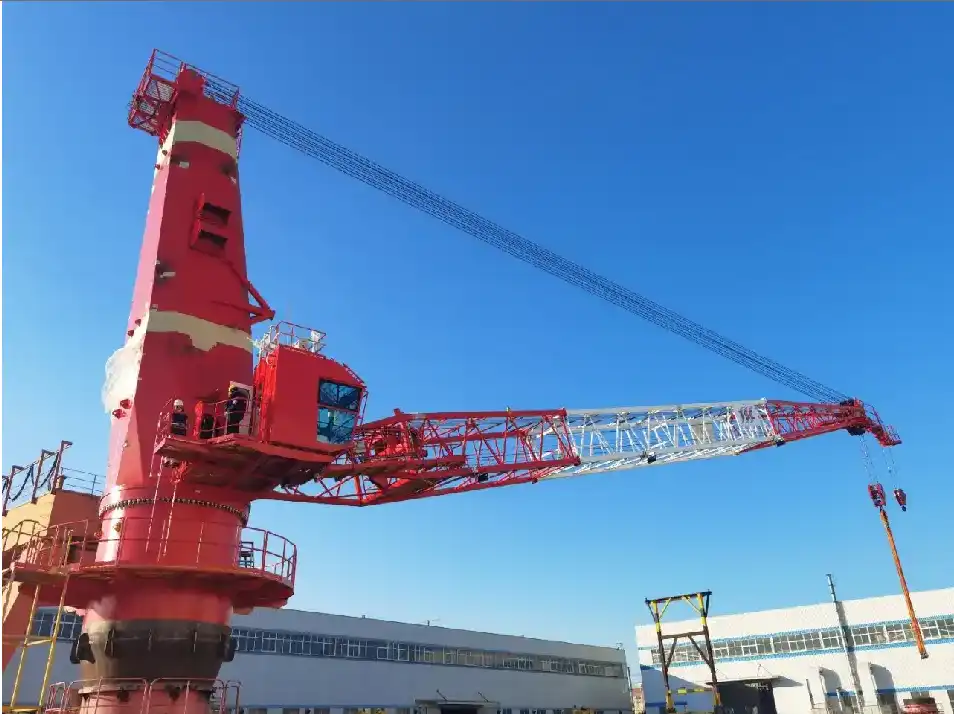
Understanding Marine Cranes: Types, Operations, and Safety Features
The offshore business needs strong lifting solutions that can handle complicated cargo operations in marine settings that are always changing. Marine Cranes are made to deal with these problems by using cutting-edge tech and special features that make sure they work safely and effectively on all kinds of ships and offshore sites.
Essential Components and Operational Principles
Modern naval lifting systems have advanced wire rope luffing mechanisms improving load control and precise placement. TSC Slew-bearing Crane-wire Rope Luffing Crane works best with ample deck space for proper positioning. Electrohydraulic power units ensure consistent performance while reducing complexity. Precision control systems handle six-degree-of-freedom movements. Modern control rooms on pedestals give full sight and intuitive controls. Optional remote controls provide flexibility while following safety rules.
Crane Types and Design Variations
Different offshore uses need different crane designs. Fixed boom systems offer high stability and heavy lift capacity for moving bulk goods and equipment where maximum power matters more than flexibility. Knuckle boom designs improve maneuverability in space-limited settings, reducing pendulum effects. Telescopic versions provide extended reach for tactical cargo movement. TSC Slew-bearing Crane-wire Rope Luffing Crane advanced wire rope luffing systems enable precise load placement under changing loads, serving as an effective alternative when increased reliability and lower maintenance are priorities.
Critical Safety Systems and Compliance Standards
Offshore lifting activities need complete safety systems that keep people and tools safe and make sure that international rules are followed. Load tracking systems keep an eye on operational factors all the time and give real-time feedback to stop overloading and the buildup of structural stress.
Automatic load cut-off systems and emergency stopping systems are very important safety features for important lifting tasks. When something goes wrong, these systems react right away, and they keep the load in the right place during emergency events. Multiple levels of safety are built into overload protection systems like MOPS, AOPS, and CT setups.
Classification society certificates from groups like DNV, ABS, BV, CCS, and LR make sure that ocean equipment meets strict international standards. These certificates prove that the structure is sound, that the operations are safe, and that the environmental rules are followed in a range of marine working circumstances.
Comparing Marine Crane Technologies and Selecting the Right Solution
To choose the right naval lifting technology, you need to carefully look at the performance standards, working needs, and environmental conditions. Knowing the differences between the technologies that are available helps you make smart choices that match the capabilities of your tools with the needs of specific offshore uses.
Hydraulic versus Electric Drive Systems
Due to their better power-to-weight ratios and exact control characteristics, electrohydraulic power systems rule modern Marine Cranes. The output of these combined systems stays the same even when the load changes, and they are reliable and use little energy. Because electrohydraulic units are small, they make the best use of room on ships and offshore sites.
Electric drive options are better in situations where noise levels need to be low and environmental effect needs to be low. These systems are great at precise positioning jobs and use very little energy when they're working for long periods of time. The choice between hydraulic and electric systems is heavily based on the needs of the operation and the power generation skills of the vessel.
Load Capacity and Boom Configuration Analysis
To find the right load capacities, you have to look at the working needs in a range of boom settings and environmental conditions. Modern naval lifting systems can handle main hook capacities that range from light loads that are good for moving items around regularly to heavy loads that are over several hundred metric tons.
Boom length setups have a direct effect on how flexible operations can be and how much weight they can carry. Boom lengths that can be changed allow for flexible placement while keeping the structure's stability under dynamic loading conditions. When choosing equipment, it's important to think carefully about how the link between boom extension and load capacity will work in all possible operating situations.
Auxiliary hook systems give operators more options for moving loads and handling them at the same time. These secondary lifting points make it possible to do complicated rigging tasks while keeping the primary load-carrying powers. This makes operations much more efficient during multi-phase lifting processes.
Brand Evaluation and Technology Comparison
The TSC naval crane systems are high-tech engineering solutions that blend tried-and-true dependability with cutting-edge technology. The complex wire rope luffing mechanisms in these systems make them perfect for tough offshore jobs while still working with a wide range of vessel types and practical needs.
Because TSC systems are made up of modules, they can be changed and expanded to fit the needs of each project. Standard setups work for common offshore tasks, and special engineering solutions are made to deal with specific operating problems. This adaptability makes sure that the right tools is used for a wide range of marine tasks.
Leading makers use quality control methods to make sure that their products always work and are reliable. When you combine full ISO quality systems with the control of a classification society, you can be sure that the tools will work safely and reliably for a long time.
Procurement Guide: Buying, Renting, and Customizing Marine Cranes
To make good buying plans for marine lifting equipment, you need to look at all of the costs over its entire life, as well as its working needs and your company's long-term goals. Because overseas operations are so complicated, it's important to think carefully about equipment specs, delivery times, and support systems to make sure the project runs smoothly.
Investment Options and Financial Considerations
Buying new equipment gives you the most options for customization and full guarantee coverage. It also makes sure that you can use the newest technology and get the best performance over its entire lifecycle. These efforts are in line with long-term operational plans and will give consistent performance over long service terms.
Leasing gives you financial freedom, lowers the need for capital expenditures, and lets you use cutting-edge technology without having to pay a lot of money up front. These choices are especially useful when the needs of a project are unique or when the market is unclear and operating flexibility is more important than owning tools.
The market for used equipment offers cheaper options for businesses that want to stick to their budgets while still meeting the needs of certain uses. By carefully looking at the past, maintenance records, and remaining service life of used equipment, you can get the most for your money while also minimizing the practical risks that come with it.
Customization and Engineering Solutions
Customized Marine Cranes lifting solutions are made to meet specific operating needs that can't be met by standard designs. Custom engineering lets you get the best equipment specs for a certain type of vessel, its intended use, and the situations it will be working in. TSC specializes in making custom solutions that use both tried-and-true technology and new ways of doing engineering.
As part of the customization process, working needs, environmental conditions, and merging issues are all carefully looked at. This joint method makes sure that the right equipment is specified while still following all rules and standards. Specialized features and operational improvements that boost productivity and safety can be added with the help of advanced design tools.
Modular design principles allow for scalable solutions that can adapt to changing operating needs while keeping equipment compatibility and update paths open. This method offers long-term benefits by making tools more useful in a variety of operational situations by allowing it to change and improve itself.
Support Infrastructure and Service Considerations
When buying tools, having a guarantee that covers everything and being able to get replacement parts are very important. Having reliable access to original parts and expert help keeps operations running while reducing the risks of downtime that come with fixing or maintaining equipment.
International service networks provide the necessary infrastructure for global operations and make sure that people can respond quickly when things go wrong. Established service relationships make it easy to schedule repair and get emergency help in a lot of different places.
Training programs and technical documents make sure that the right equipment is used in the best way possible while still following safety rules and running efficiently. Full training for operators and advice on how to keep equipment in good shape allow for efficient management over long service periods and the highest return on equipment investment.
Maintaining Marine Cranes for Maximum Performance and Longevity
Effective repair plans keep operations running at their best, stop problems before they happen, and extend the life of tools. Comprehensive maintenance programs combine routine checks with predictive maintenance methods to improve machinery efficiency and performance throughout demanding offshore operations.
Routine Maintenance and Inspection Protocols
Systematic inspection plans make sure that possible problems are found quickly and that safety rules and working standards are followed. Regular inspections of important parts like wire ropes, hydraulic systems, and structural elements stop harm from getting worse over time and keep operations safe.
Modern sea Marine Cranes are built in a way that keeps important parts safe from the harsh sea climate while making upkeep easier. Power packs, hoisting mechanisms, luffing systems, and control tools are organized on the inside of the machine so that repair can be done in a planned way and the machine is exposed to less corrosive circumstances.
For hydraulic system repair, it's important to pay close attention to how clean the fluid is and how the parts are holding up. Regularly checking the fluids and replacing the filters keeps the system working well and stops problems caused by contamination. Inspection of seals and pressure tests make sure that they will continue to work reliably even in harsh operating circumstances.
Preventive Maintenance Strategies
Predictive maintenance uses high-tech tracking systems to figure out how well equipment is working and when it should be serviced. Vibration analysis, heat imaging, and oil analysis are all early warning systems that let repair workers fix problems before they get too bad.
Lubrication programs ensure optimal component protection while extending service intervals and reducing wear rates. Systematic greasing schedules and lubricant selection optimize component longevity while maintaining operational efficiency under varying environmental conditions.
Weld checking, coating maintenance, and corrosion avoidance techniques that are important for marine settings are what structural integrity monitoring is all about. Regular checks of the boom's construction, the state of the crane tower, and the strength of the foundations make sure that the structure stays reliable for long periods of time.
The sound-proofed and resiliently suspended cabin design needs special care during repair to keep the operators safe and comfortable. It is important to check isolation systems and weather controls on a regular basis to make sure they keep working properly and in line with comfort standards.
Performance Optimization and Upgrade Opportunities
Improving operational effectiveness through system upgrades and component improvements can make tools last a lot longer and be more productive at the same time. Modern robotics and control systems make operations more effective while also lowering the work of operators and raising safety standards.
Remote debugging lets you quickly find and fix business problems with as little downtime and service needs as possible. Advanced diagnostic systems keep a close eye on all of an equipment's statuses and can schedule preventative repair and improve performance.
Programs that change or improve equipment make it possible to add new technologies and operational skills while also increasing output and extending the life of the equipment. These ways to update offer cheaper options to replacing all of your tools while still keeping your working skills competitive.
Conclusion
Marine Cranes are an important part of offshore activities because they reliably lift heavy loads and make it easy to move goods between different types of marine applications. To choose the right tools, you need to carefully look at your long-term strategic goals, operational needs, and technological skills. TSC marine lifting systems are known to be reliable and use cutting-edge technology to meet the specific needs of current offshore activities. Effective maintenance plans and a full support system make sure that equipment works at its best for longer amounts of time while still meeting safety standards and being operationally efficient. When you buy good marine lifting tools, you get long-lasting competitive benefits through better operational skills and higher productivity.
FAQ
1. What factors should be considered when selecting marine lifting equipment for offshore operations?
Some of the things that go into the selection process are the required load capacity, the required boom length, the environment, the limited deck room, and the need to integrate with current vessel systems. The operational profiles and duty cycles have a big impact on the specifications of the equipment, while the basic safety standards are set by legal compliance and classification society requirements.
2. How often should marine lifting equipment undergo comprehensive inspection and testing?
According to the rules of the classification society, checks must be done once a year, and full load tests must be done every five years or after big changes. Daily operating checks and thorough inspections once a month make sure that safety rules are still being followed, and predictive maintenance methods let you change the time between inspections based on how the equipment is actually doing.
3. What distinguishes hydraulic from electric marine lifting systems in offshore applications?
It is best to use hydraulic systems for heavy-lifting and dynamic positioning because they have a high power density and exact control. Alternatives that use electricity are better for saving energy and making less noise, and they work very accurately for lighter loads and longer amounts of time.
4. Can Marine Cranes operate effectively in hazardous offshore environments?
Equipment that has been properly approved, has explosion-proof parts, and has the right safety standards can work safely in dangerous places like FLNG sites and tanker operations. Following the right construction steps and following ATEX standards will make sure that operations are safe and efficient even in tough settings.
5. What is the typical design life expectancy for marine lifting equipment?
Modern naval lifting systems are made to last 25 years under normal operating conditions and with the right care and upkeep. Regular repair plans and strategies for replacing parts can greatly increase the life of an operation while still meeting safety and performance standards.
Partner with CM Energy for Superior Marine Lifting Solutions
You can trust CM Energy to make high-quality marine cranes. Our well-known TSC brand offers cutting-edge ocean lifting options. We are the world's leading expert in marine lifting technology, with over 350 deck cranes in use and a 25% share of the market for offshore drilling tools. Our wide range includes kingpost cranes, slew-bearing systems, and offshore versions that are specially made for harsh sea settings. Get in touch with our knowledgeable staff at info.cn@cm-energy.com to talk about buying marine cranes that are custom made to fit your needs. CM Energy is the leader in water lifting solutions because of its dependability and commitment to new ideas.
References
1. International Maritime Organization. "Guidelines for Marine Lifting Equipment Safety Standards." IMO Maritime Safety Committee, 2023.
2. American Bureau of Shipping. "Rules for Building and Classing Marine Vessels - Part 4: Vessel Systems and Machinery." ABS Publications, 2023.
3. Det Norske Veritas. "Offshore Standard DNV-OS-D101: Marine and Machinery Systems and Equipment." DNV GL Standards, 2022.
4. Society of Naval Architects and Marine Engineers. "Marine Crane Design and Operation Principles." SNAME Technical Publications, 2023.
5. International Association of Classification Societies. "Requirements for Marine Lifting Appliances." IACS Unified Requirements, 2022.
6. Maritime Technology Cooperative Research Centre. "Advanced Marine Crane Technologies for Offshore Applications." MTCRC Research Report, 2023.