Importing Knuckle Boom Cranes: A Simple Guide
Importing knuckle boom cranes from China involves understanding technical specs, compliance, supplier selection, and efficient logistics. China has become a dominant manufacturing hub, offering competitive pricing, advanced technology, and reliability. This guide helps maritime operators successfully source high-quality hydraulic cranes for offshore platforms and bulk carriers, maximizing value and minimizing risks.
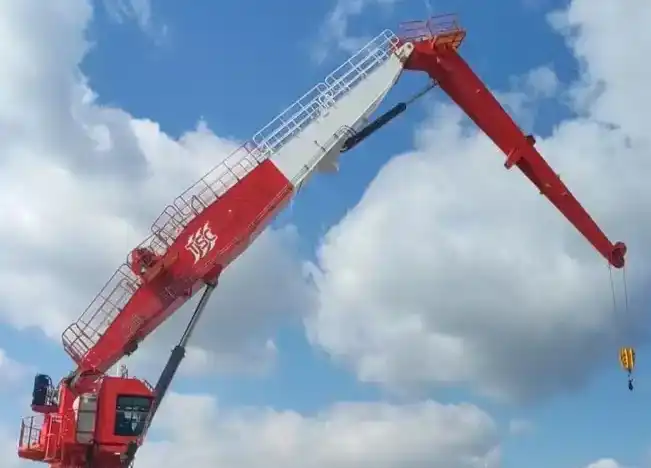
Why Source Knuckle Boom Cranes from China?
Manufacturing Excellence and Scale
China's shipbuilding industry holds a significant portion of the global market, driving economies of scale and technological innovation in crane manufacturing. Strong vertical integration of steel production, hydraulic components, and precision machining reduces costs and lead times while ensuring high-quality standards.
Technological Innovation and R&D Investment
Chinese crane manufacturers invest heavily in technology, emphasizing automation, remote control, and safety features. Modern facilities use advanced design and welding methods, incorporating IoT sensors and predictive maintenance to enhance safety, efficiency, and reduce maintenance needs in demanding marine environments, particularly for Knuckle Boom Cranes.
Cost Structure Advantages
Manufacturing costs in China stay competitive due to efficient processes, skilled labor, and favorable exchange rates. Cost efficiencies come from standardized designs, modular construction, and high-volume production, allowing for competitive pricing on custom configurations while maintaining maritime quality standards.
Understanding Technical Specifications and Standards
Critical Performance Parameters
Load capacity is essential for selecting knuckle boom cranes, typically spanning from light to heavy-duty for maritime use. The articulating boom provides flexibility in confined spaces, while longer booms reduce load capacity, ensuring stability and precision in cargo operations.
Material Standards and Construction Quality
High-strength steel, like S355, ensures durability and corrosion resistance in marine environments. Hydraulic components meet global standards with pressure ratings, seal compatibility, and safety features like overload protection, enhancing crane reliability and operational safety.
Industry Certifications and Classifications
Maritime cranes must be certified by recognized classification societies like DNV, ABS, and CCS, ensuring compliance with international design, safety, and quality standards. API-2C certification addresses offshore crane requirements, covering design loads, fatigue analysis, and safety for harsh marine environments.
Navigating Regulations and Compliance Requirements
International Maritime Standards
The IMO sets global standards for marine equipment, ensuring international acceptance. SOLAS regulations mandate safety features like emergency stops, load monitoring, and operator protection for cargo handling equipment.
Regional Certification Requirements
CE marking is required for cranes in the EU, covering safety and electromagnetic standards. US Coast Guard approval may be needed for vessels in US waters, involving extra testing and documentation.
Documentation and Traceability
Material traceability certificates verify steel grade and heat treatment compliance, supporting quality assurance and regulatory approvals. Welding qualifications and documentation confirm manufacturing capability and validate construction quality.
Why CM Energy is Your Ideal Import Partner
Industry Leadership and Global Presence
CM Energy is a technology-driven leader in marine energy and lifting equipment, with a strong offshore presence. Its equipment, including deck cranes and self-elevating platforms, demonstrates consistent performance in demanding applications.
Innovation and Intellectual Property
CM Energy holds a significant number of patents, including several inventions, granting access to advanced Knuckle Boom Crane technology and proprietary designs. R&D focuses on core innovations, boosting performance and providing a competitive advantage.
Quality Assurance and Certification
CM Energy runs welding shops that are DNV-certified and have ISO standard processes. These products have been approved by major classification groups. Fast shipping and uniform quality are made possible by modular design, and performance is confirmed by plant acceptance testing.
International Trade Process and Documentation
Initial Inquiry and Quotation Process
The purchase process starts with a precise list of technical requirements, such as load capacity, boom configuration, installation limitations, and operating factors. When requirements are well defined, vendors may give full quotes with the right technological solutions. In the request for quote (RFQ) papers, you should include information about the type of vessel, the surroundings, the standards of the classification society, and when you expect the delivery to happen. With this knowledge, makers can come up with the best crane designs and correct prices.
Contract Terms and Payment Structures
International crane purchases typically utilize standardized trade terms that define cost allocation and risk transfer responsibilities. Understanding these terms ensures proper budget allocation and risk management throughout the procurement process. FOB (Free On Board) terms require buyers to arrange ocean freight, insurance, and destination handling. The seller delivers goods to the departure port, with risk transfer occurring when goods cross the ship's rail. This arrangement provides buyers with shipping control but requires logistics management capabilities. CIF (Cost, Insurance, and Freight) terms include ocean freight and marine insurance in the seller's quotation. Risk transfers to the buyer upon goods crossing the ship's rail at the departure port, but the seller handles shipping arrangements to the destination port. EXW (Ex Works) represents the minimum seller obligation, requiring buyers to collect goods from the manufacturing facility. This arrangement provides maximum control over logistics but requires comprehensive shipping expertise.
Production and Quality Control
Manufacturing schedules vary based on crane complexity, with standard designs requiring a few months and custom ones taking longer. Quality control includes material checks, welding, testing, and third-party inspections for compliance.
Shipping and Logistics Management
Booking ocean freight means working together with shipping lines and freight forwarders. Break-bulk ships are better for moving big items, while containers are better for shipping smaller items. Customs clearing and package release are made possible by bills of lading and other papers.
Payment Methods and Financial Risk Management
The telegraphic transfer, also known as T/T, requires a thirty percent advance and the remaining seventy percent prior to shipping. Letters of credit (LC) give a secure option that is backed by bank guarantees, whilst documentary collections provide an alternative that is more advantageous financially.
Supply Chain Reliability and Lead Times
Production Planning and Capacity Management
To get the most out of their resources, Chinese crane makers use advanced production planning based on lean concepts and just-in-time delivery. Tools for supply chain awareness allow tracking in real time, accurate delivery updates, and joint planning of installations.
Component Sourcing and Quality Control
Important hydraulic parts are bought from global companies like Bosch Rexroth as well as local companies to make sure they are available and of good quality. Buying steel locally meets international standards, which cuts down on wait times and lets you be more creative with your schedule.
Infrastructure and Port Efficiency
China's main ports, like Shanghai and Ningbo, handle goods quickly and efficiently, and their prices are reasonable. Digital systems make exports easier, which cuts down on delays, guarantees accurate arrival times, and lowers the cost of shipping.
Communication and Business Culture
Language and Technical Communication
Modern Chinese factories have employees who speak English and give paperwork in English. Digital tools and videoconferencing allow for real-time conversations, virtual trips, and clear contact during the whole buying process.
Business Relationship Development
In Chinese business society, trust and long-term ties are very important. The main goals of the first talks are to learn about the customer's wants and show off the company's skills. Competence in technology and quality are more important than low prices, and success depends on reliable help and performance.
Time Zone Coordination
Time zone variations are taken into consideration in strategic communication scheduling, which ensures that replies are available on time. By allowing for asynchronous technical talks and document exchange, extended work hours and digital platforms make it possible to keep the momentum of the project going.
Common Pitfalls and Risk Mitigation Strategies
Specification Clarity and Technical Alignment
Not full specs lead to problems and delays in buying. Detailed crane standards keep changes from being too expensive. Review by a third party makes sure that the specs are correct and checks the supplier's skills. This helps find problems early on and lowers the project's risks.
Quality Assurance and Inspection Protocols
Quality and standard compliance are checked during pre-shipment checks, and independent reviews provide proof. Factory exams check how well the factory can make things and how well its quality systems work. This finds risks and builds trust in the supplier's abilities.
Documentation and Regulatory Compliance
Customs and launching are held up by incomplete paperwork. Full checklists make sure that all the necessary papers and paperwork are included. Early communication with classification groups and port authorities speeds up the process of accepting and approving equipment.
Financial Risk Management
Checking the financial health of a source through credit records and building visits lowers the risk of not being able to pay and guarantees that production can continue. Performance bonds add extra security, making sure the job gets finished even if problems arise with the seller.
Conclusion
Importing knuckle boom cranes from China offers competitive pricing, advanced technology, and reliable manufacturing. Success requires thorough supplier evaluation, clear specifications, and risk management. Chinese manufacturers like CM Energy combine maritime expertise with innovation to deliver superior offshore crane solutions. Key to success is understanding technical requirements, regulatory compliance, and building strong supplier relationships. Proper planning, documentation, and quality assurance ensure smooth procurement and long-term success. Chinese manufacturers are well-positioned to meet evolving maritime industry needs through innovation and excellence.
FAQ
1. What are the typical lead times for knuckle boom crane imports from China?
Standard knuckle boom cranes are usually made and delivered in a few months. Custom designs may take longer. Leading times change depending on how complicated the specifications are, how much can be made, and the time of year. When sending by ocean, it can take longer based on the port of arrival and the shipping method.
2. Which certifications are essential for marine knuckle boom crane installations?
Key certifications include approval from classification societies like DNV, ABS, or CCS, API-2C for offshore platforms, CE marking for Europe, and material certificates and welding qualifications for quality assurance.
3. How do I verify Chinese crane manufacturer quality and reliability?
Verify manufacturer credentials through classification society databases, references, and audits. Review quality certifications, manufacturing capabilities, and past projects, with third-party inspections ensuring independent quality validation during production and pre-shipment.
Partner with CM Energy for Your Next Knuckle Boom Crane Project
CM Energy stands ready to support your marine lifting equipment requirements with world-class knuckle boom crane solutions designed for demanding offshore applications. As a leading knuckle boom crane manufacturer, we combine decades of maritime expertise with cutting-edge technology to deliver reliable, efficient lifting solutions. Our comprehensive approach covers everything from initial design consultation through installation support and lifecycle service.Contact our technical team at info.cn@cm-energy.com to discuss your specific crane requirements and explore how our innovative hydraulic crane solutions can enhance your operational capabilities while ensuring long-term reliability and performance.
References
1. International Maritime Organization. "Guidelines for Marine Lifting Appliances and Winches." London: IMO Publishing, 2019.
2. Chen, Wei-Ming, and Liu, Xiaoping. "Development Trends in Chinese Marine Equipment Manufacturing Industry." Journal of Marine Engineering Technology, vol. 18, no. 3, 2020, pp. 45-62.
3. American Petroleum Institute. "Specification for Offshore Pedestal Mounted Cranes." API Standard 2C, 8th edition, Washington D.C.: API Publications, 2018.
4. Maritime and Coastguard Agency. "Code of Practice for the Safe Use of Lifting Equipment on Ships." Southampton: MCA Publications, 2017.
5. Det Norske Veritas. "Standard for Certification of Lifting Appliances." DNV-OS-D201, Oslo: DNV GL Publishing, 2019.
6. Zhang, Hongwei, et al. "Quality Assessment Framework for Marine Crane Manufacturing in China." International Journal of Advanced Manufacturing Technology, vol. 112, no. 7-8, 2021, pp. 2156-2171.